
Transmission problems are some of the most anxiety-inducing issues a GM or Chevrolet owner can face. Whether you're driving a Silverado, Equinox, Tahoe or Traverse, transmission trouble can range from a fluid change to a four-figure rebuild — which is why catching symptoms early matters so much.
This guide covers the common symptoms, what causes them, which transmissions are affected, and what to check before you spend anything.
Important correction — the Equinox does not have a CVT (unless it is a 2025 or newer).
An earlier version of this page described a CVT in the "2016–2022 Equinox with the 1.5T engine." That generation of Equinox never used a CVT — it used a conventional six-speed automatic. An owner reading that would have been researching, and potentially paying to diagnose, a transmission their vehicle does not contain.
GM's CVT is used in the Malibu, the front-wheel-drive Trailblazer, and the fourth-generation Equinox from 2025 in front-wheel-drive form. GM has announced it is dropping the CVT from the Equinox and Terrain for 2027 in favour of an eight-speed automatic.
Common GM Transmission Symptoms
1. Rough or Hard Shifting
Abrupt shifts, a clunk between gears, or hesitation before engaging. On GM six-speed automatics this is frequently a software calibration issue rather than mechanical damage, and GM has issued numerous service bulletins addressing shift quality with a control module reprogram. Ask about a reprogram before agreeing to any teardown.
2. Slipping
Engine revs climb but road speed does not follow. Worn clutch packs, low fluid, or a failing solenoid. Slipping generates heat, and heat accelerates the damage — this one gets worse quickly.
3. Delayed Engagement
A pause of more than a second or two moving into Drive or Reverse. Usually low fluid, a tired pump, or a restricted filter.
4. Shudder at Cruising Speed
A shudder or vibration, classically around 45–55 mph, that feels like driving over rumble strips. This is torque converter shudder, and on GM eight-speeds it is very often a fluid problem rather than a mechanical failure — see the fluid section below, because this is the single most misdiagnosed GM transmission symptom.
5. Warning Message
"Service Transmission," "Transmission Hot — Idle Engine," or a gear icon means the control module has logged a fault. Get the codes read before assuming the worst.
6. No Movement in Drive or Reverse
The most severe symptom. Have it towed rather than trying to drive it — if there is internal failure, driving circulates debris through the entire unit.
7. Burning Smell
Overheated fluid, from a low level, exhausted fluid, or a slipping clutch. Stop driving and check the fluid.
Which GM Transmission Do You Actually Have?
Getting this right matters more than anything else on this page, because the fluid specification differs between them and using the wrong one causes the very symptoms you are trying to fix.
| Transmission | Typical applications | Fluid |
|---|---|---|
| 6-speed (6T40, 6T45, 6T70, 6L80, 6L90) | Wide range of GM cars, trucks and SUVs from 2008 onward — including the 2018–2022 Equinox 1.5T | DEXRON-VI |
| 8-speed (8L90, 8L45) | V8 trucks and Corvette from 2015 | DEXRON-HP |
| 9-speed (9T50 family) | Transverse crossovers including later Equinox and Terrain | Check the spec for your vehicle |
| 10-speed (10L80, 10L90) | 2019+ Silverado and Sierra 1500 with 5.3L and 6.2L | DEXRON-ULV |
| CVT | Malibu, front-wheel-drive Trailblazer, 2025+ front-wheel-drive Equinox | CVT-specific fluid — not interchangeable |
Note the ten-speed. It uses DEXRON-ULV, an ultra-low-viscosity fluid that is not the same as the DEXRON-VI in a six-speed or the DEXRON-HP in an eight-speed. An earlier version of this page named only VI and HP, which would have left a Silverado owner with the 10-speed reaching for the wrong bottle.
The ten-speed was co-developed with Ford. Early examples drew shift-quality complaints that were largely addressed through calibration updates.
The Eight-Speed Shudder — Usually Fluid, Not Failure
This deserves its own section because of how much money rides on it.
The 8L90 and 8L45 developed a reputation for torque converter shudder. In many cases the cause is the fluid rather than a failed converter, and GM's remedy has centred on a fluid change to the updated specification rather than replacing hardware.
Why this matters: a torque converter replacement is a four-figure job. A fluid service is not. If you have shudder on a GM eight-speed, the correct fluid service should be attempted before anyone quotes you a converter.
Using non-approved fluid in these transmissions can itself cause shudder, so "it started after a fluid change elsewhere" is a meaningful clue.
Filters for the 8-speed fix
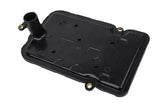 ACDelco Automatic Transmission Filter Kit
$105.99Filters for the fluid exchange. The shudder fix uses Dexron HP fluid — confirm before buying fluid. Confirm fitment by VIN before ordering.
ACDelco Automatic Transmission Filter Kit
$105.99Filters for the fluid exchange. The shudder fix uses Dexron HP fluid — confirm before buying fluid. Confirm fitment by VIN before ordering.
 ACDelco Automatic Transmission Filter
$186.99Filters for the fluid exchange. The shudder fix uses Dexron HP fluid — confirm before buying fluid. Confirm fitment by VIN before ordering.
ACDelco Automatic Transmission Filter
$186.99Filters for the fluid exchange. The shudder fix uses Dexron HP fluid — confirm before buying fluid. Confirm fitment by VIN before ordering.

What Causes GM Transmission Problems?
- Neglected fluid. "Lifetime fluid" is a marketing term, not an engineering one. Our recommendation is a fluid service around every 45,000–60,000 miles in normal use, and closer to 30,000 if you tow — shorter than GM's normal-service schedule, and deliberately so.
- Wrong fluid. See the table above. This is the most avoidable cause of transmission trouble on modern GM vehicles.
- Heat from towing. Towing near capacity without adequate cooling shortens transmission life more than mileage does. Heat is what kills automatics.
- Software calibration. Many shift-quality complaints are resolved by a reprogram, sometimes at no cost under warranty. Always worth asking.
- Solenoid failure. One failed solenoid can produce several unrelated-looking shift symptoms, which is why codes matter more than guesswork.
Fluid and filter kits
 ACDelco 10-9243 Dexron VI Full Synthetic ATF 88865549, 1 Qt
$16.99Dexron VI for 6-speeds and filter kits. Confirm the spec for your transmission. Confirm fitment by VIN before ordering.
ACDelco 10-9243 Dexron VI Full Synthetic ATF 88865549, 1 Qt
$16.99Dexron VI for 6-speeds and filter kits. Confirm the spec for your transmission. Confirm fitment by VIN before ordering.
 ACDelco 10-9244 Dexron VI Full Synthetic ATF 88865618, 1 Gal
$49.99Dexron VI for 6-speeds and filter kits. Confirm the spec for your transmission. Confirm fitment by VIN before ordering.
ACDelco 10-9244 Dexron VI Full Synthetic ATF 88865618, 1 Gal
$49.99Dexron VI for 6-speeds and filter kits. Confirm the spec for your transmission. Confirm fitment by VIN before ordering.
 CARQUEST 85976 Transmission Filter Kit
$22.00Dexron VI for 6-speeds and filter kits. Confirm the spec for your transmission. Confirm fitment by VIN before ordering.
CARQUEST 85976 Transmission Filter Kit
$22.00Dexron VI for 6-speeds and filter kits. Confirm the spec for your transmission. Confirm fitment by VIN before ordering.


Before You Spend Money
- Check fluid level and condition if your vehicle has a dipstick — many newer GM transmissions do not, and require a specific procedure at temperature. Healthy fluid is red or pink and does not smell burnt.
- Scan for codes. Transmission faults generally appear as P07xx and P08xx codes and point at specific components.
- Ask about service bulletins for your exact vehicle and symptom. A reprogram costs a fraction of a repair.
- On an eight-speed with shudder, try the correct fluid service first.
- Confirm which transmission you have from the RPO codes on the glovebox label before anyone orders parts or fluid.
Scan tools
 FOXWELL NT726 Bidirectional OBD2 Scanner
$368.99Read transmission codes before spending money.
FOXWELL NT726 Bidirectional OBD2 Scanner
$368.99Read transmission codes before spending money.
 FOXWELL NT614 Elite OBD2 Scanner
$233.69Read transmission codes before spending money.
FOXWELL NT614 Elite OBD2 Scanner
$233.69Read transmission codes before spending money.
 FOXWELL NT604 OBD2 Scanner
$209.09Read transmission codes before spending money.
FOXWELL NT604 OBD2 Scanner
$209.09Read transmission codes before spending money.


Repair Cost Estimates
Our estimates, which vary widely by region, vehicle and shop.
| Repair | DIY Cost | Shop Cost |
|---|---|---|
| Transmission fluid change | $50–$100 | $150–$300 |
| Control module reprogram | Not a DIY job | $0 under warranty – $150 |
| Solenoid replacement | $50–$150 (part) | $250–$600 |
| Torque converter replacement | Not a DIY job | $600–$1,500 |
| Rebuild | Not a DIY job | $2,500–$4,500 |
| Remanufactured unit, installed | Not a DIY job | $3,000–$5,500 |
Converters and solenoids
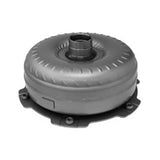 VEGE Remanufactured Torque Converter TQGM4 (2015-2021)
$433.99Converters and shift solenoids. Confirm transmission. Confirm fitment by VIN before ordering.
VEGE Remanufactured Torque Converter TQGM4 (2015-2021)
$433.99Converters and shift solenoids. Confirm transmission. Confirm fitment by VIN before ordering.
 GM Genuine Parts 24230298 1-2/3-4 Shift Solenoid
$17.21Converters and shift solenoids. Confirm transmission. Confirm fitment by VIN before ordering.
GM Genuine Parts 24230298 1-2/3-4 Shift Solenoid
$17.21Converters and shift solenoids. Confirm transmission. Confirm fitment by VIN before ordering.

Rebuild or Replace?
- If the vehicle is worth comfortably more than the repair and is otherwise sound, repair it.
- If it is high mileage with other significant problems and the repair approaches its value, think hard.
- A remanufactured unit from a reputable supplier usually carries a warranty, which a rebuild of your worn original may not match.
Frequently Asked Questions
Does the Chevy Equinox have a CVT?
Only from the 2025 model year, and only in front-wheel-drive form. The 2018 to 2022 Equinox with the 1.5T engine used a conventional six-speed automatic, and GM confirmed the 2022 model retained it. GM has also announced the Equinox and Terrain drop the CVT for 2027 in favour of an eight-speed. An earlier version of this page wrongly described a CVT in the 2016–2022 Equinox.
Which GM vehicles actually use a CVT?
The Malibu, the front-wheel-drive Trailblazer, and the fourth-generation Equinox from 2025 in front-wheel-drive form. All-wheel-drive versions of those crossovers generally use a geared automatic instead, so two vehicles of the same model year and badge can have completely different transmissions.
What transmission fluid does my GM vehicle need?
It depends on the transmission, not the vehicle. Six-speeds use DEXRON-VI. Eight-speeds use DEXRON-HP. Ten-speeds use DEXRON-ULV, which is an ultra-low-viscosity fluid and not interchangeable with the others. CVTs use their own dedicated fluid. Confirm which unit you have from the RPO codes on the glovebox label before buying anything.
My eight-speed shudders around 45 to 55 mph. Do I need a torque converter?
Probably not, and this is worth pushing back on. Shudder on GM eight-speeds is very often caused by the fluid rather than a failed converter, and the established remedy is a fluid service to the correct current specification. A converter replacement is a four-figure job; a fluid service is not. Ask for the fluid service to be attempted first.
Is rough shifting always mechanical damage?
No. On GM six-speeds in particular, harsh or clunky shifting is frequently a software calibration issue, and GM has issued many bulletins resolving it with a control module reprogram. That can be free under warranty. Always ask whether a reprogram applies to your vehicle and symptom before authorising a teardown.
How often should I change GM transmission fluid?
Our recommendation is every 45,000 to 60,000 miles in normal use and around 30,000 miles if you tow regularly. That is shorter than GM's normal-service interval, deliberately. Heat is what destroys automatic transmissions, and towing generates it faster than anything else you can do to one.
What do P07xx and P08xx codes mean?
They are transmission-related fault codes, and they point to specific components rather than a general "transmission problem." Getting them read before authorising work is the single cheapest diagnostic step available, and it prevents paying for a rebuild when a solenoid or a calibration is at fault.
My transmission has no dipstick. How do I check the fluid?
Many newer GM transmissions are sealed and have no dipstick. Checking the level requires bringing the fluid to a specified temperature and using a fill or check plug underneath, following the procedure for that transmission. It is not a driveway check on those units, and overfilling causes its own problems, so this one is worth leaving to a shop with the correct procedure.
A Note on Sourcing
The Equinox transmission correction is corroborated across multiple independent sources, including GM Authority's reporting that the 2022 Equinox retained its six-speed automatic, and subsequent reporting that GM is removing the CVT from the Equinox and Terrain for the 2027 model year. We have not read a GM document directly for this point.
Two things were corrected in this revision: the claim that the 2016–2022 Equinox 1.5T used a CVT, and the omission of DEXRON-ULV for the ten-speed, which left the fluid guidance incomplete for a large population of Silverado and Sierra owners.
A claim that CVT problems might be covered under GM's emissions warranty was removed. We could not substantiate it, and warranty coverage is not something to speculate about.
The fluid intervals, the cost estimates and the rebuild-versus-replace guidance are our own, based on service experience rather than GM's published schedules — and the intervals are deliberately shorter than GM's.
Fluid specifications and transmission fitment vary by model year, engine and drivetrain. Confirm the transmission in your specific vehicle from its RPO codes before buying fluid or parts.
Bottom Line
Most GM transmission complaints are not catastrophic. Identify which transmission you actually have, get the codes read, ask about a calibration update, and on an eight-speed with shudder insist on the correct fluid service before anyone quotes a converter. Those four steps resolve a large share of cases for a fraction of what a rebuild costs.
Browse our Complete GM & Chevrolet Owner's Guide for more, or contact us with your vehicle and symptoms.
Shop Related Parts & Accessories
DEXRON-VI is for six-speed transmissions. If you have an eight-speed, ten-speed or CVT, this is not your fluid — check the table above first.
-
 ACDelco DEXRON-VI Full Synthetic ATF (6-pack qt) — $73.07. For six-speed transmissions.
-
 ACDelco DEXRON-VI ATF (1 gal) — $36.88. For six-speed transmissions.
-
 ACDelco DEXRON-VI ATF (1 qt) — $14.99. For topping up a six-speed.