
Complete Chevrolet & GM Vehicle Maintenance Schedule Guide 2026
A maintenance schedule is worth following because GM engineers know which parts wear first and which fluids break down under heat. This guide gives the general rhythm most Chevrolet, GMC, Buick and Cadillac vehicles follow — and, just as importantly, flags where a general figure is not good enough and your own manual has to govern.
Read this as a planning framework, not a specification. GM publishes intervals per vehicle and engine, and severe service — towing, short trips, dust, extended idling — shortens several of them. Where this page and your owner's manual disagree, the manual wins.
The Oil Life Monitor Governs Oil Changes
On modern GM vehicles the Oil Life Monitor is the authority, not a mileage number. It estimates degradation from engine revolutions, temperature and load, which is why short city trips trigger a change sooner than highway miles. In practice that usually lands somewhere between 5,000 and 7,500 miles, and never beyond 12 months regardless of mileage.
Treat the monitor as a ceiling rather than a target. It is a model, not a measurement — it does not know you towed a trailer over a mountain pass last weekend. Change sooner after heavy towing, sustained idling, or a stretch of very short trips.
Viscosity matters as much as timing. Many modern GM V8s take 0W-20 to the dexos1 standard, some four-cylinders and older engines take 5W-30, and the 3.0L Duramax requires dexosD. One exception worth knowing: 6.2L L87 engines built between 1 March 2021 and 31 May 2024 fall under a GM recall whose remedy moves them from 0W-20 to dexos R 0W-40. The label on your oil cap settles it — our dexos specification guide explains how the standards differ.
Oil and filters
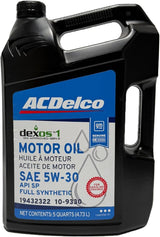 ACDelco 10-9330 dexos1 Gen 3 Full Synthetic 5W-30 Oil
$58.95dexos1 oil and filters. Confirm spec. Confirm fitment by VIN before ordering.
ACDelco 10-9330 dexos1 Gen 3 Full Synthetic 5W-30 Oil
$58.95dexos1 oil and filters. Confirm spec. Confirm fitment by VIN before ordering.
 GM ACDelco 109326 0W-20 dexos1 Gen 3 Full Synthetic Motor Oil
$109.99dexos1 oil and filters. Confirm spec. Confirm fitment by VIN before ordering.
GM ACDelco 109326 0W-20 dexos1 Gen 3 Full Synthetic Motor Oil
$109.99dexos1 oil and filters. Confirm spec. Confirm fitment by VIN before ordering.
 ACDelco GM Original Equipment PF64 (25206966) Oil Filter
$13.89dexos1 oil and filters. Confirm spec. Confirm fitment by VIN before ordering.
ACDelco GM Original Equipment PF64 (25206966) Oil Filter
$13.89dexos1 oil and filters. Confirm spec. Confirm fitment by VIN before ordering.


Service Intervals at a Glance
| Interval | Service item |
|---|---|
| Per Oil Life Monitor | Engine oil and filter; reset the monitor afterwards |
| Every oil change | Tyre pressure and tread, wiper condition, fluid levels, visual check of belts and hoses |
| ~7,500 miles | Tyre rotation |
| ~15,000 miles | Cabin air filter inspection, engine air filter inspection, brake pad thickness, battery terminals and voltage |
| ~30,000 miles | Engine air filter, brake fluid, coolant test, full suspension inspection |
| ~45,000 miles | Transmission fluid and filter, transfer case fluid, differential fluid — sooner if you tow |
| Per manual | Spark plugs — the interval varies widely by engine |
| Long interval | Coolant flush, serpentine belt, four-wheel alignment check |
| Seasonally | Before winter: battery load test, coolant freeze point, tread depth. Before summer: A/C performance and coolant level |
Routine Items in Detail
Tyres: rotation, balancing, replacement
Rotation roughly every 7,500 miles evens out tread wear, which matters especially on GM trucks and SUVs where front and rear tyres wear differently. Pairing rotation with an oil change is the easiest way to stay consistent.
Uneven steering feel, cabin vibration at speed, or one tread edge wearing faster all point at balancing or alignment rather than the tyres themselves. On replacement: 2/32 of an inch is the legal minimum, not the recommended replacement point. Wet braking and snow traction fall off well before that, so plan nearer 4/32 if you drive in rain or snow.
Brakes
Pads commonly last somewhere in the 40,000–60,000 mile range, but city traffic, heavy loads and mountain grades shorten that considerably, and symptoms matter more than mileage. Squealing, grinding, longer stopping distances or a soft pedal all deserve attention now rather than at the next service. Waiting turns a pad job into a rotor job.
Filters
Engine and cabin air filters are both worth inspecting at oil changes and replacing by condition — dusty roads, gravel and high pollen shorten their life considerably, so a single mileage figure does not serve everyone well.
Fuel filters are a different case entirely. On most 2007-and-newer GM vehicles the fuel filter is integrated into the in-tank pump module and is not a serviceable maintenance item. Do not plan a routine fuel filter replacement on those vehicles — see our fuel filter guide for which vehicles still have an external filter.
Air and cabin filters
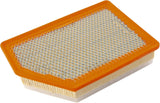 ACDelco A3459C Air Cleaner Element 85614334
$37.98Engine and cabin filters. Confirm fitment by VIN before ordering.
ACDelco A3459C Air Cleaner Element 85614334
$37.98Engine and cabin filters. Confirm fitment by VIN before ordering.
 ACDelco CF185 Cabin Air Filter
$28.49Engine and cabin filters. Confirm fitment by VIN before ordering.
ACDelco CF185 Cabin Air Filter
$28.49Engine and cabin filters. Confirm fitment by VIN before ordering.
 ACDelco Gold CF1184C Cabin Air Filter
$27.99Engine and cabin filters. Confirm fitment by VIN before ordering.
ACDelco Gold CF1184C Cabin Air Filter
$27.99Engine and cabin filters. Confirm fitment by VIN before ordering.


Mileage Milestones
Up to 30,000 miles
Mostly confirming the vehicle is settling in as expected: first oil changes, tyre rotations, and multi-point inspections looking at brake performance, tyre wear and fluid levels. For owners in harsher conditions this is where time-based service can arrive before mileage-based service.
30,000 to 60,000 miles
Maintenance becomes preventive. Tyre replacement may enter the discussion, brake inspection matters more, and battery checks are sensible — particularly in climates that swing hot or cold. Cabin air filter replacement and, on some schedules, a coolant service fall in this band.
60,000 to 90,000 miles
Belts and hoses start showing age, transmission service becomes relevant, and suspension components deserve closer attention for leaks, looseness or uneven ride. Driving style starts to matter more than the odometer: a truck that tows, a city commuter and a highway cruiser need different attention at the same mileage.
90,000 to 100,000+ miles
Major wear items come into play — spark plugs, differential service, and a closer look at the timing system.
One correction worth stating plainly: modern GM engines use timing chains, not timing belts. An earlier version of this page listed timing belt inspection at this milestone, which does not apply to the current GM lineup. Chains are designed to last the life of the engine and are not a scheduled replacement item — but they do stretch and fail on some engines, and the symptoms are specific. Our timing chain guide covers the codes and noises that indicate a problem.
Fluids
 ACDelco 10-101 DEX-COOL Extended Life Coolant, 1 Gallon
$31.95Coolant, ATF and gear oil. Confirm spec. Confirm fitment by VIN before ordering.
ACDelco 10-101 DEX-COOL Extended Life Coolant, 1 Gallon
$31.95Coolant, ATF and gear oil. Confirm spec. Confirm fitment by VIN before ordering.
 ACDelco 10-9244 Dexron VI Full Synthetic ATF 88865618, 1 Gal
$49.99Coolant, ATF and gear oil. Confirm spec. Confirm fitment by VIN before ordering.
ACDelco 10-9244 Dexron VI Full Synthetic ATF 88865618, 1 Gal
$49.99Coolant, ATF and gear oil. Confirm spec. Confirm fitment by VIN before ordering.
 ACDelco 10-4034 Dexron LS 75W-90 Gear Oil 88862624, 32 oz
$42.99Coolant, ATF and gear oil. Confirm spec. Confirm fitment by VIN before ordering.
ACDelco 10-4034 Dexron LS 75W-90 Gear Oil 88862624, 32 oz
$42.99Coolant, ATF and gear oil. Confirm spec. Confirm fitment by VIN before ordering.


Electric and Hybrid GM Vehicles
EVs still need maintenance, just a different pattern. No oil changes on a pure EV, but tyre rotation, brake inspection, cabin filters, brake fluid and the 12-volt battery all remain. Two things surprise owners: EVs are heavy and deliver instant torque, so tyres wear faster than expected, and because regenerative braking does most of the slowing, brake components can corrode from underuse rather than wear out. Inspection still matters.
Our guide to what still wears on a GM EV covers what you keep buying and what you never buy again.
EV and hybrid care
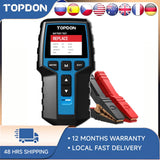 TOPDON BT200 12V Car Battery Tester Digital Automotive
$103.99EVs and hybrids still rely on a 12V battery.
TOPDON BT200 12V Car Battery Tester Digital Automotive
$103.99EVs and hybrids still rely on a 12V battery.
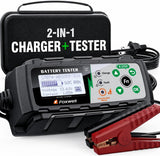 FOXWELL BC521 Battery Charger & Tester
$162.35EVs and hybrids still rely on a 12V battery.
FOXWELL BC521 Battery Charger & Tester
$162.35EVs and hybrids still rely on a 12V battery.
Frequently Asked Questions
How often should I change the oil in my GM vehicle?
Follow the Oil Life Monitor, which typically lands between 5,000 and 7,500 miles depending on how you drive, and never exceed 12 months regardless of mileage. Short trips degrade oil faster than the monitor sometimes accounts for.
What oil viscosity does my engine take?
It depends on the engine, not the badge. Many modern GM V8s take 0W-20 to dexos1; some four-cylinders and older engines take 5W-30; the 3.0L Duramax needs dexosD. One exception: 6.2L L87 engines built 1 March 2021 to 31 May 2024 fall under a recall whose remedy moves them to dexos R 0W-40. The oil cap is authoritative.
When should brake pads be replaced?
Often between 40,000 and 60,000 miles, but symptoms matter more than mileage. Squealing, grinding, longer stopping distances or a soft pedal mean now, not at the next service.
How often should the fuel filter be replaced?
On most 2007-and-newer GM vehicles, never as routine maintenance — the filter is integrated into the in-tank pump module and is not separately serviceable. Older vehicles with an external filter are a different case.
Do GM engines have a timing belt?
Modern GM engines use timing chains rather than belts. Chains are designed to last the life of the engine and are not a scheduled replacement item, though some engines do suffer chain stretch — which shows up as specific trouble codes and a cold-start rattle rather than on a service schedule.
When should tyres be replaced?
2/32 of an inch is the legal minimum, not the replacement point. Wet braking and snow traction deteriorate well before that, so nearer 4/32 is safer if you drive in rain or snow.
Do electric vehicles need maintenance?
Yes, just differently. No oil changes, but tyres wear faster because EVs are heavy and torque-rich, and brake components can corrode from underuse since regenerative braking does most of the slowing. Cabin filters, brake fluid and the 12-volt battery all still apply.
What happens during a multi-point inspection?
A technician reviews fluids, brakes, tyres, battery health and visible wear items. It is most useful as a way to catch developing wear before it affects drivability, rather than as a repair visit.
Does severe service really change the schedule?
Yes, and more than most owners assume. Towing, short trips that never fully warm the engine, dusty conditions and extended idling all shorten several intervals — transmission and differential fluid especially. Your manual defines what counts as severe for your vehicle.
Keeping the Plan on Track
A good maintenance schedule is less about reacting to problems and more about staying ahead of them. Oil changes, tyre rotations, brake inspections, filter replacements and milestone checks work together to protect reliability. Follow the manual, treat reminders as a planning tool, and shorten the intervals if your driving falls into severe service.
A Note on Sourcing
Intervals on this page are a planning framework rather than a manufacturer specification. GM publishes them per vehicle and engine, and severe service shortens several. Your owner's manual governs.
Two errors were corrected in revision. The page previously listed timing belt inspection as a 90,000-mile milestone — modern GM engines use chains, which are not a scheduled replacement item. It also recommended filter replacement every 20,000 miles as a blanket figure covering engine, cabin and fuel filters; on most 2007-and-newer GM vehicles the fuel filter is integrated into the in-tank pump module and is not serviceable at all.
The L87 recall details — the production window and the move to dexos R 0W-40 — come from NHTSA campaign 25V-274 and the associated GM dealer bulletin.
Hardcoded prices were removed from the parts block. Prices change; the product pages carry the current figure.
Related Maintenance Guides (By System)
Every fluid, filter and component covered in this schedule has its own detailed guide:
- Oil Change Maintenance Guide
- dexos1 vs dexosD vs dexos R: Which Spec Your Engine Takes
- Spark Plug Maintenance Guide
- Timing Chain Replacement: Symptoms and Repair
- Transmission Service Maintenance Guide
- How Long Do GM Transmissions Last?
- Transfer Case Maintenance Guide
- Differential Fluid Maintenance Guide
- Coolant Flush Maintenance Guide
- Brake Fluid Flush Maintenance Guide
- Battery Replacement Maintenance Guide
- Thermostat Maintenance Guide
- Water Pump Maintenance Guide
- Fuel Filter Maintenance Guide
- Cabin Air Filter Maintenance Guide
- Engine Air Filter Maintenance Guide
- GM EV Maintenance: What Still Wears
- How to Reset the Oil Life on GM Vehicles
- The Complete GM & Chevrolet Owner's Guide
Shop Related Parts & Accessories
Confirm viscosity and fitment against your own vehicle before ordering — GM uses different specifications across the same model line.
-
 ACDelco dexos1 5W-30 Full Synthetic Motor Oil (8-pack) — 5W-30; many modern GM V8s take 0W-20 instead. Check your oil cap.
-
 ACDelco dexos1 Gen3 0W-20 Motor Oil (6-qt case) — for 5.3L and 6.2L; check the cap if you have a 2021–2024 6.2L.
-
 ACDelco Gold Cabin Air Filter CF1184C — confirm the part number suits your model.
-
 ACDelco Dexron-VI Full Synthetic ATF (6-pack qt) — confirm your transmission takes Dexron VI rather than Dexron HP.
-
 ACDelco Radiator Cap 15 PSI