
P1514 is Airflow to TP Sensor Correlation High. The module compared two independent measurements — how much air is actually entering the engine, and how far open the throttle says it is — and found more airflow than the throttle position accounts for. That is a genuinely clever cross-check, and it means something specific: one of those two sensors is wrong, or the throttle plate is not where the module thinks it is. Working out which is the whole diagnosis.
Jump to a section: What P1514 means · A different kind of correlation code · Three ways to produce it · Was the throttle body cleaned or replaced? · The MAF side · Aftermarket intakes · Reduced Engine Power · The throttle code family · A note on sourcing · Symptoms · Causes and how to confirm each · How it's diagnosed · Parts and cost · What other pages get wrong · FAQ
What Does P1514 Mean?
The module knows two things about air entering the engine, from two entirely separate sources.
- The mass airflow sensor measures the actual quantity of air passing into the intake.
- The throttle position sensor reports how far open the throttle plate is.
Those two are physically linked. A nearly closed throttle admits little air; a wide open throttle admits a great deal. So for any given throttle angle, the module has a reasonable expectation of how much airflow should accompany it.
P1514 sets when measured airflow is higher than the throttle position can account for. The throttle says it is barely open; the airflow sensor says a lot of air is coming through. Those two statements cannot both be right.
What the code does not tell you is which one is lying — or whether both are honest and the throttle plate itself is somewhere the module did not put it.
A Different Kind of Correlation Code
Worth distinguishing, because this site covers several correlation codes and this one works differently.
| Code | What it compares |
|---|---|
| P2135 | Two sensors measuring the same thing — throttle plate position — against each other |
| P1271 | Two sensors measuring the same thing — pedal position — against each other |
| P1514 | Two sensors measuring different things — airflow and throttle angle — that physics says should agree |
The first two are redundancy checks. Deliberately duplicated sensors, put there so a single failure cannot fool the system.
P1514 is a plausibility check. Nothing was duplicated — the module is simply noticing that two unrelated measurements are telling an incoherent story about the same engine.
That distinction matters practically. On a redundancy code, one of two identical sensors is usually at fault. On a plausibility code, the fault can sit anywhere in the chain — either sensor, the throttle plate itself, or something that changed the relationship between them. It is a wider net.
Tools for comparing airflow and throttle
 FOXWELL NT726 Bidirectional Scanner
$368.99Compare MAF, MAP and throttle position in live data.
FOXWELL NT726 Bidirectional Scanner
$368.99Compare MAF, MAP and throttle position in live data.
 Launch CRE 2.0 GM All-System Scanner
$159.00GM all-system scanner with throttle relearn.
Launch CRE 2.0 GM All-System Scanner
$159.00GM all-system scanner with throttle relearn.
 TOPDON BT200 Battery Tester
$103.99Low voltage affects electronic throttle control.
TOPDON BT200 Battery Tester
$103.99Low voltage affects electronic throttle control.

Three Ways to Produce It
Getting this framing right saves a great deal of wasted work.
1. The throttle plate is more open than the sensor reports
The airflow measurement is honest, and so is the sensor — but the plate is not where the sensor thinks. Carbon built up in the throttle bore can hold the plate slightly open, or a learned closed-throttle reference can be wrong.
This is the version where nothing is electrically faulty at all, and it is very common on GM throttle bodies.
2. The airflow sensor is over-reporting
The throttle is where it says it is, but the MAF is exaggerating. Contamination, damage, or a sensor operating in the wrong housing all cause this. The module sees airflow that is not really there.
3. The throttle position sensor is under-reporting
The airflow is real, but the throttle sensor is reading lower than the actual plate angle. Sensor drift, a wiring fault, or a reference voltage problem produce this.
How to tell them apart: watch live data. Compare the airflow reading against what the engine should be drawing at that speed and load, and compare the throttle position reading against the plate's actual physical position. Whichever number looks implausible on its own is your candidate — and if both look reasonable, suspect the plate position or the learned reference instead.
Was the Throttle Body Cleaned or Replaced?
Ask this before anything else, because it resolves a meaningful share of cases at no cost.
The module learns where the closed throttle position is. That learned value is the baseline against which everything else is judged — including the airflow it expects at low throttle angles.
Cleaning a throttle body changes that relationship. The same plate position now flows considerably more air, because the carbon that was restricting it is gone. Without a relearn, the module is applying its old expectation to a newly clean throttle body — which is precisely "more airflow than the throttle position accounts for."
A relearn is required after:
- Throttle body cleaning or replacement
- An extended battery disconnect
- Module replacement or reprogramming
- Any repair that changes airflow at a given throttle angle
The manual procedure reported for GM applications is straightforward: idle for three minutes, switch off for sixty seconds, then idle for three minutes again. A capable scan tool can run a guided throttle or idle relearn instead, which is the proper route on some applications.
Our P0506 and P0507 guide covers that relearn in detail, and our P1516 guide covers GM's documentation of throttle concerns returning when the relearn is skipped. If this code appeared shortly after throttle work, do the relearn before suspecting anything.
The MAF Side
If the airflow reading is the suspect rather than the throttle, a few specifics matter.
Mass airflow sensors get contaminated — by oil, dust that got past a poorly sealed filter, or residue. A contaminated sensor misreports, and it can do so in either direction depending on what is on the element.
Cleaning is worth trying, but only correctly. Use a purpose-made MAF cleaner, spray the element without touching it, and let it dry completely before reassembly. The sensing element is extremely delicate — contact with a cloth, a brush or a finger will destroy it, turning a cleanable sensor into a replacement.
Other things that make a MAF over-report:
- An over-oiled aftermarket air filter, where oil transfers onto the element
- Damage to the sensing element from debris
- A poorly fitted or wrong air filter letting unfiltered air past
- The sensor mounted in the wrong housing — see below
Our P0101 guide covers MAF diagnosis in depth. If P0101 is stored alongside P1514, the airflow side is much the stronger suspect.
Aftermarket Intakes
We sell intake parts, so we will be straight about this rather than avoiding it.
A well-made intake system properly installed does not cause this code. But P1514 is specifically about airflow readings not matching throttle position, and there is one installation error that produces exactly that.
Mass airflow sensors are calibrated to their housing. The tube diameter, the distance from bends, and the airflow characteristics around the sensor are all part of what the reading means. Mount the same sensor in a tube of a different diameter, or too close to a bend, and it reports a different number for the same real airflow — with nothing broken at all.
So if the code followed an intake installation, check three things:
- The sensor is in the correct position and orientation in its housing
- The housing diameter matches what the sensor expects
- Every joint is properly sealed and clamped, since unmetered air is its own problem — our P1191 guide covers that
Also check the filter oiling. Reusable filters that have been over-oiled transfer oil onto the MAF element, and that is one of the most common ways a healthy sensor starts lying.
Reduced Engine Power
Worth knowing what to expect, and why.
GM throttle system codes frequently trigger Reduced Engine Power. When the module cannot reconcile what its throttle sensors are telling it, limiting power is the safe response — the same principle covered in our P1271 guide.
The safety consideration is timing. A correlation fault can be intermittent, so the vehicle may drop into reduced power without warning — including while merging or overtaking. Losing acceleration in those situations is genuinely hazardous.
So: if your vehicle has entered reduced power even once, avoid highway driving and towing until it is resolved, and get it diagnosed promptly rather than eventually.
The Throttle Code Family
| Code | What it adds |
|---|---|
| P1515 | Electronic throttle system throttle position — closely related |
| P1516 | Throttle actuator control module — actuator position performance |
| P1517 / P1518 / P1519 | Throttle module faults and module communication |
| P1510 / P1511 | Throttle control system performance and backup system |
| P0101 | MAF performance. Alongside this, the airflow side is the stronger suspect |
| P0506 / P0507 | Idle speed low or high. Frequently the same underlying cause |
What is stored alongside tells you which side of the correlation to investigate. MAF codes point at the airflow measurement; throttle actuator and position codes point at the throttle side.
A Note on Sourcing for This Code
We cite documents we have read and label the rest.
We could not verify a GM service bulletin naming P1514 on a specific GM platform. The definition is consistent with GM code references, and the code sits within a coherent run of throttle control codes, which corroborates the reading.
The diagnostic material here — the plausibility-check framing, the relearn requirement, MAF contamination and housing calibration — reflects standard practice rather than a GM document we opened and read.
GM reused P1xxx numbers across model years and platforms, with published code lists carrying an explicit caution about it, and other manufacturers use these numbers for unrelated faults. If your scan tool shows a different definition, trust the tool and your service information.
Symptoms of P1514
- Check engine light on
- Reduced Engine Power message and limited power
- Rough, high or unstable idle
- Hesitation or stumble on acceleration
- Poor throttle response
- Stalling in some cases
- Reduced fuel economy
- Companion airflow or throttle codes
On urgency: moderate to high, and the reason is Reduced Engine Power rather than damage. The engine is not being harmed, but an intermittent throttle fault can limit power without warning at exactly the wrong moment. Avoid highway driving and towing until it is resolved.
Causes and How to Confirm Each
| Cause | How to confirm it | Notes |
|---|---|---|
| Relearn not performed after throttle work | Ask what was done recently. Perform the relearn and retest | Free, and it resolves a real share of these |
| Carbon in the throttle bore | Remove the intake duct; look for a black ring around the plate | Holds the plate off its expected position. Relearn after cleaning |
| Contaminated MAF sensor | Compare live airflow against expected values for engine speed and load | Clean correctly — never touch the element |
| Over-oiled air filter | Inspect the filter and the MAF element for oil | A common way a healthy sensor starts lying |
| MAF in wrong housing or position | Verify sensor orientation, position and tube diameter on aftermarket intakes | Reports a different number for the same real airflow |
| Throttle position sensor drift or fault | Watch TP voltage sweep smoothly through full travel with no dropouts | Compare against the plate's actual position |
| Wiring, connector or reference fault | Inspect connectors; check reference voltage and ground under load | Other sensor codes alongside point at a shared reference |
| Unmetered air entering after the MAF | Inspect the ducting; smoke test the intake | See our P1191 guide |
| Poor-quality replacement sensor | Establish what was fitted if the code returned quickly | Accuracy is the whole function here |
| Throttle body or actuator fault | After cleaning, relearn and sensor checks | Throttle actuator codes alongside support this |
| ECM fault | Last, after everything else is excluded | Rare |
Airflow and throttle parts
 ACDelco MAF Sensor 23262343
$119.99ACDelco MAF sensor. Confirm fitment by VIN before ordering.
ACDelco MAF Sensor 23262343
$119.99ACDelco MAF sensor. Confirm fitment by VIN before ordering.
 ACDelco Throttle Body 12679524
$343.99ACDelco throttle body. Confirm fitment by VIN before ordering.
ACDelco Throttle Body 12679524
$343.99ACDelco throttle body. Confirm fitment by VIN before ordering.
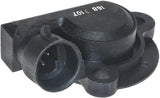 ACDelco Gold 19322821 Throttle Position Sensor
$58.77ACDelco Gold throttle position sensor. Confirm fitment by VIN before ordering.
ACDelco Gold 19322821 Throttle Position Sensor
$58.77ACDelco Gold throttle position sensor. Confirm fitment by VIN before ordering.


How Is P1514 Diagnosed?
- Record all codes and freeze frame data. MAF codes point at the airflow side; throttle codes point at the throttle side.
- Ask what work was done recently. Throttle body cleaning, a battery disconnect or an intake installation all explain this code.
- Perform the relearn if throttle work preceded the fault. Free, and it may be the whole answer.
- Inspect the air filter and the MAF element for oil and contamination.
- On an aftermarket intake, verify MAF position, orientation and housing diameter.
- Remove the intake duct and inspect the throttle bore for a carbon ring around the plate.
- Watch live data. Compare airflow against expected values for engine speed and load, and throttle position against the plate's actual angle.
- Inspect connectors and check reference voltage and ground under load.
- Clean the throttle body if carbon is found — cleaner on a cloth, not sprayed into the manifold — then relearn.
- Clean or replace the MAF if the airflow reading is the implausible one.
- Clear and verify across several drive cycles, including idle periods.
Parts and Cost
| Repair | What it involves | Cost picture |
|---|---|---|
| Throttle relearn | Three minutes on, sixty seconds off, three minutes on | Free — and it resolves more of these than people expect |
| Throttle body cleaning | Clean the bore and plate, then relearn | Cleaner and an hour |
| MAF cleaning | Purpose-made cleaner, no contact with the element | Inexpensive — done wrong it costs you the sensor |
| Air filter | Where contamination or over-oiling is found | Minimal |
| Correcting an aftermarket intake installation | Repositioning the MAF, sealing joints properly | Often free beyond time |
| Connector or wiring repair | Where corrosion or a reference fault is found | Modest |
| Mass airflow sensor | Match to VIN | Moderate |
| Throttle body assembly | Where cleaning and relearn did not resolve it. Relearn after fitting | Moderate to significant |
| Parts fitted before the relearn was tried | What happens when the free step is skipped | Money spent on a software problem |
Order against your VIN. Throttle bodies and airflow sensors are calibrated to specific engines and are not interchangeable across the range.
Service parts
 ACDelco Throttle Body Repair Kit 217-2894
$152.99ACDelco throttle body repair kit. Confirm fitment by VIN before ordering.
ACDelco Throttle Body Repair Kit 217-2894
$152.99ACDelco throttle body repair kit. Confirm fitment by VIN before ordering.
 ACDelco A3140C Air Filter
$107.99ACDelco Professional air filter. Confirm fitment by VIN before ordering.
ACDelco A3140C Air Filter
$107.99ACDelco Professional air filter. Confirm fitment by VIN before ordering.
 ACDelco 2-Pin Replacement Connector PT3739
$90.99Two-pin replacement connector. Confirm fitment by VIN before ordering.
ACDelco 2-Pin Replacement Connector PT3739
$90.99Two-pin replacement connector. Confirm fitment by VIN before ordering.


What Other P1514 Pages Get Wrong
- Treating it as a single-component fault. This is a plausibility check between two different measurements. The fault can be either sensor, the throttle plate's actual position, or the learned reference — a wider net than a redundancy code.
- Skipping the relearn question. Cleaning a throttle body means the same plate angle now flows more air, which is literally "more airflow than the throttle position accounts for." If the code followed throttle work, do the relearn first.
- Not distinguishing it from P2135 and P1271. Those compare duplicate sensors of the same thing. This compares two unrelated measurements that physics links. Different logic, different suspects.
- Recommending MAF cleaning without warning about the element. The sensing element is destroyed by contact. Spray it, do not touch it, and let it dry fully.
- Ignoring MAF housing calibration. These sensors are calibrated to their tube. In the wrong diameter or too near a bend, a perfectly good sensor reports the wrong number.
- Missing the over-oiled filter. Oil transferring onto the element from a reusable filter is a common cause and free to inspect.
- Understating Reduced Engine Power. An intermittent throttle fault can limit power while merging or overtaking, without warning.
Frequently Asked Questions
What is actually being compared?
Measured airflow against throttle position. Those two are physically linked — a barely open throttle should admit little air — so the module can check one against the other. P1514 means it measured more airflow than the throttle angle accounts for, which means one of them is wrong or the plate is not where the module thinks.
I just cleaned my throttle body and now I have this code.
That is one of the most common versions, and it is free to fix. Cleaning removes carbon that was restricting flow, so the same plate position now admits more air — while the module is still applying its old expectation. Perform the throttle relearn: idle three minutes, off sixty seconds, idle three minutes, or use a scan tool's guided procedure.
Is it the MAF or the throttle sensor?
Live data settles it. Compare the airflow reading against what the engine should be drawing at that speed and load, and the throttle position reading against the plate's actual angle. Whichever number is implausible on its own is your candidate. If both look reasonable, suspect the plate's physical position or the learned reference instead.
Can I clean the MAF sensor?
Yes, but carefully. Use a purpose-made MAF cleaner, spray the element without touching it, and let it dry completely before reassembly. The sensing element is extremely delicate — contact with a cloth, brush or finger destroys it, which turns a cleanable sensor into one you have to buy.
Could my aftermarket intake be causing this?
It can, in two ways. Mass airflow sensors are calibrated to their housing, so mounting one in a different tube diameter or too close to a bend makes it report a different number for the same real airflow — with nothing broken. And an over-oiled reusable filter transfers oil onto the element. If the code followed an intake installation, start there.
Can I drive with P1514?
Get it seen to promptly. The engine is not being damaged, but GM throttle codes commonly trigger Reduced Engine Power, and an intermittent fault can limit power without warning — including while merging or overtaking. Avoid highway driving and towing until it is resolved.
How is this different from P2135?
P2135 compares two sensors measuring the same thing — throttle plate position — against each other, as a deliberate redundancy check. P1514 compares two sensors measuring different things, airflow and throttle angle, which physics says should agree. That makes it a plausibility check, and the fault can sit anywhere in the chain rather than in one of two duplicate sensors.
I have P0101 as well. Does that narrow it down?
Considerably. P0101 is a MAF performance code, so having it alongside points at the airflow measurement rather than the throttle side. Start with the filter, the MAF element, and on an aftermarket intake the sensor's position in its housing.
Shop Related Parts & Tools
Do the relearn first if throttle work preceded this — it is free. Then decide which side of the correlation is wrong before buying anything.
-
 MOTOPOWER MP69033 OBD2 Scanner — the deciding tool on this code: watching live airflow and throttle position together is how you tell which of the two measurements is the implausible one.
-
 95-Piece Mechanics Tool Set (Metric & SAE) — for removing the intake duct to inspect the throttle bore, and for MAF housing access.
-
 VDIAGTOOL BT500 Battery Tester — rules out marginal voltage, which destabilises the reference circuits both of these sensors depend on.
Related Guides
- Chevy Code P1516: Meaning, Causes & How to Fix It — the throttle actuator side, and the relearn GM documents
- P0101 Code: Mass Air Flow Sensor Performance — if the airflow side is the suspect
- P0506 & P0507 Codes: Idle Speed Lower or Higher Than Expected — carbon, and the relearn that must follow cleaning
- P1191 Code: Intake Air Duct Air Leak — unmetered air and MAF positioning on aftermarket intakes