
P1870 on a GMC is GM's "Transmission Component Slipping." It is a GM-specific code from the 4L60-E and 4L80-E era — the Sierra, Yukon, Savana, Envoy, Safari, Jimmy and Sonoma of the late 1990s and early 2000s — and it sets when the computer sees the engine turning faster than it should for road speed after it has already locked the torque converter clutch in top gear. It matters because the computer responds by raising line pressure and dropping converter lockup, which is why so many GMC owners first notice it as a harsh 1-2 upshift, not a slip. And the surprise: on a 4L60-E the usual culprit is not the converter or the clutches but a worn bore in the valve body, where the torque converter clutch regulator and isolator valves live.
Jump to a section: What P1870 means · Which GMCs set it · How the slip test works · The valve body story · GMC bulletins that name P1870 · Symptoms · Causes and how to confirm each · How it's diagnosed · Parts and cost · GM documents · What other pages get wrong · FAQ
What Does P1870 Mean on a GMC?
GM's name for P1870 is "Transmission Component Slipping," and GM's documents use that wording — NHTSA's summary of GM bulletin 02-07-30-001A reads "Diagnostic Trouble Code P1870, Transmission Component Slipping," and GM's PIP5340A uses the code in its subject line. It is a manufacturer-specific code (the "1" in the second position), so a generic code list will often give you a vague or wrong description.
The idea is simple. Once the truck is cruising in top gear and the torque converter clutch (TCC) has been commanded on, the engine and transmission should be turning at a fixed ratio to road speed. The powertrain control module (PCM) compares engine speed with vehicle speed. If that ratio "breaks away" beyond limits the calibration sets for the transmission and engine combination, P1870 sets.
That makes P1870 a symptom code. It tells you something in the path from crankshaft to output shaft slipped while everything was supposed to be locked up. It does not tell you which part. On a 4L60-E in overdrive, the forward clutch, the 3-4 clutch and the 2-4 band are all applied, and the converter clutch is applied on top of them — a slip in any of those, or in the hydraulics and electronics that control them, can set the code.
Which GMCs Set P1870
P1870 belongs to GM's rear-wheel-drive electronic automatics. Sonnax's technical article on GM converter codes lists it on the 4L60-E, 4L80-E, 4L30-E and 4T60-E, and notes that the 4L80-E uses P1870 for fourth-gear TCC slip. On a GMC that means:
- 4L60-E and 4L65-E — Sierra 1500 (4.3L V6 and 4.8L/5.3L/6.0L V8s), Yukon, Savana 1500, Envoy, Safari, Jimmy and Sonoma. GM's PIP5340A names the 1998–2004 Jimmy, Safari and Sonoma, 1999–2002 Savana and 1998–2000 Sierra with the 4L60E (M30) or 4L65E (M32).
- 4L80-E — heavy-duty Sierra, Savana and Yukon XL applications. GM document 3047 covers 2000–2001 4L80-E trucks with a harsh TCC apply and P1870.
Two boundaries matter. First, P1870 is an older-truck code. Sonnax notes that some late-model 4L60-E units set P1870 or P0741 depending on programming, and by 2012 GM's special coverage 15111 for the Sierra, Savana and Canyon with the 4L60E describes a TCC problem setting P0741 in the transmission control module. GM's PIP5340A also pairs P1870 with P0894 for the same post-repair symptom. If your newer GMC shows a converter or slip code, the number may be different. Second, front-drive GMCs (Acadia, Terrain) and the six-, eight- and ten-speed trucks use different transmissions and different code sets.
Scan tools that read the transmission module
 FOXWELL NT604 ABS/SRS/Transmission Scanner
$209.09Reads transmission codes and TCC slip live data.
 FOXWELL NT614 Elite Scanner
$233.69Four-system scanner including transmission, with live data.
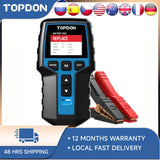 TOPDON BT200 Battery Tester
$103.99Low voltage affects solenoid operation — test the battery.


How the Slip Test Works
MOTOR magazine's June 2006 article on P1870 explains the strategy well. The PCM monitors the upshifts first. Only once the truck reaches a cruise state with the converter clutch commanded on in high gear does it start watching the cruise ratio. If slip appears, P1870 sets and the PCM:
- raises main line pressure to stop further slippage and protect the transmission,
- stops converter clutch apply,
- in some cases inhibits fourth gear, and
- may or may not turn on the check engine light.
The raised line pressure is why a P1870 truck so often comes in complaining of a hard 1-2 shift. The transmission is not shifting badly because it is broken in first and second; it is shifting firmly because the PCM is deliberately commanding high pressure after seeing slip at cruise.
The same article explains why the converter clutch on these trucks rarely feels like it "locks." From 1995 a pulse-width-modulated (PWM) TCC solenoid was added so the clutch applies gradually. From partial coverage in 1997 and on 1998-and-later vehicles, GM moved to an electronically controlled capacity clutch (ECCC) strategy that keeps the converter clutch slipping deliberately — MOTOR describes a constant 20 to 40 rpm slip, brought below 10 rpm after a later reflash. MOTOR warns that an earlier-design converter clutch will not survive the later strategy — worth knowing if your GMC has had a converter replaced.
The Valve Body Story
MOTOR's experience on the 4L60-E is that most P1870s trace to converter clutch failure caused by valve body concerns, specifically wear. The isolator valve and TCC regulator valve sit in a bore in the valve body. MOTOR puts the valve-to-bore clearance at about 0.001 inch and the transmission's filter at 60 microns — so particles small enough to pass the filter still act as an abrasive. The valves are side-loaded, GM added ring grooves to reduce that, but the bore still wears. Once it does, regulated converter clutch apply pressure drops and the clutch slips at cruise: P1870.
The same article names other valve-body suspects:
- the actuator feed limit valve, which feeds the PWM solenoid — if its pressure is low, the PWM solenoid cannot raise converter apply pressure enough;
- the TCC on/off solenoid and converter clutch valve, where a problem can stop the valve fully stroking.
For the 4L80-E, MOTOR says P1870 has usually been the result of a cracked converter clutch piston — a torque converter problem rather than a valve body one. That is one reason a 4L80-E Sierra HD and a 4L60-E Sierra 1500 with the same code can need very different repairs.
GMC Bulletins That Name P1870
GM wrote several documents around P1870 on GMC trucks. Most are old enough that NHTSA's index carries only a summary, not the bulletin itself; we have marked those as corroborated.
- 01-07-30-023A/B (2001–2002) — harsh 1-2 upshift with the service engine soon light and P1870 on 1996–2000 Chevrolet and GMC light-duty trucks; NHTSA lists the Sierra and Yukon.
- 02-07-30-001A — diagnostic information on P1870 for 2000–2002 vehicles, later updated to include 2004 models; NHTSA lists the Envoy, Savana, Sierra and Yukon.
- 3047 — 2000–2001 4L80-E with a harsh TCC apply and/or P1870 (Savana, Sierra, Yukon).
- 03-07-30-001 — for the 2003 Envoy: transmission slipping or TCC inoperative with no service engine soon light and no P1870. A slip can exist without this code.
- PIP5340 / PIP5340A (2015–2016) — we read both. After a torque converter or service replacement transmission is installed, a 4L60E/4L65E truck may have the MIL on, a harsh 1-2 shift and P0894 or P1870. GM's instruction: if you duplicate the concern and find either code in the TCM, contact GM technical assistance.
If your Safari, Sonoma, Jimmy, Savana or Sierra set P1870 right after a transmission or converter job, GM treated that as a known post-repair condition worth a call to technical assistance, not proof the new parts failed.
Symptoms of P1870
- Check engine or service engine soon light (not always — the PCM may not request it)
- Harsh or firm 1-2 upshift after the code sets, from commanded high line pressure
- No converter lockup at highway speed; engine rpm a little higher than normal at cruise
- RPM flare or slip in top gear under light throttle or on a grade
- Fourth gear inhibited on some calibrations
- Shudder or a soft "surge" at cruise as the converter clutch slips
- Fluid that smells burnt, if slipping has gone on for a while
Causes and How to Confirm Each
| Cause | How to confirm it | Notes |
|---|---|---|
| Low or degraded fluid | Check level hot by the GM procedure for your transmission; look for burnt smell and debris | Free to check and always first |
| Worn TCC regulator / isolator valve bore (4L60-E) | TCC slip rises at cruise while PWM duty is commanded high; valve body inspection or a vacuum/wet-air test of the bore | The most common 4L60-E cause per MOTOR |
| Actuator feed limit valve wear | Low PWM solenoid feed; same slip pattern; valve body inspection | Another valve body wear point |
| TCC on/off or PWM solenoid, converter clutch valve | Command TCC with a scan tool, check the solenoid circuits, confirm the valve strokes freely | Electrical checks before teardown |
| Torque converter clutch failure | Slip persists with good valve body pressures; converter inspection | Usual 4L80-E cause (cracked piston, per MOTOR) |
| 3-4 clutch or 2-4 band slipping (4L60-E) | Slip shows up with TCC released as well; pressure test | Means an internal repair |
| Wrong converter or calibration after repair | Code appears right after a converter or transmission replacement | GM's PIP5340A: contact technical assistance |
| Engine-side faults stopping lockup | Misfire, coolant temperature or vehicle speed sensor faults present | MOTOR: these can stop TCC apply or mimic a converter buck |
Fluid, filter and solenoid parts
 ACDelco Dexron VI Full Synthetic ATF, 1 Gal
$49.99Dexron VI full synthetic ATF, 1 gallon.
 CARQUEST 85976 Transmission Filter Kit
$22.00CARQUEST transmission filter kit for Cadillac, Chevrolet, GMC and Hummer. Confirm fitment by VIN before ordering.
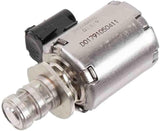 GM Genuine 24248893 Pressure Control Solenoid
$55.34GM Genuine pressure control solenoid. Confirm fitment by VIN before ordering.


How Is P1870 Diagnosed?
- Read all codes with a tool that shows GM descriptors. Note P1870 alongside any converter, speed sensor, misfire or temperature codes, and save the freeze frame.
- Fix engine problems first. A misfire, a bad coolant temperature sensor or a speed sensor fault can change or prevent TCC apply.
- Check fluid level and condition by the GM procedure for your 4L60-E, 4L65-E or 4L80-E.
- Road test with data. MOTOR names the three PIDs that matter: TCC enabled (yes/no), PWM solenoid duty cycle (shown as "ON time" on the 4L60-E) and converter slip rpm. Slip that climbs as duty cycle rises at cruise points at apply pressure or the converter.
- Check the TCC solenoid circuits before condemning hydraulics.
- Inspect the valve body on a 4L60-E — the isolator/TCC regulator lineup and the actuator feed limit valve — for bore wear.
- Consider the converter, especially on a 4L80-E or when slip continues after the valve body checks out.
- Ask a dealer to check the VIN for bulletins, especially if the code followed a transmission or converter replacement.
Parts and Cost
| Repair | What it involves | Cost picture |
|---|---|---|
| Fluid correction and service | Correct level, service fluid and filter where due | The cheapest outcome. Rarely the whole fix if slip is established |
| Solenoid or wiring repair | TCC or PWM solenoid, internal harness or connector | Low to moderate; pan removal |
| Valve body repair (4L60-E) | Ream and sleeve the worn bore with oversized valves, or replace the valve body | Moderate; specialist work, far less than an overhaul |
| Torque converter replacement | Transmission removal; converter must match the TCC strategy | Significant labor |
| Transmission overhaul or replacement | Clutch or band slip confirmed by testing | The expensive end; justify it with tests, not the code |
Torque converter and service parts
 VEGE TQBU52 Torque Converter (2002–2013)
$309.99VEGE remanufactured torque converter for 2002–2013 Chevy and GMC. Confirm fitment by VIN before ordering.
 VEGE TQBU54 Torque Converter (2002–2013)
$419.99VEGE remanufactured torque converter for 2002–2013 Chevy, GMC and Cadillac. Confirm fitment by VIN before ordering.
 GM Genuine 24297922 Transmission Pan Gasket
$46.81GM Genuine transmission pan gasket. Confirm fitment by VIN before ordering.


GM Documents Relevant to P1870 on a GMC
| Document | Subject | Status |
|---|---|---|
| PIP5340A (Feb 2016) | MIL, harsh 1-2 shift and P0894 or P1870 after torque converter or transmission replacement; contact technical assistance | 1998–2004 Jimmy, Safari, Sonoma; 1999–2002 Savana; 1998–2000 Sierra; 4L60E/4L65E — verified |
| PIP5340 (Oct 2015) | Original version of the above (superseded) | Safari, Sonoma, Savana, Sierra — verified |
| 02-07-30-001A | Diagnostic information on DTC P1870, Transmission Component Slipping; updated to include 2004 models | Envoy, Savana, Sierra, Yukon — corroborated (NHTSA summary) |
| 01-07-30-023A / 023B | Harsh 1-2 upshift, service engine soon light, P1870 set; 1996–2000 Chevrolet and GMC light trucks | Sierra, Yukon — corroborated |
| 3047 | 2000–2001 4L80-E harsh TCC apply and/or P1870 | Savana, Sierra, Yukon — corroborated |
| 03-07-30-001 | Slipping or TCC inoperative with no SES light and no P1870 | 2003 Envoy — corroborated |
| 15111 (Jun 2015) | Special coverage: MIL and harsh 1-2 shift with P0741 in the TCM; replace the transmission wiring harness. Does not name P1870 | 2012 Sierra, Savana, Canyon with 4L60E — verified |
Technical background on the slip strategy and valve body wear comes from MOTOR magazine's June 2006 article "Deciphering GM Transmission DTC P1870" and Sonnax's article on GM converter codes. Have a dealer check your VIN against current bulletins and campaigns rather than relying on any article, including this one.
What Other P1870 Pages Get Wrong
- "P1870 means the transmission is done." On a 4L60-E the common cause is a worn valve body bore, which is repairable without an overhaul.
- Blaming the harsh 1-2 shift on first or second gear. The firm shift is the PCM's high-pressure response to slip it saw at cruise.
- Treating every GMC the same. A 4L80-E Sierra HD usually points at the converter; a 4L60-E Sierra 1500 usually at the valve body.
- Applying it to newer GMCs. Later trucks may report P0741 or P0894 instead, and the Acadia and Terrain use different transmissions.
- Assuming no code means no slip. GM's 2003 Envoy bulletin describes slipping and an inoperative TCC with no P1870 at all.
- Ignoring a recent converter swap. GM's PIP5340A singles out P1870 right after a converter or transmission replacement.
For the generic GM picture on converter codes, see our P0741 GM guide.
Frequently Asked Questions
Can I keep driving my GMC with P1870?
Gently and for a short time, yes, but slip creates heat and wears clutches. The PCM's protective response — high line pressure and no lockup — protects the transmission somewhat, but it does not fix anything. Get it diagnosed before a worn valve body becomes a burnt converter clutch.
Why does my Sierra shift hard from 1st to 2nd with P1870?
Because after the PCM sees slip at cruise it raises line pressure to stop further slipping. MOTOR's article explains that this is why P1870 is so often accompanied by a hard 1-2 upshift complaint.
Will a new torque converter fix P1870?
Sometimes — and on a 4L80-E it is often the answer. On a 4L60-E, the converter may be fine and the valve body bore worn, in which case a new converter alone will not stop the code. GM even documented P1870 appearing after converter or transmission replacement on 4L60E/4L65E trucks.
Does my 2015 Sierra use P1870?
Our sources tie P1870 to the 4L60-E, 4L65-E and 4L80-E generation. Sonnax notes some late 4L60-E calibrations set P0741 instead, and GM's 2012 Sierra special coverage describes P0741 in the TCM. On a newer six-, eight- or ten-speed truck, read the actual code with a GM-capable scanner rather than assuming.
Can a fluid change cure P1870?
Correcting low fluid can, if low fluid caused the slip. A fluid change will not repair a worn valve bore or a damaged converter clutch. Be cautious about using a service as a cure-all on a slipping transmission.
What scan data should I ask the shop to show me?
TCC commanded state, PWM solenoid duty cycle and converter slip rpm on a road test at cruise. Slip that rises while the PCM commands more apply pressure tells you the clutch is not holding — and narrows the search to apply pressure or the converter.
Shop Related Parts & Tools
Before buying parts: check fluid, read TCC slip and PWM duty on a road test, and inspect the valve body. Order transmission parts by VIN and transmission RPO.
-
 Launch CRE 2.0 GM All-System Scanner — a GM-focused all-system scanner that shows GM descriptors and TCC data such as slip rpm, so you can see P1870 for what it is.
-
 FOXWELL NT726 Bidirectional OBD2 Scanner — a bidirectional scan tool for watching converter slip and solenoid commands on a road test.
-
 95-Piece Mechanics Tool Set (Metric & SAE) — for pan removal and valve body access on a 4L60-E or 4L80-E.
Related Guides
- P0741: Torque Converter Clutch Stuck Off (GM Guide) — the converter code later trucks use
- P0700 on a GMC: Transmission Control System MIL Request
- How to Fix GMC Transmission Shudder — converter clutch shudder on GMC trucks
- Transmission Service Guide for GM Vehicles
- GM Transmission Problems: Symptoms and Causes