
P2138 on a Cadillac is GM's "Accelerator Pedal Position (APP) Sensor 1-2 Correlation." The two sensors inside the gas pedal disagree, so the engine computer limits power and shows "Engine Power is Reduced." The surprise is how often GM's Cadillac paperwork points away from the pedal. The 2014 ATS had an emission recall (14176) for badly crimped pedal-circuit terminals in a connector behind the right front wheel liner. GM's fleet-wide bulletin starts with water in a connector behind the dash. And on the Escalade, GM's technicians are sent to two inline connectors and a pinched harness before anyone orders a pedal.
Jump to a section: What P2138 means · 2014 ATS: Emission Recall 14176 · 2013–2014 ATS and 2014 CTS: GM engineering's checklist · GM's fleet-wide bulletin: water in the connector · Escalade and CTS-V wiring findings · P2138 is the pedal, not the throttle · Symptoms · Causes and how to confirm each · How it's diagnosed · Parts and cost · GM documents · What other pages get wrong · FAQ
What Does P2138 Mean on a Cadillac?
The accelerator pedal on a modern Cadillac is not connected to the engine by a cable. It is a sensor assembly, and the engine control module (ECM) reads it to decide how far to open the throttle.
A wrong pedal reading could open the throttle when nobody asked, so the pedal holds two separate position sensors, each with its own 5-volt reference, low reference and signal circuit back to the ECM. They are scaled differently, but both rise together as the pedal goes down.
GM's bulletin 07-06-04-019F states the setting condition: a voltage difference between APP sensor 1 and APP sensor 2 that exceeds a predetermined value for more than a calibrated period of time. The ECM responds with reduced power and the check engine light. On the 2014 ATS, GM's recall adds that traction control and StabiliTrak are disabled too.
Notice what the definition says: the two signals disagree at the ECM. Anything between the pedal and the computer — a connector, a crimp, a chafed wire — can create that disagreement. That is exactly where most of the Cadillac bulletins land. For the brand-neutral version of this code, see our Chevrolet P2138 guide; this one covers the Cadillac documents.
2014 ATS: Emission Recall 14176
GM Product Emission Recall 14176 (August 2014, revised as 14176A and then 14176B in January 2015) covers certain 2014 Cadillac ATS models. GM's condition, verified from the bulletin: "the electrical terminals are not properly crimped to the Accelerator Pedal Position (APP) circuits at the engine harness side of an inline electrical connector." The high resistance can set P2138, disable traction and stability control, put the car in reduced power and turn on the MIL.
The connector is X150, the inline body-to-engine harness connector, reached by removing the right front wheelhouse liner. GM's procedure is specific:
- Read the three-digit date code after "NC" on the engine harness tag near the bottom right of the radiator. On four-cylinder cars it is visible from above; on V6 cars GM says it can only be seen from below with the wheelhouse liner removed.
- Harnesses with date codes 182 through 187 get solder added to every gold-plated terminal crimp in cavities 1–6.
- On any date code, all six APP terminals in X150 must be gold plated. Any tin-plated terminal there is replaced with GM's gold-plated terminated lead (19300653).
GM's fleet-wide P2138 bulletin carries a matching instruction: for a 2014 ATS, check the latest version of 14176 before doing anything else. If you own a 2014 ATS with P2138, ask a dealer to run the VIN for 14176 first. It is a recall, so if it shows as open it is the place to start.
Tools for checking the pedal sensors
 FOXWELL NT614 Elite Scanner
$233.69Shows pedal sensor 1 and 2 percentages side by side in live data.
 Launch CRE 2.0 GM All-System Scanner
$159.00GM all-system scanner for Cadillac, Buick and Chevrolet.
 TOPDON BT200 Battery Tester
$103.99Low system voltage can upset sensor reference voltages — test the battery.


2013–2014 ATS and 2014 CTS: GM Engineering's Checklist
While that recall was being prepared, GM engineering issued PIE0291 (March 2014, revised as PIE0291A and PIE0291B by April 2014) for 2013–2014 ATS and the 2014 CTS sedan (VIN A) with the MIL on and P2138 or P06A3 set. It was an information-gathering request, not a repair, and it told technicians not to disconnect anything before calling engineering.
The first versions spelled out what to look at, and the list is a good one for any ATS or CTS of that era:
- Confirm the APP sensor, throttle position sensor, MAF sensor and X150 connectors are seated and locked.
- Look for broken bale levers or pivot pins, corrosion, pushed-out terminals, wire damage and wires pulled taut.
P06A3 appearing alongside P2138 is a clue in itself: it is one of GM's 5-volt sensor reference codes, which points at shared circuits rather than the pedal.
GM's Fleet-Wide Bulletin: Water in the Connector
GM bulletin 07-06-04-019F (November 2017), "Intermittent MIL Illuminated, DTC P2138 with Reduced Engine Power (Repair IP to Body Harness Connector)," applies to 2018 and prior GM passenger cars and light-duty trucks. NHTSA's index files it against nearly every Cadillac of that period, from the 2005 DeVille, STS and XLR through the 2018 ATS, CTS, CT6, XTS, XT5 and Escalade.
GM's cause: water entering the instrument panel-to-body harness connector, which carries the APP signals to the ECM. GM's examples of leak sources are A-pillar seals, sunroof drain lines and windshield or cowl sealing. Its steps:
- Check that no aftermarket equipment is connected to the APP signal or low reference circuits, or to any ECM 5-volt or low reference circuit. GM states plainly that aftermarket equipment can generate P2138.
- If any 5-volt reference codes are set, diagnose those first.
- Find the connector — usually near the left kick panel or inside the instrument panel — find and fix the water leak, and clean or repair corroded terminals.
No parts are listed; the labor operations are for body, plenum and windshield resealing. A Cadillac whose P2138 shows up after rain or a car wash fits this bulletin exactly.
Escalade and CTS-V Wiring Findings
2007–2014 Escalade (PIP3783D, July 2014). GM describes intermittent reduced power with APP codes P2120, P2122, P2123, P2125, P2127, P2128 and/or P2138, often too intermittent to reset on demand. If service information does not find the cause, GM sends technicians to two inline connectors: C109/X109 on the left side of the engine compartment below the underhood fuse block, and C205/X205 under the upper instrument panel trim. The checks are seating, corrosion or water intrusion, terminal seating, terminal tension and crimp quality. If that finds nothing, GM's next step is to recrimp the APP terminals at the pedal and ECM connectors — still not a pedal.
2016 Escalade with the 6.2L L86 (PIP5344, October 2015). Reduced power with 5-volt reference 3 or APP codes, including P2138, traced to a harness pinched on a mounting stud near the left instrument panel junction block. The repair is the damaged circuits.
2009–2012 CTS-V with the automatic (PIP5091, February 2013). A Service StabiliTrak message with codes that can include P2138, caused by the harness chafing at connector X104 on the left rear of the cylinder head or its bracket on cars built before April 2, 2012, when GM changed the routing.
2007 Escalade (08-06-04-012B, November 2008). The NHTSA index summary describes intermittent MIL with APP codes including P2138 and a pedal replacement, noting the condition may be caused by corrosion at the pedal connector. We could read only the summary, so treat it as corroborated. It is the one Cadillac document in this guide where the pedal itself is the repair.
P2138 Is the Pedal, Not the Throttle
GM uses the same two-sensor design in the throttle body, and that sets a different code:
- P2138 — the two sensors in the accelerator pedal circuit disagree.
- P2135 — the two sensors in the throttle body disagree. Cadillac's throttle body coverages (14582 for CTS/SRX, 11273 for Escalade) are written against P2135, not P2138. See our P2135 Cadillac guide.
A throttle body sold for a P2138 is the wrong part. Where they overlap is the 5-volt reference: our P0641/P0651 guide explains why GM diagnoses reference codes first. On older GM vehicles the pedal correlation fault had its own number; see our P1271 guide.
Reduced power is the right response when the computer cannot trust the pedal, but it arrives without warning and can leave you short of acceleration in traffic. Restarting may restore power for a while. That is not a repair.
Symptoms of P2138
- "Engine Power is Reduced" message and limited acceleration
- Check engine light on, often intermittently
- Traction control and StabiliTrak disabled, or a "Service StabiliTrak" message (2014 ATS recall; 2009–2012 CTS-V)
- Fault appearing after rain or a car wash
- Power returning after a restart, then the fault coming back
- Companion codes P2122/P2123 or P2127/P2128 (individual pedal sensor circuits), or 5-volt reference codes such as P06A3
Causes and How to Confirm Each
| Cause | How to confirm it | Notes |
|---|---|---|
| Poorly crimped or tin-plated terminals at X150 | Dealer VIN check for 14176; inspect cavities 1–6 behind the right front wheelhouse liner | 2014 ATS emission recall |
| Water or corrosion at the IP-to-body connector | Look for water staining at the left kick panel; inspect and clean terminals | GM's fleet-wide finding (07-06-04-019F). Fix the leak too |
| Inline connector faults (C109/X109, C205/X205) | Check seating, tension and corrosion; voltage-drop test APP circuits while moving the harness | 2007–2014 Escalade (PIP3783D) |
| Pinched or chafed harness | Inspect at the left IP junction block stud (2016 Escalade) or X104 bracket (2009–2012 CTS-V) | PIP5344, PIP5091 |
| Shared 5-volt reference fault | Reference codes present; unplug sensors on the same circuit one at a time | GM: diagnose 5-volt codes first |
| Aftermarket equipment | Remote starters, throttle controllers or accessories spliced into pedal or reference circuits | GM names this explicitly |
| Internal pedal sensor failure | Slow and fast pedal sweeps on a scan tool show one sensor dropping out with wiring proven good | Replace the pedal assembly by VIN |
Pedal and throttle parts
 ACDelco Accelerator Pedal 25832864
$141.99ACDelco accelerator pedal assembly 25832864. Confirm fitment by VIN before ordering.
 ACDelco Direct-Injection Throttle Body 12670981
$261.99ACDelco throttle body for direct-injection GM engines. Confirm fitment by VIN before ordering.
 ACDelco Throttle Body 12679524
$343.99ACDelco throttle body 12679524. Confirm fitment by VIN before ordering.


How Is P2138 Diagnosed?
- Confirm it is P2138, not P2135. Pedal versus throttle decides the part.
- Record every code. Diagnose any 5-volt reference codes first.
- Check the VIN. On a 2014 ATS, 14176 comes before anything else.
- Look for aftermarket equipment tied into the pedal or reference circuits.
- Inspect for water at the left kick panel and the IP-to-body connector, and find the leak source.
- Inspect the model-specific connectors — X150 on ATS and 2014 CTS, C109/X109 and C205/X205 on 2007–2014 Escalade, X104 on CTS-V.
- Watch APP 1 and APP 2 on a scan tool through slow and fast pedal sweeps while moving the harness.
- Test the reference, low reference and signal circuits, including terminal tension with the correct test probes.
- Replace the pedal assembly only when the fault follows the pedal, then clear the code and road test — after rain or a wash if it was intermittent.
Parts and Cost
| Repair | What it involves | Cost picture |
|---|---|---|
| Recall terminal repair (2014 ATS) | Solder or replace X150 APP terminals per 14176B | No charge if the recall is open on your VIN |
| Connector cleaning and leak repair | Clean or repair terminals and reseal the water source | Often the real fix; mostly labor |
| Harness or terminal repair | Chafed, pinched or poorly crimped APP wiring | Modest to moderate |
| Accelerator pedal assembly | When testing confirms an internal sensor fault; the sensors are not serviced separately | Moderate part, easy installation |
| Throttle body sold for P2138 | What happens when P2138 and P2135 are confused | Money spent with the fault still present |
For the repair
 ACDelco 2-Pin Replacement Connector PT3739
$90.99Two-pin replacement connector for a corroded harness connector. Confirm fitment by VIN before ordering.
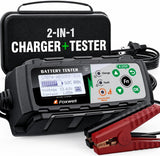 FOXWELL BC521 Battery Charger & Tester
$162.35Keep battery voltage steady while relearning the throttle.
 ACDelco Throttle Body Repair Kit 217-2894
$152.99ACDelco throttle body repair kit. Confirm fitment by VIN before ordering.


GM Documents That Name P2138 on a Cadillac
| Document | Subject | Status |
|---|---|---|
| Emission Recall 14176B (Jan 2015) | Improperly crimped APP terminals at X150; P2138, traction/stability disabled, reduced power. Date codes 182–187 soldered; tin terminals replaced with gold-plated lead 19300653 | Certain 2014 ATS — verified (also 14176 and 14176A) |
| PIE0291 (Mar 2014; A and B revisions to Apr 2014) | Engineering information: MIL with P2138 or P06A3. Check APP, TPS, MAF and X150 connectors; contact engineering before disconnecting | 2013–2014 ATS, 2014 CTS sedan (VIN A) — verified |
| 07-06-04-019F (Nov 2017) | Intermittent MIL, P2138 with reduced power. Water in IP-to-body connector; check aftermarket equipment; 5-volt codes first; 2014 ATS: see 14176 first | 2018 and prior GM cars and light trucks — verified |
| PIP3783D (Jul 2014) | SES, reduced power and APP codes including P2138. Inspect C109/X109 and C205/X205; recrimp APP terminals | 2007–2014 Escalade — verified |
| PIP5344 (Oct 2015) | Reduced power with 5-volt reference 3 or APP codes including P2138; harness pinched at left IP junction block stud | 2016 Escalade (6.2L L86) — verified |
| PIP5091 (Feb 2013) | Service StabiliTrak with powertrain codes including P2138; harness chafe at X104 | 2009–2012 CTS-V, automatic (MYD), built before 4/2/2012 — verified |
| 08-06-04-012B (Nov 2008) | Intermittent MIL with APP codes including P2138; replace accelerator pedal; corrosion at pedal connector | 2007 Escalade, ESV, EXT — corroborated (index summary) |
| 05-06-04-032 (2006) | Reduced power with one or more of P0121, P0221, P2119, P2122, P2138, P2176 | 2004 CTS and SRX — corroborated (index summary) |
Have a dealer check your VIN against current coverages rather than relying on any article, including this one.
What Other P2138 Pages Get Wrong
- Going straight to the pedal. Almost every Cadillac document here fixes a connector, a crimp or a harness first.
- Missing the ATS recall. A 2014 ATS with P2138 should be checked for 14176 before any diagnosis.
- Replacing the throttle body. P2138 is the pedal circuit. Cadillac's throttle body coverages use P2135.
- Ignoring the weather. GM's fleet-wide fix is a water leak into a connector behind the dash.
- Ignoring accessories. GM says aftermarket equipment can generate P2138.
- Skipping the 5-volt codes. P06A3 or another reference code alongside P2138 points at a shared circuit.
Frequently Asked Questions
Can I drive my Cadillac with P2138?
Only as far as you need to. Reduced power can come on without warning and limit acceleration. On a 2014 ATS it can also disable traction and stability control. Get it checked rather than commuting on it.
Is P2138 the gas pedal or the throttle body?
The pedal circuit. P2138 means the ECM sees the two pedal sensor signals disagree. The throttle body version is P2135.
My 2014 ATS has P2138. Is there a recall?
Certain 2014 ATS models are covered by Emission Recall 14176 for improperly crimped pedal-circuit terminals in connector X150. A dealer VIN check will show whether yours is involved and whether it has been done.
Why does my Cadillac's P2138 come and go with rain?
GM's 07-06-04-019F describes water entering the instrument panel-to-body harness connector from A-pillar, sunroof drain or windshield leaks. On 2007–2014 Escalades, GM also lists water intrusion at inline connectors C109/X109 and C205/X205.
Can a remote starter cause P2138?
GM's bulletin says aftermarket equipment connected to the pedal signal or the ECM's reference circuits can generate P2138. If something was installed around the time the code started, check its wiring first.
Where is connector X150 on an ATS?
Behind the right front wheelhouse liner, according to GM's recall procedure. It is the inline body-to-engine harness connector, black with a grey lever lock, and the pedal circuits are cavities 1 through 6.
Shop Related Parts & Tools
Confirm it is P2138, not P2135, check your VIN for recall 14176 on a 2014 ATS, and inspect connectors for water before buying a pedal. Pedal assemblies are VIN-specific.
-
 FOXWELL NT301 OBD2 Scanner — shows APP sensor 1 and 2 live so you can sweep the pedal and wiggle the harness — the core P2138 test.
-
 ACDelco Accelerator Pedal Assembly 23362231 — an ACDelco accelerator pedal assembly whose listing names Cadillac. Pedal part numbers vary by model and year, so confirm fitment against your VIN — and replace it only after the connectors and wiring check out.
-
 95-Piece Mechanics Tool Set (Metric & SAE) — for kick panel trim, wheelhouse liner fasteners and pedal mounting bolts.
Related Guides
- P2135 Code on a Cadillac: Throttle Position Sensor 1-2 Correlation — the throttle-side code
- P2138 Code on a Chevrolet: Accelerator Pedal Position Sensor 1-2 Correlation
- P1271 Code: Accelerator Pedal Position Sensor 1-2 Correlation — the older GM equivalent
- P0641 & P0651: 5-Volt Sensor Reference Circuit
- P2138 Code on a Buick: Accelerator Pedal Position Sensor 1-2 Correlation