
P2635 is Fuel Pump "A" Low Flow / Performance. On a GM vehicle it means the fuel pump control module commanded a fuel pressure, watched the fuel pressure sensor, and did not get what it asked for. It refers to the low-pressure in-tank pump, not the high-pressure direct injection pump on the engine. And before you spend a penny on it, there is something specific you need to check — because on a lot of GM trucks and SUVs, the part this code most often lands on has been the subject of three separate GM campaigns.
Jump to a section: Check this before you pay · What P2635 actually means · How the system works · What sets the code · The free checks, in order · Causes and how to confirm each · The companion codes that tell you where to look · Symptoms · The module nobody tests before condemning the pump · What it costs · Is it safe to drive? · What other pages get wrong · A note on sourcing · FAQ
Check This Before You Pay
This is the most valuable thing on the page, so it goes first.
P2635 diagnosis on GM vehicles frequently lands on the fuel pump control module — the unit that drives the in-tank pump. That component has been the subject of three GM field actions since 2021:
- Safety recall N212332040 / NHTSA 21V739 (September 2021) — 2021 Escalade, Escalade ESV, Suburban, Tahoe, Yukon and Yukon XL. GM described a supplier manufacturing defect that can cause the fuel pump to fail or operate intermittently, with unexpected stalling as the risk.
- Emission recall N252516900 (September 2025) — a much broader list of 2021–2023 Buick, Cadillac, Chevrolet and GMC models, on a phased launch, with more VINs opened in January 2026.
- Emission recall N262558690 — phased, expanded in August 2026 to add 2022–2023 Chevrolet Silverado.
So before you authorise a paid repair, have a GM dealer check your VIN. Our page on emission recall N262558690 covers the detail.
And here is the trap: emission recalls do not appear in a NHTSA VIN lookup. Checking NHTSA.gov, seeing nothing, and concluding you are clear is exactly how owners end up paying for covered work. Ask the dealer to check IVH in GM's warranty system, which shows field actions of every type.
This does not mean your P2635 is a recall item. Plenty are not, and the code has several other causes. But the check is free, takes one phone call, and the downside of skipping it is paying for a module GM would have replaced.
What P2635 Actually Means
P2635 is a performance code, not a circuit code. That distinction shapes the entire diagnosis.
A circuit code — an open, a short, a voltage out of range — tells you something electrical is wrong and points at wiring. A performance code says the electrical side looks fine but the result is wrong. The module asked for a pressure. It did not get it. Nothing failed in an obvious, measurable way.
Which means P2635 will not tell you what is broken. It tells you the fuel system is not delivering, and leaves you to determine whether that is the pump, the module driving it, the sensor reporting on it, the wiring between them, or a restriction in the fuel path.
Critically: this is the low-pressure side. On direct-injected GM engines there are two fuel pumps — the in-tank low-pressure pump that feeds the engine, and the engine-mounted high-pressure pump that feeds the injectors. P2635 is about the first one. Codes concerning the high-pressure side, like P0087, are a different conversation even though the symptoms overlap.
Tools for testing fuel delivery
 FOXWELL NT614 Elite Scanner
$233.69Shows desired-versus-actual fuel pressure in live data.
FOXWELL NT614 Elite Scanner
$233.69Shows desired-versus-actual fuel pressure in live data.
 AUTOWN 45-Piece Fuel Pressure Tester
$44.99Fuel pressure tester kit for a mechanical pressure check.
AUTOWN 45-Piece Fuel Pressure Tester
$44.99Fuel pressure tester kit for a mechanical pressure check.
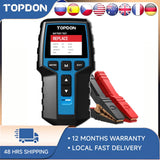 TOPDON BT200 Battery Tester
$103.99Low voltage slows the fuel pump — test the battery first.
TOPDON BT200 Battery Tester
$103.99Low voltage slows the fuel pump — test the battery first.
 FOXWELL NT301 Code Reader
$68.82Budget code reader with live data.
FOXWELL NT301 Code Reader
$68.82Budget code reader with live data.


How the System Works
Understanding this makes the diagnosis obvious rather than guesswork, because every element in the loop is a suspect.
GM's in-tank pump is not a simple on/off device. It runs on a closed loop with four participants:
- The ECM supplies voltage to the fuel pump control module when it detects the ignition is on. That voltage remains active for about 2 seconds unless the engine is cranking or running.
- The fuel pump control module closes the ground switch for the fuel pump, bringing it to life.
- The fuel pressure sensor reports actual pressure back to the module.
- The module varies pulse-width-modulated current to the pump to hold the commanded pressure, adjusting continuously as demand changes.
That is a feedback loop, and feedback loops fail in more ways than one.
The pump may be weak and genuinely unable to make the pressure. The module may be failing and not driving the pump correctly. The sensor may be lying — reporting a pressure that is not real, so the module believes it has failed when it has not. The wiring may be adding resistance so the pump gets less than the module thinks it is delivering. Or the fuel path may be restricted, so the pump works properly but flow does not arrive.
Every one of those produces the same code. Which is why replacing the pump on the strength of P2635 alone is a coin flip.
What Sets the Code
GM's threshold is specific, and knowing it helps you interpret live data.
The code sets when the fuel pump control module detects a deviation of roughly ±60 kPa (about 8.7 PSI) against a 400 kPa (about 58 PSI) commanded pressure. A second, tighter threshold of around ±45 kPa applies at another operating point, though we do not have the full parameter set.
Two things follow from that number.
The tolerance is not tight. Roughly 15% deviation from the commanded pressure is required. A system that is marginal but coping will not set this code — which is why P2635 often appears late, after a period of driveability complaints nobody could pin down.
The deviation can run either way. Most people assume "low flow" means pressure below target. But a module comparing commanded against actual can flag a mismatch in either direction, and GM service material has described cases where actual low-side fuel pressure reads substantially higher than desired — which points at the sensor or the control loop rather than a tired pump.
So when you look at live data, do not just check whether pressure is low. Compare desired against actual, and note which way the gap runs. That single observation redirects the diagnosis.
The Free Checks, in Order
Do these before anything else. They cost nothing and they resolve a meaningful share of P2635 complaints.
1. Confirm there is actually fuel in the tank. This sounds insulting and it is not — vehicles have been diagnosed with P2635 while simply low on fuel, or with a faulty fuel gauge reporting a level that is not real. A pump cannot make pressure out of air. Add a known quantity of fuel and see what changes.
2. Check whether your VIN has an open field action. Covered above. One phone call.
3. Pull every code, not just P2635. The companions are where the actual information is — see below.
4. Note the conditions. Does it happen when hot? On GM trucks of the 2010–2017 era, P2635 complaints have been associated with high ambient temperatures — around 100°F and above — with stalling appearing in heat and clearing when things cool. That pattern points at a heat-sensitive electronic failure rather than a mechanically worn pump.
5. Look at desired versus actual fuel pressure on a scan tool. Free if you own a capable tool, and it is the single most informative measurement on this code.
6. Check the module connector for corrosion. The fuel pump control module lives in a hostile position on many GM trucks, and corroded connections are a known failure point.
Causes and How to Confirm Each
| Cause | How to confirm | Notes |
|---|---|---|
| Fuel pump control module failure | Check for communication with the module using a scan tool. A U0109 code is close to a giveaway. Verify power and ground at the module connector. If inputs are good but the pump does not run or runs erratically, the module is suspect | A very common failure point on GM trucks. Inspect for corrosion. Replacement OEM modules require programming to the VIN |
| Fuel pressure sensor | Compare the sensor's live reading against a mechanical gauge. A stuck or implausible reading is the tell. Often accompanied by P018B | The cheap fix people skip. A lying sensor makes a healthy pump look failed |
| Weak or failing in-tank fuel pump | Mechanical pressure test at the rail, plus a volume test. Pressure alone is not enough — a pump can hold static pressure and still fail to deliver flow under load | Age and contamination are the usual drivers. Confirm before condemning — this is the expensive one |
| Wiring, grounds and connectors | Voltage drop testing on the feed and ground under load, not just continuity checks. Inspect connectors at the tank and at the module | Resistance adds up. A connection that passes a continuity test can still starve the pump under current |
| Restricted fuel filter or lines | Inspect for pinched, kinked or damaged lines. On applications with a serviceable filter, check service history | Many modern GM applications use a non-serviceable in-tank filter, so this is not always a separate item |
| Fuel pressure regulator | Pressure testing across operating conditions to see whether pressure is held as commanded | Application dependent — regulation is integrated on many GM systems |
| Low fuel level or faulty level sensor | Add a known quantity of fuel. Compare gauge reading against actual | Genuinely misdiagnosed as P2635. Rule it out first, for free |
| ECM | Only after everything upstream is verified good | Rare. Treat as a last resort, never a starting point |
Fuel pump and control parts
 ACDelco MU1777 In-Tank Fuel Pump
$252.99ACDelco electric in-tank fuel pump. Confirm fitment by VIN before ordering.
ACDelco MU1777 In-Tank Fuel Pump
$252.99ACDelco electric in-tank fuel pump. Confirm fitment by VIN before ordering.
 Dorman 601132 Fuel Pump Module (2007–2009)
$218.99Dorman fuel pump module for 2007–2009 GM vehicles. Confirm fitment by VIN before ordering.
Dorman 601132 Fuel Pump Module (2007–2009)
$218.99Dorman fuel pump module for 2007–2009 GM vehicles. Confirm fitment by VIN before ordering.
 ACDelco Fuel Pump Control Module 13565642
$113.99ACDelco fuel pump control module 13565642. Confirm fitment by VIN before ordering.
ACDelco Fuel Pump Control Module 13565642
$113.99ACDelco fuel pump control module 13565642. Confirm fitment by VIN before ordering.
 ACDelco Fuel Pump Driver Module 20875846
$178.99ACDelco fuel pump driver module. Confirm fitment by VIN before ordering.
ACDelco Fuel Pump Driver Module 20875846
$178.99ACDelco fuel pump driver module. Confirm fitment by VIN before ordering.


The Companion Codes That Tell You Where to Look
P2635 rarely arrives alone, and what it arrives with is more diagnostic than the code itself.
P018B — Fuel Pressure Sensor Performance. This pairing is common and it is a strong signal. When P018B and P2635 appear together, check the fuel pressure sensor's live data for a stuck or implausible reading before touching the pump. There is a documented case of a 2014 Silverado 5.3L where the in-tank pump was replaced and P2635 remained — while the fuel pressure sensor turned out to be the confirmed fix for the accompanying P018B. That is an expensive lesson available for free.
U0109 — Lost Communication With Fuel Pump Control Module. If this is present, your diagnosis has largely been done for you. The module is not talking. Verify power and ground at its connector, check for corrosion, and if inputs are good the module is the fault. Our U0100 guide covers how GM communication-loss codes behave generally.
P0087 — Fuel Rail System Pressure Too Low. Overlapping symptoms, different system. P0087 concerns rail pressure; P2635 concerns the low-pressure supply. Seeing both narrows things usefully — a low-side supply problem can starve the high-pressure side and produce both.
Fuel trim data. Not a code, but worth reading. Long-term fuel trims tell you what the engine thinks about its fuel supply, and they can point toward a problem that is not the pump at all.
Symptoms
What owners actually report:
- Hard starting or extended cranking, worst after the vehicle has sat
- Hesitation or stumble under acceleration, particularly under load — climbing, towing, merging
- Stalling, sometimes at idle, sometimes while driving
- Rough or unstable idle
- A loss of power or the vehicle entering reduced power mode
- Check engine light
- No-start in the worst cases
The pattern that matters most is intermittency. A fuel delivery fault that comes and goes is far more dangerous than one that simply stops the vehicle in the driveway — because the failure you cannot predict is the one that happens while you are merging onto a highway.
Symptoms that appear in heat and clear when the vehicle cools point strongly toward the electronic side rather than a worn pump.
The Module Nobody Tests Before Condemning the Pump
Worth its own section, because this is where most money gets wasted on P2635.
Dropping a fuel tank is a substantial job. It is heavy, awkward, involves live fuel, and on many GM trucks the practical approach is lifting the bed rather than lowering the tank. Between parts and labour it is the most expensive path this code offers.
The fuel pump control module is comparatively accessible and is a documented common failure point on GM trucks. It fails through corrosion and heat, and when it does the pump beneath it is usually perfectly healthy.
So the sequence that saves money is:
- Verify the module is communicating and has good power and ground
- Verify the fuel pressure sensor is telling the truth against a mechanical gauge
- Verify the wiring with voltage drop testing under load
- Then, and only then, test the pump for pressure and volume
On module replacement: ACDelco has consolidated several earlier part numbers — 23103795, 23172742 and 23200138 — into 23482933. Confirm the correct part against your VIN, since supersessions and applications vary. OEM modules require programming to the vehicle's VIN, so this is not a plug-and-play part for most home mechanics.
What It Costs
| Repair | Typical parts | Notes |
|---|---|---|
| Covered by a GM field action | $0 | Check first. Parts and labour covered if your VIN qualifies |
| Fuel pressure sensor | Low | Often the actual fix when P018B is present |
| Wiring or connector repair | Low | Labour-dependent; corrosion at the module connector is common |
| Fuel pump control module | Moderate | Requires VIN programming on OEM parts |
| In-tank fuel pump assembly | High | Tank removal or bed lift. The one to confirm before committing |
| Diagnostic time | — | Independent shops commonly charge in the region of $150 for check engine light diagnosis |
We are not publishing precise parts prices, because they vary substantially by model, engine and supplier, and stale numbers are worse than none. The ranking is what matters: the sensor is cheap, the module is moderate, the pump is expensive, and the field action check is free.
Sensors and service parts
 ACDelco Fuel Pressure Sensor 12651990
$138.99ACDelco GM fuel pressure sensor. Confirm fitment by VIN before ordering.
ACDelco Fuel Pressure Sensor 12651990
$138.99ACDelco GM fuel pressure sensor. Confirm fitment by VIN before ordering.
 BG 44K Fuel System Cleaner
$24.95BG 44K fuel system cleaner.
BG 44K Fuel System Cleaner
$24.95BG 44K fuel system cleaner.
 ACDelco 2-Pin Replacement Connector PT3739
$90.99Two-pin replacement connector for a corroded pump connector. Confirm fitment by VIN before ordering.
ACDelco 2-Pin Replacement Connector PT3739
$90.99Two-pin replacement connector for a corroded pump connector. Confirm fitment by VIN before ordering.
 Nomex Split Loom, 1 in. x 10 ft
$105.66Split loom to protect a repaired harness.
Nomex Split Loom, 1 in. x 10 ft
$105.66Split loom to protect a repaired harness.


Is It Safe to Drive?
Treat P2635 as urgent rather than routine.
The failure mode is fuel starvation, and the consequence is stalling. A vehicle that quits in traffic, on a highway, or while turning across oncoming lanes is a genuine hazard — and GM said as much in its own recall language on this component family, describing a stall without warning as increasing crash risk especially at high speeds.
Practical guidance:
- Get it diagnosed promptly rather than driving on it for weeks
- Avoid towing and heavy loads until it is resolved, since demand is highest exactly when supply is marginal
- Keep more fuel in the tank than usual — a low tank makes a marginal supply worse
- If it has already stalled while driving, stop using it until it is fixed
Running an engine that is starved of fuel is also not good for it over time, so there is a mechanical argument alongside the safety one.
What Other Pages on P2635 Get Wrong
- Not mentioning the GM field actions. This is the single most useful thing an owner of an affected GM vehicle can know, and it is absent from essentially every generic write-up. The component has been covered by three campaigns since 2021.
- Sending people to NHTSA.gov to check. Two of the three campaigns are emission recalls, which do not appear there. A clear NHTSA result is not a clear answer.
- Treating it as "replace the fuel pump." It is a performance code in a feedback loop with four participants. The pump is one suspect and the most expensive one — there is a documented case of a Silverado where the pump was replaced and the code stayed.
- Ignoring P018B. The pairing is common and it points at the fuel pressure sensor. Checking sensor live data against a mechanical gauge costs nothing and can save a tank drop.
- Skipping U0109. If the module is not communicating, the diagnosis is nearly finished. That code is close to an answer in itself.
- Assuming low pressure. The module compares desired against actual and can flag a deviation in either direction — actual reading higher than desired redirects you to the sensor or control loop, not the pump.
- Publishing generic multi-brand advice. Manufacturer definitions of P2635 differ, and GM's implementation — an ECM-enabled, PWM-driven, closed-loop in-tank pump — determines the whole diagnostic path.
- Not saying to check the fuel level. Vehicles have genuinely been diagnosed with this code while low on fuel or carrying a faulty gauge.
A Note on Sourcing
We cite documents we have read and label the rest.
The GM field action details — recall N212332040 / NHTSA 21V739 and emission recalls N252516900 and N262558690 — come from GM bulletins and NHTSA material we read directly for our recall coverage, including GM's own description of the fuel pump failing or operating intermittently and its stall-risk language.
The system description, the ±60 kPa at 400 kPa set threshold, the PWM control strategy and the 2-second ECM voltage behaviour come from published GM service information as reproduced by diagnostic references. We did not open GM Service Information directly, and we do not have the complete parameter set — a second threshold around ±45 kPa exists at another operating point which we cannot fully specify.
The P018B pairing, the U0109 relationship, the module corrosion pattern, the heat-related complaints on 2010–2017 trucks, the Silverado case where pump replacement did not clear the code, and the ACDelco part supersession chain come from technician and owner reporting compiled by diagnostic references. Treat these as strong field patterns rather than GM-published findings.
We have deliberately not published specific parts prices, as they vary too much by application to be useful.
Always confirm part numbers and diagnostic procedures against your VIN.
Frequently Asked Questions
What does P2635 mean?
Fuel Pump "A" Low Flow / Performance. On a GM vehicle the fuel pump control module commanded a fuel pressure, monitored the fuel pressure sensor, and did not get the result it asked for. It concerns the low-pressure in-tank pump, not the high-pressure pump on the engine.
Does this mean I need a fuel pump?
Not necessarily, and assuming so is how people spend the most money. P2635 is a performance code covering a feedback loop with several participants — the pump, the control module, the fuel pressure sensor, the wiring and the fuel path. There is a documented case of a Silverado where the in-tank pump was replaced and P2635 remained.
Could this be covered by a recall?
Possibly, and it is worth one phone call to find out. The fuel pump control module has been covered by three GM campaigns since 2021 — safety recall N212332040 in 2021, and emission recalls N252516900 and N262558690. Ask a GM dealer to check your VIN in IVH before authorising any paid repair.
I checked NHTSA and there's nothing on my VIN.
That does not settle it. Two of the three campaigns on this component are emission recalls, which run through a different regulatory channel and may not appear in a NHTSA VIN lookup. GM's own warranty system, IVH, shows field actions of every type — ask a dealer to check it.
What should I check first?
Fuel level, genuinely — vehicles have been diagnosed with this code while low on fuel or with a faulty gauge. Then check for open field actions on your VIN, pull all codes rather than just P2635, and look at desired versus actual fuel pressure on a scan tool. All of that is free or nearly so.
What other codes should I look for?
P018B points at the fuel pressure sensor and pairs with P2635 often enough to be a strong signal. U0109 means lost communication with the fuel pump control module and is close to a diagnosis in itself. P0087 concerns the high-pressure rail and can appear alongside when a low-side supply problem starves the top end.
Why does it only happen when it's hot?
Heat-related P2635 complaints have been reported on 2010–2017 GM trucks at ambient temperatures around 100°F and above, with stalling appearing in heat and clearing as things cool. That pattern points toward a heat-sensitive electronic failure — the control module or a connection — rather than a mechanically worn pump.
Can I drive with P2635?
Get it diagnosed promptly. The failure mode is fuel starvation and the consequence is stalling, which GM itself described on this component family as increasing crash risk especially at high speeds. Avoid towing and heavy loads, keep more fuel in the tank than usual, and stop driving it if it has already stalled on you.
Can I replace the fuel pump control module myself?
Physically it is more accessible than the in-tank pump, but OEM modules require programming to the vehicle's VIN, which needs capable equipment. Confirm the correct part against your VIN too — ACDelco consolidated several earlier numbers into 23482933, and applications vary.