
U0100 is "Lost Communication With ECM/PCM A." Here is the thing to understand before anyone quotes you a computer: this code is not stored by the ECM. It is stored by the other modules complaining that they cannot hear it. The ECM is the subject of the sentence, not necessarily the culprit — and on GM vehicles the documented causes are overwhelmingly grounds, connectors and chafed wires. One of them is factory sound-deadening insulation trapped under a ground stud.
Jump to a section: What U0100 means · The G218 ground and the insulation mat · Oil wicking into the ECM connector · Documented chafe points and connectors · The gateway module on newer vehicles · Any module can take the network down · Why this one is urgent · A note on sourcing · Symptoms · Causes and how to confirm each · How it's diagnosed · Parts and cost · What other pages get wrong · FAQ
What Does U0100 Mean?
Modern vehicles do not run individual wires between every module. They use a network — the CAN bus, which GM calls GMLAN — where modules broadcast messages that others listen for. Two wires, CAN High and CAN Low, carry the whole conversation.
Every module expects to hear from the ECM regularly. U0100 sets when a module stops hearing those messages. The transmission module, the ABS module, the body control module — any of them can log it.
Which is exactly why the code does not mean the ECM has failed. There are several ways for a module to stop hearing the ECM:
- The ECM is not talking — because it has lost power, lost its ground, or genuinely failed.
- The message is not getting through — a broken, chafed or corroded network wire between them.
- The network itself is down — something is pulling the whole bus low, and nobody can hear anybody.
- The listening module has a problem of its own.
Only one of those four is a bad ECM, and on GM vehicles it is the least likely. The documented causes cluster heavily around power, grounds and connections.
The G218 Ground — and the Insulation Mat That Kills It
This is the single most useful thing on the page, and it is close to free to check.
GM has addressed communication failures across several documents — reported as PIT5405B and PIT5405C — pointing at a specific ground: G218, under the dash. And the cause is not corrosion or a broken wire. It is the vehicle's own construction.
Factory sound-deadening insulation gets trapped under the ground connection. The nut is tight, the eyelet looks fitted, and there is a layer of insulator mat squeezed between the ring terminal and the metal it is supposed to be bonding to. That produces a high-resistance ground that measures acceptable at rest and collapses under load.
GM's reported repair is exactly as simple as it sounds:
- Remove the ground nut and the eyelet.
- Cut or pull back the dash insulator mat so it no longer sits between the terminal and the body.
- Reinstall the eyelet directly against clean metal and torque the nut properly.
The test that proves it: perform a voltage drop test on the ground circuit. Reported specification — it should not exceed 200 mV while cranking. Cranking is the load that exposes a marginal ground; a static reading with no current flowing will pass a bad one every time.
Also worth checking while you are there: whether the nut is simply loose or cross-threaded, which produces the same result.
Why this matters so much: a bad ground does not politely affect one system. It scatters codes across modules that have nothing to do with each other, and it produces exactly the network-wide symptoms that lead people toward an ECM. Check G218 before anyone opens a parts catalogue.
Tools for a communication fault
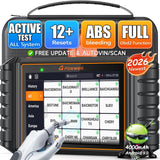 FOXWELL NT726 Bidirectional Scanner
$368.99Scans every module so you can see which ones lost the ECM.
FOXWELL NT726 Bidirectional Scanner
$368.99Scans every module so you can see which ones lost the ECM.
 TOPDON BT200 Battery Tester
$103.99A weak battery is one of the most common causes of U-codes — test it first.
TOPDON BT200 Battery Tester
$103.99A weak battery is one of the most common causes of U-codes — test it first.
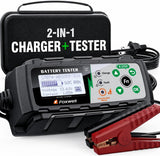 FOXWELL BC521 Battery Charger & Tester
$162.35Charge and maintain the battery during diagnosis and programming.
FOXWELL BC521 Battery Charger & Tester
$162.35Charge and maintain the battery during diagnosis and programming.
Oil Wicking Into the ECM Connector
A destructive and genuinely under-covered cause, and it connects to a problem many GM owners already have.
On the 2.4L Equinox and Terrain, oil from a leaking sensor — commonly an oil pressure switch or a VVT solenoid — does not simply drip and evaporate. It wicks up inside the wiring harness, travelling along the wire strands by capillary action, and arrives inside the ECM connector.
Oil in a module connector shorts the module internally. The result is reported as a no-start or stalling — and, critically, it damages the ECM rather than merely interrupting it.
Three things follow:
- An oil leak on these engines is not just an oil leak. If you have a weeping oil pressure switch or VVT solenoid, it is worth fixing before it finds the harness.
- If U0100 appears alongside a known oil leak, say so. It changes the diagnosis completely, and it is the one scenario where the module genuinely may be damaged.
- Replacing the ECM without fixing the leak repeats the failure. Oil is still travelling up the same harness toward the new connector.
Our P0521 guide covers the oil pressure switch side, and the P0014 guide covers the VVT solenoids. If you have codes from either alongside U0100, treat the combination as significant rather than coincidental.
Documented Chafe Points and Connectors
GM has named specific locations where the network wiring fails, which turns a network hunt into an inspection route.
| Location | What happens | Applies to |
|---|---|---|
| Engine harness at the corner of the engine or valve cover | Chafing that damages the CAN bus wires — reported as circuits 2500 and 2501 | 2010–2017 Equinox and Terrain 2.4L (PI1004A) |
| X411 connector, under the rear of the vehicle near the fuel tank | Corrosion disrupting the network and producing a flood of communication codes | 2010–2017 Equinox and Terrain (PIT5427B) |
| Backed-out terminals or corrosion in a shared connector | Lost communication with the ECM and the transmission module together | GMT900 trucks and SUVs (08-07-30-021H) |
| Accessory wake-up power circuit to the ECM | The ECM does not wake properly, so it never joins the conversation | 2015–2022 Silverado (PIT6198) |
Notice the pattern. Every one of those is a wire or a terminal. None of them is a module. And several are in places nobody would inspect without being told — under the rear of the vehicle near the fuel tank is not where you look for an engine computer problem.
The backed-out terminal case deserves particular mention because it defeats visual inspection. A terminal that has slipped back in its housing looks perfectly seated from outside. Finding it requires a pin drag test — checking each terminal's grip individually — rather than looking at the connector face.
The Gateway Module on Newer Vehicles
On newer GM vehicles there is an extra component in the middle of all this, and it is a documented failure point.
The Serial Data Gateway Module (SDGM) acts as a central hub routing communications between different parts of the network. When it misbehaves, the effect is not subtle — modules across the vehicle lose contact with each other at once.
Two documented conditions:
- Software error or faulty connector terminals in the SDGM causing a complete loss of network communication, reported for the 2018–2024 Equinox under 20-NA-212. Note that a software error means the repair may be a reprogram rather than a part.
- "Logic lock" in the SDGM, reported for 2015–2022 Silverado under PIT5586G — the module effectively hanging rather than failing.
The practical point: on a newer vehicle with a flood of U-codes across unrelated systems, the gateway is a legitimate suspect — and it is worth asking whether a calibration update applies before any module is replaced.
Any Module Can Take the Whole Network Down
A diagnostic principle worth internalising, illustrated by a real case.
A technician working a 2017 Equinox with multiple communication codes measured 1,000 ohms of resistance to ground on a CAN circuit. That is not a dead short — it is the kind of reading that gets dismissed as "wiring looks OK."
They kept going. Disconnecting modules one at a time, methodically, the resistance stayed. The eventual cause was an internal short to ground inside the body control module, pulling the entire network down.
Two lessons:
- A partial short is still a short. A network that is being dragged toward ground through a thousand ohms is a network with a problem, even though nothing reads zero.
- The module at fault need not be the one named in the code. U0100 says nobody can hear the ECM. A different module shorting the bus produces exactly that, and replacing the ECM would have achieved nothing.
This is why network diagnosis is done by systematic elimination rather than by reading a code and buying the part it names.
Why This One Is Urgent
U0100 is not a light to live with, and the reasons are concrete.
When the ECM goes silent, modules that depend on its data stop functioning properly. Reported consequences include:
- No-start — the vehicle simply will not go
- Stalling, including while driving
- Loss of power steering assist
- Erratic shifting, since the transmission module is working without engine data
- Reduced power modes
- Warning lights across multiple systems at once
A stall at speed with power steering gone is a serious situation, and an intermittent network fault is exactly the kind that chooses its own moment. If your vehicle has stalled, lost power steering, or failed to start even once, treat this as a repair to book now.
A Note on Sourcing for This Code
We cite documents we have read and label the rest.
The GM documents referenced here — PIT5405B/C, PI1004A, PIT5427B, 08-07-30-021H, PIT5586G, PIT6198 and 20-NA-212 — are corroborated from technician-facing sources rather than opened by us. What gives them collective weight is that they are consistent and specific: named grounds, named connectors, named circuit numbers, and a named voltage drop threshold.
The 200 mV cranking specification for the ground circuit and the circuit numbers 2500 and 2501 are reported rather than confirmed by us against GM's documentation.
Because so many of these are platform-specific, this is a code where checking your own VIN pays. A dealer can tell you in minutes which of these apply to your vehicle, and that is worth more than any general article — including this one.
Symptoms of U0100
- No-start — the engine cranks but does not run, or does not crank at all
- Stalling, sometimes while moving
- Check engine light, usually with several other warning lights
- A flood of other codes, often U-codes across unrelated modules
- Loss of power steering assist
- Erratic or harsh shifting
- Reduced engine power
- Scan tool unable to communicate with the ECM
- Intermittent door lock or chime behaviour
The multiple-code pattern is diagnostically useful. One module reporting lost communication is different from six modules reporting it. The more systems affected, the more likely the fault is shared — a ground, a supply, or the network itself — rather than anything specific to the ECM.
Causes and How to Confirm Each
| Cause | How to confirm it | Notes |
|---|---|---|
| G218 ground compromised by insulation, or loose | Voltage drop test — reported limit is 200 mV while cranking. Inspect for insulator mat trapped under the eyelet | Check first. Near-free, and GM-documented |
| Oil wicked up the harness into the ECM connector | Separate the ECM connector and look for oil. Trace back to a leaking oil pressure switch or VVT solenoid | 2.4L Equinox and Terrain. Fix the leak or it repeats |
| Chafed CAN wiring at the engine or valve cover | Inspect where the harness passes engine corners. Circuits 2500 and 2501 are reported | PI1004A — corroborated |
| Corroded X411 connector near the fuel tank | Get underneath and inspect the connector at the rear | PIT5427B. Nobody looks here without being told |
| Backed-out or loose terminals | Pin drag test — a backed-out terminal looks perfectly seated | Visual inspection will not find this |
| Weak battery or charging fault | Test the battery and charging system under load | Free, and low voltage produces network chaos |
| Gateway module fault or software | Ask about calibration updates against your VIN before replacing it | SDGM logic lock and software errors are both documented |
| Accessory wake-up power circuit fault | Circuit testing at the ECM supply | PIT6198 — the ECM never wakes to join the network |
| Another module shorting the bus | Systematic disconnection while watching bus resistance | A partial short still counts. The named module need not be the faulty one |
| Failed ECM | Last. After grounds, supplies, wiring, connectors and other modules are excluded | Requires programming. Least likely of the list |
Battery, cable and power-supply parts
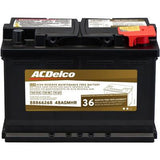 ACDelco Gold AGM Battery, Group 48
$300.99ACDelco Gold AGM battery, Group 48. Confirm fitment by VIN before ordering.
ACDelco Gold AGM Battery, Group 48
$300.99ACDelco Gold AGM battery, Group 48. Confirm fitment by VIN before ordering.
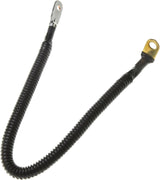 ACDelco 4ST18 Positive Fuse Block Cable
$15.84ACDelco positive battery fuse block cable. Confirm fitment by VIN before ordering.
ACDelco 4ST18 Positive Fuse Block Cable
$15.84ACDelco positive battery fuse block cable. Confirm fitment by VIN before ordering.
How Is U0100 Diagnosed?
- Record every code in every module. The breadth of the code set tells you whether the fault is shared or local.
- Test the battery and charging system. Free, and marginal voltage causes network faults directly.
- Check G218 and the other main grounds — voltage drop under cranking load, not a static reading, and look for insulator mat trapped under the eyelet.
- Inspect the ECM connectors for oil, particularly on a 2.4L with any history of an oil leak.
- Inspect the documented chafe points — the engine harness at engine corners and the valve cover.
- Inspect the connectors GM names, including X411 under the rear of the vehicle.
- Pin drag test the terminals in the relevant connectors rather than inspecting them visually.
- Measure the network — resistance and voltage on CAN High and CAN Low. Note that a partial short is still a fault.
- Disconnect modules systematically if the bus is being dragged down, to find which one is doing it.
- Ask about calibration updates for the gateway module before replacing it.
- Only then consider the ECM, and if oil was found in its connector, fix the leak first.
Parts and Cost
| Repair | What it involves | Cost picture |
|---|---|---|
| Clean up the G218 ground | Remove the nut and eyelet, cut back the insulator mat, reinstall against clean metal | Effectively free in parts. The best possible outcome |
| Tighten or repair a loose ground | Where the nut is loose or cross-threaded | Minimal |
| Connector or terminal repair | Where a backed-out or corroded terminal is found | Modest |
| CAN wiring repair and reroute | Where chafing is found. Reroute clear of the contact point | Modest — and the reroute prevents the repeat |
| Battery or alternator | Where the charging system is the underlying cause | Moderate — far cheaper than a module |
| Fix the oil leak | Oil pressure switch or VVT solenoid, plus cleaning or replacing the affected harness section | Moderate. Not optional if oil reached the ECM |
| Gateway module calibration | Where a software update applies | No parts |
| Gateway module replacement | Where the module itself is confirmed faulty | Significant; requires programming |
| ECM replacement | Last resort, and it must be programmed to the vehicle | The large one. Ask what was tested first |
Modules are configured to the specific vehicle, so order against your VIN and budget for programming as part of any module repair rather than as an extra.
For the repair
 ACDelco Remanufactured ECM
$301.99Remanufactured ACDelco engine control module — only after power, grounds and the data bus test good. Confirm fitment by VIN before ordering.
ACDelco Remanufactured ECM
$301.99Remanufactured ACDelco engine control module — only after power, grounds and the data bus test good. Confirm fitment by VIN before ordering.
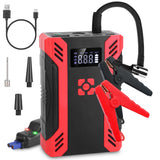 Jump Starter with Air Compressor
$177.99Portable jump starter to keep the truck starting while you track down the fault.
Jump Starter with Air Compressor
$177.99Portable jump starter to keep the truck starting while you track down the fault.
 FOXWELL NT301 Code Reader
$68.82Budget code reader with live data.
FOXWELL NT301 Code Reader
$68.82Budget code reader with live data.


What Other U0100 Pages Get Wrong
- Reading it as "the ECM is bad." U0100 is stored by other modules reporting they cannot hear the ECM. Lost power, a bad ground, a broken network wire, or another module shorting the bus all produce it with a healthy computer.
- Never mentioning G218. GM documents a specific ground under the dash compromised by the vehicle's own sound-deadening mat, with a 200 mV cranking specification to prove it. It is the cheapest check available and it is missing from most write-ups.
- Recommending static ground checks. A high-resistance ground reads fine with no current flowing. Voltage drop under cranking load is what exposes it.
- Missing the oil-wicking cause. On the 2.4L, oil from a leaking sensor travels up the harness into the ECM connector and shorts the module. Replacing the ECM without fixing the leak sends the new one the same way.
- Treating "check the wiring" as advice. GM names locations: engine corners and the valve cover, the X411 connector near the fuel tank, specific circuits. That is an inspection route rather than a suggestion.
- Trusting visual connector inspection. A backed-out terminal looks perfectly seated. A pin drag test is what finds it.
- Dismissing a partial short. A thousand ohms to ground on a CAN circuit is not "wiring looks OK" — it is a network being dragged down, and it can come from inside a module that the code never mentions.
- Calling it drivable. No-start, stalling and loss of power steering assist are all documented outcomes.
Frequently Asked Questions
Does U0100 mean I need a new ECM?
Usually not, and it should be the last conclusion rather than the first. The code is stored by other modules saying they cannot hear the ECM — which happens if the ECM lost power or ground, if a network wire is broken or corroded, or if another module is pulling the bus down. On GM vehicles the documented causes are overwhelmingly grounds, connectors and wiring.
What is G218 and why does it matter?
It is a ground point under the dash that GM has identified in communication fault documents. The notable part is the cause: factory sound-deadening insulation gets trapped between the ring terminal and the body, creating a high-resistance connection that looks perfectly tight. The fix is to cut the mat back so the terminal contacts clean metal.
How do I test a ground properly?
With a voltage drop test under load, not a static resistance check. A bad ground reads fine with no current flowing. The reported specification for this circuit is that voltage drop should not exceed 200 mV while cranking — cranking being the load that exposes it.
Can an oil leak really damage my ECM?
On the 2.4L Equinox and Terrain, yes. Oil from a leaking oil pressure switch or VVT solenoid wicks up inside the wiring harness by capillary action and reaches the ECM connector, where it shorts the module internally. If you have an oil leak on one of these engines, it is worth fixing before it finds the harness — and if oil is already in the connector, the leak must be repaired or a new ECM goes the same way.
Can I drive with U0100?
We would not recommend it. Documented consequences include no-start, stalling while driving, and loss of power steering assist. An intermittent network fault picks its own moment, and losing steering assist mid-corner is a serious situation.
Why do I have so many other codes?
Because when the ECM goes quiet, every module that depends on its data logs a complaint. That breadth is actually useful information — the more unrelated systems affected, the more likely the fault is something shared like a ground, a supply or the network itself, rather than anything specific to one module.
What is the SDGM?
The Serial Data Gateway Module, a central hub routing communication between parts of the network on newer GM vehicles. It is a documented failure point, with both software errors and a "logic lock" condition reported. Because software is involved, ask about calibration updates against your VIN before anyone replaces it.
My mechanic says the wiring looks fine. What now?
Ask two specific questions: was a pin drag test done on the terminals, and was the network measured for resistance to ground. A backed-out terminal looks perfectly seated, and a partial short — around a thousand ohms rather than zero — reads as "fine" to anyone expecting a dead short while still pulling the network down.
Shop Related Parts & Tools
Grounds and battery first — both are close to free to check and both are documented causes. Any module fitted here needs programming, so confirm against your VIN.
-
 VDIAGTOOL BT500 Battery Tester — genuinely first in line on this code. Marginal voltage causes network faults directly, and this tests cranking and charging rather than just resting volts.
-
 MOTOPOWER MP69033 OBD2 Scanner — shows how many modules are complaining, which is the clue that separates a shared ground or supply fault from a single-module problem.
-
 ACDelco Gold Negative Battery Cable — directly relevant here rather than filler: this code is a grounding and connection problem far more often than a module problem. Check fitment for your VIN.
-
 95-Piece Mechanics Tool Set (Metric & SAE) — for under-dash ground access and reaching the connectors GM names, including the one under the rear of the vehicle.
Related Guides
- P1682 Code: Ignition 1 Switch Circuit 2 — module power supply faults and the terminal that causes them
- P0562 Code: System Voltage Low
- P0521 Code: Engine Oil Pressure Sensor/Switch — the leak that can reach your ECM connector
- P0700 Code: Transmission Control System (MIL Request)