
P0014 is "'B' Camshaft Position — Timing Over-Advanced or System Performance, Bank 1." The "B" camshaft is the exhaust cam, and the code means the variable valve timing system ended up further advanced than the module commanded. On GM it appears across three very different engine families, and what GM tells technicians to do differs sharply between them — on one, replace both solenoids as a pair; on another, GM explicitly advises against the swap test most people reach for first.
Jump to a section: What P0014 means · Which engine do you have? · 2.4L Ecotec — replace both solenoids · 3.6L V6 — don't swap the solenoids · The scan-tool discriminator · Superseded part numbers · Why oil is the first check · Symptoms · Causes and how to confirm each · How it's diagnosed · Parts and cost · GM documents · What other pages get wrong · FAQ
What P0014 Means
Variable valve timing lets the module rotate a camshaft relative to the crankshaft, using oil pressure directed by an oil control solenoid into a cam phaser mounted on the end of the cam. The module commands a position, then reads the camshaft position sensor to confirm the cam actually got there.
P0014 sets when the exhaust cam ends up over-advanced relative to what was commanded, or the system does not respond as expected.
The letter and bank convention trips people up, so:
| Code | Camshaft | Bank |
|---|---|---|
| P0011 | "A" — intake | Bank 1 |
| P0014 | "B" — exhaust | Bank 1 |
| P0021 | "A" — intake | Bank 2 |
| P0024 | "B" — exhaust | Bank 2 |
Because VVT runs on oil pressure through very small passages, this is fundamentally an oil-condition code as often as it is a parts code. That is true across every engine below — but what you do after checking the oil depends entirely on which engine you have.
Which Engine Do You Have?
This is the fork that decides everything, and most guides skip it.
| Engine family | Typical vehicles | What GM's guidance looks like |
|---|---|---|
| 2.4L Ecotec (LAF, LEA) | Equinox, Terrain, Malibu, Captiva | Replace both cam solenoids together, plus a module calibration |
| 3.6L V6 (LFX and related) | Equinox, Traverse, Acadia, Enclave, Camaro, CTS | Check for an engine identification sticker; GM advises against swapping solenoids as a test |
| Small block V8 | Silverado, Sierra, Tahoe, Suburban, Yukon, Escalade | Single cam phaser architecture; oil condition and the actuator solenoid dominate |
If you have an Equinox specifically, our P0014 Chevy Equinox guide goes deeper on both the 2.4L and V6 paths with the full bulletin detail. This page is the cross-engine overview.
2.4L Ecotec — GM Says Replace Both Solenoids
On the 2.4L, GM's guidance in 17-NA-098 is more specific than "replace the failed solenoid," and following it saves a repeat visit.
The correction is to replace both camshaft position actuator solenoids as a pair — intake and exhaust — and then reprogram the engine control module. Not just the one the code points at.
That matters because the two solenoids live in the same oil supply and age at the same rate. Replacing only the exhaust solenoid on an engine where sludge has affected both leaves the other one part-way through the same failure — and the calibration step exists because the module's control strategy was updated alongside the hardware.
The practical rule on a 2.4L: budget for both solenoids and the reprogramming, not one solenoid.
There is also a well-documented startup complaint on these engines — a rattle on cold start alongside VVT codes — addressed in GM preliminary information PIP4716F. If your P0014 arrives with a brief rattle when the engine first fires, that is a recognised pattern rather than a coincidence.
3.6L V6 — GM Advises Against the Swap Test
Here the guidance inverts, which is why engine identification matters so much.
The instinctive diagnostic on any solenoid code is to swap the suspect solenoid with its neighbour and see whether the fault follows. On the 3.6L V6, GM preliminary information PIP5096C advises against doing that.
It also directs technicians to check for an engine identification sticker before proceeding, because the correct path depends on which version of the engine is in front of you.
Separately, PIP5162 covers cleaning the solenoid screens on the LFX rather than replacing parts outright — again pointing at oil-borne debris as the mechanism rather than component failure.
So on a V6: identify the engine, clean and inspect before condemning, and do not use the swap test as your diagnostic shortcut. Doing what works on a four-cylinder is actively counterproductive here.
The Scan-Tool Discriminator
There is a free way to confirm which architecture you are dealing with, using nothing but the stored codes.
P0021 and P0024 are bank 2 codes — and bank 2 only exists on a V6 or V8. An inline four-cylinder has a single bank.
- P0011 and P0014 only, never P0021 or P0024 → consistent with a four-cylinder such as the 2.4L Ecotec.
- P0021 or P0024 present or in history → you are on a V-engine, and the V6 guidance above applies rather than the 2.4L guidance.
That takes seconds with any scanner and stops you applying the wrong bulletin's advice to the wrong engine.
Superseded Part Numbers — Check Before You Order
This is worth its own section because the wrong number is still circulating widely, including in older versions of this page.
On the 2.4L Ecotec, the camshaft position actuator solenoids were revised. The older part number 12655421 has been superseded by 12679100, with 12679099 the companion in the current pair.
If you search this code, you will find the superseded numbers quoted confidently on many pages — and ordering against them may get you an obsolete part or a substitution you did not intend.
Order both solenoids against your VIN through a dealer parts department, and treat any number you find in an article — including the current ones above — as a starting point to verify rather than a final answer. Supersessions happen precisely because the original design was revised, which is often relevant to why your part failed.
VVT solenoids and phasers
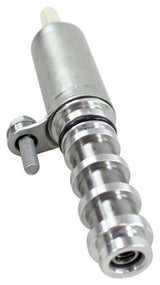 2017 Chevrolet Camaro 2.0L VVT Solenoid
$57.99Solenoids and phasers. Confirm engine. Confirm fitment by VIN before ordering.
2017 Chevrolet Camaro 2.0L VVT Solenoid
$57.99Solenoids and phasers. Confirm engine. Confirm fitment by VIN before ordering.
 2017 Chevrolet Colorado 2.5L VVT Solenoid
$57.99Solenoids and phasers. Confirm engine. Confirm fitment by VIN before ordering.
2017 Chevrolet Colorado 2.5L VVT Solenoid
$57.99Solenoids and phasers. Confirm engine. Confirm fitment by VIN before ordering.
 ACDelco Camshaft Phaser (VVT Actuator)
$237.99Solenoids and phasers. Confirm engine. Confirm fitment by VIN before ordering.
ACDelco Camshaft Phaser (VVT Actuator)
$237.99Solenoids and phasers. Confirm engine. Confirm fitment by VIN before ordering.


Why Oil Is the First Check on Every Engine
Whatever the engine, start here, because it is free and it genuinely resolves cases.
The VVT system works by pushing oil through narrow passages and fine screens. Degraded, sludged, low or wrong-viscosity oil restricts that flow, and the phaser cannot reach or hold the commanded position — which is exactly what P0014 describes.
What to check:
- Level, cold and on level ground.
- Condition — dark and thick is meaningful here in a way it is not for many codes.
- Interval — when was it last changed, and against what specification.
- Viscosity — the grade your engine specifies, not a substitute.
- The solenoid screens, which is where the sludge actually collects.
There is a real cost argument for taking this seriously. An oil service is a fraction of a solenoid job, and a solenoid job is a fraction of a timing chain job — and the same neglected oil that sets this code is what stretches timing chains. Treating P0014 as an early warning rather than an annoyance is the cheapest possible response.
Oil
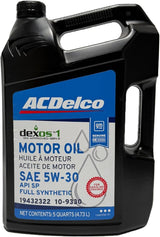 ACDelco 10-9330 dexos1 Gen 3 Full Synthetic 5W-30 Oil
$58.95Correct viscosity matters for cam phasing. Confirm spec. Confirm fitment by VIN before ordering.
ACDelco 10-9330 dexos1 Gen 3 Full Synthetic 5W-30 Oil
$58.95Correct viscosity matters for cam phasing. Confirm spec. Confirm fitment by VIN before ordering.
Symptoms of P0014
- Check engine light on
- Rough idle or vibration at idle
- Hesitation on acceleration
- Reduced power
- Rattle from the timing chain area, particularly on cold start
- Decreased fuel economy
- Hard or rough starting in some cases
- Often P0011 stored alongside
On urgency: short trips are generally tolerable, but this is not a code to sit on for months. If the cause is oil-related, the same condition is wearing the timing chain while you wait — and a chain job costs several times what a solenoid job does. A cold-start rattle alongside the code makes it more urgent, not less.
Causes and How to Confirm Each
| Cause | How to confirm it | Notes |
|---|---|---|
| Degraded, low or sludged oil | Check level, condition, interval and specification | The most common root cause across all three engine families |
| Clogged solenoid screen | Remove and inspect the screen for sludge | PIP5162 covers cleaning screens on the LFX rather than replacing |
| Failed camshaft position actuator solenoid | Command it with a scan tool and watch the cam position response | On the 2.4L, GM's correction replaces both plus a calibration |
| Outdated module calibration | Have the dealer check for updates against your VIN | Part of GM's 2.4L correction, not an optional extra |
| Worn or failing cam phaser | Cam-crank correlation testing after oil and solenoid are excluded | Significant repair |
| Stretched timing chain | Correlation codes such as P0016 alongside; cam timing that will not hold | See our P0016 guide |
| Camshaft position sensor or wiring fault | Inspect the connector and circuit | Less common than the oil-side causes |
| Oil pressure genuinely low | Verify with a mechanical gauge | See our P0521 guide |
How Is P0014 Diagnosed?
- Record every stored code, including history. P0021 or P0024 present means you are on a V-engine and the V6 guidance applies.
- Identify the engine. On the 3.6L, GM asks technicians to check for an engine identification sticker before proceeding.
- Check oil level, condition, interval and viscosity. Free, and it resolves a meaningful share of cases.
- Listen on cold start for a rattle from the timing area.
- Remove and inspect the solenoid screens for sludge before ordering anything.
- On a V6, do not use the solenoid swap test — GM advises against it.
- Command the solenoid with a scan tool and watch the cam position respond.
- Check for an available module calibration against your VIN.
- On the 2.4L, plan for both solenoids plus reprogramming rather than a single part.
- If oil, screens and solenoids are all good, move to cam-crank correlation testing for phaser or chain wear.
Scan tools
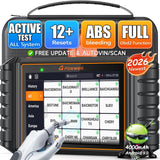 FOXWELL NT726 Bidirectional OBD2 Scanner
$368.99Watch desired vs actual cam angle.
FOXWELL NT726 Bidirectional OBD2 Scanner
$368.99Watch desired vs actual cam angle.
 FOXWELL NT614 Elite OBD2 Scanner
$233.69Watch desired vs actual cam angle.
FOXWELL NT614 Elite OBD2 Scanner
$233.69Watch desired vs actual cam angle.

Parts and Cost
| Repair | What it involves | Cost picture |
|---|---|---|
| Oil and filter service | Correct specification and viscosity | The cheapest outcome, and a genuine fix in many cases |
| Clean solenoid screens | Remove, inspect and clean rather than replace | Minimal — GM's approach on some applications |
| Camshaft actuator solenoids | On the 2.4L, GM's correction is both solenoids. Order against the VIN — older numbers are superseded | Modest parts, short labour |
| Module reprogramming | Part of GM's 2.4L correction | Dealer visit; no parts |
| Camshaft phaser / actuator assembly | Where the phaser itself is worn | Significant — front cover access |
| Timing chain kit | Where chain stretch is confirmed | The major repair, and what neglected oil eventually causes |
Because the phaser and chain sit behind the same cover, inspect both if you are going in. Confirm all part numbers against your VIN.
GM Documents Relevant to P0014
| Document | Subject | Applies to |
|---|---|---|
| 17-NA-098 | Replace both camshaft position actuator solenoids and reprogram the engine control module | 2.4L Ecotec applications |
| PIP5096C | Check for the engine identification sticker; advises against swapping solenoids as a diagnostic test | 3.6L V6 |
| PIP5162 | Clean the camshaft actuator solenoid screens | LFX 3.6L |
| PIP4716F | Engine startup rattle occurring alongside P0014 | Affected applications |
A note on one bulletin you may be pointed at. Special Coverage 16115 is sometimes cited in connection with these engines. It covers LaCrosse and Impala applications — not the Equinox — so check the coverage against your own vehicle rather than assuming it applies. Our P0014 Equinox guide covers that distinction in detail.
Coverage and applicability change over time. Have a dealer check your VIN against current bulletins rather than relying on any article, including this one.
What Other P0014 Pages Get Wrong
- Treating every GM engine the same. GM's guidance genuinely inverts between families — replace both solenoids on one, and expressly avoid the swap test on another. Generic advice will send you the wrong way on at least one of them.
- Recommending the solenoid swap test universally. It is the standard move on many codes, and GM advises against it on the 3.6L V6. Knowing that before you start saves undoing work.
- Publishing superseded part numbers. 12655421 has been superseded. It is still quoted widely, and an earlier version of this page quoted it too — we have corrected that and explained why supersession matters.
- Replacing one solenoid on a 2.4L. GM's correction is both, plus a module calibration. Doing half the job on a shared oil supply invites a return visit.
- Forgetting the calibration. Reprogramming is part of GM's stated correction on the 2.4L, not an upsell.
- Dismissing the cold-start rattle. A rattle alongside this code is a documented pattern and a signal about chain and phaser condition.
- Not saying which bank 2 codes mean. P0021 and P0024 in history tell you instantly whether you are on a V-engine, which decides which guidance applies. That check is free.
Frequently Asked Questions
Will an oil change alone fix P0014?
Sometimes, and it is always the right first step because it costs the least. VVT runs on oil pressure through fine screens and narrow passages, so degraded or low oil genuinely produces this code. If a proper service with the correct specification oil clears it and it stays clear, that was the cause.
What's the difference between P0014 and P0011?
P0014 is the "B" camshaft — the exhaust cam — on bank 1. P0011 is the "A" camshaft, the intake side, on the same bank. They very often appear together because they share an oil supply and a common root cause.
Should I swap the solenoids to test them?
It depends on the engine, which is unusual. On the 3.6L V6, GM's preliminary information advises against swapping solenoids as a diagnostic test. Identify your engine before reaching for that shortcut.
Do I need to replace both solenoids?
On the 2.4L Ecotec, GM's correction is to replace both camshaft position actuator solenoids and reprogram the module. They share an oil supply and age together, so replacing one is often a partial repair.
Is the part number I found online correct?
Check it. The 2.4L solenoid numbers were revised, and the older 12655421 has been superseded by 12679100, with 12679099 as its companion. Superseded numbers are still widely quoted. Order against your VIN through a dealer parts department.
How do I know if my engine is a four-cylinder or a V6 from the codes?
Look for P0021 or P0024, current or in history. Those are bank 2 codes, and bank 2 only exists on a V6 or V8. If they have never appeared, that is consistent with a single-bank four-cylinder.
Is it safe to keep driving with P0014?
Short term, generally yes. The concern is what is happening while you wait: if the cause is oil-related, the same condition wears the timing chain, and that repair costs several times what a solenoid job does. A cold-start rattle alongside the code argues for sooner rather than later.
Does Special Coverage 16115 apply to my Equinox?
That coverage applies to LaCrosse and Impala applications rather than the Equinox, so check your own vehicle's coverage rather than assuming. A dealer can confirm what applies to your VIN in a few minutes and at no cost.
Shop Related Parts & Tools
Oil condition is the first and cheapest check on every engine that sets this code. Always confirm part numbers against your VIN, since the solenoid numbers on these engines have been revised.
-
 ACDelco dexos1 Gen 3 Full Synthetic 5W-30 (1 qt) — VVT runs on oil pressure through fine screens; clean oil at the right grade is the single best preventive measure.
-
 Timing Set, 2010-2017 Equinox 2.0L-2.4L — for the chain job that neglected oil eventually causes on these engines. Confirm fitment for your VIN.
-
 Timing Set, 2014-2020 Cadillac/Chevrolet/GMC 5.3L-6.2L — the V8 equivalent, for applications where chain wear is confirmed.
-
 MOTOPOWER MP69033 OBD2 Scanner — checks for P0021 or P0024 in history, which tells you instantly whether you are on a V-engine and which guidance applies.
-
 ACDelco PF63 Engine Oil Filter — confirm the correct filter for your engine; filtration quality directly affects the screens this code depends on.
Related Guides
- P0014 Chevy Equinox: Meaning, Causes & Fix — the Equinox-specific deep dive
- P0011 Chevy Equinox: Meaning, Causes & Fix — the intake-side companion code
- P0013 Chevy Equinox: Meaning, Causes & Fix — the exhaust solenoid circuit code
- P0016 Chevy Equinox: Meaning, Causes & Fix — crank/cam correlation and timing chain
- Timing Chain Replacement: Meaning, Symptoms & Repair Guide
- GM Check Engine Light Codes: Most Common & What They Mean