
Four accessories are worth buying for a Lyriq or Optiq in the first month: all-weather floor liners, a cargo tray sized to the real load floor, a home Level 2 charger matched to your onboard charge module, and the DC fast-charge adapter your car's port does not cover. Everything else is optional. Here is what fits, what does not, and why the two cars are not interchangeable.
Both are new enough that the aftermarket catalog is still filling in. That is the actual problem Lyriq and Optiq owners run into — a listing says Cadillac SUV and the liner arrives cut for an XT5. Start from interior accessories and floor protection for your Cadillac EV and filter to the exact model year, because Cadillac alone is not a fitment.
Parts and tools you'll need
- All-weather floor liners, cargo trays and interior protection
- Cadillac parts and accessories, filtered to Lyriq or Optiq
- EV charging cables, adapters and cable management
- A tape measure. You will use it more than any tool on this list.
12-volt battery care
 TOPDON BT200 12V Car Battery Tester Digital Automotive
$103.99EVs still rely on a 12-volt battery.
TOPDON BT200 12V Car Battery Tester Digital Automotive
$103.99EVs still rely on a 12-volt battery.
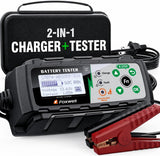 FOXWELL BC521 2-in-1 Battery Charger & Tester, Test Before
$162.35EVs still rely on a 12-volt battery.
FOXWELL BC521 2-in-1 Battery Charger & Tester, Test Before
$162.35EVs still rely on a 12-volt battery.
 FOXWELL BT705 Car Battery Tester 24V 12V, Alternator and Load
$159.89EVs still rely on a 12-volt battery.
FOXWELL BT705 Car Battery Tester 24V 12V, Alternator and Load
$159.89EVs still rely on a 12-volt battery.
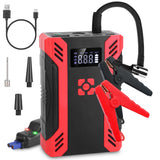 Car Jump Starter with Air Compressor Portable Car Battery
$177.99EVs still rely on a 12-volt battery.
Car Jump Starter with Air Compressor Portable Car Battery
$177.99EVs still rely on a 12-volt battery.

What is different about accessorizing an EV crossover?
Three things: there is no transmission tunnel, so the front floor is flat and liners are shaped differently than in a gas Cadillac; the cargo floor sits over battery and electronics packaging, so it is higher and flatter than you expect; and charging hardware is now an interior storage problem, not just an electrical one.
The flat floor matters more than it sounds. In an XT5 or XT6, the driver and passenger footwells are separated by a tall center tunnel, and liners are molded to wrap it. In a Lyriq, that tunnel is gone and the console is a floating structure. A liner cut for a gas Cadillac will not seat properly, will curl at the inboard edge, and will slide. This is the single most common return in the category.
The second thing is that EV interiors are quieter, which makes rattles and squeaks from loose accessories far more noticeable. A cargo tray that moves around in a gas SUV disappears under engine noise. In a Lyriq you will hear it at every stop sign. Buy things that clip, hook or grip.
How much cargo space does a Lyriq or Optiq actually have?
The Lyriq holds about 28 cubic feet behind the second row and 60.8 cubic feet with the rear seats folded. The Optiq is smaller at 26 cubic feet behind the second row and 57 cubic feet folded. Neither has a front trunk. Both have a covered under-floor bin in the cargo area, and that bin is where your charge cable belongs.
Those numbers matter when you are shopping a cargo liner, because a 60 cubic foot seats-folded liner and a 28 cubic foot behind-the-second-row liner are two different products. Decide first whether you want the trunk area protected or the whole rear of the car protected with the seats down, then order to that.
| Spec | Cadillac Lyriq | Cadillac Optiq | Why it matters for accessories |
|---|---|---|---|
| Cargo behind second row | 28 cu ft | 26 cu ft | Cargo tray and liner sizing; they are not shared parts |
| Cargo, seats folded | 60.8 cu ft | 57 cu ft | Full-length liners and pet platforms are cut to this dimension |
| Front trunk | None | None | Charge cable and gear live in the rear under-floor bin |
| Battery | 102 kWh | 85 kWh | Charge time budgeting for home charger sizing |
| Standard onboard AC charger | 11.5 kW | 11.5 kW | A 48-amp home charger is the matching size |
| Optional onboard AC charger | 19.2 kW available | 19.2 kW available | Only worth buying an 80-amp charger if the car has this |
| DC fast charge peak | 190 kW | 150 kW | Sets expectations for road-trip stops, not accessory choice |
| Max towing | 3,500 lb | 1,500 lb | Rules out most trailers on an Optiq; check before buying a hitch |
The towing row deserves a second look. A Lyriq is rated at 3,500 pounds and an Optiq at 1,500 pounds, so a bike rack, small utility trailer or teardrop that is fine behind one is not automatically fine behind the other. Confirm the rating for your exact configuration in the owner's manual before you spend money on a hitch.
Do Lyriq accessories fit an Optiq?
Mostly no. They are different sizes on different architectures with different interior dimensions. Floor liners, cargo trays, sunshades, seatback protectors and cargo covers are all model-specific. The only category that genuinely crosses over is charging gear, and even there the port type can differ by model year.
This trips people up because both cars share Cadillac's design language and both ride on GM's Ultium-era EV architecture. Shared architecture does not mean shared interior trim. Order to the model name and the model year, every time.
Universal-fit products are the other trap. A universal trimmable cargo mat will physically go in the back of either car, but it will not follow the wheel-well contours, it will not lock to the anchor points, and it will slide under a load. For a vehicle this quiet, that is a daily annoyance. Custom-molded is worth the difference here in a way it is not on a work truck.
Which floor liners should you buy?
Buy laser-measured, high-wall, all-weather liners in a rubberized thermoplastic, and buy the full set — front row, second row, and cargo. The carpeted mats the car came with are fine in a dry climate and hopeless anywhere with snow, salt or a dog. High walls are the whole point; a flat mat just relocates the water.
The category breaks into three tiers. Carpeted premium mats look best and protect least. Molded all-weather liners with raised edges are the practical answer for most owners. Flat rubber trays are cheap, and they are genuinely fine if you mostly need to catch mud in the driver's footwell and nothing else. There is no shame in the cheap option if the cheap option covers your use case.
What actually matters when you compare listings:
- Retention. The liner has to engage the factory floor anchors. A liner that slides forward under the pedals is a safety problem, not a fitment complaint.
- Wall height at the door sill. This is where meltwater runs out onto the carpet.
- Second-row coverage. Some kits cover only the outboard footwells and leave the flat center area bare. On an EV with a flat rear floor, that gap is large and visible.
- Model year range on the listing. Interior changes mid-cycle. A liner listed for 2023–2024 is not automatically confirmed for a later car.
Cargo liners are the same decision with one addition: check whether the liner allows access to the under-floor bin without removing the whole tray. If it does not, you will stop using the bin, and that bin is the best storage in the vehicle.
Interior organizers
 AUTOWN Truck Bed Cargo Net for GMC Sierra & Chevy Silverado
$22.13Universal organizers and mounts for the cabin.
AUTOWN Truck Bed Cargo Net for GMC Sierra & Chevy Silverado
$22.13Universal organizers and mounts for the cabin.
 Universal Car Trunk Organizer Elastic Cargo Net Heavy Duty
$36.14Universal organizers and mounts for the cabin.
Universal Car Trunk Organizer Elastic Cargo Net Heavy Duty
$36.14Universal organizers and mounts for the cabin.
 Heavy Duty Roof Rack Cargo Net PVC Webbing Truck Pickup SUV
$40.09Universal organizers and mounts for the cabin.
Heavy Duty Roof Rack Cargo Net PVC Webbing Truck Pickup SUV
$40.09Universal organizers and mounts for the cabin.
 Car Interior Accessories for 2024 2023 2022 2021 GMC Yukon
$40.50Universal organizers and mounts for the cabin.
Car Interior Accessories for 2024 2023 2022 2021 GMC Yukon
$40.50Universal organizers and mounts for the cabin.


What charging gear does a Lyriq or Optiq owner need at home?
A Level 2 charger sized to your car's onboard charge module. Both cars come standard with an 11.5 kW onboard charger, which pairs with a 48-amp wall unit. Both offer an optional 19.2 kW module, which needs an 80-amp unit to be worth anything. Buying an 80-amp charger for an 11.5 kW car buys you nothing.
That is the most expensive mistake in this category, so be specific about it. The onboard charge module inside the car sets the ceiling. If your car has the standard 11.5 kW module, it will draw 48 amps and no more, regardless of what the wall unit is capable of delivering. Confirm which module your car has before you shop — it is an option, not standard equipment, and both Lyriq and Optiq are sold both ways.
Circuit requirements follow from that. A 48-amp charger is a continuous load and needs a 60-amp branch circuit. An 80-amp charger needs a 100-amp circuit. Very few older residential panels have 100 amps to spare, and the panel upgrade often costs more than the charger. Have a licensed electrician evaluate the service before you order hardware — our home charging equipment checklist covers the circuit sizing and the load calculation in detail.
One detail worth knowing before you pay for the 19.2 kW option: on the Lyriq, Cadillac's own published range figures are lower for the dual-motor car equipped with the 19.2 kW module than for the same car with the standard 11.5 kW module. The heavier charging hardware costs you rated range. If you do not have the electrical service to use 80 amps, the option is working against you.
Which charging adapter does your car need?
It depends entirely on which connector is molded into your car's charge port, and that changed by model year. Cars built with a CCS port need a NACS adapter to use Tesla Superchargers. Cars built with a native NACS (J3400) port need a CCS adapter to use CCS networks. Look at the port before you order either one.
The 2026 Cadillac Optiq and Optiq-V were among GM's first EVs with a native NACS inlet. In August 2026 GM confirmed that all of its EVs across Cadillac, Chevrolet and GMC carry a native NACS port as standard from the 2027 model year, which is when the Lyriq makes the switch. Lyriq owners with earlier cars have a CCS port and need the adapter that goes the other direction.
| Vehicle | Port on the car | Adapter you need for Superchargers | Adapter you need for CCS networks |
|---|---|---|---|
| Lyriq, model years before the NACS switch | CCS1 | NACS DC adapter | None — plugs in directly |
| Lyriq, 2027 and later | NACS / J3400 | None — plugs in directly | CCS adapter |
| Optiq / Optiq-V, 2026 and later | NACS / J3400 | None — plugs in directly | CCS adapter |
| Any earlier Optiq build | Verify at the car | Depends on port | Depends on port |
Do not order from the table alone. Open the charge door and look. It takes five seconds and it is the only fitment check that cannot be wrong. Our guide to which NACS adapter fits which GM EV lists the four GM part numbers and explains why a DC adapter will not work on a Tesla Destination charger.
Two safety notes on adapters, kept short. Use adapters that are certified for DC fast charging if you intend to fast charge with them — AC-only adapters are not the same hardware and will overheat. And never leave an adapter hanging unsupported from the port on a cold day; the weight plus a stiff cable puts load on the port latch.
Where do you put the charge cable?
In the rear under-floor bin. Neither the Lyriq nor the Optiq has a front trunk, so the portable cord set has to live somewhere in the cargo area, and the covered bin under the load floor is exactly the right size for a coiled cable and a bag. Add a cable bag so the connector does not knock against the trim.
This is a small thing that changes how the car feels to live with. A loose 25-foot cord set rolling around a 28-cubic-foot cargo area is the noise you will hear on every corner. A cheap zippered cable bag plus the under-floor bin solves it permanently.
The same logic applies to a cargo organizer. A collapsible divider or a low-sided bin keeps groceries from migrating across that long flat floor. On a fastback-roofline SUV like the Lyriq, the floor is deep and low, which is great for loading and bad for anything that rolls.
What else is actually worth buying?
A short list, in the order most owners end up buying them:
- All-weather floor liner set. First purchase, no debate, especially in a salt state.
- Cargo tray or liner. Second purchase. Get the one that keeps under-floor bin access.
- Home Level 2 charger. Sized to your onboard module, installed on a properly rated circuit.
- The adapter your port does not cover. Buy it before the road trip, not during.
- Seatback protectors. Cheap, and the only thing that stops shoe marks on light-colored second-row seatbacks.
- Sunshade. Both cars have large glass areas; a folding windshield shade does real work on interior temperature.
- Splash guards / mud flaps. Worth it if you park under trees or drive gravel, unnecessary otherwise.
- Cable bag and cargo organizer. The rattle fix described above.
Things that get sold hard and are usually not worth it: universal-fit EV-branded mats, dash covers on a car with this much soft-touch trim already, and stick-on charge port lights. Spend the money on the liner set instead.
Road-trip gear
 DTI-13G Digital Tire Inflator
$85.99Useful gear for long EV trips.
DTI-13G Digital Tire Inflator
$85.99Useful gear for long EV trips.
 Car Tire Inflator Pump Portable Car Air Compressor Corded
$64.99Useful gear for long EV trips.
Car Tire Inflator Pump Portable Car Air Compressor Corded
$64.99Useful gear for long EV trips.
 Tire Inflator 12V DC 100W 150PSI Digital Tire Pump w/LCD
$60.99Useful gear for long EV trips.
Tire Inflator 12V DC 100W 150PSI Digital Tire Pump w/LCD
$60.99Useful gear for long EV trips.
 150PSI Cordless Car Tire Pump 6000mAh Rechargeable Tire
$91.99Useful gear for long EV trips.
150PSI Cordless Car Tire Pump 6000mAh Rechargeable Tire
$91.99Useful gear for long EV trips.


What does not fit
- Lyriq floor liners do not fit an Optiq, and vice versa. Different interiors, different molds.
- Liners cut for a gas Cadillac crossover (XT4, XT5, XT6) do not fit either EV. The floor pan geometry is different.
- A NACS DC adapter is useless on a car that already has a NACS port, and a CCS adapter is useless on a car that already has a CCS port.
- An 80-amp home charger delivers no benefit to a car with the standard 11.5 kW onboard module.
- Front trunk organizers, storage bins and frunk liners sold for other EVs have nowhere to go in either of these cars.
- Hitch-mounted cargo carriers and trailers rated near 3,500 pounds are outside an Optiq's 1,500-pound rating.
What to check before you order
- Model name — Lyriq and Optiq are not interchangeable for anything interior.
- Exact model year, and whether the listing's year range includes it explicitly.
- Which onboard charge module your car has: 11.5 kW or 19.2 kW.
- The connector in your charge port, confirmed visually, before ordering any adapter.
- Your home panel's available capacity, confirmed by an electrician, before ordering a charger.
- Whether a cargo liner still allows under-floor bin access.
- Whether a floor liner set includes the second-row center area or only the outboard footwells.
- Your vehicle's towing rating in the owner's manual before buying any hitch-mounted accessory.
Frequently Asked Questions
Do Lyriq accessories fit an Optiq?
Mostly no. Floor liners, cargo trays, sunshades, seatback protectors and cargo covers are all model-specific — different sizes, different interior dimensions, different moulds. Charging gear is the only category that genuinely crosses over, and even there the port type can differ by model year.
Will a liner made for an XT5 fit a Lyriq?
No, and this is the most common return in the category. A gas Cadillac has a tall centre tunnel that liners are moulded to wrap; the Lyriq's floor is flat with a floating console. A liner cut for the gas car will not seat, will curl at the inboard edge, and will slide.
How much cargo space do the Lyriq and Optiq have?
The Lyriq is about 28 cubic feet behind the second row and 60.8 folded; the Optiq is 26 and 57. Neither has a front trunk. Both have a covered under-floor bin in the cargo area, which is where the charge cable belongs.
What size home charger should I buy?
One matched to your onboard charge module. Both cars come standard with 11.5 kW, which pairs with a 48-amp wall unit on a 60-amp circuit. The optional 19.2 kW module needs an 80-amp unit on a 100-amp circuit. An 80-amp charger on an 11.5 kW car buys you nothing.
Is the 19.2 kW charging option worth it on a Lyriq?
Only if you have the electrical service to use it. Cadillac's own published range figures are lower for the dual-motor Lyriq with the 19.2 kW module than for the same car with the standard 11.5 kW one — the heavier hardware costs rated range. Without 100 amps to spare, the option works against you.
Which charging adapter does my Cadillac EV need?
It depends on the connector in your port. The 2026 Optiq and Optiq-V have a native NACS port, so they need a CCS adapter for CCS networks. Lyriqs before the 2027 switch have CCS and need a NACS adapter for Superchargers. Open the charge door and look before ordering.
When does the Lyriq get a native NACS port?
The 2027 model year. GM confirmed in August 2026 that all its EVs across Cadillac, Chevrolet and GMC carry a native NACS port as standard from 2027. The Optiq got there a year earlier.
Where should I store the charging cable?
In the covered under-floor bin in the cargo area — neither car has a front trunk. Add a zippered cable bag so the connector does not knock against trim. A loose cord set rolling around a quiet EV cargo area is the noise you will hear on every corner.
Can I tow with a Lyriq or Optiq?
The Lyriq is rated at 3,500 lb and the Optiq at 1,500 lb, so something fine behind one is not automatically fine behind the other. Confirm the rating for your exact configuration in the owner's manual before buying any hitch-mounted accessory.
Are universal-fit cargo mats good enough?
Not really, on these cars. A universal trimmable mat physically fits but will not follow the wheel-well contours or lock to the anchor points, so it slides under load. In a cabin this quiet, that is a daily annoyance — custom-moulded is worth the difference here in a way it is not on a work truck.
A Note on Sourcing
Cargo volumes, battery capacities, onboard charger ratings, DC peak rates and towing figures come from Cadillac's published specifications. Towing ratings vary by configuration, which is why this page defers to your owner's manual before any hitch purchase.
The 2027 native-NACS transition comes from GM's own announcement of August 2026, which confirms native NACS as standard across Cadillac, Chevrolet and GMC EVs from the 2027 model year and identifies the 2026 Optiq as already NACS-native.
The observation that the 19.2 kW module costs rated range on the dual-motor Lyriq comes from Cadillac's own published range figures, comparing the same car with each charging module.
The buying priorities and the assessment of what is not worth buying are our own. We sell interior accessories, and the position stated here is that the liner set is worth the money and the universal-fit EV-branded mats, dash covers and charge port lights are not.
Everything in this guide, in one place
Start with floor liners, cargo trays and interior protection and filter to your model and year. Charging cables and adapters are in the EV charging and accessories collection, and everything else Cadillac-specific sits in Cadillac parts and accessories. For more model-by-model breakdowns across the lineup, browse our GM parts and accessories guides.