
Customer Satisfaction Program N252501791 reprograms the telematics control module on the 2023 Cadillac Lyriq and the 2023 Chevrolet Colorado and GMC Canyon. The condition is reduced or intermittent telematics functionality — the systems that connect your vehicle to the outside world. The fix needs no parts, costs nothing, takes 0.8 hours of labour, and has to be done at a dealer. The program runs until 31 August 2028.
Read the primary document yourself: GM Customer Satisfaction Program bulletin N252501791, released 13 August 2026 (PDF), hosted by NHTSA as a manufacturer communication. Includes the service procedure, labour operations, reimbursement terms and customer letter. Read in full.
Correction — there are not two expiry dates.
An earlier version of this page stated that the program expires 31 August 2028 for the Lyriq and 28 August 2028 for the Colorado and Canyon, and built a section around what that three-day gap implied about how GM had scoped the populations. No such split exists. GM's bulletin gives a single date for all three vehicles: "This program is in effect until August 31, 2028." The 28 August date and the reasoning attached to it have been removed.
Two further things have been corrected: GM does send owner letters for this program, where we had suggested nobody may chase you; and there is a documented reimbursement process, which the page did not mention at all.
Jump to a section: What to do · Which vehicles — and one EV catch · What the telematics module actually does · What "reduced or intermittent" looks like · Why a dealer has to do it · The remedy · Reimbursement · Do not let this expire · A note on sourcing · What other pages get wrong · FAQ
What to Do
This will not appear in a NHTSA VIN lookup. It is a Customer Satisfaction Program, not a safety recall, so it has no NHTSA campaign number and GM's own systems are the only place your VIN status shows.
- Ask a dealer to check your VIN in Investigate Vehicle History and name program N252501791. GM's bulletin states IVH must be checked and must show OPEN status before any work begins, and explicitly warns dealers not to use Service Information with a VIN search, because it will not verify eligibility for field actions.
- Check your myCadillac, myChevrolet or myGMC app, which surfaces GM field actions of every type.
- Mention any connectivity problems you have had, even ones you assumed were network coverage or your phone.
No charge, no parts, 0.8 hours of labour.
There is no safety urgency — this does not affect how the vehicle drives or stops. But there is a deadline, which is the unusual part of this one and the reason not to file it away and forget it.
Which Vehicles — and One EV Catch
The program covers three 2023 model year vehicles:
- 2023 Cadillac Lyriq
- 2023 Chevrolet Colorado
- 2023 GMC Canyon
2023 only, and involvement is by VIN. Owning one of these does not mean yours is included.
The pairing is worth noticing. The Lyriq is Cadillac's electric crossover; the Colorado and Canyon are mid-size pickups with combustion engines. Mechanically they have almost nothing in common. What they share is the electronic architecture — and specifically the telematics module — which is exactly the kind of thing that lets one software issue land on two unrelated vehicles. This is increasingly how modern field actions work: software-defined vehicles group by module and platform rather than by what is under the bonnet, which is why campaign lists have stopped looking intuitive.
Now the catch, and it is a real one if you own a Lyriq. GM's bulletin carries an instruction at the top:
For EV Involved Vehicles: The repairs outlined in this bulletin must only be completed at an authorized EV dealer and repairs must be performed by a technician who has successfully completed the applicable technical training required to perform this repair.
GM repeats it in the owner letter: if your vehicle is an EV, confirm with the dealer that they are an EV certified dealer when scheduling.
So Lyriq owners should ask before booking, not on arrival. Not every Cadillac dealer is EV-certified, and turning up to be told they cannot do the work wastes a trip. Colorado and Canyon owners can use any GM dealer.
One small detail from the bulletin worth knowing: GM notes that no stock VIN list was issued because its records showed no involved vehicles in dealer new inventory or in transit. Every affected vehicle is already in customer hands, which puts the onus entirely on owners rather than on dealers clearing lots.
What the Telematics Module Actually Does
Worth understanding, because "telematics" is vague and the module does more than people assume.
The telematics control module is your vehicle's connection to the outside world. It holds the cellular hardware and manages everything that depends on the vehicle being online:
- OnStar, including emergency and crash response services
- Remote functions — remote start, lock and unlock, vehicle location, from the owner app
- The in-vehicle data connection and Wi-Fi hotspot
- Over-the-air software updates delivered to the vehicle
- Diagnostic reporting back to GM, including the vehicle health reports owners receive
That list is general knowledge of these systems, not something GM enumerates in this bulletin, which describes only "reduced or intermittent Telematics Control Module functionality." We set it out because that phrase tells an owner almost nothing about what to look for.
The fourth item is the one people miss, and it compounds. If the telematics module is not working reliably, the vehicle may not receive over-the-air updates properly — which means a connectivity fault can quietly become a software-currency problem across other systems.
The first item deserves its own emphasis. Remote start being unreliable is an irritation. Automatic crash response depending on a module with intermittent function is a different category of concern — not because this program describes a safety defect, it does not, but because it is worth knowing what sits on that connection before you decide the repair can wait indefinitely.
Before the reprogramming
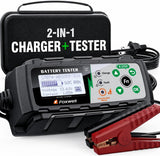 FOXWELL BC521 Battery Charger & Tester
$162.35Charger and tester — dealers need steady voltage while reprogramming modules.
FOXWELL BC521 Battery Charger & Tester
$162.35Charger and tester — dealers need steady voltage while reprogramming modules.
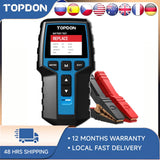 TOPDON BT200 Battery Tester
$103.99Check battery health before your service visit.
TOPDON BT200 Battery Tester
$103.99Check battery health before your service visit.
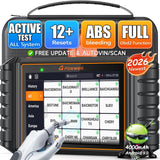 FOXWELL NT726 Bidirectional Scanner
$368.99Reads telematics and body module codes on supported vehicles.
FOXWELL NT726 Bidirectional Scanner
$368.99Reads telematics and body module codes on supported vehicles.
 FOXWELL NT301 Code Reader
$68.82Budget code reader with live data.
FOXWELL NT301 Code Reader
$68.82Budget code reader with live data.
 50-Piece 1/4 in. Drive Socket Set
$54.99Quarter-inch drive socket set.
50-Piece 1/4 in. Drive Socket Set
$54.99Quarter-inch drive socket set.


What "Reduced or Intermittent" Looks Like
GM's stated condition, in full, is that certain vehicles "may experience reduced or intermittent Telematics Control Module functionality." Both words carry weight.
"Reduced" means some things work and some do not. The connection is present but not delivering everything it should.
"Intermittent" is the harder one. The module works, then does not, then works again. That pattern is genuinely difficult for an owner to interpret, because every symptom has an innocent explanation available.
Consider how these present in practice:
- The app fails to reach the vehicle — and you assume the parking garage has no signal
- Remote start does not respond — and you try again and it works, so you forget it
- OnStar features are unavailable — and you assume a temporary outage
- The hotspot drops — and you blame the network
- Vehicle location is stale in the app — and you assume it just had not refreshed
That symptom list is ours, not GM's. The bulletin names none. But every one of those is something owners routinely explain away, which is precisely why an intermittent connectivity fault can persist for years without anyone raising it at a service visit.
So the useful question is not "is it broken today." It is whether connected features on your 2023 Lyriq, Colorado or Canyon have been less reliable than they ought to be. If the answer is yes even occasionally, have the VIN checked.
Why a Dealer Has to Do It
The obvious question on a software fix.
GM's bulletin gives no over-the-air option. The service procedure is a dealer reprogramming job through Service Programming System 2, and unlike some other GM software campaigns — the rear turn-signal program, for instance, which explicitly offers owners an OTA route — this one does not mention wireless delivery at all.
Why that is, GM does not say. The obvious explanation is that the module being reprogrammed is the one that receives over-the-air updates, so pushing the fix wirelessly would depend on the very function that is reduced or intermittent. That is our reading, not GM's stated reason — but the absence of an OTA path on a software-only fix is conspicuous, and it fits.
The procedure itself is more involved than "plug in and flash." GM's steps are: reprogram the module, then perform Serial Data Authentication Configuration — a step the bulletin says in bold must not be skipped — then reprogram the module a second time, repeating until the confirmation screen appears.
GM also warns technicians that the programming computer must be connected by network cable rather than wirelessly, because an interruption during programming can cause programming failure or control module damage. That is a caution about the workshop's own setup, not about your vehicle, but it explains why this is not a job for a mobile technician on a patchy connection.
The Remedy
A technician reprograms the telematics control module to the latest software level.
| Cost to you | None |
| Parts required | None |
| Labour time | 0.8 hours for the reprogramming, including Serial Data Authentication Configuration |
| If already up to date | 0.2 hours to verify the calibration level |
| Can it be done remotely | No — dealer visit required |
| EV vehicles | EV-certified dealer and trained technician only |
Under an hour with no parts is about as easy as a field action gets. There is no waiting for backordered components and no multi-day workshop stay.
Two practical suggestions:
Bundle it. With no safety urgency, fold it into your next scheduled service rather than making a dedicated trip — checking first that the dealer is EV-certified if you have a Lyriq.
Ask what else is open while they have your VIN up. IVH shows every field action on a vehicle — safety recalls, emission recalls, special coverages and customer satisfaction programs. It is one question and it catches the campaigns that are invisible in a federal lookup.
If you are buying used: GM requires dealers to hold any involved vehicle in their possession and complete the work before a customer takes delivery, and Certified Pre-Owned vehicles are de-certified until it is done. A private sale carries no such obligation.
Battery parts
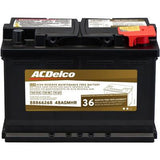 ACDelco Gold AGM Battery, Group 48
$300.99ACDelco Gold AGM battery. Confirm fitment by VIN before ordering.
ACDelco Gold AGM Battery, Group 48
$300.99ACDelco Gold AGM battery. Confirm fitment by VIN before ordering.
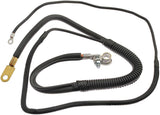 ACDelco Gold 2LF32XE Negative Battery Cable
$45.24ACDelco negative battery cable. Confirm fitment by VIN before ordering.
ACDelco Gold 2LF32XE Negative Battery Cable
$45.24ACDelco negative battery cable. Confirm fitment by VIN before ordering.
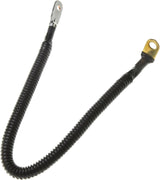 ACDelco 4ST18 Positive Fuse Block Cable
$15.84ACDelco positive battery fuse block cable. Confirm fitment by VIN before ordering.
ACDelco 4ST18 Positive Fuse Block Cable
$15.84ACDelco positive battery fuse block cable. Confirm fitment by VIN before ordering.
Reimbursement
If you already paid to have this condition looked at, there is a documented process and a deadline. An earlier version of this page did not mention reimbursement at all.
GM's customer letter sets it out: owners who paid for repairs for this condition before the mailing should complete the enclosed reimbursement form and present it to their dealer with the required documents, or mail it to GM's Reimbursement Department. It must be received within one year of the date on the letter, unless state law specifies longer. The bulletin carries dedicated labour operations for both approved and denied claims.
Two things worth knowing. GM states that even if you have previously had repairs for this condition, you still need to bring the vehicle in — a past repair does not close the program. And GM notes internally that a reimbursement transaction should be submitted before the repair transaction to avoid extra approval routing, which is worth mentioning to your service advisor so the paperwork goes in the right order.
Do Not Let This Expire
This is the part that distinguishes a CSP from a recall, and it is where owners lose out.
Safety recalls do not expire. A vehicle with an open safety recall from a decade ago can still be repaired free today.
Customer Satisfaction Programs do expire. This one ends on 31 August 2028 — one date, for all three vehicles.
After that date, the same repair on the same fault becomes a bill you pay. Under an hour of dealer programming labour is not enormous, but it is not nothing — and it is entirely avoidable.
GM does send owner letters for this program, so you may well hear about it. But letters go to the registered address, which on a 2023 vehicle may be a previous owner — and unlike a safety recall, nothing further chases you. The action is small and the window is long. Get the VIN checked at your next service visit and it is dealt with.
A Note on Sourcing
We cite documents we have read and label the rest.
This page is now built from the GM Customer Satisfaction Program bulletin N252501791, released 13 August 2026 and hosted by NHTSA as a manufacturer communication, which we have opened and read in full. That supplies the covered vehicles, the condition, the single 31 August 2028 end date, the correction, the labour operations and times, the EV dealer requirement, the service procedure including the Serial Data Authentication Configuration step, the dealer hold and CPO provisions, the reimbursement process and the customer letter.
An earlier version of this page was written from secondary reporting and said so. Three things changed on reading the document:
- The two-expiry-date claim was wrong. We reported 31 August 2028 for the Lyriq and 28 August 2028 for the Colorado and Canyon, and drew inferences from the three-day gap about how the populations had been scoped. The bulletin gives one date for all three vehicles. The section has been removed rather than quietly amended.
- GM does notify owners. We had implied nobody may chase you. The bulletin states GM will notify customers and includes the sample letter.
- Reimbursement is documented, with a one-year deadline from the letter date. The page did not mention it.
The bulletin states no root cause and gives no population count, which is normal for a customer satisfaction program — unlike a Part 573 safety recall filing, there is no regulatory obligation to provide either.
The description of what a telematics control module does, the symptom list, and the explanation of why no over-the-air route exists are ours, not GM's, and are labelled where they appear.
Your dealer's IVH check is the authority on whether your VIN qualifies.
Electrical tools
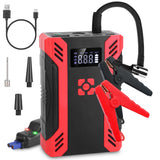 Jump Starter with Air Compressor
$177.99Jump starter with built-in air compressor.
Jump Starter with Air Compressor
$177.99Jump starter with built-in air compressor.
 FOXWELL BT705 Battery & Alternator Tester
$159.89Battery and charging system tester.
FOXWELL BT705 Battery & Alternator Tester
$159.89Battery and charging system tester.
 FOXWELL NT614 Elite Scanner
$233.69Code reader with live data.
FOXWELL NT614 Elite Scanner
$233.69Code reader with live data.
 95-Piece Mechanics Tool Set (Metric & SAE)
$99.99Mechanic tool set.
95-Piece Mechanics Tool Set (Metric & SAE)
$99.99Mechanic tool set.


What Other Pages on This Program Get Wrong
- Inventing a second expiry date. There is one: 31 August 2028, for all three vehicles. We had this wrong and built analysis on top of it.
- Not mentioning the expiry at all. Unlike a safety recall, a CSP ends — and after that the same repair is at your expense.
- Missing the EV dealer requirement. Lyriq owners must use an EV-certified dealer with a trained technician, and GM tells owners to confirm that when scheduling rather than on arrival.
- Calling it a recall. It is voluntary, has no NHTSA campaign number, and is invisible in a NHTSA VIN lookup — though the bulletin itself is a public document, which is how you can read it above.
- Leaving "telematics" undefined. It covers OnStar including emergency response, remote start and app functions, the data connection and hotspot, over-the-air update delivery, and diagnostic reporting. A much broader footprint than the word suggests.
- Missing the compounding effect. A telematics module with intermittent function may not receive over-the-air updates reliably — so a connectivity fault can quietly turn into a software-currency problem across other systems.
- Skipping reimbursement. There is a formal process with a one-year clock from the date on your letter, and a past repair does not close the program.
- Implying you would obviously notice. Intermittent connectivity faults get blamed on parking garages, phone signal and network outages. Most owners never think to raise them.
Frequently Asked Questions
Is this a recall?
No. It is a Customer Satisfaction Program — a voluntary GM program fixing a function issue at no charge. It has no NHTSA campaign number, will not appear in a NHTSA VIN lookup, and unlike a safety recall it has an expiry date. The bulletin itself is public.
When does it expire?
31 August 2028, for all three vehicles. An earlier version of this page gave a second date of 28 August 2028 for the Colorado and Canyon; that was wrong and no such split exists.
What is actually wrong?
GM describes the condition as reduced or intermittent telematics control module functionality. The module is not necessarily dead — it works unreliably, which is harder to spot than an outright failure. GM states no cause.
What would I notice?
Connected features being unreliable: the app failing to reach the vehicle, remote start not responding, OnStar features unavailable, the hotspot dropping, or stale vehicle location in the app. The catch is that every one of those has an innocent explanation — poor signal, a network outage, your phone — so owners tend to explain them away rather than mention them. That symptom list is ours; GM's bulletin names none.
I have a Lyriq. Can any Cadillac dealer do this?
No. GM's bulletin restricts EV repairs under this program to authorized EV dealers with technicians who have completed the applicable training, and the owner letter tells EV owners to confirm that when scheduling. Ask before you book.
Why can't this be done over the air?
GM gives no over-the-air option and does not explain why. The likely reason — our reading, not GM's — is that the module being reprogrammed is the one that receives wireless updates, so the fix cannot travel by the route that is broken. A dealer connects directly instead.
How long does it take and what does it cost?
GM's published labour time is 0.8 hours for the reprogramming, or 0.2 hours if the module is already at the correct calibration level. No parts, no charge to you.
I already paid to have this looked at.
There is a reimbursement process. Complete the form enclosed with GM's customer letter and present it to your dealer with the required documents, within one year of the date on the letter. Note that a previous repair does not close the program — GM says you still need to bring the vehicle in.
Why are a Lyriq and a Colorado in the same program?
Because they share electronic architecture rather than anything mechanical. One is an electric Cadillac crossover, the others are mid-size combustion pickups — but the telematics module is common, and modern field actions increasingly group by module and platform rather than by what is under the bonnet.
How do I find out if I'm included?
Ask a GM dealer to check your VIN in Investigate Vehicle History and name program N252501791. Your owner app is worth checking too. Since this is not a NHTSA campaign, GM's own warranty system is the only definitive source for your VIN.
Where can I read the actual bulletin?
It is public. NHTSA hosts GM's manufacturer communications, and bulletin N252501791 contains the vehicle list, the condition, the end date, the service procedure, the labour operations and the customer letter.
Related Guides
Sources
- GM Customer Satisfaction Program bulletin N252501791 (PDF) — released 13 August 2026, hosted by NHTSA as a manufacturer communication. Primary source for this page; opened and read in full.
- GM bulletins 25-NA-281 and 07-00-89-037 — warranty claim code retrieval and courtesy transportation eligibility, referenced by the above. Not read directly.
Owner questions: GM's customer letter directs Buick, Chevrolet and GMC owners to the Customer Assistance Center on 1-866-467-9700, and Cadillac owners to 1-800-333-4223. Eligibility is confirmed by a GM dealer through Investigate Vehicle History. Program in effect until 31 August 2028.