
Electronic Stability Control is a safety system that helps keep the vehicle tracking in the intended direction during hard maneuvers, using wheel speed sensors, a steering angle sensor, and a yaw rate sensor to detect and correct skids. When ESC starts misbehaving or shows a warning light, it's worth understanding what's actually driving the fault before assuming the worst.
Jump to a section: How ESC works · Common causes of ESC problems · Symptoms to watch for · How it's diagnosed · Quick reference table · FAQ
How ESC Works
ESC continuously compares data from wheel speed sensors, the steering angle sensor, and the yaw rate sensor to determine whether the vehicle is moving the way the driver is steering it. When it detects a mismatch — a skid or loss of traction — it selectively applies braking to individual wheels and can reduce engine power to help bring the vehicle back in line.
Common Causes of ESC Problems
A faulty wheel speed sensor feeding bad data, a misaligned or failing steering angle sensor, a failing yaw rate sensor, low or contaminated brake fluid affecting the ABS/ESC hydraulic unit, or a software fault within the stability control module are the most common causes behind ESC problems.
Wheel speed sensors
 ACDelco Rear ABS Wheel Speed Sensor 15813556
$89.99Wheel speed sensors — the most common cause. Confirm fitment by VIN before ordering.
ACDelco Rear ABS Wheel Speed Sensor 15813556
$89.99Wheel speed sensors — the most common cause. Confirm fitment by VIN before ordering.
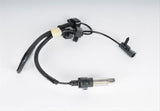 ACDelco ABS Wheel Speed Sensor 22827364
$93.99Wheel speed sensors — the most common cause. Confirm fitment by VIN before ordering.
ACDelco ABS Wheel Speed Sensor 22827364
$93.99Wheel speed sensors — the most common cause. Confirm fitment by VIN before ordering.

Symptoms to Watch For
An illuminated ESC or StabiliTrak warning light, the system engaging unexpectedly during normal driving, the system failing to engage when it should during a genuine loss of traction, or reduced engine power alongside the warning light are all signs worth having checked.
Brakes and battery
 ACDelco Front Brake Pads, OE Replacement 1711203
$157.99Front brake pads. Confirm fitment by VIN before ordering.
ACDelco Front Brake Pads, OE Replacement 1711203
$157.99Front brake pads. Confirm fitment by VIN before ordering.
 ACDelco Front Brake Pads, OE Replacement 1711040
$411.99Front brake pads. Confirm fitment by VIN before ordering.
ACDelco Front Brake Pads, OE Replacement 1711040
$411.99Front brake pads. Confirm fitment by VIN before ordering.
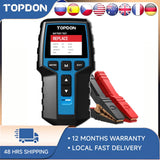 TOPDON BT200 12V Car Battery Tester Digital Automotive
$103.99Low voltage can set stability warnings.
TOPDON BT200 12V Car Battery Tester Digital Automotive
$103.99Low voltage can set stability warnings.


How It's Diagnosed
A scan tool capable of reading ABS/ESC-specific codes (not just generic powertrain codes) is essential, since ESC faults are usually stored in a separate module. From there, checking wheel speed sensor data, steering angle sensor calibration, and brake fluid condition narrows down the specific cause.
Scanners
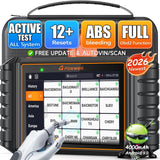 FOXWELL NT726 Bidirectional OBD2 Scanner
$368.99Scanners that read ABS/ESC.
FOXWELL NT726 Bidirectional OBD2 Scanner
$368.99Scanners that read ABS/ESC.
 FOXWELL NT614 Elite OBD2 Scanner
$233.69Scanners that read ABS/ESC.
FOXWELL NT614 Elite OBD2 Scanner
$233.69Scanners that read ABS/ESC.
 FOXWELL NT604 OBD2 Scanner
$209.09Scanners that read ABS/ESC.
FOXWELL NT604 OBD2 Scanner
$209.09Scanners that read ABS/ESC.


Quick Reference Table
| Symptom | Likely Cause | What To Do |
|---|---|---|
| ESC/StabiliTrak light on | Sensor fault or module issue | Scan for ABS/ESC-specific codes |
| System engages unexpectedly | Faulty wheel speed or yaw rate sensor | Check sensor data with scan tool |
| System doesn't engage when needed | Sensor or module failure | Full ABS/ESC system diagnostic |
| Reduced engine power with warning light | Module detecting a fault condition | Scan for codes, check sensor wiring |
Frequently Asked Questions
Can I drive with the ESC light on?
You can, but with reduced or disabled stability assistance, which matters most in slippery or emergency-maneuver conditions — it's worth getting diagnosed rather than ignored long-term.
Does a wheel alignment affect ESC?
Yes, in some cases — a significant alignment issue can affect steering angle sensor calibration, which can in turn trigger ESC-related codes or symptoms.
Will disconnecting the battery reset ESC problems?
It may temporarily clear a stored code, but if there's an underlying sensor or module fault, the issue will return once the system re-checks itself during normal driving.
Is ESC the same system as traction control?
They're related but not identical — traction control primarily manages wheel spin during acceleration, while ESC manages overall vehicle stability during cornering and skid conditions, though they share sensors and are often diagnosed together.
Shop the Parts Mentioned
-
 VDIAGTOOL BT500 Battery Tester — $57.53, rules out low or unstable voltage, a common trigger for spurious stability-control faults. Reading ABS and ESC codes themselves needs a full-system scanner — generic OBD-II readers do not cover those modules.
-
 Battery Terminal Cleaning Brush — clears corrosion affecting module and sensor circuits.
-
 ACDelco Gold Negative Battery Cable — ensures stable voltage supply to ABS/ESC module.
-
 95-Piece Mechanics Tool Set (Metric & SAE) — for sensor access and inspection.