
P0442 (small leak) and P0455 (large leak) both mean the evaporative emissions system failed a seal test. Most advice starts and ends with "check your gas cap." GM's own diagnostic bulletin for these two codes takes a different view: it lists seven critical connections to inspect, gives a four-step order to work through them, and puts the fuel cap seventh. It also states plainly that no parts are required for this repair — because on these codes the fault is usually an unseated connection or a sticking valve, not a failed component.
Jump to a section: What the two codes mean · Which code points where · GM's seven critical connections · The four-step order · Pressure, vacuum and cycling the solenoids · Where the gas cap really sits · Why the purge valve stuck · Dust intrusion on trucks · Symptoms · Causes and how to confirm each · Parts and cost · GM documents · What other pages get wrong · FAQ
What the Two Codes Mean
The EVAP system captures fuel vapour in a charcoal canister instead of venting it to atmosphere. To check itself, the module seals the system and watches the fuel tank pressure sensor. If the seal does not hold, it reports a leak — and sizes it.
- P0442 — Evaporative Emission System Small Leak Detected
- P0455 — Evaporative Emission System Large Leak Detected
GM's bulletin 21-NA-124 (version 2, December 2022) is a dedicated diagnostic tip for exactly this pair, and its coverage is about as broad as GM bulletins get: Buick, Cadillac, Chevrolet and GMC passenger cars and trucks including medium duty, model years 2000 through 2023, all gasoline engines. If you have a GM vehicle with a petrol engine built this century and one of these codes, that document is written for you.
Which Code Points Where
The size distinction is genuinely useful, and GM spells out what each code can mean. This is more nuanced than the usual "big leak equals loose cap" framing.
| Code | What GM says can cause it |
|---|---|
|
P0455 large leak |
A large leak or purge blockage. Specifically: an unseated tube connection, a damaged tube, a stuck open canister vent valve, or a stuck closed purge valve |
|
P0442 small leak |
A small leak — from a stuck open purge valve or a stuck open canister vent valve. It can also set from an unsealed EVAP system, so all purge lines being properly connected should be confirmed |
Three things follow from that, and they are worth holding onto:
- P0455 does not only mean a leak. It also covers blockage. A purge valve stuck closed produces the large-leak code even though nothing is leaking at all — which is why replacing hoses on a P0455 sometimes fixes nothing.
- The purge valve's failure direction determines the code. Stuck open sets the small leak code; stuck closed sets the large leak code.
- A stuck-open vent valve can set either code. GM lists it under both, so it cannot be ruled out by code number alone.
A note on the document itself, for accuracy: in one line the bulletin reads "For either DTC P0442 or P0445," where the surrounding text makes clear P0455 is meant. That appears to be a typo in GM's own bulletin rather than a reference to the purge circuit code. We mention it because we flagged the same thing on our P0445 guide and have now confirmed it in the source.
GM's Seven Critical Connections
This is the most useful part of the bulletin, and almost nothing written about these codes reproduces it. GM states there are seven critical connections that could likely lead to these codes being set, and gives their locations:
| # | Connection | Where to find it |
|---|---|---|
| 1 | Purge tube to purge valve | At the intake manifold |
| 2 | Purge tube to chassis EVAP line | At the rear of the engine, near the transmission |
| 3 | Chassis EVAP line to canister | At the canister |
| 4 | Fuel tank load line to canister | At the canister |
| 5 | Vent valve line to vent valve | At the vent valve |
| 6 | Fuel tank load line jumper connection | Near the fuel tank |
| 7 | Fuel tank cap closed properly | At the refuel compartment |
GM's assessment of the odds is direct: it is likely that either one of these connections is not properly seated or the line itself is damaged.
That sentence reframes the whole diagnosis. The default assumption is not a failed part — it is a connection that is not fully seated, or a line that has been damaged. Both are found by looking, and both are fixed without buying anything.
GM adds that while inspecting the line connections you should look for any signs of damage or wear along the lines, and if damage is observed, proceed to confirm it via the smoke test.
The Four-Step Order
GM specifies that the following steps should be taken in chronological order:
- Investigate all EVAP lines are properly installed and fully seated.
- Investigate for any damage on the EVAP lines.
- Investigate potential vent valve malfunction.
- Investigate potential purge valve malfunction.
The bulletin also frames it as a set of gates: if all connections are good, the vent valve should be checked for a stuck open position. If the vent valve is verified to be functioning correctly, then proceed to investigate the purge valve.
Notice what that ordering means in practice. The purge valve — the part most commonly thrown at these codes — is the last thing GM asks you to investigate, not the first. Two full inspection stages and the vent valve all come before it. Buying a purge valve on day one skips three quarters of GM's procedure.
GM closes with a note that matters if the vehicle is going through a shop: based on what is found, document the cause and correction on the repair order.
Pressure, Vacuum, and Cycling the Solenoids
Two technique notes from the bulletin are worth more than they first appear.
Test both directions. GM writes that some leaks will only be noticeable under pressure and some only noticeable under vacuum, and recommends checking both ways.
That single line explains a frustrating and common experience: a clean smoke test on a vehicle that keeps setting the code. A one-directional test can genuinely miss the leak. If a shop tells you the smoke test came back clean and the code is still returning, asking whether it was checked under both pressure and vacuum is a fair and specific question.
Cycle the solenoids while you inspect. GM notes that cycling the purge and vent solenoids with a scan tool while inspecting may indicate a sticking valve.
This is how you catch a valve that passes a static test but sticks in operation — and it costs nothing beyond having the right tool connected.
Where the Gas Cap Really Sits
Almost every article on these codes leads with the gas cap. GM lists it seventh of seven.
We are not saying to skip it. Checking the cap is free, takes ten seconds, and it genuinely is one of GM's seven critical connections — a cap that is not closed properly belongs on the list. Tighten it until it clicks, inspect the seal for cracks or debris, and confirm it is the correct cap for the vehicle if it has ever been replaced.
What we are saying is that "it's probably the gas cap" is not what GM's own diagnostic document concludes. The bulletin's stated expectation is an unseated connection or a damaged line, across seven locations spanning the intake manifold to the fuel tank. The cap is the most convenient of those to check, which is a different thing from being the most likely.
You will also see it claimed that GM issued a bulletin covering faulty original-equipment fuel caps across a range of model years. We could not substantiate any such bulletin, so we are not repeating that claim here. If you have been told a cap-specific bulletin applies to your vehicle, ask to see the number.
Scan tools
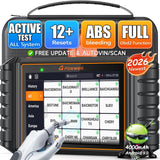 FOXWELL NT726 Bidirectional OBD2 Scanner
$368.99Run the EVAP leak test.
FOXWELL NT726 Bidirectional OBD2 Scanner
$368.99Run the EVAP leak test.
 FOXWELL NT614 Elite OBD2 Scanner
$233.69Run the EVAP leak test.
FOXWELL NT614 Elite OBD2 Scanner
$233.69Run the EVAP leak test.

Why the Purge Valve Stuck
If the diagnosis does reach the purge valve, there is a GM document explaining a reason they stick — and it carries an instruction that prevents doing the job twice.
17-NA-409 (December 2017, revised February 2018) covers 2014–2018 Chevrolet Impala with the 3.6L LFX engine for P0442, P0455 and/or P0496. GM's stated cause: oil or contamination from the cam cover gasket causing the purge valve to become stuck.
The correction is the part to know. Where the purge valve has been validated as the cause and replaced, GM states that a new cam cover gasket has been designed to reduce oil pull over at high engine speeds and must also be replaced.
| Item | Detail |
|---|---|
| Camshaft cover seal | Part 12688703, qty 1 |
| Labor operation | 4060950 — Camshaft Cover Replacement, Right Side |
The lesson generalises past the Impala: when a purge valve comes out, look inside it. Oil or heavy carbon means the valve was a casualty of something upstream, and a clean replacement dropped into the same system sticks the same way.
Dust Intrusion on Trucks
On Silverado, Sierra and the heavy-duty trucks, there is a second recurring path to these codes, and it is environmental rather than mechanical.
The EVAP canister and vent solenoid are mounted underneath the vehicle, where the air they breathe is full of road dust and water spray. GM has addressed this across three bulletin generations — reported as 02-06-04-037/037H, 15-06-04-002 and 23-NA-073 — all naming P0442 and P0455 alongside the vent codes, and all reaching for the same answer: relocate where the system draws air from and add filtration.
Two consequences worth knowing:
- If the truck works in dust, replacing the vent solenoid alone is temporary. The new part breathes the same air.
- The relocation is reported as a customer-pay modification, not a warranty repair.
Those three bulletins are corroborated rather than opened by us. Our P0446 guide covers that path in detail.
Symptoms of P0442 and P0455
- Check engine light on
- Usually no driveability symptoms at all — the engine runs normally
- A failed emissions inspection
- Occasionally a fuel smell around the vehicle
- Difficulty refuelling, where vent-side restriction is involved
- Rough idle or stalling in some cases where a purge valve is stuck open
- Companion codes: P0446, P0449, P0496, sometimes P0451
On urgency: these are emissions codes, not safety or driveability faults, and short-term driving is fine. What they do cost you is an inspection pass — and the underlying cause, whether an unseated line or dust intrusion, tends to progress rather than resolve.
EVAP valves
 GM Genuine Parts 12690512 Vapor Canister Purge Valve
$41.78Purge and vent valves. Confirm fitment by VIN before ordering.
GM Genuine Parts 12690512 Vapor Canister Purge Valve
$41.78Purge and vent valves. Confirm fitment by VIN before ordering.
 ACDelco Gold 214-2246 (19239625) Vapor Canister Purge Valve
$40.65Purge and vent valves. Confirm fitment by VIN before ordering.
ACDelco Gold 214-2246 (19239625) Vapor Canister Purge Valve
$40.65Purge and vent valves. Confirm fitment by VIN before ordering.
 Vapor Canister Purge Valve Solenoid 10357992
$57.69Purge and vent valves. Confirm fitment by VIN before ordering.
Vapor Canister Purge Valve Solenoid 10357992
$57.69Purge and vent valves. Confirm fitment by VIN before ordering.


Causes and How to Confirm Each
| Cause | How to confirm it | Source |
|---|---|---|
| Unseated tube connection | Work GM's seven critical connections, pushing each fully home | 21-NA-124 — verified. GM's stated likely cause |
| Damaged or worn EVAP line | Inspect along the lines for damage or wear; confirm with a smoke test | 21-NA-124 — verified |
| Canister vent valve stuck open | Check after connections. Cycle it with a scan tool while inspecting | 21-NA-124 — can set either code |
| Purge valve stuck open | Investigate last, per GM's order | Sets the small leak code, P0442 |
| Purge valve stuck closed / purge blockage | Investigate last, per GM's order | Sets the large leak code, P0455 |
| Oil contamination sticking the purge valve | Look inside the removed valve for oil or carbon | 17-NA-409 — verified. Replace the gasket too |
| Dust or water intrusion at the canister and vent | Inspect underneath for packed dust, mud, corrosion | 23-NA-073, 15-06-04-002 — corroborated |
| Fuel cap not closed properly, or a damaged seal | Tighten until it clicks; inspect the seal; confirm it is the correct cap | 21-NA-124, connection #7 of 7 |
| Insect or spider nest in the vent line | Inspect the open end of the vent path | Documented often enough to be worth checking |
| Cracked charcoal canister | Inspect; confirm with a smoke test | Less common than the connections |
| Fuel tank sending unit seal | Smoke test with attention to the tank | Access-heavy; confirm before committing |
Canisters
 ACDelco Fuel Vapor Canister 215464
$217.99Canisters. Confirm fitment by VIN before ordering.
ACDelco Fuel Vapor Canister 215464
$217.99Canisters. Confirm fitment by VIN before ordering.
 SPEEDRACING Vapor Canister for Escalade, Avalanche, H2
$66.59Canisters. Confirm fitment by VIN before ordering.
SPEEDRACING Vapor Canister for Escalade, Avalanche, H2
$66.59Canisters. Confirm fitment by VIN before ordering.


Parts and Cost
| Repair | What it involves | Cost picture |
|---|---|---|
| Reseat a connection | Push an unseated EVAP connection fully home | $0. GM's parts information for 21-NA-124 reads: no parts are required for this repair |
| Tighten or replace the fuel cap | Click it closed; replace if the seal is damaged | Minimal |
| Clear a nest or debris from the vent line | Inspection and cleaning | Effectively free |
| EVAP line or hose replacement | Where damage or wear is found along a line | Modest |
| Vent solenoid | Usually under the vehicle near the tank or spare tire | Inexpensive to moderate; order by VIN |
| Purge valve | Usually on top of the intake manifold. Inspect the old one internally before fitting the new one | Inexpensive part, short job |
| Camshaft cover gasket alongside the valve | Seal 12688703 on the LFX application, labor operation 4060950 | Adds cost — but skipping it repeats the failure where oil is the cause |
| Auxiliary filter and vent hose relocation | GM's preventive answer for dusty environments | Reported as customer-pay, not warranty |
| Charcoal canister | Where cracked or saturated | Notably more than the valves — confirm first |
GM Documents Relevant to P0442 and P0455
| Document | Subject | Coverage |
|---|---|---|
| 21-NA-124 (v2, Dec 2022) | Diagnostic tip for MIL illuminated with P0442 and/or P0455. What each code can mean, seven critical connections, four-step chronological order, test under both pressure and vacuum, cycle the solenoids. No parts are required for this repair | Buick, Cadillac, Chevrolet, GMC passenger cars and trucks including medium duty, 2000–2023, all gasoline engines — verified |
| 17-NA-409 | P0442, P0455 and/or P0496 from oil or contamination off the cam cover gasket sticking the purge valve. The redesigned gasket must also be replaced. Seal 12688703, labor operation 4060950 | Chevrolet Impala 2014–2018, 3.6L LFX — verified |
| 23-NA-073 | P0442, P0446, P0455 or P0449 from dust intrusion into the evaporative canister. Auxiliary filter and vent hose relocation, described as customer-pay | Current trucks — corroborated, not opened |
| 15-06-04-002 | MIL and difficulty refuelling with P0442, P0446, P0455 or P0449 from dust and water intrusion at the vent solenoid | 2011–2015 era trucks — corroborated, not opened |
| 02-06-04-037 / 037H | Dirt and dust intrusion into the EVAP canister vent hose assembly; sealed vent valve assembly plus a remote filter box | Earlier trucks — corroborated, not opened |
What Other P0442 / P0455 Pages Get Wrong
- Leading with the gas cap as "by far the most common cause." GM lists it seventh of seven critical connections, and states the likely cause is an unseated connection or a damaged line. Check the cap because it is free — not because the evidence says it is usually the answer.
- Never publishing GM's seven connections. They are specific and located — intake manifold, rear of engine near the transmission, two at the canister, the vent valve, a jumper near the fuel tank, and the cap. That list turns a vague hunt into an inspection route.
- Ignoring the diagnostic order. GM asks for lines seated, then lines undamaged, then vent valve, then purge valve — in that sequence. The purge valve people replace first is the step GM puts last.
- Treating P0455 as "there is a big hole somewhere." GM states P0455 sets from a large leak or purge blockage. A purge valve stuck closed produces it with nothing leaking at all.
- Accepting a single-direction smoke test. GM says some leaks show only under pressure and some only under vacuum, and recommends both. That explains most "the smoke test was clean but the code came back" cases.
- Never mentioning solenoid cycling. Commanding the purge and vent solenoids while inspecting can reveal a valve that sticks in operation but passes a static check.
- Assuming parts are needed. GM's parts information for this bulletin is one line: no parts are required for this repair.
- Repeating an unverified gas cap bulletin. We could not substantiate a GM bulletin covering faulty original-equipment fuel caps, so we do not cite one.
We publish coverage, part numbers and procedures where we could read them in GM's own documentation — here, two bulletins read in full — and label the rest corroborated.
Frequently Asked Questions
Is it safe to keep driving with P0442 or P0455?
Generally yes in the short term. These are emissions codes rather than driveability or safety faults, and the vehicle usually behaves normally. You will fail an emissions inspection while the code is present, and the underlying cause tends to get worse rather than better, so it is worth addressing rather than ignoring.
Is it just my gas cap?
Check it, because it takes seconds and it is genuinely one of GM's seven critical connections. But GM lists it last of the seven and states the likely cause is a connection that is not properly seated or a damaged line. If a new cap does not fix it, that is the expected outcome more often than people are led to believe.
What's the difference between the small leak and large leak code?
P0442 is the small leak code and can come from a stuck open purge valve, a stuck open vent valve, or an unsealed system. P0455 is the large leak code and covers a large leak or purge blockage — an unseated tube, a damaged tube, a stuck open vent valve, or a purge valve stuck closed. Note that a stuck-open vent valve appears under both, so the code number alone will not rule it out.
My smoke test was clean but the code keeps coming back. Why?
Possibly because it was only tested one way. GM notes that some leaks are only noticeable under pressure and some only under vacuum, and recommends checking both. It is also worth having the purge and vent solenoids cycled with a scan tool during inspection, since a valve can stick in operation while passing a static test.
Should I just replace the purge valve?
Not first. GM's four-step order puts the purge valve last — after confirming the lines are seated, checking the lines for damage, and testing the vent valve. If you do reach it and it comes out with oil inside, address where that oil came from as well, or the replacement will stick too.
Do these codes mean I need to buy parts?
Often not. GM's parts information for the diagnostic bulletin covering both codes reads: no parts are required for this repair. The expected fix is reseating a connection or repairing a damaged line.
Why does my truck get these codes when it never leaves the job site?
Because the canister and vent solenoid sit underneath the vehicle and breathe road dust. GM has published bulletins across three generations naming these codes from dust intrusion, with the fix being an auxiliary filter and relocating the vent hose to cleaner air. Note that the relocation is reported as customer-pay rather than warranty.
Will the light turn off by itself once it's fixed?
Eventually. The EVAP monitor needs specific conditions — fuel level, temperature and driving pattern — to run and report clean, so it can take several days of normal driving. A shop can also clear the code once the repair is confirmed.
Can cold weather set these codes without a real leak?
Extreme conditions can occasionally produce a borderline result, but a code that returns across multiple drive cycles and different temperatures should be treated as a real fault rather than weather. If it clears and stays away through a range of conditions, that is more consistent with a one-off.
Shop Related Parts & Tools
Most of this diagnosis is inspection, and GM's own note is that no parts are required. A scan tool earns its place because cycling the solenoids while you inspect is what catches a sticking valve. Confirm fitment against your VIN before ordering.
-
 MOTOPOWER MP69033 OBD2 Scanner — confirms which of the pair is stored and whether P0446, P0449 or P0496 are alongside, which narrows the cause considerably.
-
 95-Piece Mechanics Tool Set (Metric & SAE) — covers purge valve access at the intake manifold and vent solenoid fasteners underneath.
-
 Crankcase Ventilation Valve with PCV Vent — engine ventilation parts for GM applications; check fitment for your engine.
-
 ACDelco GM OE dexos1 GEN 2 Full Synthetic 5W-30 Motor Oil (1 qt) — useful alongside a camshaft cover gasket repair where oil contamination stuck the purge valve.
Related Guides
- P0445 Code: EVAP Purge Control Valve Circuit Shorted
- P0446 Code: EVAP Vent Control Circuit Performance
- P0496 Code: EVAP Flow During a Non-Purge Condition
- Chevy Code P0449: Meaning, Causes & How to Fix It
- Fuel System Trouble: When Fueling Your GM Goes Wrong
- GM Check Engine Light Codes: Most Common & What They Mean