
P0401 is Exhaust Gas Recirculation Flow Insufficient Detected. The module commanded exhaust gas recirculation, watched for the effect it expected, and did not see enough of it. Almost everyone responds by replacing the EGR valve — and on at least one GM application, GM's own bulletin says to replace something else first. We read that document, and it names a specific part, a specific condition, and a precise gate for when it applies.
Jump to a section: What P0401 means · How the module tests flow · GM says replace the cooler, not the valve · Carbon, and where it collects · The passages nobody cleans · A second GM bulletin worth knowing · Why the MAP sensor matters here · On EGR deletes · A note on sourcing · Symptoms · Causes and how to confirm each · How it's diagnosed · Parts and cost · What other pages get wrong · FAQ
What Does P0401 Mean?
Exhaust gas recirculation exists to control combustion temperature. Routing a metered quantity of inert exhaust gas back into the intake displaces some oxygen and lowers peak combustion temperature, which suppresses NOx formation.
P0401 sets when the module runs its EGR flow test and concludes that not enough gas is getting through.
Note what that does not identify. The code describes an outcome, not a cause. Insufficient flow can come from:
- A valve that is not opening
- A valve that opens into a blocked passage
- A plugged cooler on engines that have one
- An electrical fault preventing proper control
- A sensor problem meaning the flow is fine but the module cannot see it
Every one of those produces the same code, which is exactly why replacing the valve on reflex resolves only some of them.
How the Module Tests Flow
Worth understanding, because it explains the last item on that list.
The module cannot measure exhaust gas flow directly on most applications. Instead it commands the valve to open at a moment when it knows what should happen, and watches for the expected consequence.
Admitting inert exhaust gas into the intake changes manifold pressure. So on many systems the module opens the valve and watches the MAP sensor for a change of the size it expects. Get the change, flow is confirmed. Get too little change, and P0401 sets.
The consequence is important: a MAP sensor problem can produce this code with a perfectly healthy EGR system. The gas is flowing; the module simply cannot see it happening.
Other systems use a dedicated position sensor or a differential pressure arrangement, which shifts what can go wrong but not the underlying logic. Our P046C guide covers the position-sensor style on modern GM diesels.
Tools for testing EGR flow
 FOXWELL NT614 Elite Scanner
$233.69Commands the EGR valve and shows MAP change on supported vehicles.
FOXWELL NT614 Elite Scanner
$233.69Commands the EGR valve and shows MAP change on supported vehicles.
 Compression Tester with Fuel/Vacuum Gauge
$25.65Vacuum gauge for checking EGR vacuum and MAP response.
Compression Tester with Fuel/Vacuum Gauge
$25.65Vacuum gauge for checking EGR vacuum and MAP response.
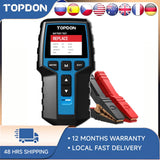 TOPDON BT200 Battery Tester
$103.99Battery tester — low voltage affects electronic EGR valves.
TOPDON BT200 Battery Tester
$103.99Battery tester — low voltage affects electronic EGR valves.


GM Says Replace the Cooler, Not the Valve
This is the most useful thing on the page, and it comes from a document we opened and read.
GM bulletin 18-NA-089 (March 2018) covers 2016–2018 Chevrolet Volt with the 1.5L DI DOHC VVT hybrid engine (RPO L3A), for the condition: check engine light on, with DTC P0401 set in the ECM.
GM's stated cause: on higher mileage vehicles, the EGR cooler is plugged, not allowing sufficient flow.
GM's stated correction, and read the qualifier carefully:
On higher mileage vehicles that have DTC P0401 set and no other EGR DTC, it is recommended to replace the EGR cooler for this condition. Clear codes and test drive to ensure the DTC does not reset. If the code resets, replace the EGR valve.
That is close to the reverse of what most people do. The default assumption on an EGR flow code is that the valve has failed. GM's guidance on this application puts the cooler first and the valve second — and gives a clean test to decide between them.
The gate matters as much as the recommendation. "P0401 set and no other EGR DTC" is a precise condition. If you also have EGR control circuit or position sensor codes, this is not your bulletin and the diagnosis goes elsewhere.
And note the sequence GM builds in: replace the cooler, clear, drive, and then replace the valve only if the code returns. That is a staged diagnosis rather than a parts list.
Be clear about scope. This bulletin covers a specific engine in specific years. We are not claiming it applies to your vehicle — but the principle it establishes is broadly useful: on an engine with an EGR cooler, the cooler is a genuine candidate for insufficient flow, and GM has documented it as the likelier one on at least one application. Have a dealer check your VIN against current bulletins; that is free.
Carbon, and Where It Collects
The dominant cause across EGR systems generally, and worth understanding as a process rather than a component failure.
The EGR system handles exhaust gas, which carries soot. Over years, deposits accumulate on every surface that gas touches — the valve pintle and seat, the passages, and the cooler's internal tubes.
Two things follow.
First, this is gradual and cumulative. Nothing breaks; a passage narrows year by year until flow drops below what the test demands. That is why higher mileage is part of GM's stated condition rather than incidental.
Second, the valve is often not the problem. A valve can be opening perfectly into a restriction downstream of it — and replacing it changes nothing, because the restriction is still there.
Short-trip driving accelerates all of it. An engine that rarely reaches full operating temperature deposits more and burns off less.
Our P1403 guide covers the same carbon problem on GM's digital EGR valve, where the small orifices close up sooner than a large passage would.
The Passages Nobody Cleans
The step that gets skipped, and the reason this repair so often repeats.
Carbon does not only build up in the valve. The passages carrying gas from the exhaust to the valve, and from the valve into the intake, collect deposits just as readily — and on some engines they narrow dramatically.
A brand new valve breathing through a blocked passage sets the code again. That is the single most common reason people conclude a replacement part was defective.
While the valve is off, inspect and clean the passages either side. You already have the access, it costs only time, and it is what makes the repair last.
On engines with an EGR cooler, extend that thinking to the cooler — which is, after all, precisely what GM's bulletin identifies. A cooler is a heat exchanger with narrow internal passages, and narrow passages carrying sooty gas are exactly what plugs.
A Second GM Bulletin Worth Knowing
We read this one too, and we want to be precise about what it does and does not cover.
GM bulletin 21-NA-116 (February 2023) covers 2016–2019 Chevrolet Volt 1.5L (L3A) for: MIL illuminated, open fuse F3UA in the underhood fuse block, and one or more of P0030, P0031, P0403, P0405, P0443, P0458, P0489, P0597, P0598 set in the ECM.
It does not name P0401. We include it because it demonstrates something valuable about EGR faults generally.
GM's stated cause: an internal short in the EGR valve — which opens a shared fuse and takes down several unrelated systems at once. GM notes the condition can appear intermittent if the EGR is not working at the moment the fuse is replaced.
Look at what the shared fuse feeds. GM directs technicians to inspect the harness for chafing at the EGR (G14), heated oxygen sensor 1 (B52A), engine coolant thermostat (E41), EVAP purge solenoid valve (Q12), and engine oil pressure control solenoid valve (Q44). If the harness checks out, GM says replace the EGR valve (Q14), part number 12691147.
One shorted EGR valve, nine codes, across O2 sensors, EVAP, the thermostat and oil pressure control. This is the same lesson as our P0641 and P0651 guide, where a shared 5-volt reference does the same thing — only here the shared thing is a fuse.
The rule generalises: when several unrelated codes appear together, look for what those systems share before investigating any of them individually.
Why the MAP Sensor Matters Here
A specific check worth doing before parts are ordered.
Because many systems infer EGR flow from a manifold pressure change, the MAP sensor is part of the flow test whether you think of it that way or not.
- A MAP sensor reading inaccurately may not register the pressure change EGR flow produces
- A vacuum hose problem on remote-mounted sensors does the same
- A shared 5-volt reference fault can corrupt the MAP reading along with several others
So if MAP codes are stored alongside P0401, deal with those first. Our P0106 guide and P1106 guide cover that sensor, and our P0641 guide covers the reference circuit it depends on.
Also check for intake leaks. Unmetered air entering the manifold disturbs the pressure readings the flow test depends on — our P1191 guide covers that.
On EGR Deletes
Search this code and you will find people suggesting a block-off plate. We will be straight about it.
Removing or disabling emissions equipment on a road-registered vehicle is illegal in the United States under the Clean Air Act, and the prohibition covers both the person doing it and anyone selling the parts. Beyond legality:
- It fails emissions inspection, including a visual check in states that perform one
- EGR controls combustion temperature. Blocking it raises those temperatures — the condition that causes detonation
- It does not fix anything. It removes the system that reported a problem
We sell GM parts and accessories, and we are not going to point readers toward a modification that risks a fine and an untradeable vehicle. If the system is carboned up, clean it or replace what is plugged. That is the repair.
A Note on Sourcing for This Code
We cite documents we have read and label the rest.
Bulletin 18-NA-089 is verified — we opened and read it. It covers 2016–2018 Chevrolet Volt 1.5L (RPO L3A), names DTC P0401, identifies a plugged EGR cooler on higher mileage vehicles as the cause, and recommends replacing the cooler where P0401 is set with no other EGR DTC, with the valve as the follow-up if the code resets.
Bulletin 21-NA-116 is verified — we read it as well. It covers 2016–2019 Chevrolet Volt 1.5L (L3A), concerns an open fuse F3UA caused by an internal short in the EGR valve, and lists P0030, P0031, P0403, P0405, P0443, P0458, P0489, P0597 and P0598. It does not name P0401, and we cite it for the shared-circuit principle rather than as coverage of this code.
Both bulletins cover a specific engine in specific model years. P0401 appears across a very wide range of vehicles, and the general material here — carbon accumulation, passage cleaning, the MAP relationship — reflects standard practice rather than a GM document.
Have a dealer check your VIN against current bulletins. On a code with this much application variation, that is free and it is the highest-value step available.
Symptoms of P0401
- Check engine light on
- Frequently no obvious driveability change
- Pinging or knocking under load, since combustion temperatures run higher without EGR
- Rough idle or hesitation in some cases
- Reduced fuel economy
- A failed emissions test, particularly for NOx
- Companion EGR, MAP or misfire codes
On urgency: moderate. This is not a stop-driving fault and many vehicles carry it with nothing worse than a light. Two things argue against leaving it. Carbon accumulates rather than plateauing, so a cleaning job today becomes a cooler or passage job later. And if you have developed detonation under load, sustained pinging is genuinely hard on an engine — that version deserves prompt attention.
Causes and How to Confirm Each
| Cause | How to confirm it | Notes |
|---|---|---|
| Plugged EGR cooler | Higher mileage, P0401 set, no other EGR DTC | GM 18-NA-089 names this on 2016–18 Volt 1.5L and recommends the cooler first |
| Carbon in the valve | Remove and inspect; check the pintle moves freely | The dominant cause across EGR systems generally |
| Carbon in the passages | Inspect either side of the valve while it is off | Do not skip this — it is why repairs repeat |
| MAP sensor inaccuracy | Compare live MAP against expected values; check for MAP codes | Flow may be fine and simply invisible to the test |
| Shared 5-volt reference fault | Several unrelated sensor codes stored together | See our P0641 and P0651 guide |
| Intake air leak | Smoke test the intake | Disturbs the pressure readings the test relies on |
| Chafed harness or shorted valve | Inspect for chafing; check for a blown fuse | GM 21-NA-116 documents an internal EGR short opening a shared fuse |
| Corroded or damaged connector | Pin drag test on terminals rather than visual inspection | Among the cheapest outcomes |
| Vacuum supply fault on vacuum-operated valves | Inspect hoses and the control solenoid | Older systems |
| Failed EGR valve | After cooler, passages, sensors and wiring | GM's own sequence puts it second, not first |
| ECM fault | Last | Rare |
EGR valves
 Delphi EG10026 EGR Valve
$197.99Delphi EGR valve. Confirm fitment by VIN before ordering.
Delphi EG10026 EGR Valve
$197.99Delphi EGR valve. Confirm fitment by VIN before ordering.
 ACDelco EGR Valve 214-5512
$114.99ACDelco GM OE EGR valve 214-5512. Confirm fitment by VIN before ordering.
ACDelco EGR Valve 214-5512
$114.99ACDelco GM OE EGR valve 214-5512. Confirm fitment by VIN before ordering.
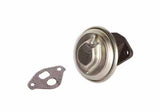 ACDelco EGR Valve 214-5084
$121.99ACDelco GM OE EGR valve 214-5084 for 5.7L LT engines. Confirm fitment by VIN before ordering.
ACDelco EGR Valve 214-5084
$121.99ACDelco GM OE EGR valve 214-5084 for 5.7L LT engines. Confirm fitment by VIN before ordering.


How Is P0401 Diagnosed?
- Record every stored code before clearing anything. Whether other EGR codes are present is the gate GM's bulletin turns on.
- Have a dealer check your VIN against current bulletins. Free, and on this code it may be the entire diagnosis.
- Check for MAP codes. If the sensor that detects flow is compromised, deal with that first.
- Look for several unrelated codes together, which points at a shared fuse or reference rather than the EGR system.
- Inspect the EGR connector and wiring for chafing and corrosion. Check for a blown fuse.
- Note the symptom pattern. Pinging under load fits blocked flow.
- Remove the valve and inspect the pintle and seat for carbon; check it moves freely.
- Inspect and clean the passages either side while you have access.
- On engines with an EGR cooler, assess the cooler — on higher mileage vehicles it is a genuine candidate and GM names it on at least one application.
- Refit with a new gasket, clear codes, and drive it properly.
- Only then replace the valve, if the code returns after the above.
Parts and Cost
| Repair | What it involves | Cost picture |
|---|---|---|
| Connector or wiring repair | Where chafing or corrosion is the whole fault | The cheapest outcome. Check first |
| Cleaning the valve and passages | Remove, clean, refit with a new gasket | Cleaner and a gasket. Try before buying |
| EGR gasket | Required whenever the valve comes off | Minimal — do not reuse the old one |
| MAP sensor | Where the sensor detecting flow is at fault | Moderate — and cheaper than the EGR path |
| EGR cooler | GM's recommendation on 2016–18 Volt 1.5L with P0401 and no other EGR DTC | Moderate to significant |
| EGR valve | GM's follow-up step if the code resets after the cooler | Moderate. Part 12691147 is named for the L3A short condition |
| Passage cleaning done properly | Time rather than parts | Free in materials, and it is what makes the repair last |
| Valve fitted into blocked passages | What happens when the passages are skipped | The repair repeats. Money spent, code returns |
Order against your VIN. GM used several EGR architectures and the parts are not interchangeable between them.
Sensors and service parts
 Delphi PS10000 MAP Sensor (2000–2011)
$94.99Delphi MAP sensor — GM uses MAP change to judge EGR flow. Confirm fitment by VIN before ordering.
Delphi PS10000 MAP Sensor (2000–2011)
$94.99Delphi MAP sensor — GM uses MAP change to judge EGR flow. Confirm fitment by VIN before ordering.
 ACDelco EGR Valve 214-5535
$100.99ACDelco GM OE EGR valve 214-5535. Confirm fitment by VIN before ordering.
ACDelco EGR Valve 214-5535
$100.99ACDelco GM OE EGR valve 214-5535. Confirm fitment by VIN before ordering.
 FOXWELL NT301 Code Reader
$68.82Budget code reader with live data.
FOXWELL NT301 Code Reader
$68.82Budget code reader with live data.


What Other P0401 Pages Get Wrong
- Going straight to the EGR valve. On at least one GM application, GM's own bulletin recommends the cooler first and the valve only if the code resets afterwards. The reflex answer is not GM's answer.
- Ignoring the "no other EGR DTC" qualifier. That gate is what makes the cooler recommendation apply. With EGR circuit or position codes alongside, the diagnosis goes elsewhere entirely.
- Never mentioning the cooler at all. On engines that have one, it is a heat exchanger full of narrow passages carrying sooty gas — exactly what plugs.
- Skipping the passages. A new valve breathing through a blocked passage sets the code again, and the replacement part gets blamed.
- Not explaining how flow is tested. Many systems infer flow from a manifold pressure change, which means a MAP problem produces this code with a perfectly healthy EGR system.
- Treating multiple codes as multiple faults. GM documented one shorted EGR valve opening a shared fuse and setting nine codes across five unrelated systems.
- Suggesting a block-off plate. Illegal on a road vehicle, fails inspection, raises combustion temperatures, and repairs nothing.
Frequently Asked Questions
Do I need a new EGR valve?
Not necessarily, and GM's own guidance on one application says otherwise. Bulletin 18-NA-089 covers 2016–2018 Chevrolet Volt 1.5L with P0401 set and no other EGR code, and recommends replacing the EGR cooler — then clearing codes and test driving, and replacing the valve only if the code resets. Beyond that specific application, carbon in the passages is a very common cause that a new valve does not address.
What is an EGR cooler and why would it plug?
It is a heat exchanger that cools exhaust gas before it enters the intake, and it contains narrow internal passages. Narrow passages carrying sooty exhaust gas are exactly what deposits close up over time — which is why GM's stated condition mentions higher mileage vehicles specifically. It is gradual rather than a sudden failure.
Could my MAP sensor cause this?
Yes, and it is worth checking before ordering EGR parts. Many systems cannot measure exhaust flow directly, so the module opens the valve and watches for the manifold pressure change it expects. If the MAP sensor is reading inaccurately, the gas can be flowing perfectly while the module simply cannot see it happening.
Why did the code come back after I replaced the valve?
Most often because the passages were not cleaned. Carbon collects in the passages either side of the valve as readily as in the valve itself, and a new valve breathing through a restriction behaves like the old one. On an engine with an EGR cooler, the cooler is worth assessing too.
I have a lot of unrelated codes as well.
Then look at what those systems share before investigating any of them. GM bulletin 21-NA-116 documents an internal short in the EGR valve opening fuse F3UA on the 2016–2019 Volt 1.5L, setting nine codes across oxygen sensors, EVAP, the thermostat and oil pressure control. That bulletin does not name P0401, but the principle applies broadly — one fault, many codes.
My engine pings under load.
That fits blocked EGR flow. Preventing exactly that is what EGR is for — recirculated exhaust gas lowers peak combustion temperature, and without it those temperatures run higher than intended. Sustained detonation is hard on an engine, so this version of the symptom is worth attending to promptly rather than living with.
Can I just block off the EGR?
No. Removing or disabling emissions equipment on a road-registered vehicle is illegal in the United States, it fails inspection, and it raises the combustion temperatures that cause detonation. It also repairs nothing — it removes the system that reported the problem.
How urgent is it?
Moderate. It is not a stop-driving fault and often nothing feels wrong. But carbon accumulates rather than levelling off, so a cleaning job now becomes a cooler or passage job later — and if you have developed pinging under load, deal with that promptly.
Shop Related Parts & Tools
Check for other EGR codes before ordering anything — that distinction is the gate GM's own bulletin turns on. Confirm fitment against your VIN.
-
 MOTOPOWER MP69033 OBD2 Scanner — unusually decisive here. GM's bulletin applies only where P0401 is set with no other EGR DTC, so knowing exactly what else is stored is what tells you whether the cooler recommendation is even relevant.
-
 95-Piece Mechanics Tool Set (Metric & SAE) — for removing the valve and reaching the passages behind it, which is where the cleaning that actually makes the repair last happens.
-
 3-In-1 Cordless Impact Wrench & Screwdriver Kit — speeds up the fastener work on EGR and cooler jobs, where access is usually the hard part.
Related Guides
- P1403 Code: EGR Solenoid 1 Error — GM Digital EGR Valve — the same carbon problem on GM's three-solenoid design
- P046C Code: EGR Position Sensor Performance — the position-sensor style on modern GM diesels
- P0641 & P0651 Codes: 5-Volt Sensor Reference Circuit — one fault, many codes
- P0106 Code: MAP Sensor Performance — the sensor the flow test often depends on