
P046C is "Exhaust Gas Recirculation Sensor A Circuit Range/Performance" — GM words it as EGR Position Sensor Performance. The module commanded the EGR valve to a position, and the sensor reported back something that does not match. On GM diesels the usual reason is not a failed sensor at all: it is carbon holding the valve where it does not belong. The sensor is doing its job by telling you so — which is why replacing it fixes nothing.
Jump to a section: What P046C means · The sensor is usually right · Why you cannot buy just the sensor · Short trips make this worse · On EGR deletes — the honest answer · Companion codes · A note on sourcing · Symptoms · Causes and how to confirm each · How it's diagnosed · Parts and cost · What other pages get wrong · FAQ
What Does P046C Mean?
Exhaust gas recirculation exists to control combustion temperature. Above roughly 2,200–2,500°F, nitrogen and oxygen in the combustion chamber combine to form NOx — the pollutant behind smog and acid rain. Routing a metered amount of inert exhaust gas back into the intake displaces some oxygen, lowers peak combustion temperature, and keeps NOx formation down.
For that to work, the module has to know exactly where the EGR valve is. So the valve carries a position sensor reporting its actual pintle position back as a feedback signal.
P046C sets when that feedback does not agree with what the module commanded. It asked for a position; the sensor reported something implausible or unexpected for that command.
Read that carefully, because it is the whole diagnostic key: this is a disagreement code, not a broken-part code. There are only two ways the feedback and the command can disagree — either the sensor is lying, or the valve genuinely is not where it was told to go. On GM diesels the second is far more common.
The Sensor Is Usually Telling the Truth
This is the single most useful idea on the page.
Diesel exhaust is full of soot. The EGR valve sits directly in that flow, and over tens of thousands of miles carbon builds up on the pintle and in the valve bore. Eventually the deposits are thick enough that the valve cannot move freely — it sticks, it binds, or it simply stops short of where it was commanded.
What happens next is exactly what you would want to happen. The module commands a position. The valve, gummed up, does not reach it. The position sensor faithfully reports where the valve actually is. The module compares the two, sees they do not match, and sets P046C.
The sensor performed correctly. It reported a real mechanical problem. Replacing it is replacing the messenger.
So the diagnostic order that follows is:
- Look at the valve before condemning the sensor. Carbon build-up is usually visible once the valve is out.
- Try cleaning first where the valve is serviceable and the deposits are the issue. On some applications a thorough clean restores free movement.
- Check the wiring and connector, since a corroded or damaged circuit genuinely can make the sensor lie.
- Only then consider the valve assembly itself failed.
Carbon accumulation also affects the passages either side of the valve, so inspect those while you have access. A clean valve breathing through a blocked passage will be back.
Tools for testing EGR flow
 FOXWELL NT614 Elite Scanner
$233.69Commands the EGR valve and shows MAP change on supported vehicles.
FOXWELL NT614 Elite Scanner
$233.69Commands the EGR valve and shows MAP change on supported vehicles.
 Compression Tester with Fuel/Vacuum Gauge
$25.65Vacuum gauge for checking EGR vacuum and MAP response.
Compression Tester with Fuel/Vacuum Gauge
$25.65Vacuum gauge for checking EGR vacuum and MAP response.
 TOPDON BT200 Battery Tester
$103.99Battery tester — low voltage affects electronic EGR valves.
TOPDON BT200 Battery Tester
$103.99Battery tester — low voltage affects electronic EGR valves.


Why You Cannot Usually Buy Just the Sensor
A practical point that catches people out at the parts counter.
On most GM applications setting this code, the position sensor is integral to the EGR valve assembly — built into it, not a separate bolt-on part. There is no "EGR position sensor" to order on its own.
That means:
- If the sensor genuinely has failed, you are buying the valve. Budget accordingly.
- Which makes cleaning worth attempting first, since the alternative is a complete assembly rather than a cheap sensor.
- And it makes the wiring check worth doing properly, because a connector fault is the one outcome that costs almost nothing.
On diesel applications the EGR valve, cooler and associated plumbing are substantial components in an awkward location, so the labour is not trivial either. Confirm the diagnosis before ordering.
Short Trips and Light Loads Make This Worse
Worth knowing, because it explains why two identical trucks age so differently.
A diesel that spends its life on short trips at light load never gets hot enough for long enough to burn deposits off. Soot accumulates in the EGR system faster, and the valve gums up sooner. The same truck used for towing and sustained highway running sees higher exhaust temperatures and stays cleaner.
Technicians report this directly: the more a diesel is driven gently and never worked, the more EGR trouble tends to appear. It is not a rule you can rely on as a cure, but it is a genuine pattern.
The practical implication is modest but real. If your truck is a light-duty commuter that rarely sees load, expect EGR maintenance to come around sooner, and treat periodic inspection as normal rather than as a sign something is wrong. A long highway run under load is not a repair for a stuck valve — but it is part of why some trucks never get there.
On EGR Deletes — the Honest Answer
Search this code and you will quickly find people recommending an EGR delete and a tuner instead of a repair. We are going to be straight about that rather than pretend the suggestion does not exist.
Removing or disabling emissions equipment on a road-registered vehicle is illegal in the United States under the Clean Air Act, and the prohibition covers both the person doing it and anyone selling the parts to do it. Beyond the legality:
- It fails inspection in any state with emissions testing, and it fails a visual check in states that do one.
- It compromises resale, and can complicate warranty claims on unrelated components.
- It does not fix anything. It removes the system that reported the problem.
We sell GM parts and accessories, and we are not going to steer readers toward a modification that could land them with a fine and an untradeable truck. If your EGR valve is carboned up, clean it or replace it. That is the repair.
Off-road and competition-only vehicles sit outside road regulations, and that is a genuinely different conversation — but it is a narrow exception, not a workaround for a daily-driven truck.
Companion Codes
The code stored alongside P046C tells you a great deal about which part of the system is at fault.
| Code | What it points at |
|---|---|
| P0403 — EGR control circuit | The motor circuit rather than the position feedback. P046C with P0403 suggests the valve's actuator or its wiring, not just deposits |
| P0401 — insufficient EGR flow | Flow is blocked. Strongly consistent with carbon in the valve or passages |
| P0402 — excessive EGR flow | A valve stuck open, letting through more than commanded |
| P044C / P044D | Sensor signal low / high — more specific circuit faults on the same sensor |
| P049D | Another EGR position-related code seen alongside on Duramax applications |
| Exhaust aftertreatment codes | EGR faults and DPF or particulate faults often share a root cause in soot handling. See our P118B guide |
P046C plus P0401 is the classic carbon signature — the valve is not reaching position and flow is insufficient, both explained by the same deposits.
A Note on Sourcing for This Code
We cite GM documents where we have them and say so where we do not.
We could not verify a GM service bulletin naming P046C on a specific GM platform. GM's own wording for the code — "Exhaust Gas Recirculation (EGR) Position Sensor Performance" — is consistently reported by technicians working from GM service information, but the diagnostic material on this page is field consensus rather than a document we opened and read.
The code appears most often on GM diesels: the 6.6L Duramax in Silverado and Sierra HD, the 2.8L Duramax in Colorado and Canyon, and the 1.6L diesel in the Cruze. It is a generic OBD-II code rather than a GM-specific one, so material written for other manufacturers describes the same principle but not necessarily the same hardware.
Worth asking about: emissions components can carry coverage beyond the standard warranty, and diesel emissions hardware sometimes carries longer terms than petrol. Have a dealer check your VIN against current bulletins and coverages before paying — it is free and it is definitive in a way no article is.
Symptoms of P046C
- Check engine light on
- Frequently no driveability change at all — many owners report normal running
- Rough idle or stalling, where the valve is stuck partly open
- Hesitation or reduced power under load
- Reduced fuel economy
- Black smoke in some cases
- A failed emissions test
- Companion EGR codes, particularly P0401 or P0403
On urgency: this is not a stop-driving fault, and plenty of trucks carry it for a while with no symptom but the light. What argues against leaving it is that the underlying cause is accumulating. Carbon does not plateau — it keeps building, and it spreads into passages and coolers that are far more work to clean than the valve alone. Dealing with it while it is still a valve-cleaning job is considerably cheaper than dealing with it later.
Causes and How to Confirm Each
| Cause | How to confirm it | Notes |
|---|---|---|
| Carbon build-up restricting pintle movement | Remove and inspect the valve. Deposits are usually visible and the pintle will not move freely by hand | The dominant cause on GM diesels. The sensor is reporting accurately |
| Carbon in the EGR passages | Inspect the passages either side of the valve while it is out | A clean valve breathing through a blocked passage will set the code again |
| Damaged, corroded or chafed wiring / connector | Inspect the connector and harness. This is the outcome that costs almost nothing | Check before ordering an assembly |
| Failed position sensor | After the valve is confirmed free-moving and the wiring is good | Usually means buying the valve, since the sensor is integral |
| Failed EGR valve motor or actuator | Suggested by P0403 alongside | Circuit testing distinguishes it from a mechanical stick |
| EGR cooler restriction | Inspect where flow codes accompany the position code | Larger job; confirm before committing |
| Exhaust modifications changing system behaviour | Establish what has been fitted, especially if the code followed an exhaust change | Owners report EGR codes appearing after exhaust work |
| Poor-quality aftermarket valve | Establish what was fitted if the code returned quickly | These are calibrated assemblies with integral electronics |
| ECM fault | Last, after valve, wiring and sensor are proven | Rare relative to everything above |
EGR valves
 Delphi EG10026 EGR Valve
$197.99Delphi EGR valve. Confirm fitment by VIN before ordering.
Delphi EG10026 EGR Valve
$197.99Delphi EGR valve. Confirm fitment by VIN before ordering.
 ACDelco EGR Valve 214-5512
$114.99ACDelco GM OE EGR valve 214-5512. Confirm fitment by VIN before ordering.
ACDelco EGR Valve 214-5512
$114.99ACDelco GM OE EGR valve 214-5512. Confirm fitment by VIN before ordering.
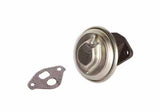 ACDelco EGR Valve 214-5084
$121.99ACDelco GM OE EGR valve 214-5084 for 5.7L LT engines. Confirm fitment by VIN before ordering.
ACDelco EGR Valve 214-5084
$121.99ACDelco GM OE EGR valve 214-5084 for 5.7L LT engines. Confirm fitment by VIN before ordering.


How Is P046C Diagnosed?
- Record every stored code. P0401 alongside points hard at carbon; P0403 points at the motor circuit instead.
- Inspect the EGR connector and harness before anything is removed. It is the cheapest possible outcome.
- Command the valve with a scan tool and watch the position feedback. A valve that lags, sticks or stops short is showing you the mechanical fault directly.
- Remove and inspect the valve for carbon on the pintle and in the bore. Check whether it moves freely by hand.
- Inspect the passages either side of the valve while access is open.
- Clean thoroughly where the valve is serviceable and deposits are the cause.
- Reassess after cleaning. If the valve now moves freely and the code stays away, you are done — and you have not bought an assembly.
- Consider the cooler where flow codes persist after the valve is clean.
- Replace the valve assembly only once cleaning, wiring and passages have been addressed.
- Clear and road test across a range of loads, including a sustained run, before concluding the repair worked.
Parts and Cost
| Repair | What it involves | Cost picture |
|---|---|---|
| Connector or wiring repair | Where corrosion or chafing is the whole fault | The cheapest outcome. Check first |
| EGR valve cleaning | Remove, clean the pintle and bore, inspect and clean the passages, refit | Labour plus consumables. Try this before buying an assembly |
| EGR valve assembly | Complete valve including the integral position sensor | Significant on diesel applications — the sensor is not sold separately |
| Gaskets and hardware | Required whenever the valve comes off | Small addition; do not reuse old gaskets |
| EGR cooler | Where restriction is confirmed | Substantially more than the valve. Confirm before committing |
| Cleaning that was skipped | What happens when a new valve goes into blocked passages | The repair repeats — and the assembly is not cheap |
Order against your VIN. GM used several EGR designs across its diesel range and the assemblies are not interchangeable between them.
Sensors and service parts
 Delphi PS10000 MAP Sensor (2000–2011)
$94.99Delphi MAP sensor — GM uses MAP change to judge EGR flow. Confirm fitment by VIN before ordering.
Delphi PS10000 MAP Sensor (2000–2011)
$94.99Delphi MAP sensor — GM uses MAP change to judge EGR flow. Confirm fitment by VIN before ordering.
 ACDelco EGR Valve 214-5535
$100.99ACDelco GM OE EGR valve 214-5535. Confirm fitment by VIN before ordering.
ACDelco EGR Valve 214-5535
$100.99ACDelco GM OE EGR valve 214-5535. Confirm fitment by VIN before ordering.
 FOXWELL NT301 Code Reader
$68.82Budget code reader with live data.
FOXWELL NT301 Code Reader
$68.82Budget code reader with live data.


What Other P046C Pages Get Wrong
- Framing it as a failed sensor. P046C is a disagreement between commanded and actual position. On GM diesels the usual reason is that the valve genuinely is not where it was told to go — the sensor is reporting accurately.
- Not saying the sensor is part of the valve. On most GM applications there is no separate position sensor to buy. If the sensor has failed, you are purchasing the assembly, which changes the economics of trying a clean first.
- Skipping the passages. Cleaning or replacing the valve while the passages either side stay blocked reproduces the fault.
- Recommending an EGR delete. Removing emissions equipment from a road vehicle is illegal under the Clean Air Act, fails inspection, and does not repair anything — it deletes the system that reported the problem.
- Ignoring the companion codes. P0401 alongside is the carbon signature; P0403 points at the motor circuit instead. They lead to different repairs.
- Saying it does not matter because the truck drives fine. Many do. But carbon accumulates rather than plateaus, and a valve-cleaning job left long enough becomes a cooler and passage job.
- Publishing a single cost figure. The range runs from a connector repair to an EGR cooler. Any page quoting one number has not seen your truck.
Frequently Asked Questions
Do I need a new EGR position sensor?
Probably not as a standalone part — on most GM applications the sensor is built into the EGR valve and is not sold separately. More importantly, the sensor is usually reporting correctly: it is telling you the valve did not reach its commanded position, typically because carbon is holding it. Inspect the valve before condemning the sensor.
Can I just clean the EGR valve?
Often yes, and it is worth trying first given the alternative is a complete assembly. Remove the valve, clean the pintle and bore thoroughly, and inspect and clean the passages either side while you have access. If the valve then moves freely and the code stays away, that is the repair.
Is it safe to drive with P046C?
Generally yes in the short term, and many owners report no symptom beyond the light. The reason not to leave it indefinitely is that carbon keeps accumulating — what is a valve cleaning today can become passage and cooler work later.
Why does my truck get this when my friend's identical truck doesn't?
Duty cycle is a genuine factor. A diesel used for short trips at light load never gets hot enough for long enough to burn deposits off, so soot accumulates faster. A truck that tows and runs sustained highway miles tends to stay cleaner. It is a pattern rather than a rule, but it explains a lot of the variation.
Should I just delete the EGR?
No. Removing or disabling emissions equipment on a road-registered vehicle is illegal in the United States under the Clean Air Act, it fails emissions inspection, and it harms resale. It also does not fix anything — it removes the system that reported the fault. Clean or replace the valve instead.
What does P0401 alongside P046C tell me?
That is the classic carbon signature. P046C says the valve is not reaching commanded position and P0401 says flow is insufficient — both explained by the same deposits. It strengthens the case for inspecting and cleaning rather than chasing electrical faults.
The code came back after I replaced the valve. Why?
Most often because the passages were not cleaned. A new valve breathing through blocked passages behaves like the old one. It is also worth confirming the replacement was the correct assembly for your VIN, and checking the connector and harness, since a wiring fault produces the same code with good hardware.
Which GM vehicles get this code?
Predominantly the diesels — the 6.6L Duramax in Silverado and Sierra HD, the 2.8L Duramax in Colorado and Canyon, and the 1.6L diesel in the Cruze. It is a generic OBD-II code, so it exists on other platforms too, but the carbon-driven pattern described here is a diesel characteristic.
Shop Related Parts & Tools
Inspect the connector, then the valve, before ordering an assembly — the position sensor is not sold separately on most GM applications. Confirm fitment against your VIN.
-
 MOTOPOWER MP69033 OBD2 Scanner — confirms whether P0401 or P0403 are stored alongside, which is the difference between a carbon problem and a motor circuit problem.
-
 95-Piece Mechanics Tool Set (Metric & SAE) — for EGR valve removal and access to the passages behind it, which is where the cleaning that actually matters happens.
-
 3-In-1 Cordless Impact Wrench & Screwdriver Kit — speeds up the fastener work on a diesel EGR job, where access is usually the hard part.
Related Guides
- GMC Code P118B: Particulate Matter Sensor — the other side of GM diesel soot handling
- GMC Code P0191: Fuel Rail Pressure Sensor Performance
- GM Check Engine Light Codes: Most Common & What They Mean