
P1403 is EGR Solenoid 1 Error — and the first useful thing to know is why there is a "solenoid 1" at all. It is because your vehicle has a digital EGR valve, a GM design containing three separate solenoids rather than one motor. That is why P1403, P1404 and P1405 exist as a set, one per solenoid. It is also why, on this valve more than most, carbon is usually the real answer — and why cleaning is worth trying before anything is bought.
Jump to a section: What P1403 means · How the digital EGR valve works · The three-solenoid code family · Carbon is the usual answer · Clean the passages too · Stuck open vs stuck closed · Careful — this is a Ford code too · On EGR deletes · A note on sourcing · Symptoms · Causes and how to confirm each · How it's diagnosed · Parts and cost · What other pages get wrong · FAQ
What Does P1403 Mean?
Exhaust gas recirculation controls combustion temperature. Routing a metered quantity of inert exhaust gas back into the intake displaces some oxygen and lowers peak combustion temperature, which keeps NOx formation down.
On the GM digital EGR valve, that metering is done by three solenoids. The module energises them to admit exhaust gas, and it monitors their control circuits as it does so.
P1403 sets when the module detects a problem with solenoid 1 — either its electrical circuit is not behaving as commanded, or the flow that solenoid is responsible for is not happening as expected.
Note what that does not tell you. The code names a solenoid, not a cause. A stuck pintle, a carboned orifice, an open coil, a corroded connector and a chafed wire all produce it. Which is why the diagnosis starts with understanding what the valve actually is.
How the Digital EGR Valve Works
This is worth understanding because it explains the whole code family and it changes what you inspect.
Most EGR valves people picture use a single pintle moved by vacuum or by an electric motor, with a position sensor reporting where it is. The GM digital EGR valve does something different.
It contains three independent solenoids, each controlling its own orifice, and the orifices are different sizes. Each solenoid is simply on or off — there is no proportional control of any single one.
The cleverness is in the combinations. By energising the solenoids in different groupings, the module gets a range of discrete flow rates out of three simple on/off devices. One small orifice gives a little flow; the largest alone gives more; all three together give the most. Different combinations sit at the steps in between.
That design has real consequences for you:
- There are three things that can fail, independently — hence three codes.
- Which solenoid is faulty tells you which orifice is affected, though not what is wrong with it.
- The orifices are small, and small passages in an exhaust stream are exactly what carbon closes up first.
- There is no single position sensor to blame in the way there is on a linear valve — a distinction worth knowing if you have read about EGR position sensor codes elsewhere.
This valve appeared across a range of GM engines in the 1990s and 2000s, notably on the V6 families. If your vehicle sets P1403, P1404 or P1405, it almost certainly has one.
Tools for testing EGR flow
 FOXWELL NT614 Elite Scanner
$233.69Commands the EGR valve and shows MAP change on supported vehicles.
FOXWELL NT614 Elite Scanner
$233.69Commands the EGR valve and shows MAP change on supported vehicles.
 Compression Tester with Fuel/Vacuum Gauge
$25.65Vacuum gauge for checking EGR vacuum and MAP response.
Compression Tester with Fuel/Vacuum Gauge
$25.65Vacuum gauge for checking EGR vacuum and MAP response.
 TOPDON BT200 Battery Tester
$103.99Battery tester — low voltage affects electronic EGR valves.
TOPDON BT200 Battery Tester
$103.99Battery tester — low voltage affects electronic EGR valves.


The Three-Solenoid Code Family
| Code | What it names |
|---|---|
| P1403 | EGR solenoid 1 error |
| P1404 | EGR solenoid 2 error |
| P1405 | EGR solenoid 3 error |
| P1406 | EGR pintle position error |
| P0401 / P1402 | EGR flow insufficient — the system-level complaint |
| P1407 | EGR valve air leak |
How many of these you have is informative, and it is worth counting before you touch anything.
- One solenoid code alone points at that solenoid specifically — its coil, its orifice, or its portion of the circuit.
- Two or three solenoid codes together is a strong pointer at something shared. Either the whole valve is carboned up, or there is a common electrical problem — the supply feeding all three, a ground, or the connector they share.
Three codes rarely means three failed solenoids. It means one condition affecting all of them, and on this valve that condition is usually carbon. This is the same reasoning that runs through our Duramax injector circuit guide, where the number of codes stored indicates the type of fault rather than the number of failures.
P0401 or a flow-insufficient code alongside strengthens the carbon case considerably — the module is telling you both that a solenoid is misbehaving and that gas is not getting through.
Carbon Is the Usual Answer
Here is the practical heart of it.
The EGR valve sits directly in the exhaust stream. Exhaust gas carries soot and carbon, and over years of operation those deposits build up on the pintles, in the seats, and in the orifices.
On a digital EGR valve the orifices are small, which makes them close up sooner than a large single passage would. And a pintle coated in hardened carbon cannot seat properly or move freely — so the solenoid energises, the valve does not do what it should, and the module objects.
The important consequence: the solenoid may be electrically perfect. The coil works, the circuit is fine, and the fault is a mechanical one caused by deposits. Replacing the valve on electrical suspicion when the problem is carbon is a common and avoidable expense.
So try cleaning first. The digital EGR valve can generally be removed and cleaned, and on a carbon-fouled valve that is frequently the whole repair:
- Remove the valve and inspect the pintles and orifices for deposits
- Check whether the pintles move freely — a stuck one is your answer
- Clean thoroughly, including the seats and each orifice
- Fit a new gasket on reassembly — do not reuse the old one
If the pintles free up and the codes stay away, you have fixed it for the price of a gasket and some cleaner.
Clean the Passages Too
The step that gets skipped, and the reason the repair sometimes repeats.
Carbon does not only accumulate in the valve. The passages that carry exhaust gas to the valve and from the valve into the intake collect deposits just as readily — and on some engines they narrow substantially over time.
A clean valve breathing through a blocked passage will set the code again. That is true whether you cleaned the old valve or fitted a new one, and it is the most common reason people conclude the replacement part was faulty.
While the valve is off, inspect and clean the passages either side. You already have the access; it costs only time, and it is what makes the repair last.
Our P046C guide covers the same principle on GM's later EGR designs — the passages matter as much as the valve, on every EGR system GM has built.
Stuck Open vs Stuck Closed
The direction of the failure produces quite different symptoms, and knowing which you have helps considerably.
| Stuck open | Stuck closed | |
|---|---|---|
| What happens | Exhaust gas enters when it should not, including at idle | No exhaust gas enters, so combustion temperatures run higher |
| Typical symptoms | Rough idle, stalling, hesitation — the engine is being fed inert gas when it needs a clean charge | Pinging or knocking under load, and a failed emissions test for NOx |
| When you notice it | At idle and low speed | Under load, on hills, when towing |
The stuck-open symptoms are the ones people actually complain about — a vehicle that idles badly or stalls at junctions. EGR is supposed to be closed at idle, and admitting exhaust gas then is genuinely disruptive to combustion.
The stuck-closed case is quieter but not harmless. Higher combustion temperatures are what EGR exists to prevent, and sustained detonation is hard on an engine. If you have developed a pinging noise under load alongside this code, that is worth attending to rather than living with.
Careful — This Is a Ford Code Too
Worth flagging clearly, because searching this code will mislead you.
On Ford vehicles, P1403 means "DPFE Sensor Hoses Reversed" — a differential pressure feedback sensor with its two hoses connected the wrong way round. That is a well-known Ford fault with a famous fix, and it has nothing whatever to do with a GM digital EGR valve.
Search results blend the two freely. If you find a page discussing DPFE sensors and reversed hoses, it is describing a Ford, not your vehicle.
P1xxx codes are manufacturer-specific by definition — the standardised P0xxx range is common across makes, but P1xxx was left to each manufacturer. And GM reused numbers in that range internally too, across model years and platforms, with published GM code lists carrying an explicit caution about it.
If your scan tool shows a different definition than this page, trust the tool and your service information.
On EGR Deletes
Search this code and you will find people suggesting simply blocking the EGR off. We will be straight about that rather than pretending the suggestion does not exist.
Removing or disabling emissions equipment on a road-registered vehicle is illegal in the United States under the Clean Air Act, and the prohibition covers both the person doing it and anyone selling the parts for it. Beyond legality:
- It fails emissions inspection, and a visual check in states that perform one.
- EGR exists to control combustion temperature. Blocking it raises those temperatures — which is the condition that causes detonation.
- It does not fix anything. It removes the system that reported a problem.
We sell GM parts and accessories, and we are not going to point readers toward a modification that risks a fine and an untradeable vehicle. If the valve is carboned up, clean it. That is the repair.
A Note on Sourcing for This Code
We cite documents we have read and label the rest.
We could not verify a GM service bulletin naming P1403 on a specific GM platform. The definition is consistent across multiple independent GM code references, and the surrounding family — P1404 and P1405 for solenoids 2 and 3, P1406 for pintle position — corroborates the three-solenoid reading strongly.
The description of the digital EGR valve's construction and the carbon failure mode reflects well-established characteristics of that design rather than a GM document we opened and read.
This is an older GM code, belonging to the era when the digital EGR valve was in use. On more recent GM vehicles you will encounter different EGR architectures and different codes — our P046C guide covers the position-sensor style used on modern GM diesels.
Symptoms of P1403
- Check engine light on
- Rough idle or stalling, where a solenoid is stuck open
- Pinging or knocking under load, where flow is blocked
- Hesitation or stumble on acceleration
- Reduced fuel economy
- A failed emissions test, particularly for NOx
- Sometimes no obvious driveability change at all
- Companion EGR codes — other solenoids, pintle position, or flow insufficient
On urgency: moderate. This is not a stop-driving fault, and many vehicles carry it with nothing worse than a light. Two things argue against leaving it indefinitely. Carbon accumulates rather than plateauing, so a valve-cleaning job today becomes a passage-cleaning job later. And if you have developed detonation under load, sustained pinging is genuinely hard on an engine — that one deserves prompt attention.
Causes and How to Confirm Each
| Cause | How to confirm it | Notes |
|---|---|---|
| Carbon on the pintle or in the orifice | Remove the valve and inspect. Check whether the pintles move freely | The dominant cause. The solenoid may be electrically perfect |
| Carbon in the EGR passages | Inspect the passages either side while the valve is off | Do not skip this — it is why repairs repeat |
| Corroded or damaged connector | Inspect the valve connector; check terminal grip rather than appearance | The cheapest possible outcome |
| Chafed or damaged wiring | Trace the harness to the valve; flex it while inspecting | Engine bay heat and vibration |
| Failed solenoid coil | Test the solenoid circuit after cleaning and wiring are cleared | Real, but less common than carbon |
| Shared supply or ground fault | Suspect strongly if two or three solenoid codes are stored together | One fault, several codes |
| Vacuum or intake leak affecting the system | Smoke test the intake | Can produce related driveability complaints |
| Poor-quality replacement valve | Establish what was fitted if the code returned quickly | Also check the passages were cleaned |
| ECM fault | Last, after valve, passages, wiring and connector are excluded | Rare |
EGR valves
 Delphi EG10026 EGR Valve
$197.99Delphi EGR valve. Confirm fitment by VIN before ordering.
Delphi EG10026 EGR Valve
$197.99Delphi EGR valve. Confirm fitment by VIN before ordering.
 ACDelco EGR Valve 214-5512
$114.99ACDelco GM OE EGR valve 214-5512. Confirm fitment by VIN before ordering.
ACDelco EGR Valve 214-5512
$114.99ACDelco GM OE EGR valve 214-5512. Confirm fitment by VIN before ordering.
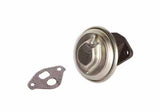 ACDelco EGR Valve 214-5084
$121.99ACDelco GM OE EGR valve 214-5084 for 5.7L LT engines. Confirm fitment by VIN before ordering.
ACDelco EGR Valve 214-5084
$121.99ACDelco GM OE EGR valve 214-5084 for 5.7L LT engines. Confirm fitment by VIN before ordering.


How Is P1403 Diagnosed?
- Record every stored code and count the EGR ones. One solenoid code points at that solenoid; two or three point at something shared, usually carbon or a common circuit.
- Note whether a flow-insufficient code is stored alongside. That strengthens the carbon case considerably.
- Inspect the EGR connector and wiring before anything is removed — it is the cheapest outcome available.
- Note the symptom direction. Rough idle and stalling suggest stuck open; pinging under load suggests blocked flow.
- Remove the valve and inspect the pintles and orifices for carbon. Check that the pintles move freely.
- Clean the valve thoroughly, including the seats and each orifice.
- Inspect and clean the passages either side while you have access.
- Refit with a new gasket, clear the codes, and drive it properly.
- Test the solenoid circuits if the codes return after a thorough clean.
- Replace the valve only once cleaning, passages, wiring and connector have all been addressed.
Parts and Cost
| Repair | What it involves | Cost picture |
|---|---|---|
| Connector or wiring repair | Where corrosion or chafing is the whole fault | The cheapest outcome. Check first |
| Cleaning the valve and passages | Remove, clean pintles, orifices and passages, refit with a new gasket | Cleaner and a gasket. Try this before buying a valve |
| EGR gasket | Required whenever the valve comes off | Minimal — do not reuse the old one |
| Digital EGR valve assembly | Sold as a unit; individual solenoids are not separately serviced | Moderate. Confirm the diagnosis first |
| Passage cleaning done properly | Time rather than parts | Free in materials, and it is what makes the repair last |
| Valve replaced into blocked passages | What happens when the passages are skipped | The repair repeats. Money spent, code returns |
Order against your VIN. GM used several EGR designs across this era and the valves are not interchangeable between them.
Sensors and service parts
 Delphi PS10000 MAP Sensor (2000–2011)
$94.99Delphi MAP sensor — GM uses MAP change to judge EGR flow. Confirm fitment by VIN before ordering.
Delphi PS10000 MAP Sensor (2000–2011)
$94.99Delphi MAP sensor — GM uses MAP change to judge EGR flow. Confirm fitment by VIN before ordering.
 ACDelco EGR Valve 214-5535
$100.99ACDelco GM OE EGR valve 214-5535. Confirm fitment by VIN before ordering.
ACDelco EGR Valve 214-5535
$100.99ACDelco GM OE EGR valve 214-5535. Confirm fitment by VIN before ordering.
 FOXWELL NT301 Code Reader
$68.82Budget code reader with live data.
FOXWELL NT301 Code Reader
$68.82Budget code reader with live data.


What Other P1403 Pages Get Wrong
- Confusing it with Ford's P1403. On a Ford this number means a DPFE sensor with reversed hoses. That is a different manufacturer, a different system and a different repair. Search results mix them constantly.
- Never explaining the three-solenoid design. The whole reason P1403, P1404 and P1405 exist is that the digital EGR valve has three independent solenoids. Without that, the code family makes no sense and neither does the diagnosis.
- Treating it as an electrical fault. The solenoid is often electrically perfect and mechanically stuck. Carbon on a small orifice is the dominant cause on this valve.
- Not suggesting cleaning first. This valve can generally be removed and cleaned, and on a carbon-fouled example that is frequently the entire repair.
- Skipping the passages. A clean valve breathing through blocked passages sets the code again — and gets blamed on a faulty replacement part.
- Ignoring what multiple codes mean. Two or three solenoid codes together is one shared condition, not several failures.
- Suggesting a block-off plate. Disabling emissions equipment on a road vehicle is illegal, fails inspection, raises combustion temperatures, and repairs nothing.
Frequently Asked Questions
Why is there a "solenoid 1"?
Because your vehicle uses GM's digital EGR valve, which contains three independent solenoids rather than a single motor. Each controls its own differently-sized orifice, and the module combines them to get a range of flow rates. That is why P1403, P1404 and P1405 exist as a set — one code per solenoid.
Do I need a new EGR valve?
Try cleaning first. The dominant failure on this valve is carbon building up on the pintles and in the small orifices, which stops them moving freely even though the solenoid is electrically fine. The valve can generally be removed and cleaned, and on a carbon-fouled example that is frequently the whole repair.
I have P1403, P1404 and P1405 together. Are three solenoids bad?
Almost certainly not. Three codes together points at one shared condition — either the whole valve is carboned up, or there is a common electrical problem such as the shared supply, a ground, or the connector. One fault producing three codes is far more likely than three simultaneous failures.
Why did the code come back after I replaced the valve?
Most often because the passages were not cleaned. Carbon collects in the passages either side of the valve as readily as in the valve itself, and a new valve breathing through a blocked passage behaves like the old one. Clean the passages while you have the access.
My engine idles badly and sometimes stalls.
That fits a valve stuck open. EGR is supposed to be closed at idle, and admitting inert exhaust gas when the engine needs a clean charge disrupts combustion badly. It is the symptom people most often notice with this code, and it points at a pintle held open by deposits.
I get a pinging noise under load instead.
That fits the opposite failure — flow blocked, so no exhaust gas is being admitted and combustion temperatures run higher than intended. Preventing exactly that is what EGR is for. Sustained detonation is hard on an engine, so this version is worth attending to promptly.
Why does a Ford page come up when I search P1403?
Because Ford uses the same number for a completely different fault — a differential pressure sensor with its hoses reversed. P1xxx codes are manufacturer-specific, so different makes assign them independently. Anything discussing DPFE sensors is not describing your GM.
Can I just block off the EGR?
No. Removing or disabling emissions equipment on a road-registered vehicle is illegal in the United States, it fails inspection, and it raises combustion temperatures — which is the condition that causes detonation. It also repairs nothing; it removes the system that reported the problem. Clean the valve instead.
Shop Related Parts & Tools
Inspect the connector, then clean the valve and passages before buying an assembly — on this valve carbon is the usual answer. Confirm fitment against your VIN.
-
 MOTOPOWER MP69033 OBD2 Scanner — matters here because counting the EGR codes is the diagnosis. One solenoid code points at that solenoid; two or three together point at carbon or a shared circuit rather than multiple failures.
-
 95-Piece Mechanics Tool Set (Metric & SAE) — for removing the valve and reaching the passages behind it, which is where the cleaning that actually makes the repair last happens.
-
 3-In-1 Cordless Impact Wrench & Screwdriver Kit — speeds up the fastener work on an EGR job, where access is usually the hard part.
Related Guides
- P046C Code: EGR Position Sensor Performance — GM's later EGR design, and the same lesson about passages
- P0300 Code: Random/Multiple Cylinder Misfire Detected — what a valve stuck open can look like
- P1223 & Related: Duramax Injector Output Circuits — where counting codes tells you the fault type
- GM Check Engine Light Codes: Most Common & What They Mean