
P1223, P1226, P1229, P1238 and P1241 are Duramax injector output circuit codes — one code per cylinder, from a family of eight. They are not eight different problems. GM's own service information covers all of them under a single diagnostic procedure, and GM's bulletin on them opens with an instruction worth reading twice: do not replace fuel injectors for these codes. On these engines the fault is very often a chafed wire at one named connector.
Jump to a section: Which cylinder is which · What these codes mean · Count the codes — GM's diagnostic rule · GM's bulletin: don't replace the injectors · The C107 and C118 connectors · Why the FICM matters here · Electrical modifications · A note on sourcing · Symptoms · Causes and how to confirm each · How they're diagnosed · Parts and cost · What other pages get wrong · FAQ
Which Cylinder Is Which
Start here, because the code number tells you the cylinder and nothing else about the fault.
| Code | Cylinder | Code | Cylinder |
|---|---|---|---|
| P1223 | Injector 1 output circuit | P1235 | Injector 5 output circuit |
| P1226 | Injector 2 output circuit | P1238 | Injector 6 output circuit |
| P1229 | Injector 3 output circuit | P1241 | Injector 7 output circuit |
| P1232 | Injector 4 output circuit | P1244 | Injector 8 output circuit |
All eight share one diagnostic procedure in GM's service information. They appear together under a single heading precisely because the circuit, the failure modes and the repair path are identical — only the cylinder differs.
These are 6.6L Duramax codes, appearing on Silverado and Sierra, and on the Kodiak and TopKick medium-duty trucks, in the LB7 and LLY generations of the early to mid 2000s.
What Do These Codes Mean?
The engine control module fires the appropriate injector on each cylinder's compression stroke. It does not switch the injector directly — it works through the fuel injection control module (FICM), grounding the control circuit through a solid-state device called a driver.
Critically, the module then watches that driver. It knows what state it commanded, and it monitors what voltage the circuit is actually at.
These codes set when the module detects a voltage that does not match the state it commanded. It asked for one thing and the circuit is doing another.
Note carefully what that describes: a mismatch between commanded and actual state on a control circuit. It is a statement about the wiring and the driver — not a measurement of how well the injector is spraying, how much fuel it is delivering, or whether it is worn. The injector itself is not being assessed by this diagnostic at all.
That distinction is the reason for GM's instruction, and the reason this page exists.
Tools for diagnosing injector circuits
 FOXWELL NT726 Bidirectional Scanner
$368.99Bidirectional scanner with injector balance rates and cylinder cutout on Duramax.
FOXWELL NT726 Bidirectional Scanner
$368.99Bidirectional scanner with injector balance rates and cylinder cutout on Duramax.
 Launch CRE 2.0 GM All-System Scanner
$159.00GM all-system scanner with diesel functions.
Launch CRE 2.0 GM All-System Scanner
$159.00GM all-system scanner with diesel functions.
 TOPDON BT200 Battery Tester
$103.99Low voltage is a common cause of FICM and injector circuit codes.
TOPDON BT200 Battery Tester
$103.99Low voltage is a common cause of FICM and injector circuit codes.

Count the Codes — GM's Diagnostic Rule
This is the most valuable thing here, and it is the reason these codes must be treated as a set rather than individually.
How many of these codes are stored tells you what kind of fault you have.
| Codes stored | Most likely fault | What to do |
|---|---|---|
| Only one | An open circuit or a poor connection | Trace that one cylinder's control circuit. Inspect its connections end to end |
| A group of four | A short to ground | Note which four. GM's cylinder groups are 2, 3, 5, 8 and 1, 4, 6, 7 |
| More than four | A short to voltage on the injector control circuit | A circuit-wide fault. Do not start buying injectors |
Look at that middle row carefully, because it is genuinely useful. The cylinder groups 2, 3, 5, 8 and 1, 4, 6, 7 are not arbitrary — they reflect how the circuits are grouped in the harness. If your stored codes match one of those sets exactly, you are not looking at four failed injectors. You are looking at one short to ground affecting one group.
So translate your codes before doing anything else:
- P1226, P1229, P1235, P1244 = cylinders 2, 3, 5, 8 — a complete group
- P1223, P1232, P1238, P1241 = cylinders 1, 4, 6, 7 — the other complete group
If your code list matches one of those, that is your answer about fault type before you have picked up a tool. And if you have more than four, it is a short to voltage — a single fault producing a long and alarming code list.
This is the same principle as several codes on this site: when many things fail at once, look at what they share. Our U0100 guide applies it to grounds, and our P0135 guide applies it to fuses.
GM's Bulletin: Don't Replace the Injectors
GM addressed these codes directly, and the guidance is unusually blunt.
Preliminary information PIP3394, revised across several versions including PIP3394A and PIP3394F, covers 2004–2005 Chevrolet and GMC vehicles with the 6.6L Duramax LLY — Silverado, Sierra, Kodiak and TopKick.
The condition it describes: misfire, rough running, surge, chuggle, and the service engine soon lamp illuminated, with DTCs P1223, P1226, P1229, P1232, P1235, P1238, P1241 or P1244 found during diagnosis.
The instruction:
Do not replace fuel injectors for trouble codes P1223, P1226, P1229, P1232, P1235, P1238, P1241 or P1244.
The direction it gives instead: check the wiring between the engine control module and the fuel injection control module, inspect the relevant connector for wire chafes, and repair any wiring issues found.
Why this matters so much on a Duramax specifically: injector replacement on these engines is a serious, expensive job — and on the LB7 generation in particular it means significant disassembly. A bulletin telling technicians not to go there for these codes is protecting owners from one of the larger unnecessary repairs available on the platform.
If a shop has quoted you injectors on the strength of these codes, ask whether the wiring inspection in PIP3394 was performed. That is a fair, specific and entirely reasonable question.
The C107 and C118 Connectors
GM did not just say "check the wiring." It named where to look.
| Vehicle | Connector to inspect |
|---|---|
| Silverado and Sierra | C107 |
| Kodiak and TopKick | C118 |
The failure mode is wire chafing — insulation worn through where the harness rubs against something, letting a control circuit touch ground or another circuit.
That fits the code-count rule perfectly. A chafe that grounds one wire produces one code. A chafe that reaches a bundle produces a group. And it explains why the symptoms are what they are: an injector whose control circuit is compromised does not fire correctly, which is a misfire on that cylinder.
What to look for when inspecting:
- Where the harness passes edges, brackets and clamps — the classic chafe locations
- Inside the connector for corrosion, moisture, and backed-out or spread terminals
- Flex the harness while inspecting. A wire worn nearly through makes contact intermittently, so a static inspection can pass it
- The full run between the ECM and the FICM, not just the connector itself
Repair the chafe and reroute the harness so it no longer contacts whatever wore it through. Repairing the wire without addressing the cause simply restarts the clock.
Why the FICM Matters Here
Understanding the architecture explains why these codes exist as a separate family.
On this engine the injector control is a separate module — the fuel injection control module — rather than being built into the ECM. The ECM commands; the FICM does the switching; and the wiring between them is the circuit these codes are watching.
That separation is characteristic of diesel applications, and it is good news diagnostically: there is a discrete circuit and a discrete module to test, rather than everything being sealed inside one computer. Our P0612 guide covers that same integrated-versus-separate distinction and why it changes the repair path so dramatically.
Practical consequences:
- The wiring between the two modules is a real, inspectable length of harness — which is exactly where GM's bulletin sends you.
- The FICM itself is a candidate, but only after the wiring is proven, and it is far less likely than a chafe.
- Neither of those is an injector.
Electrical Modifications Are Worth Declaring
A point worth raising honestly, because these trucks are heavily modified.
Technicians working these codes routinely advise clearing them, disconnecting any aftermarket electrical modification, and seeing whether the codes return. If they do not, the modification was the cause.
Anything that taps into, splices near, or draws from the engine harness can produce circuit faults — and a control circuit that the module is monitoring for exact voltage states is not forgiving of extra connections spliced into it.
If your truck has aftermarket electronics fitted — tuners, gauges, lighting, or anything wired into the engine harness — say so when it is diagnosed. Disconnecting them is a free test, and it can save hours of chasing a fault that a shop had no way of knowing about.
A Note on Sourcing for These Codes
We cite documents we have read and label the rest.
PIP3394 and its revisions, including PIP3394A and PIP3394F, are corroborated from technician-facing sources rather than opened by us. What gives them weight is consistency and specificity: multiple independent references quote the same instruction not to replace injectors, name the same connectors, and describe the same condition on the same platform.
The circuit description, the code-to-cylinder mapping and the code-count diagnostic rule are consistently reported by technicians working directly from GM service information, which groups all eight codes under one procedure.
Ask a dealer to check your VIN against current bulletins. On these codes specifically it is worth doing, because the difference between the documented answer and the intuitive one is a set of Duramax injectors.
Symptoms of the Injector Output Circuit Codes
- Misfire — the cylinder whose circuit is affected does not fire correctly
- Rough running, particularly noticeable at idle
- Surge and chuggle — both named in GM's own description of the condition
- Service engine soon lamp illuminated
- Loss of power
- Reduced fuel economy
- Rough or extended starting in some cases
- Companion misfire codes for the affected cylinders
On urgency: moderate to high, depending on how many cylinders are involved. One affected cylinder on a V8 is a rough-running truck. Four is a truck that is barely working. Beyond driveability, sustained misfiring puts unburnt fuel through the exhaust system, which is not good for the aftertreatment components on a diesel. Get it diagnosed rather than driving on it — but get it diagnosed properly, because the wrong diagnosis here is expensive.
Causes and How to Confirm Each
| Cause | How to confirm it | Notes |
|---|---|---|
| Chafed wiring between ECM and FICM | Inspect the harness run and the named connector. Flex the harness while inspecting | GM's documented cause. Check before anything else |
| Poor connection or open circuit | Only one code stored points here. Trace that cylinder's circuit end to end | GM's own rule for a single code |
| Short to ground | A group of four codes — cylinders 2, 3, 5, 8 or 1, 4, 6, 7 | One fault, four codes. Not four failed parts |
| Short to voltage | More than four codes stored | A circuit-wide fault producing an alarming list |
| Corroded, backed-out or spread terminals | Inspect inside C107 or C118. Check terminal grip, not appearance | A backed-out terminal looks perfectly seated |
| Aftermarket electrical modification | Disconnect it, clear the codes, and see whether they return | Free test. Declare any modifications when it is diagnosed |
| FICM fault | After the wiring between ECM and FICM is proven good | Less likely than a chafe. Test before replacing |
| ECM driver fault | Last, after wiring, connectors and the FICM are excluded | Rare, and requires programming |
| Injector electrical fault | Only where circuit testing genuinely isolates it to the injector | GM says do not replace injectors for these codes |
Injector wiring and power parts
 Fleece L5P Fuel Injector Pigtail S0468
$376.99Fleece injector pigtail for 2017–2022 6.6L Duramax. Confirm fitment by VIN before ordering.
Fleece L5P Fuel Injector Pigtail S0468
$376.99Fleece injector pigtail for 2017–2022 6.6L Duramax. Confirm fitment by VIN before ordering.
 ACDelco Gold AGM Battery, Group 48
$300.99ACDelco Gold AGM battery — weak batteries starve the FICM. Confirm fitment by VIN before ordering.
ACDelco Gold AGM Battery, Group 48
$300.99ACDelco Gold AGM battery — weak batteries starve the FICM. Confirm fitment by VIN before ordering.
 ACDelco 2-Pin Replacement Connector PT3739
$90.99Two-pin replacement connector. Confirm fitment by VIN before ordering.
ACDelco 2-Pin Replacement Connector PT3739
$90.99Two-pin replacement connector. Confirm fitment by VIN before ordering.


How Are These Codes Diagnosed?
- Write down every stored code and count them. One, a group of four, or more than four — that count is GM's own indicator of fault type.
- Translate the codes to cylinders and check whether they match the groups 2, 3, 5, 8 or 1, 4, 6, 7. A complete group means a short to ground rather than four failures.
- Declare and disconnect any aftermarket electrical modifications, clear the codes, and see whether they return. Free, and it can end the diagnosis immediately.
- Inspect the wiring between the ECM and the FICM along its full run.
- Inspect C107 on Silverado and Sierra, or C118 on Kodiak and TopKick, for chafes, corrosion and terminal problems.
- Flex the harness while inspecting, since a wire worn nearly through makes contact intermittently.
- Test the circuit for opens, shorts to ground and shorts to voltage, guided by what the code count suggested.
- Repair the wiring and reroute it clear of whatever caused the chafe.
- Assess the FICM only once the wiring is proven.
- Clear and road test across a range of conditions before concluding the repair worked.
Parts and Cost
| Repair | What it involves | Cost picture |
|---|---|---|
| Disconnecting an aftermarket modification | Where a fitted accessory is the cause | Free to test. Do this early |
| Wiring repair and reroute | Repair the chafed conductor and route it clear of the contact point | The documented fix. Modest, and the reroute prevents the repeat |
| Connector or terminal repair | Where corrosion or a backed-out terminal is found in C107 or C118 | Modest |
| Harness section replacement | Where damage is beyond a splice repair | Moderate |
| Fuel injection control module | Only after the wiring is proven good | Significant. Confirm before ordering |
| ECM | Last resort; requires programming | Substantial |
| Duramax injectors | What GM's bulletin tells technicians not to do for these codes | By far the largest — and on the LB7 the labour alone is major |
Confirm any part against your VIN. And on this particular family of codes, the money saved is not in shopping carefully — it is in not buying the expensive thing the codes do not actually implicate.
Wiring and charging
 Nomex Split Loom, 1 in. x 10 ft
$105.66Nomex split loom for heat protection on a repaired injector harness.
Nomex Split Loom, 1 in. x 10 ft
$105.66Nomex split loom for heat protection on a repaired injector harness.
 FOXWELL BC521 Battery Charger & Tester
$162.35Charger and tester for dual-battery diesel trucks.
FOXWELL BC521 Battery Charger & Tester
$162.35Charger and tester for dual-battery diesel trucks.
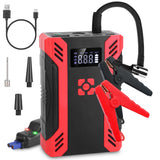 Jump Starter with Air Compressor
$177.99Jump starter with built-in air compressor.
Jump Starter with Air Compressor
$177.99Jump starter with built-in air compressor.

What Other Pages on These Codes Get Wrong
- Treating them as injector codes. These monitor a control circuit — whether commanded and actual voltage states match. They do not assess spray quality, delivery volume or injector wear. GM's bulletin says plainly not to replace injectors for them.
- Covering each code in isolation. The single most useful diagnostic here is counting how many are stored. One means an open or poor connection, four means a short to ground, more than four means a short to voltage. A page about one code alone cannot tell you that.
- Never publishing the cylinder groups. Codes matching cylinders 2, 3, 5, 8 or 1, 4, 6, 7 are a complete group — one short to ground, not four failures. That converts an alarming code list into a specific diagnosis.
- Not naming the connectors. GM specifies C107 on Silverado and Sierra, C118 on Kodiak and TopKick. That turns "inspect the wiring" into a place to put your hands.
- Recommending static wiring inspection. A wire worn nearly through makes contact intermittently. Flex the harness while looking, or it passes.
- Ignoring aftermarket electronics. Disconnecting them and clearing the codes is a free test on a platform where modifications are common.
- Repairing the wire without rerouting it. Whatever wore through the insulation is still there.
Frequently Asked Questions
Do I need new injectors?
GM's bulletin on these codes says explicitly not to replace fuel injectors for them, and directs technicians to the wiring between the ECM and the fuel injection control module instead. These codes monitor whether the control circuit's actual voltage matches what was commanded — they do not assess the injector's condition at all. On a Duramax that distinction is worth a great deal of money.
I have four of these codes. Are four injectors bad?
Almost certainly not. GM's own guidance is that a group of four points to a short to ground, and the cylinder groups are 2, 3, 5, 8 and 1, 4, 6, 7. If your codes match one of those sets exactly, you have one fault producing four codes rather than four separate failures.
What if only one code is stored?
That points to an open circuit or a poor connection on that one cylinder's control circuit. Trace it end to end, and pay attention to the connector — a backed-out or corroded terminal looks perfectly normal from outside.
What if I have more than four?
More than four of these codes points to a short to voltage on the injector control circuit. It looks alarming on a scan tool, but it is one circuit-wide fault rather than a catastrophic set of component failures.
Where exactly should the wiring be inspected?
Between the engine control module and the fuel injection control module, with particular attention to connector C107 on Silverado and Sierra, or C118 on Kodiak and TopKick. Look for chafing where the harness passes edges and brackets, and flex the harness as you inspect.
Could my tuner or aftermarket electronics be causing this?
It is worth ruling out, and the test is free. Disconnect any aftermarket electrical modification, clear the codes, and drive it. If they do not return, you have your answer. Declare any modifications when the truck is diagnosed — a shop cannot account for what it does not know about.
Which vehicles get these codes?
The 6.6L Duramax in Silverado and Sierra, and in the Kodiak and TopKick medium-duty trucks, in the LB7 and LLY generations of the early to mid 2000s. GM's bulletin specifically covers 2004–2005 vehicles with the LLY engine.
Can I keep driving?
It depends how many cylinders are involved — one is a rough-running truck, four is barely drivable. Beyond driveability, sustained misfiring sends unburnt fuel through the exhaust, which is not good for a diesel's aftertreatment. Get it diagnosed promptly, but make sure the wiring inspection happens before anyone quotes injectors.
Shop Related Parts & Tools
The documented repair here is wiring, not parts. Count your codes, inspect the harness, and get the diagnosis right before anyone orders anything for a Duramax.
-
 MOTOPOWER MP69033 OBD2 Scanner — the single most important tool on these codes, because reading every stored code is the diagnosis. One, four, or more than four tells you whether you have an open circuit, a short to ground, or a short to voltage.
-
 95-Piece Mechanics Tool Set (Metric & SAE) — for access to the harness run between the ECM and the FICM and to the connector GM names for your truck.
-
 VDIAGTOOL BT500 Battery Tester — worth ruling out the charging system on a code family that is fundamentally about voltage states being where they should be.
Related Guides
- P0612 Code: Fuel Injector Control Module Relay Control — the separate-module architecture these codes rely on
- GMC Code P0191: Fuel Rail Pressure Sensor Performance — the Duramax fuel system
- P046C Code: EGR Position Sensor Performance — another Duramax code where the obvious part is the wrong one
- P0300 Code: Random/Multiple Cylinder Misfire Detected