
P0612 is "Fuel Injector Control Module Relay Control." It belongs to the internal control module family of codes — the module ran a self-test on the circuit it uses to command the fuel injector relay, and did not like what it found. Whether that is a cheap repair or an expensive one hinges on a single question most pages never ask: is your injector control a separate module, or is it built into the ECM? Those are two completely different jobs.
Jump to a section: What P0612 means · The question that sets your bill · Test the fuses under load · Why you cannot just swap a module · Take a no-start seriously · Companion codes · A note on sourcing · Symptoms · Causes and how to confirm each · How it's diagnosed · Parts and cost · What other pages get wrong · FAQ
What Does P0612 Mean?
Fuel injectors need more current and higher voltage than a control module can supply directly, so the module works through a relay that switches the heavy current on the injectors' behalf.
Every time the ignition is turned on, the control module runs a series of self-tests. One of those checks the circuit it uses to command that relay. P0612 sets when that self-test fails — the module has concluded that its own injector relay control function is not working correctly.
That places P0612 in the P06xx internal control module group, alongside codes like P0601 through P0606. It is a different character of code from a sensor fault. The module is reporting a problem with itself, or with something in the circuit it directly commands.
Which is precisely why the next question matters so much.
The Question That Sets Your Bill
This is the practical heart of the code, and the answer varies enormously by vehicle.
The fuel injector controller and its relay can be arranged two ways:
| Arrangement | Typically found on | What P0612 means for the repair |
|---|---|---|
| Separate injector control module and/or an external relay | Many diesel applications, where a dedicated fuel injector control module drives the injectors | Potentially a relay, a fuse, or wiring. A repairable circuit with discrete parts |
| Integrated into the ECM | Most modern gasoline engines — manufacturers combine the functions to save space and cost | An internal module fault. Often means the ECM itself, and it will need programming |
The gap between those two outcomes is the difference between a modest repair and a control module replacement.
So the first thing to establish is which architecture your vehicle uses — before anyone quotes anything. Diesel applications with a discrete injector control module give you far more to test and repair; a gasoline engine with everything inside the ECM gives you far less.
Even where the fault does turn out to be internal, that conclusion should come last. A module reporting its own relay control circuit as faulty can be doing so because the circuit it is watching has a problem outside the module — a blown fuse, a failed relay, a corroded connector or a bad ground all produce readings the module cannot distinguish from an internal defect.
Tools for checking the relay circuit
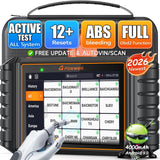 FOXWELL NT726 Bidirectional Scanner
$368.99Bidirectional scanner that commands relays on supported GM vehicles.
FOXWELL NT726 Bidirectional Scanner
$368.99Bidirectional scanner that commands relays on supported GM vehicles.
 FOXWELL NT614 Elite Scanner
$233.69Engine live data and code reading.
FOXWELL NT614 Elite Scanner
$233.69Engine live data and code reading.
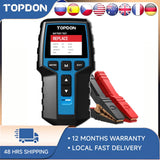 TOPDON BT200 Battery Tester
$103.99Battery tester — low voltage drops out relays.
TOPDON BT200 Battery Tester
$103.99Battery tester — low voltage drops out relays.

Test the Fuses and Relays Under Load
The cheapest checks on this code, and there is a technique detail worth getting right.
Before anything expensive, check the power supply fuses and relays feeding the control module and the injector circuit. Test them with a meter and the circuit loaded — not just by looking at them.
That distinction matters more than it sounds. A fuse can look perfectly intact and still have a cracked element that opens under current. A relay can click when you shake it and still fail to pass load through burnt contacts. A visual inspection passes both of them, and the fault stays.
The same applies to grounds. A ground that measures fine with no current flowing can drop significant voltage once the circuit is actually working — and a module with a compromised ground reference reports all sorts of things about itself that are not true.
If your vehicle has an external injector control relay, pay particular attention to it, and follow the manufacturer's test procedure rather than assuming a click means it is good.
Why You Cannot Just Swap a Module
Worth knowing before anyone buys a used ECM from a breaker's yard.
If the diagnosis genuinely lands on the control module, the replacement has to be programmed and configured to your vehicle. Modern modules arrive blank or with generic software, and they carry vehicle-specific calibration, immobiliser data and configuration.
Two consequences:
- A module fitted without programming will not work, and on many vehicles will not allow the engine to start at all.
- The programming is not optional or skippable. It requires the right equipment, which for most people means a dealer or a well-equipped independent shop.
This is also why a used module off a similar vehicle is rarely the shortcut it appears to be — it is carrying another vehicle's configuration, and in many cases cannot simply be reprogrammed to yours.
Budget for the programming as part of the repair, not as an extra. And because that cost applies regardless, it is one more reason to exhaust the fuses, relays, wiring and grounds first.
Take a No-Start Seriously
Most codes on this site come with a "generally safe to drive" note. This one deserves more caution.
P0612 concerns the circuit that switches power to the fuel injectors. If that circuit fails outright, the injectors stop firing — and an engine with no fuel does not run. Internal control module codes are documented as capable of producing a no-start condition among their possible outcomes.
What that means practically:
- If it is currently running normally with just a light on, you have time, but not unlimited time. An intermittent fault in this circuit can become a permanent one without warning.
- If it has already stalled or failed to start once, treat that as the fault announcing itself. Do not plan a long trip on it.
- If it stalls while moving, that is a safety concern in its own right — a stalled engine takes power steering and brake assist with it.
This is not a code to carry for months to see what happens.
Companion Codes
| Code | What it adds |
|---|---|
| P0611 — fuel injector control module performance | The closest relative. Strengthens the case that the injector control function specifically is at fault |
| P0601 / P0602 / P0603 / P0604 / P0606 | Other internal control module codes. A cluster of these together points at the module itself rather than at one circuit |
| P0685 / P0689 | ECM power relay control and sense circuits — related power supply architecture. See our P1682 guide |
| Injector circuit codes (P0200 series) | Point downstream of the relay, toward individual injectors or their wiring |
| Communication codes (U-codes) | Suggest a module power or network problem broader than the injector circuit alone |
P0612 on its own is a much better position than P0612 inside a cluster of P06xx codes. One circuit code invites you to test that circuit; several internal module codes together make the module itself far more likely.
A Note on Sourcing for This Code
We cite GM documents where we have them and say so where we do not.
We could not verify a GM service bulletin naming P0612 on a specific GM platform. P0612 is a generic OBD-II code that applies across manufacturers, and the material on this page — the integrated-versus-separate distinction, the load-testing technique, the programming requirement — is standard diagnostic practice rather than a GM document we opened and read.
That is worth stating plainly because it also tells you something useful: a great deal of what is written about P0612 online is generic, applying to Chevrolet, GMC, Dodge, Ram and others alike. Guidance written for another manufacturer's fuel injector control module may describe the same principle without describing your hardware.
The single most valuable thing you can do is search for bulletins specific to your exact year, model and engine. On a code like this, where the architecture varies so much between applications, a manufacturer bulletin matching your vehicle is worth more than any general article. Have a dealer check your VIN — that is free and definitive.
Symptoms of P0612
- Check engine light on
- No-start condition in the more severe cases
- Stalling, or the engine cutting out and restarting
- Rough running or vibration at idle
- Poor acceleration and hesitation
- Reduced fuel economy
- Difficulty shifting, where the transmission responds to erratic engine behaviour
- Sometimes only the light, with no obvious symptom
On urgency: higher than most. The severity depends on whether the circuit is intermittently marginal or has failed outright, and the same fault can move between those states. If the vehicle is running normally, get it diagnosed soon rather than eventually. If it has stalled or refused to start, stop treating it as a light on the dashboard.
Causes and How to Confirm Each
| Cause | How to confirm it | Notes |
|---|---|---|
| Blown fuse in the module or injector supply | Test with a meter under load, not visually | Cheapest possible outcome. A cracked element passes a visual check |
| Failed external injector control relay | Test per the manufacturer's procedure. Where an identical relay exists elsewhere, swapping is a free test | Only applies where the relay is external rather than integral |
| Corroded or damaged connector | Inspect module and relay connectors for corrosion, moisture and backed-out pins | Inexpensive, and easy to overlook |
| Poor ground or voltage drop | Voltage drop testing with the circuit loaded | A compromised ground makes a module misreport its own condition |
| Damaged wiring in the control circuit | Continuity and insulation testing along the run | Check routing near heat sources and moving components |
| Low system voltage or weak battery | Test the battery and charging system first — it is free | Modules behave unpredictably on marginal voltage |
| Failed separate fuel injector control module | Where the vehicle has one, after the circuit is proven | More common on diesel applications |
| Internal ECM fault | Last. After fuses, relays, connectors, grounds and wiring are excluded | Requires programming. A cluster of P06xx codes makes this more likely |
| Software calibration | Ask the dealer to check for updates against your VIN | Worth asking before condemning hardware |
Relay and module parts
 ACDelco D1741C Multi-Purpose Relay
$19.99ACDelco multi-purpose relay. Confirm fitment by VIN before ordering.
ACDelco D1741C Multi-Purpose Relay
$19.99ACDelco multi-purpose relay. Confirm fitment by VIN before ordering.
 ACDelco Remanufactured ECM
$301.99ACDelco remanufactured engine control module. Confirm fitment by VIN before ordering.
ACDelco Remanufactured ECM
$301.99ACDelco remanufactured engine control module. Confirm fitment by VIN before ordering.
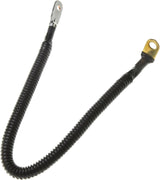 ACDelco 4ST18 Positive Fuse Block Cable
$15.84ACDelco positive battery fuse block cable. Confirm fitment by VIN before ordering.
ACDelco 4ST18 Positive Fuse Block Cable
$15.84ACDelco positive battery fuse block cable. Confirm fitment by VIN before ordering.


How Is P0612 Diagnosed?
- Record all codes and freeze frame data before clearing anything. On an intermittent fault that context may be all you get.
- Note whether other P06xx codes are present. A cluster shifts probability toward the module itself.
- Establish your architecture — separate injector control module and external relay, or everything integrated into the ECM. This determines what can be repaired.
- Test the battery and charging system. Free, and marginal voltage makes modules report nonsense.
- Test the module and injector supply fuses under load, with a meter rather than by eye.
- Test the injector control relay where it is external, following the manufacturer's procedure.
- Inspect connectors and perform voltage drop tests on the grounds.
- Search for bulletins matching your exact year, model and engine, since general guidance on this code covers many manufacturers.
- Only then consider the module, and budget for programming as part of the job.
- Verify across several ignition cycles, since the self-test that sets this code runs at key-on.
Parts and Cost
| Repair | What it involves | Cost picture |
|---|---|---|
| Fuse | Replace, and establish what blew it | Minimal. Test under load first |
| Injector control relay (external) | Where the vehicle has a discrete relay and it tests bad | Inexpensive — the best realistic outcome |
| Connector or ground repair | Where corrosion or a voltage drop is the fault | Modest |
| Wiring repair | Where damage is found in the control circuit | Varies with access |
| Separate fuel injector control module | Where the vehicle has one and it is confirmed failed | Significant; may require programming |
| ECM replacement plus programming | Where the fault is internal and the function is integrated | The large one. Programming is part of the job, not an add-on |
| Used module bought as a shortcut | Carrying another vehicle's configuration | Frequently money spent with the vehicle no better |
Order against your VIN. Control modules are application-specific and configured to the vehicle, so a part number from a similar vehicle is not a safe basis for ordering.
Wiring and charging
 ACDelco 2-Pin Replacement Connector PT3739
$90.99Two-pin replacement connector. Confirm fitment by VIN before ordering.
ACDelco 2-Pin Replacement Connector PT3739
$90.99Two-pin replacement connector. Confirm fitment by VIN before ordering.
 Nomex Split Loom, 1 in. x 10 ft
$105.66Split loom to protect a repaired harness.
Nomex Split Loom, 1 in. x 10 ft
$105.66Split loom to protect a repaired harness.
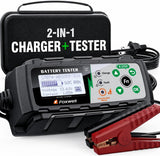 FOXWELL BC521 Battery Charger & Tester
$162.35Charger and tester — keep voltage steady during programming.
FOXWELL BC521 Battery Charger & Tester
$162.35Charger and tester — keep voltage steady during programming.


What Other P0612 Pages Get Wrong
- Not asking whether the function is integrated or separate. That single question decides whether this is a relay repair or a control module replacement, and most write-ups skip straight past it.
- Treating "internal control module fault" as meaning the module is bad. The module is reporting a problem with a circuit it commands. A blown fuse, a dead relay, a corroded connector or a poor ground all produce that report with a healthy module.
- Recommending visual fuse and relay checks. A cracked fuse element and burnt relay contacts both pass a look. Test under load with a meter.
- Ignoring the programming requirement. A replacement module has to be programmed and configured to the vehicle. Buying a used one to save money usually does not.
- Calling it safe to drive. This circuit switches power to the fuel injectors, and internal module codes are documented as capable of producing a no-start. That deserves more caution than a typical sensor code.
- Presenting generic guidance as vehicle-specific. P0612 spans Chevrolet, GMC, Dodge, Ram and others with genuinely different hardware. Guidance for one may not describe another.
- Ignoring the code cluster. P0612 alone points at a circuit worth testing. P0612 among several P06xx codes points at the module. Those lead to very different spends.
Frequently Asked Questions
Does P0612 mean my ECM is bad?
Not necessarily, and that conclusion should come last. The module is reporting that its injector relay control function failed a self-test — which a blown fuse, a failed relay, a corroded connector or a poor ground can all cause with a perfectly good module. Test the circuit before condemning the computer.
What's the cheapest thing to check first?
The fuses and relays feeding the module and the injector circuit — tested with a meter under load rather than by eye. A fuse can look intact and still open under current, and a relay can click while failing to pass load through burnt contacts.
Can I drive with P0612?
With more caution than most codes. This circuit switches power to the fuel injectors, and internal control module codes are documented as capable of producing a no-start. If the vehicle is running normally you have some time; if it has already stalled or failed to start, do not plan a long trip on it.
Can I fit a used ECM to save money?
Usually not successfully. Replacement modules must be programmed and configured to your specific vehicle, carrying its calibration and security data. A used module arrives with another vehicle's configuration and in many cases cannot simply be reprogrammed to yours. Budget for programming as part of any module repair.
Why does the light come on at key-on?
Because that is when the module runs its self-tests. Every time the ignition is energised it checks its own functions, including the injector relay control circuit. That is also why verifying a repair takes several ignition cycles rather than one.
What's the difference between P0612 and P0611?
P0611 concerns the fuel injector control module's performance; P0612 concerns the relay control function specifically. They are closely related, and seeing them together strengthens the case that the injector control side is genuinely at fault rather than a broader module problem.
Is this a diesel-only code?
No, though the architecture differs. Diesel applications more often have a discrete fuel injector control module, which gives you more separate components to test and repair. On many gasoline engines the function is integrated into the ECM, which narrows the repair options considerably.
My shop wants to replace the computer. Should I question it?
Ask three things: were the fuses and relays tested under load rather than visually, were the grounds voltage-drop tested, and are other P06xx codes stored alongside. If the first two were not done and P0612 is the only internal code, the circuit has not been ruled out yet.
Shop Related Parts & Tools
Test the supply side before anyone quotes a module. Confirm all parts against your VIN — control modules are configured to the specific vehicle.
-
 MOTOPOWER MP69033 OBD2 Scanner — shows whether other P06xx codes are stored alongside, which is the difference between testing one circuit and suspecting the module itself.
-
 VDIAGTOOL BT500 Battery Tester — rules out marginal system voltage, which makes control modules misreport their own condition and is free to eliminate.
-
 95-Piece Mechanics Tool Set (Metric & SAE) — for fuse block, relay and module connector access.
Related Guides
- P1682 Code: Ignition 1 Switch Circuit 2 — module power supply faults and why they mimic component failures
- P0562 Code: System Voltage Low
- GMC Code P0191: Fuel Rail Pressure Sensor Performance — the diesel fuel system side
- GM Check Engine Light Codes: Most Common & What They Mean