
P0717 is "Input/Turbine Speed Sensor A Circuit — No Signal." Not a weak signal, not an implausible one. The transmission module is seeing nothing at all from the sensor that tells it how fast the input shaft is turning. On GM's 6L80 and 6L90 that sensor is not a bolt-on part on the outside of the case — it lives on the valve body inside the transmission, which changes the whole shape of the repair. And if this code appeared right after transmission work, there is a specific thing to check first.
Jump to a section: What P0717 means · GM's exact setting condition · Where the sensor actually lives · The wrong valve body · The alternator nobody suspects · The free swap test · Why P0700 is stored alongside · A note on sourcing · Symptoms · Causes and how to confirm each · How it's diagnosed · Parts and cost · What other pages get wrong · FAQ
What Does P0717 Mean?
An automatic transmission cannot shift intelligently without knowing two speeds: how fast the input shaft is turning coming in from the torque converter, and how fast the output shaft is turning going out to the driveshaft. Compare the two and you know what gear it is actually in, how much the converter is slipping, and whether a clutch is holding.
The input speed sensor — also called the turbine speed sensor — supplies the first of those numbers. On GM's 6L80 and 6L90 it is a hall-effect sensor that reads a machined surface on the 1-2-3-4 and 3-5-R clutch housing as it rotates, producing a signal frequency proportional to speed.
The module uses that signal to determine line pressure, shift patterns, torque converter clutch slip speed, and gear ratio. Losing it is not a minor inconvenience.
The distinction that matters is in the code name. There are three codes for this sensor and they mean different things:
| Code | What it says |
|---|---|
| P0715 | Circuit malfunction — something is wrong with the circuit |
| P0716 | Range/performance — a signal is present but it does not make sense |
| P0717 | No signal. The module is receiving nothing at all |
"No signal" pushes the diagnosis toward an open circuit, a disconnected or wrongly positioned sensor, or a total supply failure — rather than a sensor that has drifted out of tolerance. That is a meaningfully different list of suspects.
GM's Exact Setting Condition
Most pages describe this code vaguely. GM's criterion is precise, and knowing it explains the symptoms.
The code sets when the module sees turbine speed below 61 RPM while output speed is above 500 RPM, for one second.
Think about what that describes. The output shaft is clearly turning — the vehicle is moving at a decent clip. But the input shaft is reporting essentially stationary. Those two facts cannot both be true in a functioning transmission, so the module concludes the input signal is absent rather than merely wrong.
The sensor is also fed a supply voltage: GM specifies the input and output speed sensors receive roughly 8.3 to 9.3 volts on the shared supply circuit from the transmission control module. That shared supply is worth remembering — if it fails, both speed sensors go quiet together, which is a very different repair from one dead sensor.
So if P0717 is stored alongside an output speed sensor code such as P0722, do not assume two sensors failed. Look at what they have in common.
Tools for checking speed sensor data
 FOXWELL NT604 ABS/SRS/Transmission Scanner
$209.09Shows input and output shaft speed in live data.
FOXWELL NT604 ABS/SRS/Transmission Scanner
$209.09Shows input and output shaft speed in live data.
 Launch CRE 2.0 GM All-System Scanner
$159.00GM all-system scanner with transmission data.
Launch CRE 2.0 GM All-System Scanner
$159.00GM all-system scanner with transmission data.
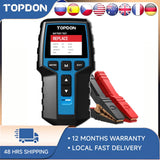 TOPDON BT200 Battery Tester
$103.99Weak charging voltage can corrupt speed sensor signals.
TOPDON BT200 Battery Tester
$103.99Weak charging voltage can corrupt speed sensor signals.


Where the Sensor Actually Lives
This is the part that changes people's expectations, and it depends heavily on which transmission you have.
| Transmission | Where the input speed sensor sits | What that means |
|---|---|---|
| 6L80 / 6L90 (and 6L45 / 6L50) | Mounted to the control valve upper body assembly, inside the transmission. It connects to the control solenoid and TCM valve assembly through an internal harness and connector | Pan down and into the transmission. Not a roadside sensor swap |
| Older 4-speed units and many Allison applications | Externally accessible on the case — commonly near the bell housing | Genuinely a bolt-on sensor in many cases |
Verify which you have before accepting any labour estimate, because the difference between an external sensor and an internal one is hours of billed time.
The 6L80/6L90 arrangement also connects this code to the transmission's control electronics generally. That family uses the TEHCM — the Transmission Electro-Hydraulic Control Module, combining the control module, solenoids and pressure switches in one assembly on the valve body. Our P0700 guide covers that architecture, including the trap of buying a PCM when the transmission electronics are what is implicated.
If This Started After Transmission Work — Check the Valve Body
A specific and easily missed cause, worth checking before anything else if the timing fits.
GM publishes an upper valve body identification guide for the 6L45, 6L50, 6L80 and 6L90 family, because these transmissions use valve bodies that look similar but are not interchangeable. The guide exists to stop the wrong one being fitted.
The consequence relevant here: an incorrect upper valve body does not locate the input speed sensor properly, which can produce a total loss of sensor signal — exactly what P0717 describes. The sensor may be brand new and perfectly functional, positioned where it cannot read the clutch housing.
The same wrong-valve-body error is also associated with no reverse or no second gear after a rebuild, so those symptoms alongside strengthen the case considerably.
The practical rule: if P0717 appeared after a rebuild, a valve body replacement, or any internal transmission work, ask what valve body was fitted and whether it was verified against the identification guide. That is a much better first question than "which sensor do we replace."
The Alternator Nobody Suspects
A genuinely unusual cause, specific to a group of GM trucks and SUVs.
On 2007–2014 Silverado, Sierra, Tahoe and Suburban, a failing alternator is reported to introduce electrical noise onto the vehicle's supply that can disrupt the transmission speed signal. The sensor is fine. The wiring is fine. The signal is being drowned in interference from a charging system that is on its way out.
What makes this worth flagging is that nothing about the symptom points at the alternator. The vehicle shifts badly, a transmission code stores, and the diagnosis heads into the gearbox — which on a 6L80 means dropping the pan for a sensor that was never faulty.
If your truck is in that range, have the charging system tested properly before anyone opens the transmission. Test it under load and look for ripple, not just a voltage reading at idle — a failing diode produces AC noise while still showing acceptable DC volts. Our P0562 guide covers how charging faults scatter codes across unrelated systems.
The Free Swap Test
Where the sensors are externally accessible — including many Allison-equipped Duramax applications — there is a test that costs nothing.
The transmission has two speed sensors of the same type: input and output. Swap them, clear the codes, and drive.
- If the fault moves to the output sensor code, the sensor is bad and you know which part to buy.
- If P0717 stays put, the sensor is fine and the fault is in the wiring, the connector, or the module — and you have saved yourself from buying a part you did not need.
On Allison applications, technicians also check resistance through the turbine speed sensor circuit at the TCM connector, with a published figure in the region of 2,300 to 2,800 ohms at 68°F. Use the specification and pin locations for your exact application rather than a figure from a forum about a different one — but the principle of testing the circuit end to end, rather than just the sensor, is sound everywhere.
Why P0700 Is Almost Always Stored Alongside
If you scanned the vehicle yourself, you probably saw two codes and wondered which one matters.
P0700 is not a second fault. It is the transmission module asking the engine module to turn on the check engine light on its behalf. The transmission module cannot illuminate the MIL itself, so it sends a request, and the engine module logs that request as P0700.
P0717 is the actual fault. P0700 is the notification.
This is exactly the situation our P0700 guide describes: a generic reader shows P0700 and nothing else, because the real code lives in the transmission module and needs a tool that can address it. If you are reading this page, you already have the companion code — which puts you ahead of most people facing a rebuild quote.
A Note on Sourcing for This Code
We cite GM documents where we have them and label the rest.
GM preliminary information PIP4793F is reported to address DTC P0716, P0717 or P0722 on the 6L80 and 6L90 transmissions — speed sensor performance on exactly this family. We could not open that document, so we are reporting it as corroborated rather than verified. If a shop is diagnosing your 6L80, it is a reasonable bulletin to ask them to check.
The upper valve body identification guide for the 6L45, 6L50, 6L80 and 6L90 is likewise corroborated rather than opened by us, as is the alternator-noise pattern on 2007–2014 trucks.
The setting threshold, the supply voltage range and the sensor's mounting description are consistently reported by technicians working from GM service information. Have a dealer check your VIN against current bulletins directly — that is free and definitive in a way no article is.
One further note worth knowing: the 2007–2009 Saturn Outlook and its Lambda platform relatives are associated with an internal transmission component failure producing a cluster of codes including P0716, P0717, P0776, P0777, P2714, P2715 and P2723. A long list of transmission codes together on those vehicles suggests one internal failure rather than many.
Symptoms of P0717
- Check engine light, usually with P0700 alongside
- Limp mode — locked into a single gear to protect the transmission
- Harsh, erratic or delayed shifting
- Failure to shift at all
- Slipping, or engine speed rising without matching acceleration
- Torque converter clutch not engaging, or engaging roughly
- Speedometer or shift indicator behaving oddly in some cases
- Reduced fuel economy
On urgency: this one is more serious than most sensor codes. The module uses input speed to set line pressure and manage clutch application. Without it, the transmission is operating on defaults — and a transmission shifting on defaults, slipping, or locked in limp mode is generating heat. Heat is what destroys automatics. Keep driving to a minimum and get it diagnosed promptly rather than commuting on it for weeks.
Causes and How to Confirm Each
| Cause | How to confirm it | Notes |
|---|---|---|
| Wrong upper valve body fitted | Ask what was fitted at the last internal repair; verify against GM's identification guide | Does not locate the sensor properly — total signal loss. Check first if the code followed transmission work |
| Open circuit in the sensor wiring or connector | Continuity and resistance testing end to end. "No signal" points here strongly | Includes the internal harness on 6L80/6L90 |
| Failed input speed sensor | Swap with the output sensor where accessible and see if the fault follows | Free to test when the sensors are external |
| Alternator noise (2007–2014 trucks and SUVs) | Test the charging system under load, looking for ripple as well as voltage | Sensor and wiring both good. Test before opening the transmission |
| Shared supply voltage fault | Check for roughly 8.3–9.3 V on the speed sensor supply circuit | Suspect when an output speed sensor code is stored alongside |
| Internal harness or connector fault | Requires the pan down on 6L80/6L90 | Inspect while you are in there rather than making two trips |
| Contaminated or low transmission fluid | Check level and condition using the correct procedure for your transmission | Cheap to check; many GM units have no dipstick |
| Internal component failure | A wide cluster of transmission codes together, particularly on Lambda platform vehicles | One failure producing many codes |
| TEHCM or control module fault | After circuit, sensor and supply are proven | Requires programming; not a parts-cannon repair |
Speed sensor and module parts
 ACDelco Transmission Control Module 24276411
$254.99ACDelco transmission control module — 6L80/8L90 speed sensors are built into the TEHCM. Confirm fitment by VIN before ordering.
ACDelco Transmission Control Module 24276411
$254.99ACDelco transmission control module — 6L80/8L90 speed sensors are built into the TEHCM. Confirm fitment by VIN before ordering.
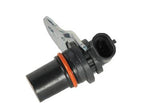 ACDelco Vehicle Speed Sensor 213344
$85.99ACDelco 2-wire vehicle speed sensor for older GM transmissions. Confirm fitment by VIN before ordering.
ACDelco Vehicle Speed Sensor 213344
$85.99ACDelco 2-wire vehicle speed sensor for older GM transmissions. Confirm fitment by VIN before ordering.
 ACDelco 2-Pin Replacement Connector PT3739
$90.99Two-pin replacement connector for a damaged sensor connector. Confirm fitment by VIN before ordering.
ACDelco 2-Pin Replacement Connector PT3739
$90.99Two-pin replacement connector for a damaged sensor connector. Confirm fitment by VIN before ordering.


How Is P0717 Diagnosed?
- Record every code in the transmission module. P0722 alongside points at the shared supply; a long cluster suggests one internal failure.
- Ask what work was done recently. If the code followed a rebuild or valve body replacement, verify the valve body was the correct one.
- Establish which transmission you have and whether the sensor is internal or external, before accepting a labour quote.
- On a 2007–2014 truck or SUV, test the charging system under load for ripple before opening anything.
- Check transmission fluid level and condition with the correct procedure.
- Swap the input and output sensors where they are externally accessible and see whether the fault follows.
- Test the circuit end to end — continuity, resistance, and the supply voltage at the sensor.
- Inspect the internal harness and connector if the pan has to come down anyway.
- Repair what is confirmed, and while you have access, address anything else the codes implicated.
- Clear and road test through the conditions in the freeze frame data, since the setting criterion involves the vehicle moving at speed.
Parts and Cost
| Repair | What it involves | Cost picture |
|---|---|---|
| Sensor swap test | Exchange input and output sensors where externally accessible | Free to test |
| Connector or external wiring repair | Where the fault is outside the transmission | Among the cheapest outcomes |
| Input speed sensor, externally mounted | Bolt-on where the design allows | Modest part, short job |
| Input speed sensor, internal (6L80 / 6L90) | Pan down, into the transmission, valve body access | Part is modest; labour dominates |
| Alternator | Where charging system noise is the confirmed cause | Moderate — and far cheaper than opening a transmission |
| Internal harness | Fitted while the pan is down | Small addition to a job already committed |
| Correcting a wrong valve body | Fitting the right one per GM's identification guide | Significant — but it is the actual fault, not a sensor |
| TEHCM | Inside the transmission; requires programming | Substantial |
| Rebuild | Only where internal mechanical failure is genuinely confirmed | Ask what evidence points there beyond a speed sensor code |
Confirm parts against your VIN and transmission RPO. GM used several automatics across the same model years and the sensors are not interchangeable between families.
Fluid and wiring parts
 ACDelco Dexron VI Full Synthetic ATF, 1 Gal
$49.99Dexron VI full synthetic ATF, 1 gallon.
ACDelco Dexron VI Full Synthetic ATF, 1 Gal
$49.99Dexron VI full synthetic ATF, 1 gallon.
 ACDelco Transmission Filter TF937
$89.99ACDelco automatic transmission filter. Confirm fitment by VIN before ordering.
ACDelco Transmission Filter TF937
$89.99ACDelco automatic transmission filter. Confirm fitment by VIN before ordering.
 GM Genuine 24297922 Transmission Pan Gasket
$46.81GM Genuine transmission pan gasket. Confirm fitment by VIN before ordering.
GM Genuine 24297922 Transmission Pan Gasket
$46.81GM Genuine transmission pan gasket. Confirm fitment by VIN before ordering.


What Other P0717 Pages Get Wrong
- Calling it a bolt-on sensor. On the 6L80 and 6L90 the input speed sensor mounts to the valve body inside the transmission. Describing this as a quick sensor swap sets people up for a shock at the quote.
- Missing the valve body cause. An incorrect upper valve body does not locate the sensor properly and can produce total signal loss. If the code appeared after internal work, that is the first question — not the last.
- Never mentioning the alternator. On 2007–2014 GM trucks and SUVs, charging system noise can disrupt the transmission signal with a healthy sensor. Testing the alternator costs a fraction of opening a transmission.
- Treating P0700 as a separate problem. It is the transmission module's request for the warning light. P0717 is the fault; P0700 is the notification.
- Ignoring the shared supply. Both speed sensors run off one supply circuit. Two speed sensor codes together should send you to the supply, not to two parts.
- Not distinguishing it from P0716. P0716 means an implausible signal; P0717 means no signal at all. The second points at opens, disconnections and supply failures rather than a drifting sensor.
- Being casual about urgency. Input speed drives line pressure and clutch control. A transmission running on defaults generates heat, and heat is what kills them.
Frequently Asked Questions
Is P0717 just a sensor I can replace?
It depends entirely on your transmission. On the 6L80 and 6L90 the input speed sensor mounts to the valve body inside the transmission, so it means dropping the pan and going in. On some other designs it is externally accessible on the case. Establish which you have before accepting a labour estimate — the difference is hours.
I also have P0700. Is that a second problem?
No. P0700 is the transmission module asking the engine module to turn the check engine light on. P0717 is the actual fault it was reporting. One problem, one repair.
The code appeared right after my transmission was rebuilt. Is that a coincidence?
Probably not. GM publishes an upper valve body identification guide for the 6L45, 6L50, 6L80 and 6L90 precisely because similar-looking valve bodies are not interchangeable, and an incorrect one will not locate the input speed sensor properly — producing exactly this loss of signal. Ask which valve body was fitted and whether it was verified.
Can an alternator really cause a transmission code?
On 2007–2014 Silverado, Sierra, Tahoe and Suburban it is a reported cause. A failing alternator can put electrical noise onto the supply that disrupts the speed signal while the sensor itself is perfectly healthy. Test the charging system under load, looking for ripple rather than just a voltage reading, before anyone opens the transmission.
Can I drive with P0717?
Keep it short. Without input speed the module cannot properly manage line pressure or clutch application, so the transmission runs on defaults — and slipping or limp mode generates heat, which is what destroys automatics. This is not a code to commute on for weeks.
What's the difference between P0716 and P0717?
P0716 means the module is receiving a signal that does not make sense. P0717 means it is receiving nothing at all. "No signal" points toward an open circuit, a disconnected or mispositioned sensor, or a supply failure, rather than a sensor that has drifted out of tolerance.
Is there a free test I can do?
Where the sensors are externally accessible, yes. The input and output speed sensors are the same type, so swap them and clear the codes. If the fault moves to the output sensor code, the sensor is bad. If P0717 stays, the sensor is fine and the problem is in the wiring or the module.
My shop quoted a rebuild. Should I question it?
Ask what evidence points at internal mechanical failure beyond this code. A speed sensor with no signal is frequently a wiring fault, a mispositioned sensor after a valve body swap, a supply problem, or on some trucks a charging system fault. A rebuild is warranted when something internal is confirmed — not on the strength of P0717 alone.
Shop Related Parts & Tools
Establish whether your sensor is internal or external before ordering anything, and confirm parts against your VIN and transmission RPO.
-
 MOTOPOWER MP69033 OBD2 Scanner — captures the freeze frame data before anything is cleared, which matters here because the setting criterion involves the vehicle moving at speed. Reading the transmission module's own codes needs a tool with TCM access.
-
 VDIAGTOOL BT500 Battery Tester — genuinely relevant on this code: it analyses charging ripple and waveform, which is how you catch the alternator noise cause on 2007–2014 trucks before opening a transmission.
-
 95-Piece Mechanics Tool Set (Metric & SAE) — for transmission pan and connector access where the sensor is internal.
Related Guides
- P0700 Code: Transmission Control System (MIL Request) — the code stored alongside, and why it is not a second fault
- P0741 Code: Torque Converter Clutch Circuit Performance or Stuck Off
- P0562 Code: System Voltage Low — how charging faults scatter codes across systems
- GM Check Engine Light Codes: Most Common & What They Mean