
P305D is a DC/DC converter circuit code — part of the 12-volt power architecture on GM vehicles with stop/start. Two things make this page worth reading. First, you will find conflicting definitions for this code online, and we can settle which one is right using GM's own bulletin. Second, that bulletin identifies a cause almost nobody would guess: condensation from the wireless phone charging pad's cooling duct, dripping onto the DC/DC converter under the console. GM's repair requires no parts at all.
Jump to a section: What P305D means · Settling the definition conflict · The phone charger that drips on the converter · Why a DC/DC converter is there at all · A related theme — fuses in the wrong holes · Companion codes · Symptoms · Causes and how to confirm each · How it's diagnosed · Parts and cost · GM documents · What other pages get wrong · FAQ
What Does P305D Mean?
P305D sits in a block of GM codes — P3054, P305B, P305C, P305D, P305E and neighbours — covering the DC/DC converter and its control circuits.
A DC/DC converter does what the name says: it takes voltage at one level and delivers it at another. On GM vehicles with stop/start (RPO KL9) and on mild-hybrid systems, it exists to keep the 12-volt accessory system stable through events that would otherwise cause a voltage dip — particularly the moment the engine auto-restarts.
P305D reports a fault in that converter's control circuit — most commonly described as a high voltage condition on the crank control circuit.
The important framing: this is a low-voltage power electronics problem, not an engine mechanical one. Your engine is almost certainly fine. Something in the module, its connector or its control circuit is not behaving.
Settling the Definition Conflict
If you search this code you will find two different definitions, and it is worth being straight about that rather than picking one silently.
| Claimed definition | Where it appears | Assessment |
|---|---|---|
| DC/DC Converter Crank Control Circuit High Voltage | Multiple code databases, listed specifically for Buick, Cadillac, Chevrolet and GMC | Supported by GM's own bulletin |
| O2 Sensor Temperature Measurement, warm-up temperature not reached | At least one aggregator listing | Not supported. Contradicted by the bulletin evidence below |
Here is how we resolved it. GM bulletin 17-NA-305, which we read in full, is titled "Malfunction Indicator Lamp (MIL) Illuminated — DTCs P305C, P305D and/or P3054 Set." Its stated cause is water dripping onto the DC/DC converter, and its repair procedure works on the DC/DC module's electrical connector.
That is decisive. A GM bulletin naming P305D and repairing a DC/DC converter is not compatible with P305D being an oxygen sensor temperature code.
A second bulletin points the same way: 22-NA-214 is reported to cover stop/start inhibited with battery monitor and intelligent battery sensor concerns, listing P305D alongside U152D, P15FF, P305E and U01B0 — again the 12-volt power domain, not the exhaust.
If a shop quotes you an oxygen sensor for a P305D, ask them to show you where that definition comes from. The manufacturer's own documentation puts this code somewhere else entirely.
Tools for testing the 12-volt system
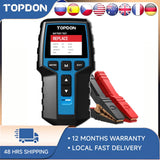 TOPDON BT200 Battery Tester
$103.9912V battery and charging system tester.
TOPDON BT200 Battery Tester
$103.9912V battery and charging system tester.
 FOXWELL BT705 Battery & Alternator Tester
$159.89Tests both batteries and the charging system.
FOXWELL BT705 Battery & Alternator Tester
$159.89Tests both batteries and the charging system.
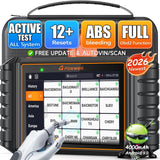 FOXWELL NT726 Bidirectional Scanner
$368.99Bidirectional scanner that reads body and power module codes.
FOXWELL NT726 Bidirectional Scanner
$368.99Bidirectional scanner that reads body and power module codes.

The Phone Charger That Drips on the Converter
This is the reason this page exists, and it is the sort of cause you would never arrive at by reasoning about electrical faults.
GM bulletin 17-NA-305 (September 2017) covers the 2016 Chevrolet Malibu (VIN Z) and 2017–2018 Malibu with RPOs KC4 and KL9. Its cause statement, verbatim:
This condition may be caused by condensation on the cooling duct used for the charging pad, dripping water on the DC/DC converter.
Follow the chain. The wireless phone charging pad generates heat, so it has a cooling duct running to it under the floor console. Air-conditioned air passing through that duct makes the outside of it cold. Humid cabin air condenses on the cold duct, exactly as a cold drink sweats on a summer day. The water runs off — and lands on the DC/DC converter sitting below.
Water on a power electronics connector produces electrical faults. The module is not defective. It is being rained on by a phone charger.
GM's repair procedure:
- Remove the front floor console.
- Remove the screws securing the wireless device charge port temperature control duct to the underside of the console.
- Wrap the duct with closed cell adhesive foam — insulating it so it no longer reaches the temperature at which condensation forms.
- Inspect the DC/DC module electrical connector for signs of moisture. If moisture is found, allow the connector to dry, then apply dielectric grease to the area.
- Reinstall the duct and the console.
And GM's parts information reads, in full: "No parts are required for this repair."
Why this matters so much: the alternative diagnosis is replacing a DC/DC converter — a power electronics module — on a vehicle where the module was never faulty. If your Malibu is in that range and setting these codes, ask specifically whether the charging pad duct and the DC/DC connector were inspected for moisture before any module is ordered.
A note on versions: the September 2017 bulletin we read names P305C, P305D and P3054. A later revision is reported to expand the list to include P0615, P0617 and P305E. Ask your dealer for the current version against your VIN.
Why a DC/DC Converter Is There at All
Understanding this explains the symptoms, and why the code often shows up as a stop/start complaint rather than an electrical one.
When a stop/start system shuts the engine off at a red light and then restarts it, the starter draws a very large current. Without intervention, system voltage would sag hard for a moment — and you would see it: headlights dimming, the radio resetting, the display flickering, the climate control blinking off and back.
The DC/DC converter's job is to hold the accessory side up through that event so the restart is invisible to the occupants. That is why it has a "crank control" circuit — it is specifically involved in what happens during cranking.
Two consequences follow:
- A converter fault often presents as the stop/start system simply refusing to work. The vehicle disables the feature rather than restart the engine without voltage support. That is protective behaviour, not a second fault.
- Owners frequently report it as "my auto stop stopped working" rather than as an electrical problem — which is why the diagnosis can wander before anyone looks at the converter.
A Related Theme — Fuses in the Wrong Holes
Worth knowing because it shows a pattern across this family of codes.
GM bulletin 21-NA-121 (May 2021) covers P3055 and/or P3056 with the stop/start function inoperative on 2019–2021 Silverado and Sierra 1500 equipped with stop/start (RPO KL9). The cause is not a failed component. It is fuses F51DR and F52DR being present in the wrong locations.
GM even created a dedicated labour operation for it — 5486158, "Inspect For and Correct Incorrect Fuse Locations on Vehicles with KL9," 0.5 hours.
That bulletin does not name P305D, so it is not your code. We include it because the theme is consistent and useful: codes in this family are frequently installation, environmental or configuration issues rather than failed modules. Water from a duct. Fuses in the wrong holes. Before anyone orders power electronics, it is worth asking what was checked.
Companion Codes
| Code | What it adds |
|---|---|
| P305C and P3054 | Named alongside P305D in 17-NA-305. This grouping is the signature of the charging pad condensation issue on affected Malibus |
| P305E | The companion position to P305D. Reported in the later revision of 17-NA-305 and in 22-NA-214 |
| P0615 / P0617 | Starter relay circuit codes. Reported in the later 17-NA-305 revision — consistent with a cranking-related fault |
| P15FF, U01B0, U152D | Battery monitor and communication codes reported alongside in 22-NA-214, in a stop/start inhibited context |
| P3055 / P3056 | Stop/start inoperative. Different codes, but see the fuse location bulletin above |
P305C, P305D and P3054 together on a 2016–2018 Malibu is close to a signature. Look under the console before anything else.
Symptoms of P305D
- Check engine light on
- Stop/start system inoperative, or a message saying it is disabled
- The engine no longer shutting off at stops when it used to
- Electrical oddities during restart — flickering displays, momentary accessory dropouts
- Battery or charging system warnings in some cases
- Often no change to how the vehicle drives otherwise
- Companion codes from the P305x group
On urgency: this is generally not a stop-driving fault, and the vehicle typically operates normally with the stop/start feature disabled. The reason not to leave it is specific to the documented cause: if water is dripping onto a connector, it keeps dripping. A moisture problem left alone corrodes terminals and turns a free repair into a module replacement. Deal with it while it is still foam tape and dielectric grease.
Causes and How to Confirm Each
| Cause | How to confirm it | Source |
|---|---|---|
| Condensation from the charging pad cooling duct dripping onto the DC/DC converter | Remove the floor console; inspect the duct and the DC/DC module connector for moisture | 17-NA-305 — verified. No parts required |
| Moisture or corrosion in the DC/DC module connector | Inspect the connector directly. Dry it, then apply dielectric grease | 17-NA-305 — GM's own step |
| Water intrusion from another source | Trace where the water is coming from before sealing anything | Cabin leaks, cowl drains and blocked AC drains all put water in unhelpful places |
| Damaged or chafed wiring in the control circuit | Inspect the harness routing around the module | Console areas see foot traffic and cargo |
| Incorrect fuse configuration | Verify fuses are in their correct locations | Documented for related stop/start codes in 21-NA-121 |
| Weak or failing 12 V battery | Test the battery and the intelligent battery sensor | Stop/start systems are sensitive to battery condition |
| Software calibration | Ask the dealer to check for updates against your VIN | Common resolution across GM stop/start codes |
| Failed DC/DC converter | Last. After moisture, wiring, fuses, battery and calibration are excluded | The expensive conclusion — make it earn its place |
Batteries and relays
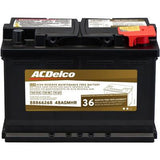 ACDelco Gold AGM Battery, Group 48
$300.99ACDelco Gold AGM battery, Group 48. Confirm fitment by VIN before ordering.
ACDelco Gold AGM Battery, Group 48
$300.99ACDelco Gold AGM battery, Group 48. Confirm fitment by VIN before ordering.
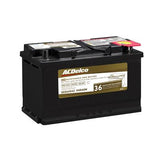 ACDelco Professional AGM Battery, Group 94R
$327.99ACDelco Professional AGM battery, Group 94R. Confirm fitment by VIN before ordering.
ACDelco Professional AGM Battery, Group 94R
$327.99ACDelco Professional AGM battery, Group 94R. Confirm fitment by VIN before ordering.
 ACDelco Auxiliary Battery Relay 84611502
$235.99ACDelco auxiliary battery relay. Confirm fitment by VIN before ordering.
ACDelco Auxiliary Battery Relay 84611502
$235.99ACDelco auxiliary battery relay. Confirm fitment by VIN before ordering.
How Is P305D Diagnosed?
- Record every stored code. P305C and P3054 alongside on a 2016–2018 Malibu point directly at the condensation bulletin.
- Check the VIN against 17-NA-305 and its later revisions with a dealer. Free, and it may be the whole answer.
- Remove the front floor console and inspect the DC/DC module connector for moisture. This is GM's own step and it costs nothing but time.
- Inspect the charging pad cooling duct for condensation, and check whether it has been insulated.
- Look for any other water source before sealing anything — insulating a duct will not help if the water is coming from a blocked drain.
- Test the 12 V battery and the battery sensor. Stop/start systems are unforgiving of a tired battery.
- Verify fuse locations are correct, given the documented precedent on related codes.
- Ask about calibration updates against your VIN.
- Only then consider the converter itself, and inspect the connector one more time before committing.
Parts and Cost
| Repair | What it involves | Cost picture |
|---|---|---|
| Insulate the duct, dry and grease the connector | GM's documented procedure — foam tape on the duct, dielectric grease on the connector | GM: "No parts are required for this repair." Labour only |
| Correcting fuse locations | Where a related configuration issue applies | Minimal — GM's own operation for the related codes is half an hour |
| Connector repair | Where corrosion has progressed beyond drying out | Modest |
| Wiring repair | Where chafing or damage is found | Modest |
| 12 V battery | Where testing shows it is the limiting factor | Moderate. Stop/start vehicles use specific battery types — match to VIN |
| Calibration update | Dealer reprogramming | No parts |
| DC/DC converter | Power electronics module, likely requiring programming | The large one. Ask what was inspected before agreeing |
Order against your VIN. Power electronics modules are application-specific and generally require configuration to the vehicle.
Cables and charging
 ACDelco Gold 2LF32XE Negative Battery Cable
$45.24ACDelco negative battery cable. Confirm fitment by VIN before ordering.
ACDelco Gold 2LF32XE Negative Battery Cable
$45.24ACDelco negative battery cable. Confirm fitment by VIN before ordering.
 ACDelco 4ST18 Positive Fuse Block Cable
$15.84ACDelco positive battery fuse block cable. Confirm fitment by VIN before ordering.
ACDelco 4ST18 Positive Fuse Block Cable
$15.84ACDelco positive battery fuse block cable. Confirm fitment by VIN before ordering.
 FOXWELL BC521 Battery Charger & Tester
$162.35Charger and tester to keep both batteries healthy.
FOXWELL BC521 Battery Charger & Tester
$162.35Charger and tester to keep both batteries healthy.
GM Documents Relevant to P305D
| Document | Subject | Status |
|---|---|---|
| 17-NA-305 (Sep 2017) | "MIL Illuminated — DTCs P305C, P305D and/or P3054 Set." Cause: condensation on the cooling duct used for the charging pad, dripping water on the DC/DC converter. Correction: wrap the duct in closed cell adhesive foam; inspect the DC/DC module connector for moisture, dry it and apply dielectric grease. No parts are required for this repair | Chevrolet Malibu 2016 (VIN Z) and 2017–2018, RPOs KC4 and KL9 — verified |
| 17-NA-305, later revision | Reported to expand the DTC list to include P0615, P0617 and P305E | Corroborated — the version we opened is the September 2017 release |
| 22-NA-214 | Stop/start inhibited with battery monitor and module concerns, listing P305D and P305E alongside U152D, P15FF and U01B0 | Corroborated — not opened |
| 21-NA-121 (May 2021) | Stop/start inoperative with P3055 and/or P3056 caused by fuses F51DR and F52DR in incorrect locations. Labour operation 5486158, 0.5 hr | Silverado and Sierra 1500 2019–2021 with RPO KL9 — verified. Does not name P305D; included for the pattern |
Have a dealer check your VIN against current bulletins rather than relying on any article, including this one.
What Other P305D Pages Get Wrong
- Publishing the wrong definition. At least one aggregator lists P305D as an oxygen sensor temperature code. GM's own bulletin names it in a DC/DC converter repair. Those cannot both be true, and the manufacturer's document wins.
- Never mentioning the charging pad duct. GM documented condensation from a phone charger cooling duct dripping onto the DC/DC converter, with a no-parts repair. It is the single most useful fact about this code on the affected vehicles and it is almost entirely absent from code write-ups.
- Jumping to the converter. This is a power electronics module. Before it is replaced, someone should have looked at the connector for moisture — because on the documented cause the module was never faulty.
- Publishing a flat repair cost range. The documented repair uses no parts at all. Any page quoting a single figure has not seen the bulletin.
- Missing the stop/start connection. The converter exists to hold accessory voltage through auto-restart, which is why the complaint often arrives as "stop/start quit working" rather than as an electrical fault.
- Sealing without finding the source. Insulating the duct is the right fix for condensation on the duct. If water is arriving from a blocked drain or a cabin leak, that needs finding first.
- Treating moisture as harmless once dried. GM's procedure includes applying dielectric grease after drying, precisely because a connector that has been wet once is vulnerable.
Frequently Asked Questions
What does P305D actually mean? I'm seeing two different definitions.
It is a DC/DC converter circuit code. You will find one aggregator listing it as an oxygen sensor temperature code, but GM's own bulletin 17-NA-305 names P305D in a repair that inspects and services the DC/DC converter connector. That settles it — the code belongs to the 12-volt power system, not the exhaust.
Is it really caused by my phone charger?
On the affected Malibus, GM says yes — indirectly. The wireless charging pad has a cooling duct, humid cabin air condenses on that cold duct, and the water drips onto the DC/DC converter below. GM's fix is to insulate the duct with closed cell foam and to dry and grease the module connector.
Do I need a new DC/DC converter?
Not until someone has looked for moisture. GM's documented repair for this code on the affected vehicles requires no parts at all. If a converter is being quoted, ask whether the floor console was removed and the module connector inspected first.
Why did my stop/start stop working?
Because the DC/DC converter is what holds accessory voltage steady through an auto-restart. If the module's circuit is faulted, the system disables stop/start rather than restart the engine without that support. It is protective behaviour rather than a separate fault.
Can I drive with P305D?
Generally yes — most vehicles operate normally with the stop/start feature disabled. The argument for not waiting is specific: if water is dripping onto a connector, it does not stop on its own. Corrosion turns a no-parts repair into a module replacement.
Which vehicles does the bulletin cover?
The version we read covers the 2016 Chevrolet Malibu (VIN Z) and the 2017–2018 Malibu with RPOs KC4 and KL9. A later revision is reported to broaden the DTC list. Have a dealer check the current version against your VIN.
What are P305C and P3054?
Codes in the same DC/DC converter family, and GM names them alongside P305D in the same bulletin. Seeing that group together on an affected Malibu points strongly at the condensation issue.
My truck has stop/start problems but different codes. Is this the same thing?
Possibly a related theme rather than the same fault. GM documented P3055 and P3056 on 2019–2021 Silverado and Sierra caused by fuses being in the wrong locations — again a configuration issue rather than a failed part. It is worth asking what was checked before parts are ordered.
Shop Related Parts & Tools
GM's documented repair for this code uses no parts. These help you confirm the diagnosis and rule out the 12-volt side before anyone quotes a module.
-
 MOTOPOWER MP69033 OBD2 Scanner — confirms whether P305C and P3054 are stored alongside, which on a 2016–2018 Malibu is the signature that points straight at the condensation bulletin.
-
 VDIAGTOOL BT500 Battery Tester — stop/start systems are unforgiving of a tired 12 V battery, and this rules the battery in or out before anyone looks at power electronics.
-
 95-Piece Mechanics Tool Set (Metric & SAE) — for floor console removal, which is what GM's procedure requires to reach the duct and the module connector.
Related Guides
- P0562 Code: System Voltage Low — the wider 12-volt picture
- P1682 Code: Ignition 1 Switch Circuit 2 — another GM code where a connection, not a module, is the fault
- GM Check Engine Light Codes: Most Common & What They Mean