
Most bad accessory purchases come down to one of three mistakes: buying a part when you needed maintenance, buying aftermarket where OEM matters, or buying on the model name without checking the year, trim and configuration. This guide covers all three.
Parts or Accessory? The Distinction Is About Budgeting
The words get used interchangeably, but they behave differently in your wallet.
| Parts | Accessories | |
|---|---|---|
| What they are | Functional components that wear out — oil, filters, brake pads, belts | Additions rather than replacements — liners, covers, lighting, bed storage |
| When you buy | On a schedule, or when they fail | When you choose to |
| Budget type | Non-negotiable | Discretionary |
The practical value of keeping them separate: it stops accessories from quietly eating the maintenance budget. Deferring a brake fluid flush to buy a tonneau cover is a trade most owners would not make deliberately, but it happens by accident when both come out of the same pot.
Some things sit in between. A cold air intake is not scheduled maintenance, but it does change how the engine breathes — closer to a performance accessory than a wear part, and worth thinking about in that light rather than as an upgrade with no consequences.
OEM or Aftermarket? It Depends on the Category
This is the decision that actually matters, and a blanket answer serves nobody. The useful question is what happens if the part is slightly out of spec.
Where OEM or OEM-equivalent is worth it
Anything the engine management system reads or controls. Sensors, fuel pressure regulators, injectors and electronic modules are the clear cases. Aftermarket equivalents that are close but not exact have a documented history of setting companion trouble codes, and GM's own bulletins on fuel pressure diagnostics warn technicians about being led toward unnecessary pump replacement. A cheap sensor that reads 3% off does not fail — it lies, which is considerably worse to diagnose.
ACDelco is GM's OEM parts brand, so it is the factory-equivalent choice for most GM vehicles rather than a third-party alternative.
Where quality aftermarket often wins
Interior protection, styling and lighting. Fit tolerances matter less than on precision engine components, and aftermarket liner manufacturers frequently offer better coverage than the factory mat ever did. This is also where the price gap is widest in your favour.
Where it varies
Brakes and suspension sit in between. Reputable aftermarket brands are entirely fine; the cheapest available option is not, because the failure mode is one you find out about at a stop sign. Buy on brand reputation rather than price in these categories.
Fluids: match the specification, not the brand
Motor oil is where "OEM" is the wrong frame entirely. What matters is the specification your engine calls for, and that is not one answer across the GM lineup. Many modern V8s take 0W-20 to dexos1; some four-cylinders and older engines take 5W-30; the 3.0L Duramax needs dexosD; and 6.2L L87 engines built between 1 March 2021 and 31 May 2024 fall under a recall whose remedy moves them to dexos R 0W-40.
Any oil meeting your engine's spec is correct. Any oil that does not is wrong, whoever made it. The label on your oil cap settles it — our dexos specification guide explains the differences.
OEM and ACDelco parts
 ACDelco PF63 Oil Filter 19363567 2-Pack for GM 5.3L/6.2L V8
$13.89ACDelco and GM Genuine replacement parts. Confirm fitment by VIN before ordering.
ACDelco PF63 Oil Filter 19363567 2-Pack for GM 5.3L/6.2L V8
$13.89ACDelco and GM Genuine replacement parts. Confirm fitment by VIN before ordering.
 ACDelco Brake Pads, Gold Ceramic
$88.99ACDelco and GM Genuine replacement parts. Confirm fitment by VIN before ordering.
ACDelco Brake Pads, Gold Ceramic
$88.99ACDelco and GM Genuine replacement parts. Confirm fitment by VIN before ordering.
 ACDelco dexos1 Gen 3 0W-20 Full Synthetic Oil 10-9322
$79.99ACDelco and GM Genuine replacement parts. Confirm fitment by VIN before ordering.
ACDelco dexos1 Gen 3 0W-20 Full Synthetic Oil 10-9322
$79.99ACDelco and GM Genuine replacement parts. Confirm fitment by VIN before ordering.
 ACDelco CF185 Cabin Air Filter
$28.49ACDelco and GM Genuine replacement parts. Confirm fitment by VIN before ordering.
ACDelco CF185 Cabin Air Filter
$28.49ACDelco and GM Genuine replacement parts. Confirm fitment by VIN before ordering.


Does Aftermarket Void Your Warranty?
Not wholesale. Under the federal Magnuson-Moss Warranty Act a dealer generally cannot void your entire warranty simply because you fitted aftermarket parts. What they can do is decline coverage for damage that a specific aftermarket part actually caused.
So the real risk is narrower than the folklore suggests, but it is not zero — and it concentrates in exactly the categories above where OEM is worth it. An aftermarket floor liner will never be blamed for anything. An aftermarket sensor or a tune plausibly could be.
How to Verify Fitment Before You Order
The single most common mistake is assuming a part fits based on the model name alone. On GM vehicles that is rarely enough.
- Model year, and the generation it belongs to. These are not the same question. 2019 is the classic trap on Silverado and Sierra — GM sold two generations side by side that year, and the carryover trucks were badged Silverado 1500 LD and Sierra 1500 Limited.
- Cab and bed configuration on trucks. Bed length decides fitment for bed products, not model year.
- Seating configuration on SUVs. Second-row buckets and a bench take different liner shapes.
- Drivetrain and engine for anything mechanical.
- Trim, where it changes hardware rather than just badging. RPO codes on your glovebox label are more reliable than trim names here.
Then read reviews that mention your specific model year and describe the installation — fitment problems show up in the detail, not the star rating. And check the return policy before ordering anything fitted, because that is the category where a mismatch is most likely.
A listing naming your model is not a fitment statement. Product titles frequently include vehicles a part loosely relates to. If the listing does not name your year and configuration explicitly, treat it as unconfirmed.
Verify fitment first
 Launch CRE 2.0 for Buick/Chevrolet/Cadillac All System
$159.00Scanners that read the VIN and every module.
Launch CRE 2.0 for Buick/Chevrolet/Cadillac All System
$159.00Scanners that read the VIN and every module.
 FOXWELL NT624 Elite OBD2 Scanner, All-System Scan Tool
$332.09Scanners that read the VIN and every module.
FOXWELL NT624 Elite OBD2 Scanner, All-System Scan Tool
$332.09Scanners that read the VIN and every module.
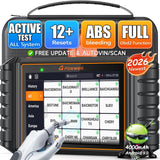 FOXWELL NT726 Bidirectional OBD2 Scanner
$368.99Scanners that read the VIN and every module.
FOXWELL NT726 Bidirectional OBD2 Scanner
$368.99Scanners that read the VIN and every module.
 FOXWELL NT301 OBD2 Scanner Live Data Professional Mechanic
$68.82Scanners that read the VIN and every module.
FOXWELL NT301 OBD2 Scanner Live Data Professional Mechanic
$68.82Scanners that read the VIN and every module.


Where to Start by Category
| Category | Sensible starting point | Fitment risk |
|---|---|---|
| Interior protection | Floor liners matched to your cab and seating layout | High — check configuration |
| Maintenance | Cabin and engine air filters, wipers | Moderate — confirm by VIN |
| Exterior | Wiper blades, puddle lights, mirror covers | Moderate to high |
| Bed and cargo | Bed mat or liner, tie-downs | High — bed length governs |
| Universal | Phone mounts, chargers, jump starters | None |
Model-specific guides exist for a reason — the Silverado, Colorado, Tahoe, Equinox and the rest each have fitment breaks a general overview cannot cover.
Accessories by category
 2017-2023 Chevrolet Bolt EV Universal Floor Mats & Cargo Liner
$98.99Popular Chevrolet accessories. Confirm fitment by VIN before ordering.
2017-2023 Chevrolet Bolt EV Universal Floor Mats & Cargo Liner
$98.99Popular Chevrolet accessories. Confirm fitment by VIN before ordering.
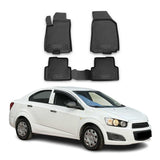 2012-2015 Chevrolet Aveo Sonic Floor Mats Liners Full Set
$78.99Popular Chevrolet accessories. Confirm fitment by VIN before ordering.
2012-2015 Chevrolet Aveo Sonic Floor Mats Liners Full Set
$78.99Popular Chevrolet accessories. Confirm fitment by VIN before ordering.
 2011-2015 Chevrolet Cruze Floor Mats Liners Full Set
$78.99Popular Chevrolet accessories. Confirm fitment by VIN before ordering.
2011-2015 Chevrolet Cruze Floor Mats Liners Full Set
$78.99Popular Chevrolet accessories. Confirm fitment by VIN before ordering.
 2007-2014 Chevrolet Tahoe Floor Mats Liners Full Set
$83.99Popular Chevrolet accessories. Confirm fitment by VIN before ordering.
2007-2014 Chevrolet Tahoe Floor Mats Liners Full Set
$83.99Popular Chevrolet accessories. Confirm fitment by VIN before ordering.


Frequently Asked Questions
What is the difference between a part and an accessory?
Parts are functional components that wear out and get replaced on a schedule — oil, filters, brake pads. Accessories are additions rather than replacements. The practical value of the distinction is budgeting: it stops discretionary purchases from quietly eating the maintenance budget.
Should I buy OEM or aftermarket?
It depends on the category. OEM or ACDelco for anything the engine management system reads or controls — sensors, regulators, modules — where a part that is slightly out of spec lies rather than fails. Quality aftermarket is often better for interior protection, styling and lighting.
Does using aftermarket parts void a GM warranty?
Not wholesale. Under the federal Magnuson-Moss Warranty Act a dealer generally cannot void your entire warranty for fitting aftermarket parts, though they can decline coverage for damage a specific part caused. The risk concentrates in sensors, modules and tunes rather than accessories.
Is ACDelco considered OEM for GM vehicles?
Yes. ACDelco is GM's own parts brand, making it the factory-equivalent choice rather than a third-party alternative.
Which motor oil should I buy?
Match the specification your engine calls for, not a brand. Many modern GM V8s take 0W-20 to dexos1; some four-cylinders and older engines take 5W-30; the 3.0L Duramax needs dexosD; and recalled 2021–2024 6.2L L87 engines move to dexos R 0W-40. The oil cap is authoritative.
What is the most common fitment mistake?
Buying on the model name alone. On GM vehicles you also need the generation, cab and bed configuration, seating layout, drivetrain, and sometimes the RPO codes on your glovebox label. 2019 Silverado and Sierra are the classic trap — two generations sold side by side.
Is a cheap aftermarket part always a bad idea?
Not always, but the categories differ. On a floor liner the downside is disappointment. On brakes, suspension or a sensor the downside is a fault you diagnose at a stop sign or chase through a scan tool. Buy on reputation in those categories.
Does a listing naming my vehicle mean it fits?
No. Product titles frequently include vehicles a part loosely relates to. If the listing does not name your year and configuration explicitly, treat the fitment as unconfirmed.
A Note on Sourcing
This guide consolidates four earlier overview pages — a category directory, a how-to-shop-smart page, an OEM-versus-aftermarket page and a parts-versus-accessories page — which recommended largely the same products and overlapped heavily in scope.
The oil guidance was corrected. Those pages listed "OEM-spec (ACDelco dexos1)" as the answer for motor oil and linked a 5W-30 as the example. dexos1 is not a single viscosity, and 5W-30 is wrong for many modern GM V8s. What matters is the specification your engine calls for.
The Magnuson-Moss point is federal law rather than GM policy, and it is stated with its actual limit: a dealer can still decline coverage for damage a specific aftermarket part caused.
Cabin filter fitment is no longer described as universal. Filter housings differ across the GM lineup; confirm by VIN.