
GM Safety Recall N262563571 covers 2025–2026 Chevrolet Express and GMC Savana vans built with a steering gear assembly whose nut may not have been torqued to specification. If that nut separates while driving, the driver can lose steering control. Dealers inspect and replace the steering gear at no charge under NHTSA campaign 26V399.
Read the primary document yourself: Part 573 Safety Recall Report for NHTSA campaign 26V399 (PDF), submitted by General Motors on 23 June 2026.
Update — three things on this page have been corrected. An earlier version said a do-not-drive advisory had been reported by at least one outlet and told readers to ask their dealer because sources conflicted. NHTSA's own record for campaign 26V399 carries no do-not-drive and no park-outside designation, so that question is now settled rather than left open. The earlier version also gave 10 August 2026 as the owner-letter date; NHTSA records the letters as mailed 20 July 2026, three weeks earlier than GM's filed estimate. And it stated that the two bulletin numbers split the Express and Savana populations — GM's filing does not say that, and we should not have. Each correction is described below rather than edited away.
This is not a check-engine-light recall. A nut in the steering gear may have left the supplier only hand-tight, and if it backs out on the road you lose the ability to steer the van. 26,541 vehicles are potentially involved.
If you own or run a 2025 or 2026 Express or Savana, stop reading in a minute and go check your VIN. VINs became searchable on 23 June 2026.
What Is Safety Recall N262563571?
N262563571 is one of two internal GM bulletins — the other is N262563570 — executing a single safety recall filed with NHTSA as campaign 26V399. GM's filing states plainly that the recall "will be executed under two bulletins: N262563570 and N262563571."
It does not say what distinguishes them, and we are not going to guess. An earlier version of this page asserted that the split separated the Chevrolet Express and GMC Savana populations. That was a reasonable-sounding inference, but it is not in the document and we have no source for it. If a dealer quotes you one number and you have the other, they are talking about the same recall — and the NHTSA campaign number 26V399 covers everything either way.
A safety recall is the most serious category of field action. Unlike a special coverage or a customer satisfaction program, it never expires, it is federally tracked, and it is illegal for a dealer to deliver a new vehicle subject to an open recall until the defect is remedied.
Which Vehicles Are Covered?
GM's filing breaks the 26,541 vehicles down by model and model year:
| Vehicle | Production dates | Units |
|---|---|---|
| 2025 Chevrolet Express | 21 Jan 2025 – 12 Dec 2025 | 14,615 |
| 2026 Chevrolet Express | 30 Sep 2025 – 1 Jun 2026 | 6,389 |
| 2025 GMC Savana | 21 Jan 2025 – 29 Oct 2025 | 4,786 |
| 2026 GMC Savana | 21 Oct 2025 – 1 Jun 2026 | 751 |
| Total | 26,541 |
The Express is the bulk of it — 21,004 of the 26,541 vans, about 79%. The 2025 Express alone accounts for more than half the campaign.
Here is the number that changes how you should read this recall: GM's estimated percentage of the population with the defect is 1%. Against 26,541 vans that implies roughly 265 vehicles actually carrying an under-torqued nut. That is why the remedy begins with an inspection rather than an automatic replacement — the overwhelming majority of inspected vans are expected to be found correctly assembled and keep their original steering gear.
It also means the VIN lookup does not tell you your van has a loose nut. It tells you your van is in the population that needs checking. Those are different things, and the distinction is worth holding onto.
Vans produced after 1 June 2026 are built with properly torqued steering gear nuts. GM contained the condition at the supplier on 29 May 2026, so late-build 2026 units are outside the affected population.
The Express and Savana are assembled at GM's Wentzville plant in Missouri. That is general product knowledge rather than something stated in the recall filing, which does not name an assembly plant.
What Actually Went Wrong?
GM's description is one sentence:
These vehicles may have a steering gear assembly with a nut that was not properly tightened.
And the consequence:
A loose nut that separates from the steering gear assembly while driving can cause a loss of steering control, increasing the risk of a crash.
The reason the under-torqued units were not caught is the part worth understanding. GM's stated cause:
A malfunctioning part sensor at the supplier's facility allowed some assemblies to pass without the nut being properly tightened.
The assembly line had a check in place. The check itself was broken, so assemblies with only hand-tightened nuts were stamped as good and shipped. This is the same failure pattern as the transfer case recall on GM's full-size SUVs — error-proofing that exists on paper and does not function in practice.
Once GM opened the investigation, the supplier reviewed its torque trace data — the recorded torque value for each assembly — and identified exactly which units had passed inspection without ever being properly tightened. That is how a population of 26,541 was defined out of a much larger production run.
The supplier is named in the filing as Nexteer Automotive Group, of Saginaw, Michigan. The involved component is listed as GEAR, HYD RECRG BALL STRG — a hydraulic recirculating-ball steering gear — part numbers 86285183, 85819773 and 85056974.
What Are the Warning Signs?
This is the section to read carefully, because GM's filing identifies a warning — and unlike most recalls, it is something a driver would actually notice. Under the heading for any warning that can occur:
Drivers may notice degraded steering precision or may notice the steering wheel is off-center when driving straight.
In plain terms:
- Degraded steering precision. The van feels vaguer than it should. More play at center, or a delay between turning the wheel and the front end responding.
- A steering wheel that sits off-center while traveling straight. You are going down a straight road but the wheel is at an angle.
Both of those are things a driver would normally shrug off or book for a convenient day. An off-center wheel in particular gets diagnosed as an alignment complaint constantly. On these vans, treat either as urgent instead.
Other things worth taking seriously: new clunking or knocking from the front end when turning, a change in steering effort, or anything that feels different from how the van drove last month. Those additions are our own general guidance rather than GM's language.
Is It Safe to Drive?
GM has not issued a do-not-drive or park-outside advisory for this campaign. NHTSA's own record for 26V399 carries neither designation, and GM's filing describes an ordinary inspect-and-replace remedy.
An earlier version of this page did not state that. It noted that at least one outlet had reported a do-not-drive advisory, observed that GM's filing described no such thing, and told readers to ask their dealer because the accounts conflicted. Having checked NHTSA's record directly, there is no conflict to report: no advisory was applied. Leaving that hedge in place would have kept alive an alarm the agency's own data does not support.
That is not the same as saying this is minor. A loss of steering control is among the most serious failure modes a vehicle can have, and GM's filing describes exactly that consequence. The absence of a do-not-drive advisory reflects the 1% defect rate and the presence of a noticeable warning, not a judgement that the failure would be survivable.
So, practically:
- If the van shows either warning sign — vague steering or an off-center wheel — stop driving it and have it transported rather than driven to the dealer.
- If it drives normally, book it immediately rather than at your next service interval.
- If a do-not-drive instruction is later attached to your specific VIN, follow it over anything on this page.
The encouraging part of the record: GM's investigation turned up nine field issues potentially related to this condition, going back to June 2025, and none of them involved an accident or an injury. This was caught before anyone was hurt.
What Will the Dealer Do?
Inspect the steering gear assembly, and replace it if necessary. GM states that the nuts on replacement steering gears are torqued to specification.
Inspection first is deliberate, and it follows directly from the 1% defect estimate. Most vans will be inspected, found correct, and keep the steering gear they came with.
The repair is free. Recall repairs are always free regardless of warranty status, mileage, or how many owners the vehicle has had.
On reimbursement: GM noted in its filing that under 49 C.F.R. § 573.13(d)(1), all covered vehicles are still under warranty, so a customer reimbursement plan does not apply. If you somehow paid for steering gear work on one of these vans, raise it with the dealer anyway and get the answer on the repair order.
The remedy is listed as a phased recall, meaning dealers work through the population as capacity and parts allow rather than all at once. Ask about parts availability when you book — steering gear assemblies on a 26,000-vehicle campaign can go on backorder.
How Do I Check My VIN?
- Get the VIN from the driver-side windshield base, the door jamb sticker, or your registration.
- Run it at nhtsa.gov/recalls. This is a federal safety recall, so unlike a special coverage or a customer satisfaction program, it will show up there. Campaign 26V399.
- Or check the GM Owner Center for your brand.
- Or call customer service — for this campaign NHTSA lists Chevrolet on 1-800-222-1020 and GMC on 1-888-988-7267 — referencing N262563571, N262563570, or 26V399. Any of the three gets them to the right campaign.
- NHTSA Vehicle Safety Hotline: 1-888-327-4236.
Running a Fleet? Check Every Unit.
The Express and Savana are work vans. Plumbers, electricians, delivery outfits, shuttle operators, upfitters, church vans, rental fleets. That changes how this recall should be handled.
- Run every VIN, not a sample. Involvement is per-assembly and was determined from supplier torque trace data, so two identical vans bought the same week can have different answers.
- Do not count on owner letters. Letters go to the registered address. Fleet vehicles, leased units and upfitted vans routinely have registration addresses that no longer reach the person driving them.
- Tell your drivers what to report. Vague steering and an off-center wheel are the two cues GM names. A driver who does not know they matter will not mention them.
- Watch used purchases. If you bought a 2025 or 2026 van secondhand this year, the letter went to the previous owner.
- Document completion. Keep the repair order showing the recall was performed on each unit.
How Did GM Find This?
The chronology is short, and it is a decent argument for reporting things that seem minor.
- 3 June 2025 – 6 November 2025 — nine field issues potentially related to the condition reach GM, on 3 June, 14 June, 7 July, 26 August, 16 September, 17 September, 4 November, 5 November and 6 November 2025. None involved an accident or injury.
- 28 May 2026 — a GM brand quality manager submits a report through GM's Speak Up For Safety programme, following a report from a dealer of a loose nut in the steering gear assembly of a 2025 Chevrolet Express.
- 29 May 2026 — the condition is contained at the supplier, the day after the report.
- 2 June 2026 — GM opens a product investigation.
- 1 June 2026 — vans built from this point forward have properly torqued nuts.
- 18 June 2026 — GM's Safety Field Action Decision Authority decides to conduct a safety recall.
- 23 June 2026 — Part 573 report filed, dealers notified, VINs searchable.
- 20 July 2026 — owner notification letters mailed, per NHTSA's record. GM's filed estimate had been 10 August.
Note the shape of that timeline. Nine field reports arrived across five months of 2025 without triggering anything. What moved it was a single dealer report in May 2026 escalated through Speak Up For Safety by a quality manager — and containment followed the very next day, before the formal investigation had even opened.
One dealer noticing one loose nut turned into a 26,541-vehicle recall in under a month, before a single crash. That is the system working the way it is supposed to — though the nine earlier reports are a fair reminder of how long a pattern can sit unrecognised in individual complaints.
A Note on Sourcing
We cite documents we have read and label the rest.
Everything factual on this page comes from the Part 573 Safety Recall Report for NHTSA campaign 26V399, submitted by General Motors on 23 June 2026, which we have opened and read in full. That covers the 26,541-vehicle population and its model-by-model breakdown, the production date ranges, the 1% defect estimate, the defect and safety risk language, the stated cause, the warning drivers may notice, the supplier name, the component part numbers, the nine field issue dates, the chronology, the remedy, the reimbursement position and the schedule.
Three things on this page were corrected against that filing and against NHTSA's campaign record. The do-not-drive question, which the agency's record settles; the owner notification date, which NHTSA records as 20 July 2026 rather than GM's filed estimate of 10 August; and the claim that the two GM bulletin numbers separate the Express and Savana populations, which the filing does not support.
Two things here are not from the filing and are labelled where they appear. The Wentzville assembly plant is general product knowledge — the recall document names no plant. The additional symptoms beyond GM's two stated warnings are our own general guidance.
Recalls develop. Populations get expanded and remedies get revised. Your VIN lookup at NHTSA.gov and your dealer are current in a way this page cannot be.
What Other Pages on This Recall Get Wrong
- Reporting a do-not-drive advisory. NHTSA's record for 26V399 carries no do-not-drive and no park-outside designation. We hedged on this ourselves rather than checking the agency's data, which was not good enough on a steering recall.
- Skipping the 1% defect estimate. It is the difference between "your van needs inspecting" and "your van has a loose nut." Roughly 265 of the 26,541 are expected to actually carry the defect, which is exactly why the remedy is inspect-first.
- Burying the warning signs. GM names two — degraded steering precision and an off-center wheel on a straight road — and both are things drivers routinely dismiss as alignment issues. That is the most actionable content in the whole filing.
- Calling it a power steering recall. Loss of power steering assist makes the wheel heavy but leaves you in control. This is a nut that can separate from the steering gear, which is loss of steering itself.
- Not explaining how it escaped. A malfunctioning part sensor at Nexteer passed hand-tightened assemblies as good. The line had error-proofing and the error-proofing failed — which is also how the supplier could later find the suspect units from torque trace data.
- Guessing at the two bulletin numbers. GM says the recall runs under N262563570 and N262563571 and does not say how they divide. We got this wrong in an earlier version of this page.
- Ignoring fleets. These are work vans. Owner letters go to registered addresses that frequently do not reach whoever is driving the van today.
- Citing the filing without linking it. The report is a public PDF and it is linked here.
Frequently Asked Questions
Is this the same as a power steering assist recall?
No. Loss of power steering assist means the steering gets heavy but you retain control. This recall involves a nut that can separate from the steering gear assembly, which GM says can cause a loss of steering control itself. Different failure, far more serious.
My van drives fine. Do I still need the recall done?
Yes. The nut may be under-torqued and not yet backed out. Driving normally today is not evidence that the assembly was tightened correctly at the supplier. That said, GM estimates only about 1% of the population actually has the defect, so most inspected vans are expected to be found correct.
Should I stop driving it?
GM has not issued a do-not-drive or park-outside advisory, and NHTSA's record carries neither. But if you notice vague steering or the wheel sitting off-center on a straight road, stop driving and have the van transported rather than driven in.
Does this cost me anything?
No. Recall repairs are free regardless of mileage, warranty status, or ownership history. GM's filing notes that because all covered vehicles are under warranty, no separate reimbursement plan is offered under 49 C.F.R. § 573.13(d)(1).
I bought my van used. Am I covered?
Yes. Recalls follow the VIN, not the owner. The letter went out on 20 July 2026 to the registered address, which may have been a previous owner — exactly why you should check the VIN yourself.
Will this show up in an NHTSA VIN lookup?
Yes. This is a federal safety recall, campaign 26V399, so it appears at nhtsa.gov/recalls. That sets it apart from special coverages and customer satisfaction programs, which do not.
Why are there two bulletin numbers?
GM's filing states the recall will be executed under two bulletins, N262563570 and N262563571, but does not say what separates them. Referencing either one, or the NHTSA campaign number 26V399, gets a dealer to the right place.
Are 2026 vans built late in the year affected?
Vehicles produced after 1 June 2026 are built with properly torqued steering gear nuts, and the condition was contained at the supplier on 29 May 2026. Still run the VIN — build date is not always obvious from the model year on the window sticker.
Where can I read the actual recall document?
It is public. The Part 573 Safety Recall Report for campaign 26V399 is hosted by NHTSA as a PDF and contains the defect description, the cause, the chronology, the population table, the part numbers and the remedy in GM's own words.
The Bottom Line
If you have a 2025 or 2026 Chevrolet Express or GMC Savana, run the VIN at nhtsa.gov/recalls under campaign 26V399. It takes under a minute and does not require calling anyone.
If the van has felt vague in the steering or the wheel sits off-center on a straight road, do not drive it to the dealer — call them, describe both symptoms, and ask whether it should be transported.
And if you run a fleet, check every unit individually. Two vans off the same order can have different answers.
Related Guides
- How to Check GM Recalls by VIN & What to Do If Your Vehicle Has One
- Safety Recall N262557621: Transfer Case Wheel Lockup — another recall caused by error-proofing that failed
- GM Customer Satisfaction Program N252541251: No Rear Turn-Signal Outage Notification
- GM Special Coverage N262546590-01: Radiator Inlet Hose Coolant Leak
Sources
- Part 573 Safety Recall Report, NHTSA campaign 26V399 (PDF) — General Motors, LLC, submitted 23 June 2026. GM recall numbers N262563570 and N262563571. Primary source for every fact on this page; opened and read in full.
- NHTSA recall lookup — search your VIN for current recall status, and the source for the owner notification mailing date and the absence of a do-not-drive advisory. Campaign number 26V399.
Owner questions: Chevrolet 1-800-222-1020, GMC 1-888-988-7267. NHTSA Vehicle Safety Hotline 1-888-327-4236. Involved vehicle lists and remedy instructions can be revised — always verify your specific VIN and follow your dealer's instructions on whether the vehicle should be driven. This article is general information, not a substitute for the official recall notice.
Steering parts
 ACDelco Steering Shaft 84789279
$97.99ACDelco stock replacement steering shaft for Chevrolet. Confirm fitment by VIN before ordering.
ACDelco Steering Shaft 84789279
$97.99ACDelco stock replacement steering shaft for Chevrolet. Confirm fitment by VIN before ordering.
 ACDelco Intermediate Steering Shaft 85721658
$125.99ACDelco intermediate steering shaft. Confirm fitment by VIN before ordering.
ACDelco Intermediate Steering Shaft 85721658
$125.99ACDelco intermediate steering shaft. Confirm fitment by VIN before ordering.
 ACDelco Gold Inner Tie Rod End 45A2153
$105.99ACDelco Gold inner tie rod end for Chevy and GMC. Confirm fitment by VIN before ordering.
ACDelco Gold Inner Tie Rod End 45A2153
$105.99ACDelco Gold inner tie rod end for Chevy and GMC. Confirm fitment by VIN before ordering.
 ACDelco Outer Tie Rod End 45A10031
$82.99ACDelco Professional outer tie rod end for Chevy and GMC. Confirm fitment by VIN before ordering.
ACDelco Outer Tie Rod End 45A10031
$82.99ACDelco Professional outer tie rod end for Chevy and GMC. Confirm fitment by VIN before ordering.
 ACDelco Idler Arm 45C1120
$114.99ACDelco idler arm. Confirm fitment by VIN before ordering.
ACDelco Idler Arm 45C1120
$114.99ACDelco idler arm. Confirm fitment by VIN before ordering.
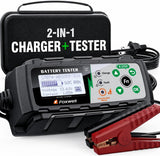 FOXWELL BC521 Battery Charger & Tester
$162.35Charger and tester for battery health.
FOXWELL BC521 Battery Charger & Tester
$162.35Charger and tester for battery health.


Tools for steering work
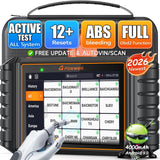 FOXWELL NT726 Bidirectional Scanner
$368.99Reads steering and chassis module codes on supported vehicles.
FOXWELL NT726 Bidirectional Scanner
$368.99Reads steering and chassis module codes on supported vehicles.
 ACDelco Digital Torque Wrench, 1/2 in. (14.8–147.5 ft-lb)
$162.99Half-inch digital torque wrench for steering fasteners.
ACDelco Digital Torque Wrench, 1/2 in. (14.8–147.5 ft-lb)
$162.99Half-inch digital torque wrench for steering fasteners.
 95-Piece Mechanics Tool Set (Metric & SAE)
$99.99Mechanic tool set.
95-Piece Mechanics Tool Set (Metric & SAE)
$99.99Mechanic tool set.
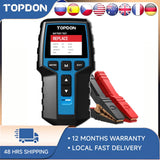 TOPDON BT200 Battery Tester
$103.99Battery tester.
TOPDON BT200 Battery Tester
$103.99Battery tester.
 FOXWELL NT301 Code Reader
$68.82Budget code reader with live data.
FOXWELL NT301 Code Reader
$68.82Budget code reader with live data.
 50-Piece 1/4 in. Drive Socket Set
$54.99Quarter-inch drive socket set.
50-Piece 1/4 in. Drive Socket Set
$54.99Quarter-inch drive socket set.


