
A dirty throttle body is one of the cheapest fixes for a rough idle or hesitating GM engine, and one of the most overlooked pieces of routine maintenance. It is also frequently confused with a much more expensive problem — intake valve carbon buildup — which sits a few inches further downstream and does not respond to the same treatment.
This guide covers what the throttle body actually does, how to tell its deposits apart from valve deposits, and how to clean it without damaging an electronic throttle actuator.
What Throttle Body Cleaning Addresses
The throttle body houses the throttle plate that regulates airflow into the engine. Over time, carbon from the EGR system and oily residue from the PCV system combine to coat the bore and the plate — a process sometimes called coking — creating a rough surface that disrupts precise airflow control, especially at idle where the plate is nearly closed and small changes matter most.
Throttle Body Deposits vs Intake Valve Carbon
These are different problems with different fixes, and mixing them up is why people clean a throttle body and stay disappointed.
| Throttle body coking | Intake valve carbon | |
|---|---|---|
| Where | Throttle bore and plate, ahead of the intake manifold | Back of the intake valves, in the cylinder head |
| Main symptom | Rough or low idle, stalling after coming to a stop | Hesitation under load, misfire codes, gradual mpg loss |
| Affects | Nearly all electronic throttle engines | Direct-injection engines specifically |
| Fix | Clean in place — under an hour | Walnut blasting with the intake manifold off |
| DIY? | Yes, with care | Generally not |
If your symptoms are load-related rather than idle-related, and the engine is direct-injected, read our guide to carbon buildup on GM direct-injection engines before spending an afternoon on the throttle body.
Symptoms
- Rough or low idle, including stalling after coming to a stop
- Hesitation or jerking when pressing the gas pedal
- Noticeably reduced fuel economy
- Check engine light from erratic airflow readings
- Sticky or sluggish pedal feel on electronic throttle bodies
- Idle that hunts up and down rather than settling
Common Causes
- PCV system routing oil vapor through the intake tract
- EGR system depositing carbon
- A dirty air filter allowing more contaminants through
- High mileage without a throttle body service
- Short-trip driving that never gets hot enough to burn off deposits
Air filters and PCV
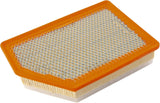 ACDelco A3459C Air Cleaner Element 85614334
$37.98Dirty air and PCV vapors build up deposits. Confirm fitment by VIN before ordering.
ACDelco A3459C Air Cleaner Element 85614334
$37.98Dirty air and PCV vapors build up deposits. Confirm fitment by VIN before ordering.
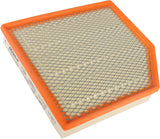 ACDelco A3258C Air Cleaner Element 84848112
$28.95Dirty air and PCV vapors build up deposits. Confirm fitment by VIN before ordering.
ACDelco A3258C Air Cleaner Element 84848112
$28.95Dirty air and PCV vapors build up deposits. Confirm fitment by VIN before ordering.
 ACDelco PCV Valve Hose
$84.99Dirty air and PCV vapors build up deposits. Confirm fitment by VIN before ordering.
ACDelco PCV Valve Hose
$84.99Dirty air and PCV vapors build up deposits. Confirm fitment by VIN before ordering.

GM Vehicles Affected
Virtually all GM gas engines with electronic throttle control — Silverado and Sierra 5.3L and 6.2L trucks, Equinox, Malibu, Cruze, and Traverse, Acadia and Enclave.
Diagnosis
- Visually inspect the throttle bore and plate for varnish or carbon buildup.
- Check idle air control learn values with a scan tool.
- Look for correlated codes such as P0121–P0123 (throttle position) or P0506/P0507 (idle control).
- Rule out vacuum leaks, which cause the same idle complaints and are cheaper to find than to chase afterwards.
- Check the PCV system. A throttle body that re-cokes within a year usually means the PCV side is feeding it.
MAF sensors
 ACDelco MAF Sensor, GM OE, Stock 23366103
$115.99Check the MAF too. Confirm engine. Confirm fitment by VIN before ordering.
ACDelco MAF Sensor, GM OE, Stock 23366103
$115.99Check the MAF too. Confirm engine. Confirm fitment by VIN before ordering.
 ACDelco MAF Sensor, GM OE, Stock 12671625
$162.99Check the MAF too. Confirm engine. Confirm fitment by VIN before ordering.
ACDelco MAF Sensor, GM OE, Stock 12671625
$162.99Check the MAF too. Confirm engine. Confirm fitment by VIN before ordering.


Step-by-Step Cleaning
- Disconnect the battery negative terminal, or follow GM's specific procedure for cleaning without disconnecting.
- Remove the air intake duct to access the throttle body.
- Use a throttle-body-safe cleaner — not a high-solvent carburettor cleaner, which can attack the coating some electronic throttle bores carry.
- Spray onto a cloth or soft brush rather than directly into the bore, and keep cleaner away from the electronic motor and the throttle position sensor.
- Gently clean carbon and varnish from the bore and both sides of the plate.
- Do not force the throttle plate open by hand on an electronic throttle body, and never open it with the engine running. The plate is driven by a geared motor, and forcing it can damage the actuator.
- Reinstall the duct, reconnect the battery, and allow the throttle body to complete its relearn.
- Clear any stored codes and road test to confirm a smooth idle.
Throttle bodies
 ACDelco Throttle Body Repair Kit 2172894
$152.99Replacement throttle bodies and repair kits. Confirm engine. Confirm fitment by VIN before ordering.
ACDelco Throttle Body Repair Kit 2172894
$152.99Replacement throttle bodies and repair kits. Confirm engine. Confirm fitment by VIN before ordering.
 ACDelco Throttle Body, Aluminum, Drive-By-Wire
$124.99Replacement throttle bodies and repair kits. Confirm engine. Confirm fitment by VIN before ordering.
ACDelco Throttle Body, Aluminum, Drive-By-Wire
$124.99Replacement throttle bodies and repair kits. Confirm engine. Confirm fitment by VIN before ordering.
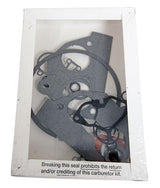 ACDelco Throttle Body Repair Kit 219607
$83.99Replacement throttle bodies and repair kits. Confirm engine. Confirm fitment by VIN before ordering.
ACDelco Throttle Body Repair Kit 219607
$83.99Replacement throttle bodies and repair kits. Confirm engine. Confirm fitment by VIN before ordering.

Why the Relearn Matters
The engine controller learns the closed-plate position over time and trims idle around it. Removing years of deposit changes that position, so until the relearn completes the idle can be high, low, or unstable — which owners often mistake for having made the problem worse. The relearn procedure varies by model and year; some complete with a key-cycle sequence, others need a scan tool. Check the procedure for your vehicle rather than assuming the idle will settle on its own.
Scan tools
 FOXWELL NT726 Bidirectional OBD2 Scanner
$368.99Run the idle relearn after cleaning.
FOXWELL NT726 Bidirectional OBD2 Scanner
$368.99Run the idle relearn after cleaning.
 FOXWELL NT614 Elite OBD2 Scanner
$233.69Run the idle relearn after cleaning.
FOXWELL NT614 Elite OBD2 Scanner
$233.69Run the idle relearn after cleaning.
 FOXWELL NT604 OBD2 Scanner
$209.09Run the idle relearn after cleaning.
FOXWELL NT604 OBD2 Scanner
$209.09Run the idle relearn after cleaning.


Labor and Cost
- Roughly 0.5 to 1.0 hour to clean in place, plus the relearn
- DIY supplies are inexpensive — cleaner and a brush
- Shop pricing varies by region and vehicle
No part number is required for a cleaning. A new air filter is worth fitting while the intake is open, and a throttle body gasket is only needed if you remove the unit entirely rather than cleaning it in place.
Frequently Asked Questions
How do I know if it's the throttle body or intake valve carbon?
Symptom timing is the clue. Throttle body coking shows up at idle — rough idle, stalling after you come to a stop, hunting idle. Intake valve carbon shows up under load, with hesitation, misfire codes and gradual fuel economy loss. Only direct-injection engines get significant valve deposits.
Can I use carb cleaner on a throttle body?
Better not to. High-solvent carburettor cleaners can attack the coating that some electronic throttle bores carry. Use a cleaner labelled as throttle-body-safe, and spray it onto a cloth rather than into the bore.
Can I move the throttle plate by hand to clean behind it?
No on an electronic throttle body. The plate is driven by a geared motor and forcing it can damage the actuator. Never open it with the engine running either.
Why is my idle worse after cleaning the throttle body?
Almost always the relearn. The controller had trimmed idle around the old, deposit-narrowed plate position, and removing that deposit changes it. Until the relearn completes, idle can run high, low or unstable. Check the relearn procedure for your model rather than waiting it out.
How often should a throttle body be cleaned?
There is no fixed interval — it depends on PCV condition and driving pattern. Short-trip driving builds deposits fastest because the engine rarely gets hot enough to burn them off. Inspect when you have idle symptoms rather than cleaning on a schedule.
My throttle body got dirty again quickly. Why?
Look at the PCV system. The oily component of the deposit comes from crankcase vapour routed through the intake tract, so a throttle body that re-cokes within a year is usually being fed by something upstream.
Will cleaning the throttle body fix a check engine light?
It can, if the stored code relates to throttle position or idle control (P0121–P0123, P0506, P0507). It will not fix codes pointing elsewhere. Read the codes first — a code names a circuit, not a part.
Does a dirty throttle body cause poor fuel economy?
It can contribute, because the controller is compensating for airflow that no longer matches what it expects. But a large economy drop usually has other causes too, so treat it as one item to check rather than the answer.
Do I need to remove the throttle body to clean it?
Usually not. Cleaning in place is the normal approach and avoids needing a new gasket. Remove it only if access is genuinely impossible or the deposits are heavy enough to need the unit on a bench.
Is throttle body cleaning worth doing preventively?
Only loosely. Unlike oil or filters, this is a condition-based job rather than an interval one. If the idle is smooth and there are no related codes, there is little to gain from opening the intake.
A Note on Sourcing
Trouble code ranges and the deposit mechanism are established diagnostic material. The distinction drawn here between throttle body coking and intake valve carbon is the important part: they share symptoms loosely but sit in different places and respond to different work.
Relearn procedures are deliberately not reproduced. They vary by model and model year, and a generic key-cycle sequence would fail on a substantial share of vehicles. Use the procedure for yours.
No cost figures are quoted for shop work because they vary by region and vehicle. The DIY side is genuinely inexpensive — cleaner and a brush.
The recommendation not to clean preventively is our own. We sell intake parts, and the position stated here is that this is a condition-based job and there is little to gain from opening the intake on an engine that idles smoothly.
Shop Related Parts
Worth fitting while the intake is open:
-
 Airaid 5.3L Cold Air Intake System (2014 GM 1500 / 2015 Tahoe/Yukon)
-
 Airaid Modular Intake Tube, 6.2L (Tahoe/Silverado/Yukon)
One caution if you fit an oiled aftermarket filter: over-oiling can pass oil onto the mass airflow sensor, and GM has published a bulletin on the driveability and transmission shift complaints that follow. Oil it sparingly, or use a dry filter.