
P0191 is "Fuel Rail Pressure Sensor Circuit Range/Performance" — the engine control module is seeing a fuel rail pressure reading it cannot reconcile with what it commanded. On a Chevrolet Equinox that almost always traces back to the camshaft-driven high-pressure fuel pump rather than to the sensor itself, and GM has issued a separate field action for the pump on each generation: an emission recall for the 2.4L, and a customer satisfaction program for the 1.5L. Both are closed now, but knowing which one applied to your vehicle tells you exactly what fails and why.
Jump to a section: What P0191 means · Which Equinox do you have? · The two GM programs · The aftermarket pump problem · Symptoms · Causes and how to confirm each · How it's diagnosed · Parts and cost · Service bulletins · What other pages get wrong · FAQ
What Does P0191 Mean on a Chevy Equinox?
Every Equinox from 2010 onward uses gasoline direct injection, which means fuel reaches the injectors at pressures measured in thousands of PSI rather than tens. A camshaft-driven high-pressure pump generates that, and a fuel rail pressure sensor tells the ECM what it actually achieved. The ECM commands a target — "desired fuel rail pressure" — and continuously compares it against what the sensor reports.
P0191 sets when the reported value falls outside the range the ECM considers plausible. That is a deliberately broad definition, and it is the reason this code gets misdiagnosed so often. It can mean the sensor is lying about a pressure that is fine. It can equally mean the sensor is telling the truth about a pressure that is not fine. The code itself does not distinguish, which is why the diagnostic below starts by comparing desired against actual rather than by replacing anything.
The distinction matters financially. A sensor or a corroded connector is a modest repair. A high-pressure pump is not, and on the 2.4L it can come with a far more serious problem attached.
First: Which Equinox Do You Have?
| Years | Engine | What GM documented |
|---|---|---|
| 2010–2017 | 2.4L Ecotec (RPO LAF / LEA) | High-pressure pump plunger piston shaft and shaft seal wearing, letting fuel into the crankcase — Emission Recall 43180, Special Coverage 12313A |
| 2018–2019 | 1.5L turbo (RPO LYX) | High-pressure fuel pump cracking and leaking fuel — Customer Satisfaction Program N182199610 |
| 2018–2020 | 2.0L turbo (RPO LTG) | No pump-specific field action; standard GDI fuel pressure diagnosis applies |
| 2023 onward | 1.5L (RPO LSD) | Substantially higher-pressure fuel system than LYX; do not carry earlier specs or parts across |
On any 2.4L, do the dipstick check described below before anything else. On a 2018 or 2019 1.5L, note whether you can smell fuel around the engine — GM's program for that generation is about a pump that cracks and leaks externally, which is a different failure with a different warning sign.
Tools for checking fuel pressure
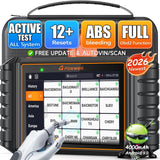 FOXWELL NT726 Bidirectional OBD2 Scanner
$368.99Compare desired vs actual fuel pressure in live data.
FOXWELL NT726 Bidirectional OBD2 Scanner
$368.99Compare desired vs actual fuel pressure in live data.
 FOXWELL NT614 Elite OBD2 Scanner
$233.69Compare desired vs actual fuel pressure in live data.
FOXWELL NT614 Elite OBD2 Scanner
$233.69Compare desired vs actual fuel pressure in live data.

The Two GM Programs — and Where They Stand Now
Emission Recall 43180 covered certain 2010–2011 Chevrolet Equinox and GMC Terrain vehicles with the 2.4L engine. GM's stated reason: the engine-mounted high-pressure fuel pump may develop excessive wear on the plunger piston shaft and shaft seal, and if that happens, fuel can leak into the engine oil crankcase, causing rough running and illuminating the malfunction indicator lamp. Dealers were to replace the high-pressure fuel pump at no charge.
That same 2010–2011 population was also covered by Special Coverage 12313A, which paired the fuel pump with the balance chain and ran 10 years or 120,000 miles from the in-service date. Full detail on that is in our P0172 Equinox guide. For a 2010 or 2011 vehicle, that window closed somewhere between 2019 and 2021.
Customer Satisfaction Program N182199610 is the 1.5L equivalent, released March 2019. It covers 2018–2019 Chevrolet Equinox with the 1.5L LYX, plus 2018 Cruze, 2018 Malibu, 2018 Tracker and 2019 GMC Terrain. GM's condition statement: the high-pressure fuel pump may crack and potentially leak fuel over time with vehicle usage. If a leak occurs the customer may notice an odour, and if left unaddressed the vehicle may fail to start, show reduced engine power, or lose propulsion. The remedy is replacement of the high-pressure fuel pump and insulator.
Two honest caveats on that one. GM's bulletin states the program was in effect until March 31, 2021 — it is closed. And the involved population was tiny: GM's dealer message put the total number of U.S. vehicles at approximately 17. If a page tells you your 2018 Equinox is probably covered by N182199610, the arithmetic says otherwise. It is still worth a VIN check, because involvement is decided by VIN and not by model year, but set your expectations accordingly.
The Aftermarket Pump Problem
This is the single most reported way people turn one code into two on this platform. Owners and technicians widely report that non-OEM high-pressure fuel pumps on these engines produce P0191 shortly after installation — sometimes immediately, sometimes within a few hundred miles — along with reduced power mode. There are accounts of people going through several aftermarket pumps before an OEM unit resolved it.
The mechanism is straightforward enough. The ECM is not just checking that pressure exists; it is checking that actual pressure tracks the commanded target within a tolerance. A pump that builds pressure adequately but responds differently to the regulator's duty cycle can sit outside that tolerance while appearing to work fine.
To be clear about the evidence: this is a well-documented field pattern, not something GM states in a bulletin. We are flagging it as the strong practical consensus it is, rather than dressing it up as manufacturer guidance. The takeaway is the same either way — on the 2.4L, GM's own part number is 12641847, named as the causal part in special coverage 12313A.
The corollary matters too: if you have P0191 on a vehicle that has already had a pump replaced, find out what was fitted before you diagnose anything else.
What Are the Symptoms of P0191 on an Equinox?
- Check engine light on
- Hard start, extended cranking, or an intermittent no-start
- Rough running, hesitation or a stumble under load
- Reduced Engine Power message and limp mode
- A fuel odour around the vehicle — on 2018–2019 1.5L models GM specifically names an odour as the customer-noticeable sign of the cracked pump
- A strong gasoline smell on the oil dipstick, and an oil level that rises on its own (2.4L, pump seal failure)
- Stalling, and in the worst case loss of propulsion
- Companion codes: P0087 (fuel rail pressure too low), P0088 (too high), P228D (fuel pressure regulator control performance, high pressure), P2635 (fuel pump flow performance), P069E (fuel pump control module) and P0172
Which companion code appears alongside P0191 is genuinely informative. P0087 points at the system failing to reach commanded pressure. P0088 points at pressure the regulator is not relieving. P069E points at the fuel pump control module rather than the pump. P0172 on a 2.4L points at fuel in the crankcase. Note them all before anyone orders a part.
What Causes P0191 — and How Do You Confirm Each One?
| Cause | How to confirm it | Applies to | Source |
|---|---|---|---|
| High-pressure pump plunger shaft and seal wear, fuel entering the crankcase | Pull the dipstick and smell for raw gasoline; check whether the oil level has risen without anyone adding oil | Equinox 2010–2017, 2.4L | Emission Recall 43180, 12313A |
| High-pressure fuel pump cracked and leaking externally | Look and smell around the pump on top of the engine for wet fuel or a persistent fuel odour. GM's condition statement adds no-start, reduced power and loss of propulsion if unaddressed | Equinox 2018–2019, 1.5L LYX | N182199610 |
| Corroded, loose or poorly tensioned fuel rail pressure sensor connector | Unplug and inspect the terminals for green corrosion, spread pins or moisture. The cheapest thing on this list and worth ruling out first on the electrical side | General | — |
| Aftermarket high-pressure pump not tracking commanded pressure | Find out what was fitted and when. Widely reported to set P0191 soon after installation | Any Equinox with a replaced pump | Field reports |
| Low-pressure (in-tank) supply starving the high-pressure pump | Test low-pressure supply and check the filter before condemning the high-pressure pump. Expect P0087 alongside if this is the cause | General | — |
| Failed fuel rail pressure sensor itself | Key on, engine off, the actual pressure reading should sit low. A high reading with the engine not running points at the sensor rather than the system | General | — |
| Fuel pump control module fault | Suspect strongly if P069E is stored alongside P0191 | General | — |
| Camshaft timing fault affecting the pump drive | The high-pressure pump is camshaft-driven, so a correlation fault changes when it pumps. Check for P0016, P0017, P0011 or P0014 in the same scan | General | — |
Fuel pressure parts
 ACDelco Fuel Rail Pressure Sensor
$98.99Fuel pressure sensors and pumps. Confirm fitment by VIN before ordering.
ACDelco Fuel Rail Pressure Sensor
$98.99Fuel pressure sensors and pumps. Confirm fitment by VIN before ordering.
 ACDelco Fuel Pressure Sensors, GM Genuine Parts
$138.99Fuel pressure sensors and pumps. Confirm fitment by VIN before ordering.
ACDelco Fuel Pressure Sensors, GM Genuine Parts
$138.99Fuel pressure sensors and pumps. Confirm fitment by VIN before ordering.


How Is P0191 Diagnosed?
- Scan and record every stored code, not just P0191. The companions above redirect the whole diagnosis.
- On a 2.4L, pull the dipstick. Smell for gasoline and check the level. Fuel in the oil means the pump, and it means stop driving.
- On a 2018–2019 1.5L, look and smell around the pump on top of the engine for an external fuel leak.
- Check the VIN for open recalls and field actions. Both programs above are closed, but involvement is decided by VIN and the check costs nothing.
- Inspect the fuel rail pressure sensor connector for corrosion, moisture and terminal tension before touching anything expensive.
- Compare desired against actual fuel rail pressure on a scan tool. Key on, engine off, actual should read low — a high reading here implicates the sensor. At idle the two should track closely. Then raise RPM and load it: if actual cannot keep up with desired, you have a delivery problem, not a sensor problem.
- Test the low-pressure side before condemning the high-pressure pump. Replacing a high-pressure pump that was being starved by the in-tank pump fixes nothing.
- Establish the service history of the pump. If a non-OEM unit has been fitted, that is a live suspect regardless of how new it is.
- Only then replace the sensor or the pump, and use an OEM or ACDelco part.
Parts and Cost
We publish part numbers only where we could open a GM document and read them. For the 2.4L that is possible; for the turbo engines GM's field action directs replacement by VIN, so we are not printing numbers we could not verify.
| Repair | Part | Notes |
|---|---|---|
| High-pressure fuel pump, 2.4L | GM 12641847 | Named as the causal part in special coverage 12313A. Supersedes 12608371, 12633115, 12633423 and 12639694 |
| High-pressure fuel pump and insulator, 2018–2019 1.5L LYX | Order by VIN | N182199610's remedy is the pump plus insulator; the program itself closed 31 March 2021 |
| Pump and balance shaft chain together, 2.4L | Pump 12641847 plus chain 12635427, tensioner 12649233 and the full 12313A gasket set | GM labor code 9900003, 5.2 hrs, including diagnostics and an oil and filter change |
| Fuel rail pressure sensor | Order by VIN | Check the connector before deciding the sensor is at fault |
| Oil and filter after fuel contamination | Filter 12605566, 5 qt dexos1 5W-30 | Part of the pump job in GM's procedure, not a fix on its own |
| Scenario | DIY | Shop or dealer |
|---|---|---|
| Clean or repair a corroded sensor connector | Contact cleaner and patience; often free | Usually folded into diagnosis |
| Replace the fuel rail pressure sensor | Sensor cost, modest labour | Sensor plus a short labour charge |
| Replace the high-pressure pump, 2.4L | Pump plus an oil and filter change; a real job but within reach | Pump plus labour |
| Pump and balance chain, 2.4L | Not a driveway job | 5.2 hrs plus the full parts list |
| Replace the high-pressure pump, 1.5L or 2.0L turbo | High-pressure fuel work carries real fire risk — not a beginner job | Pump plus labour, by VIN |
The rule of thumb worth internalising: the electrical checks are cheap and the pump is not, so do them in that order even though the pump is statistically the more likely answer.
Fuel system service
 ACDelco Fuel Injector O-Rings, ACDelco GM Genuine Parts Fuel
$120.99Seals, cleaner and connector repair. Confirm fitment by VIN before ordering.
ACDelco Fuel Injector O-Rings, ACDelco GM Genuine Parts Fuel
$120.99Seals, cleaner and connector repair. Confirm fitment by VIN before ordering.
 BG 44K Fuel System Cleaner Power Enhancer 11oz.
$24.95Seals, cleaner and connector repair. Confirm fitment by VIN before ordering.
BG 44K Fuel System Cleaner Power Enhancer 11oz.
$24.95Seals, cleaner and connector repair. Confirm fitment by VIN before ordering.
 ACDelco Wire Connectors, Replacement, 2 Pins
$90.99Seals, cleaner and connector repair. Confirm fitment by VIN before ordering.
ACDelco Wire Connectors, Replacement, 2 Pins
$90.99Seals, cleaner and connector repair. Confirm fitment by VIN before ordering.


GM Documents That Name P0191 or the Pumps Behind It
| Document | Date | Subject | Equinox coverage |
|---|---|---|---|
| 43180 — Emission Recall | — | High-pressure fuel pump plunger piston shaft and seal wear; fuel leaking into the crankcase. Pump replaced at no charge | Equinox 2010–2011, 2.4L |
| N182199610 — Customer Satisfaction Program | Mar 2019 | High-pressure fuel pump may crack and leak fuel; pump and insulator replaced. Closed 31 March 2021 | Equinox 2018–2019, 1.5L LYX |
| 12313A — Special Coverage | Jul 2013 | Balance chain and fuel pump; names pump part 12641847. 10 yrs / 120,000 mi | Equinox 2010–2011, 2.4L LAF |
| PIP4783B | — | Fuel in the oil with rough idle and engine run-on; check the dipstick before any diagnostic test | Equinox 2010–2017, 2.4L |
What Other P0191 Pages Get Wrong
- "See TSB PIP5151F for fuel contamination causing P0191 on your Equinox." This one is repeated widely and it is wrong. The PIP5151 series is a Duramax diesel bulletin — its own subject line reads "Diagnostic Tip – 6.6L Duramax Fuel System Contamination Identification," and its model list is Chevrolet Express and Silverado, GMC Savana and Sierra with the 6.6L diesel (RPO LGH and LML). It has nothing to do with a 2.4L or 1.5L Equinox. The codes P0087, P0088, P0191 and P128E appear in it because those are the diesel fuel-system codes, and pages have pattern-matched on the code numbers without reading the vehicle list.
- "Replace the fuel rail pressure sensor." The code names the sensor circuit, but on this platform the pump is the more common root cause. Confirm with desired-versus-actual data before buying a sensor.
- "Your 2018 Equinox is probably covered under N182199610." GM's own dealer message put the U.S. population at roughly 17 vehicles, and the program closed on 31 March 2021. Check the VIN, but do not budget around it.
- "Any high-pressure pump will do." The widely reported field pattern is that non-OEM pumps on these engines set P0191 soon after fitting. GM's 2.4L number is 12641847.
- "P0191 is just a sensor code, it can wait." On a 2.4L it can mean fuel is diluting your engine oil. On a 2018–2019 1.5L, GM's own wording includes loss of propulsion if the leak is left unaddressed.
Frequently Asked Questions
Why does my brand-new fuel pump still throw P0191?
If it is an aftermarket pump, that is the most likely reason. The ECM checks that actual rail pressure tracks the commanded target within tolerance, not merely that pressure exists, and non-OEM pumps on these engines are widely reported to fall outside that window. Find out what part was fitted before diagnosing anything else.
Should I check my oil if I get this code?
On a 2.4L, yes, and before anything else. A strong raw-gasoline smell on the dipstick or an oil level that has risen on its own indicates the pump's plunger shaft seal has failed and fuel is entering the crankcase — the exact condition GM describes in emission recall 43180. Fuel-diluted oil cannot lubricate properly, so stop driving if you find it.
Is P0191 urgent?
Treat it as urgent until you know which cause you have. A corroded connector is not an emergency. Fuel in the crankcase is a lubrication problem, and a cracked pump on a 1.5L is a fuel leak — GM's own program wording for that condition ends with loss of propulsion.
Can a bad connector really cause the whole code?
Yes. Corrosion, moisture or a loose terminal at the fuel rail pressure sensor can produce a reading the ECM rejects while the fuel system itself is working correctly. It is the cheapest thing on the list to check and the most annoying to discover after buying a pump.
What is the quickest way to tell the sensor from the pump?
Compare desired and actual fuel rail pressure on a scan tool. Key on with the engine off, actual should read low — a high reading there points at the sensor. At idle the two values should sit close together, and under load actual should keep up with desired. A gap that opens under load is a delivery problem.
What does P0191 with P0087 mean?
P0087 is fuel rail pressure too low, so the pairing says the system genuinely is not making commanded pressure rather than misreporting it. Check the low-pressure supply and filter first, then the high-pressure pump.
Does this affect the 2.0L turbo Equinox?
The code applies to any GDI engine, and the 2.0L LTG has the same architecture. What it does not have is a pump-specific GM field action, so there is no program to check and diagnosis follows the standard route: connector, then desired-versus-actual, then supply, then pump.
Does P0191 mean the same thing on a 2023 or newer Equinox?
The definition is the same, but the 1.5L LSD runs a substantially higher-pressure fuel system than the LYX it replaced. Specifications, expected values and parts do not carry across from the older engine, so do not apply LYX figures to it.
Shop the Parts Mentioned
-
 MOTOPOWER MP69033 OBD2 Scanner — $49, reads and clears P0191 and shows live engine data and freeze-frame.
-
 VDIAGTOOL BT500 Battery Tester — $57.53, tests battery health, cranking and charging on 6V/12V/24V systems with ripple analysis and a voltage waveform — confirms the battery and charging system are healthy before you chase a sensor or circuit fault.
-
 ACDelco GM OE dexos1 GEN 2 Full Synthetic 5W-30 Motor Oil (1 qt) — fresh oil after any fuel contamination is confirmed.
-
 95-Piece Mechanics Tool Set (Metric & SAE) — covers the fasteners for fuel pump access.
-
 ACDelco Gold Negative Battery Cable — for replacing a corroded or damaged negative cable, a common source of intermittent electrical faults.