
P0716 is "Input/Turbine Speed Sensor A Circuit Range/Performance." It means the transmission module is getting an input speed signal, but the signal doesn't behave like a real spinning shaft. On GM's 6L80 and 6L90, GM's own name for the monitor is "Input Speed Sensor Performance." In the GM calibration document we read, it sets when input speed drops sharply in a fraction of a second, faster than any real shaft could slow down. That makes P0716 mostly a code about signal dropouts: intermittent connections, electrical noise and sensor-reading problems. It's a different hunt from a sensor that has died outright.
Jump to a section: What P0716 means · How GM's module decides · Why it upsets TCC slip and gear ratio · 6L80 vs 8L90 · What is usually behind it · Related codes · Symptoms · Causes and how to confirm each · How it's diagnosed · Parts and cost · What other pages get wrong · FAQ · A note on sourcing
What Does P0716 Mean?
The input speed sensor, also called the turbine speed sensor, tells the transmission module how fast the input shaft is turning coming out of the torque converter. The module compares that number with engine speed and output shaft speed. From those comparisons it works out torque converter clutch slip, the actual gear ratio, and whether each shift finished properly.
The input-sensor codes form a family, and P0716 has its own place in it:
| Code | What it says | What that suggests |
|---|---|---|
| P0715 | Circuit fault (generic) | Something is wrong electrically. See our P0715 guide |
| P0716 | Range/performance. GM: "Input Speed Sensor Performance" | A signal is there, but it jumps or drops in a way that can't be real |
| P0717 | No signal. GM: "Circuit Low Voltage" | Nothing usable is arriving. See our P0717 guide |
GM's wording differs from the generic SAE name. GM's 2011 6L80/6L90 monitor document calls P0716 "Input Speed Sensor Performance." Transmission rebuilder references list GM's name for it on the 6L80 and 8L90 as "Input Speed Sensor Circuit Intermittent." Both names point the same way: the signal is present most of the time and misbehaves some of the time.
How GM's Module Decides to Set P0716
Generic P0716 pages usually say the module "compares input speed with engine speed and flags a mismatch." GM's documented logic for the 6L80 and 6L90 is more specific than that.
In GM's 2011 6L80/6L90 OBD monitor document, the malfunction is described as "Transmission Input Speed Sensor Drops" of 881.75 RPM or more, lasting 0.8 seconds or more. It is a one-trip code, so the light comes on the first time it fails. The monitor runs only under certain conditions:
- Engine speed between 400 and 7,500 RPM for at least 5 seconds
- Ignition voltage between about 8.6 and 32 volts
- Valid throttle position and engine torque signals
It also stands down when certain other faults are present. These include the TCM codes P0717, P0752, P0973 and P0974, and the engine codes P0101–P0103 (mass airflow) and P0121–P0123 (throttle position). Our reading of that list is simple. The monitor relies on engine torque and a healthy input circuit to judge plausibility, so fix any airflow, throttle or shift-solenoid codes first, then deal with P0716.
GM calibrations vary. An older GM transmission document we reviewed uses the same "sudden drop" logic with a larger threshold of 1,300 RPM. So treat the numbers above as one documented example, not a spec for every model year. What stays the same is the idea: the input shaft is attached to a heavy, spinning drivetrain, and it can't lose hundreds of RPM in a split second. When the signal says it did, the module blames the signal.
A GM shop manual passage quoted by a Corvette owner describes the same idea as "an unrealistic drop in input shaft speed." It points technicians at the sensor assembly, the harness, metallic debris on the connector pins and damaged clutch housing teeth.
Tools for checking speed sensor data
 FOXWELL NT604 ABS/SRS/Transmission Scanner
$209.09Shows input and output shaft speed in live data.
 Launch CRE 2.0 GM All-System Scanner
$159.00GM all-system scanner with transmission data.
 TOPDON BT200 Battery Tester
$103.99Weak charging voltage can corrupt speed sensor signals.
 FOXWELL NT301 Code Reader
$68.82Budget code reader with live data.
 95-Piece Mechanics Tool Set (Metric & SAE)
$99.99Mechanic tool set.


Why an Erratic Input Signal Upsets TCC Slip and Gear Ratio
This is the part that sends people down the wrong path. GM's own description of the 8L90 says the module uses input speed, with the other speed signals, to set line pressure, shift patterns, torque converter clutch slip speed and gear ratio. The 6L80 does the same. So a flickering input signal causes trouble downstream:
- TCC slip looks wrong. Converter slip is engine speed minus input speed. If input speed dips falsely, calculated slip jumps. The module may unlock the converter, reapply it, or log a converter code such as P0741, even though the converter is fine.
- Gear ratio looks wrong. Ratio is input speed divided by output speed. A false input reading can make the module think a clutch is slipping and log a P0730-series ratio code.
- Shift adapts go off track. The module learns shift timing partly from input speed changes during a shift. Bad data teaches it bad habits, which can feel like harsh or flared shifts.
The rule: when P0716 is stored with ratio or converter codes, fix the input signal first. Then clear the codes and see which ones come back. Don't start with clutches or a converter.
One caution for 8-speed owners. A light-throttle shudder between 25 and 80 mph on an 8L45 or 8L90 is a separate, well-documented torque converter clutch condition. GM bulletin 18-NA-355 covers it with a fluid exchange. That shudder doesn't set P0716 by itself. Keep the two diagnoses apart.
6L80 vs 8L90: What Changes for P0716
| Item | 6L80 / 6L90 | 8L90 / 8L45 |
|---|---|---|
| GM name for P0716 | "Input Speed Sensor Performance" (2011 GM document) | Listed by rebuilder references as "Input Speed Sensor Circuit Intermittent" |
| What the sensor reads | A machined surface on a rotating clutch housing (reported as the 1-2-3-4 / 3-5-R housing) | A rotating member at the front of the transmission |
| Speed sensors | Input and output | Input, intermediate and output. That's three signals to cross-check |
| Module | TEHCM inside the transmission on the valve body | External TCM with a 66-way connector |
| Where dropouts tend to come from | Internal harness, sensor mounting and position, debris at the sensor, charging noise | Internal harness and pass-through connector, outside harness, TCM connector, charging noise |
| Useful live-data check | Input speed vs engine speed with the converter locked | The same, plus input vs intermediate speed for a second opinion |
On the 8L90, the extra intermediate sensor is a real help. If input speed drops out while intermediate and output speeds stay smooth, the fault belongs to the input sensor path, not the whole transmission.
What Is Usually Behind P0716 on These Units
Intermittent wiring and connectors. A dropout that lasts a fraction of a second is what a loose pin, a chafed wire or a heat-sensitive connection does. On the 8-speed, GM's PIP5700G bulletin covers replacement internal wiring harnesses for 8L45 and 8L90 transmissions. Owners and tuners report speed-sensor faults that only appear once the transmission is warm, traced to the internal harness and the pass-through connector under the valve body.
Electrical noise and charging problems. In a 6L80 thread on a tuning forum, owners describe P0716 with input speed fluttering between zero and about 1,200 RPM while stopped in gear, the transmission dropping into limp mode and holding second gear, and the problem showing up in hot weather. The suggestions were to check the charging system for bad diodes and keep speed-sensor wiring twisted and routed away from ignition wiring. One owner reported success after cleaning alternator connections. That's anecdotal, but it matches the logic: noise creates false drops. Our P0562 guide covers charging faults in more depth.
Problems at the sensor's reading surface. A hall-effect sensor reads a rotating surface across a small gap. The shop-manual checks point at metallic debris and damaged teeth on the clutch housing. A sensor that isn't seated correctly can also read unreliably. On a 6L80 that has had valve body work, see the wrong-valve-body issue in our P0717 guide.
Module power and ground. On a different GM unit, the 4L60E in 2013 Silverado, Sierra, Express and Savana, GM's PIP5084A describes P0716 and/or P0717 caused by a lost ground inside the TCM on the input sensor circuit. That isn't a 6L80 or 8L90 bulletin. It is a useful reminder that the module end of the circuit can fail too.
Modified trucks. Many of the P0716 reports on performance forums involve changed torque converters, camshafts or custom tunes. If the truck has been modified, include the tune and the converter in the conversation.
Related Codes You May See Alongside
| Code | What it adds |
|---|---|
| P0700 | The TCM's request for the check engine light. It is not a second fault |
| P0717 | Input signal lost completely. With P0716, it suggests the dropout is getting worse |
| P0722 / P0723 | Output sensor codes. Together with P0716 they point to shared supply, harness or noise |
| P0730–P0735 | Ratio codes that a false input reading can trigger |
| P0741 | Converter clutch performance. Slip math depends on input speed |
| P0101–P0103, P0121–P0123 | Airflow and throttle codes that disable the GM P0716 monitor. Fix these first |
| P0752, P0973, P0974 | Shift solenoid codes that also disable the monitor in GM's 2011 document |
Symptoms of P0716
- Check engine light, often with P0700
- Limp mode that appears suddenly, often when coming to a stop, and clears after the engine is restarted
- Stuck in second gear, with reduced speed until restart
- A clunk or harsh engagement when the fault happens
- Converter clutch locking and unlocking unexpectedly
- Harsh or flared shifts, especially if the fault has been around for a while
- Input speed in live data that jumps or drops out while engine speed is steady
- Symptoms that get worse when hot, or come and go with bumps
How urgent is it? It is usually intermittent, and that makes it easy to ignore. Don't. Each episode puts the transmission on default pressures, and the bad data keeps disturbing converter and shift control. Get it diagnosed while the fault is still showing up, because an intermittent fault is much harder to catch after it hides.
Causes and How to Confirm Each
| Cause | How to confirm it | Notes |
|---|---|---|
| Intermittent harness or connector | Watch input speed in live data while wiggling harness sections and connectors; inspect pins for debris or spread terminals | The top suspect for a "sudden drop" code |
| Charging-system noise | Load test with an AC ripple check; see whether the dropout lines up with electrical load | Cheap to test; reported cause on 6L80 trucks |
| 8L45/8L90 internal harness or pass-through connector | Fault appears when warm; resistance and wiggle checks through the case connector; inspect with the pan down | PIP5700G covers replacement harnesses |
| Debris or damage at the sensor's reading surface | Inspect the sensor tip and the clutch housing teeth when the pan is down | Called out in GM shop-manual guidance |
| Sensor loose or mispositioned | Check mounting after any internal repair | On 6L80, rule out a wrong upper valve body |
| Failing input speed sensor | Scope the signal for dropouts once wiring and supply are proven | Replace after the circuit checks out |
| Engine airflow or throttle faults | Other stored codes; fix them first | They disable the monitor and upset torque data |
| TCM/TEHCM power, ground or internal fault | Voltage-drop test on power and grounds; last after everything else | Needs programming if replaced |
| Tune or converter changes (modified trucks) | Review calibration changes; compare with stock behavior | Common in performance-forum reports |
Speed sensor and module parts
 ACDelco Transmission Control Module 24276411
$254.99ACDelco transmission control module — 6L80/8L90 speed sensors are built into the TEHCM. Confirm fitment by VIN before ordering.
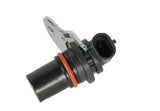 ACDelco Vehicle Speed Sensor 213344
$85.99ACDelco 2-wire vehicle speed sensor for older GM transmissions. Confirm fitment by VIN before ordering.
 ACDelco 2-Pin Replacement Connector PT3739
$90.99Two-pin replacement connector for a damaged sensor connector. Confirm fitment by VIN before ordering.


How Is P0716 Diagnosed?
- Save the freeze frame before clearing anything. Vehicle speed, gear, temperature and engine speed at the moment of the fault tell you when to try to reproduce it.
- List every code in both modules. Fix airflow, throttle and shift-solenoid codes first, because they disable or distort this monitor.
- Test the charging system under load, including AC ripple.
- Graph the speeds in live data. Plot engine, input and output speed together, plus intermediate speed on an 8L90. Look for input speed dropping while the others stay smooth.
- Try to reproduce the conditions. Drive at the freeze-frame speed and temperature, and include stops. Several reports describe the fault appearing when coming to a stop.
- Wiggle-test the accessible harness and connectors while watching input speed.
- Check fluid level and condition using GM's procedure. Look for metallic debris in the pan.
- With the pan down, inspect the sensor, its mounting, the internal harness, the pass-through connector and the clutch housing teeth.
- Repair what is proven, then clear the codes. On an 8L90, a shift adapt relearn may be needed after the repair. Follow the service information.
- Road test through the same conditions and confirm the ratio and converter codes don't come back.
Parts and Cost
These are general estimates. Intermittent faults often cost more in diagnostic time than in parts.
| Repair | What it involves | Cost picture (estimate) |
|---|---|---|
| Diagnosis with graphing and a road test | Catching an intermittent dropout | One to a few hours of labor, depending on how often it happens |
| Connector cleaning or repair | Pins, terminals, routing | Among the cheapest outcomes |
| Charging system repair | Alternator or connections | Moderate, and far cheaper than transmission work |
| Input speed sensor | Pan and valve body access on these units | Part is modest; labor dominates |
| Internal harness (8L45/8L90) | Two-piece harness per PIP5700G | Moderate to significant, mostly labor |
| TEHCM or TCM | Module plus programming | Substantial; only after testing |
| Rebuild | Only if internal damage (for example, housing teeth or bearing wear) is confirmed | Ask for the evidence |
Fluid and wiring parts
 ACDelco Dexron VI Full Synthetic ATF, 1 Gal
$49.99Dexron VI full synthetic ATF, 1 gallon.
 ACDelco Transmission Filter TF937
$89.99ACDelco automatic transmission filter. Confirm fitment by VIN before ordering.
 GM Genuine 24297922 Transmission Pan Gasket
$46.81GM Genuine transmission pan gasket. Confirm fitment by VIN before ordering.
 Nomex Split Loom, 1 in. x 10 ft
$105.66Split loom to protect a repaired harness.


What Other P0716 Pages Get Wrong
- They describe it as a simple mismatch with engine speed. GM's documented 6L80/6L90 logic looks for an input speed drop too sudden to be physically possible. That points you toward dropouts and noise.
- They treat ratio and converter codes as separate problems. A false input reading corrupts the slip and ratio math. Fix P0716 first, then see what's left.
- They ignore the monitor's disable list. Airflow, throttle and shift-solenoid codes change how this code behaves. Fix them first.
- They say "replace the sensor." Intermittent wiring, connectors, charging noise and debris at the reading surface are just as likely. On these units the sensor is inside the transmission anyway.
- They mix it up with 8L90 shudder. Light-throttle shudder is a separate converter-clutch condition covered by GM bulletin 18-NA-355.
- They ignore the third sensor. On an 8L90, the intermediate speed signal is a free cross-check.
Frequently Asked Questions
What's the difference between P0716 and P0717 on a GM truck?
P0716 means the signal is there but drops or jumps in a way that can't be real. GM's 2011 6L80/6L90 logic looks for a sudden drop in input speed. P0717 means the signal is effectively gone. P0716 leans toward intermittent connections and noise. P0717 leans toward opens, disconnection or supply failure.
Why does my transmission go into limp mode at stoplights and then work fine after a restart?
That pattern is common with P0716. The module sees an impossible drop in input speed and goes into a protective mode, often holding second gear. Restarting clears the active fault. The cause is still there. Save the freeze frame and have the input signal graphed.
Can P0716 cause torque converter or gear ratio codes?
Yes. Converter slip and gear ratio are both calculated from input speed. A false reading can trigger converter or ratio codes on a healthy transmission. Fix the input signal first.
Is my 8L90 shudder related to P0716?
Usually not. Light-throttle shudder between 25 and 80 mph on 8L45/8L90 trucks is a torque converter clutch condition covered by GM bulletin 18-NA-355. P0716 is a speed-signal plausibility fault. You can have either one without the other.
Could the alternator really cause P0716?
It is a reported cause. Owners of 6L80 trucks describe input speed fluttering and P0716 that improved after charging-system and connection work. Electrical noise can create exactly the false drops this monitor looks for. A ripple test is cheap.
Do I need to replace the input speed sensor?
Not until the wiring, connectors, supply and charging system check out. On the 6L80 and 8L90 the sensor is inside the transmission, so replacing it by guesswork is expensive.
Does a tune or aftermarket converter affect P0716?
It can come into it. Many P0716 reports on performance forums involve modified trucks. Mention any tune or converter change to whoever is diagnosing it.
Can I keep driving with P0716?
Gently and briefly. Every episode puts the transmission on default control. Get it diagnosed while the fault still shows up often enough to catch.
A Note on Sourcing
- Verified (we read the document): GM's 2011 6L80/6L90 OBD monitor document, which gives the P0716 name, the 881.75 RPM drop / 0.8 second criterion, the enable conditions and the disable-code list. An older GM transmission monitor document with a 1,300 RPM drop threshold. GM bulletins PIP5700G (8L45/8L90 internal harness) and 18-NA-355 (8-speed shudder). PIP5084A (4L60E P0716/P0717 and TCM internal ground). GM's published 8L90 description of how the module uses speed signals.
- Corroborated (industry and owner sources): Rebuilder references for GM's 6L80/8L90 code names. A GM shop-manual passage quoted on a Corvette owner forum ("unrealistic drop in input shaft speed," debris on pins, clutch housing teeth). 6L80 tuning-forum reports of input speed flutter and charging-related fixes.
- Reported, not opened by us: PIP4793F, said to cover P0716, P0717 and P0722 on the 6L80/6L90.
Thresholds vary by calibration and model year. Use the service information for your VIN, and ask a dealer to check current bulletins.
Sources We Checked
GM documents and industry references used for this guide. Calibrations and thresholds vary by model year — confirm against current GM service information for your VIN.
- GM OBD system operation summary (transmission diagnostics)
- GM service bulletin (NHTSA copy)
- GM service bulletin (NHTSA copy)
- GM service bulletin (NHTSA copy)
Shop Related Parts & Tools
An intermittent code is caught with data, not parts. Start with tools that can graph live speeds.
- Automotive Tools & Equipment: scan tools that read the TCM and graph live data, plus charging-system and ripple testers.
- Engine & Transmission Accessories: transmission parts and accessories once the cause is confirmed.
- GM Engine & Drivetrain Parts: GM drivetrain components matched to your RPO.
- GM Fluids & Maintenance Parts: the correct ATF for refilling after pan-down inspection.
- Silverado & Colorado Parts · Sierra & Canyon Parts · Tahoe & Suburban Parts: shop by vehicle.
Related Guides
- P0717 Code: Input/Turbine Speed Sensor A Circuit No Signal: when the signal is gone completely
- P0715 Code: Input Speed Sensor Circuit: how the circuit is built and where it breaks
- P0741 Code: Torque Converter Clutch Performance or Stuck Off
- GM Transmission Problems: Symptoms, Causes & What to Do