
P1258 is Engine Coolant Overtemperature — Protection Mode Active. This one is different from most codes on this site, and it is worth being direct about why: it is not reporting a sensor fault or a circuit problem. It is telling you the engine got hot enough that the module took emergency action to protect it. The code is not the problem. It is the alarm that went off because of the problem — and unlike most check engine lights, this one can be accompanied by damage that is happening right now.
Jump to a section: What P1258 means · What protection mode actually does · Why this one is genuinely serious · Do not open a hot cooling system · Why it overheated — the real question · Clearing the code fixes nothing · A warning about GM P1xxx codes · A note on sourcing · Symptoms · Causes and how to confirm each · How it's diagnosed · Parts and cost · What other pages get wrong · FAQ
What Does P1258 Mean?
Most trouble codes report that a component or circuit is not behaving. This one reports that the module has intervened.
The engine control module watches coolant temperature continuously. When that temperature exceeds a threshold GM considers dangerous, the module does not simply illuminate a light and carry on. It changes how the engine runs, deliberately, to reduce the heat being generated — and it logs P1258 to record that it did so.
You will also see this code described as "engine overtemperature protection" or, in some GM references, "low coolant fuel disable." Those wordings describe the same idea from different angles: the module reduced fuelling to protect the engine, either because coolant temperature was too high or because coolant level was too low to carry heat away.
The essential point: something made your engine overheat, and the computer stepped in. P1258 is the record of that intervention, not the fault that caused it.
What Protection Mode Actually Does
Understanding the strategy explains the symptoms, and it explains why the vehicle feels so wrong.
GM's engine overheat protection strategy works by reducing the heat the engine produces while using the engine itself to move cooling air. The module cuts fuel to some cylinders — commonly alternating between them — so those cylinders stop combusting and instead pump air through the engine, carrying heat out of the heads and into the exhaust.
Alongside that, the module typically:
- Limits engine speed, capping how hard you can work it
- Reduces available power substantially
- Commands the cooling fans to maximum
- May command the air conditioning off to reduce load
The result is a vehicle that runs badly on purpose. It will feel rough, gutless, and unwilling — and that is the system working correctly, not an additional fault.
This mode exists to get you off the road, not to let you continue your journey. GM designed it so a driver has enough capability to reach a shoulder, an exit, or a repair shop rather than being stranded in traffic. It is a limp-home provision with a specific and limited purpose.
Treating it as a mode you can drive in is a serious misreading of what it is for.
Tools for checking the cooling system
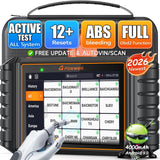 FOXWELL NT726 Bidirectional Scanner
$368.99Watch coolant temperature and command the cooling fans.
FOXWELL NT726 Bidirectional Scanner
$368.99Watch coolant temperature and command the cooling fans.
 FOXWELL NT614 Elite Scanner
$233.69Engine live data including coolant temperature.
FOXWELL NT614 Elite Scanner
$233.69Engine live data including coolant temperature.
 TOPDON BT200 Battery Tester
$103.99Battery tester — weak voltage slows electric cooling fans.
TOPDON BT200 Battery Tester
$103.99Battery tester — weak voltage slows electric cooling fans.

Why This One Is Genuinely Serious
We tell readers on most pages that a code is generally safe to drive with. This is not one of those codes, and we are not going to soften that.
Overheating is, short of losing oil pressure, the most destructive thing that can happen to an engine. Sustained high temperatures can produce:
- Head gasket failure — the classic consequence
- Warped cylinder heads, particularly on aluminium
- Cracked heads or block in severe cases
- Damaged piston rings and bore scoring
- Degraded oil, which compromises protection everywhere else
And the damage compounds with time at temperature. Every additional minute of running hot adds to it. That is precisely why GM built a protection mode rather than relying on the driver to notice a gauge.
The practical guidance if this code is active:
- Stop driving as soon as you can do so safely. Not at the next service, not when convenient — pull over.
- Switch the engine off once stopped, unless you have a specific reason to leave it idling.
- Do not "just get it home" if home is any distance. The cost difference between stopping now and continuing is frequently the difference between a thermostat and a cylinder head.
- Have it recovered rather than driven if you are unsure.
If the vehicle has cooled and seems fine, that does not mean it is fine. It means the temperature came down — which tells you nothing about whether a gasket let go while it was hot.
Do Not Open a Hot Cooling System
A safety point that matters more than any diagnostic advice on this page.
A hot cooling system is pressurised, and the coolant inside is well above its atmospheric boiling point. Releasing that pressure by opening a cap allows the coolant to flash to steam instantly and eject from the opening.
This causes severe scalding injuries, and it happens fast enough that there is no reacting to it.
So:
- Do not open the radiator cap or surge tank cap on a hot engine. Not slightly, not with a rag over it.
- Let it cool completely — that means a substantial wait, not a few minutes.
- Check the level at the surge tank when cold, which on most vehicles can be done without opening anything.
- Keep your hands clear of the fans, which can start on their own even with the ignition off on many vehicles.
If you need to know the coolant level and the engine is hot, wait. Nothing on this page is worth a burn.
Why It Overheated — the Real Question
P1258 tells you the module intervened. It does not tell you what went wrong. That is the actual diagnosis, and the candidates fall into a few groups.
Not enough coolant:
- Low coolant level, whether from a leak or from never being topped up
- A leak — hoses, radiator, water pump, heater core, gaskets
- Air trapped in the system after a previous service, which is why proper bleeding matters
- A failed pressure cap, which lowers the boiling point of the whole system
Coolant not moving:
- A thermostat stuck closed
- A failed water pump — including an impeller that has eroded or come loose while the pump still turns
Heat not leaving:
- A radiator blocked externally by debris, leaves, bugs or mud — often overlooked, and free to check
- A radiator blocked internally by scale or contamination
- Cooling fans not operating — a fan clutch that no longer engages, or an electric fan circuit fault
- Missing or damaged air deflectors and shrouding, which matter more than people expect
Something worse:
- A head gasket leak pushing combustion gases into the coolant, which both causes and results from overheating
- Severe engine mechanical problems generating abnormal heat
Note the order to work in. Coolant level, a blocked radiator face and fan operation are all free or nearly free to check, and between them they account for a great many cases. Start there before anything is replaced.
Clearing the Code Fixes Nothing
This deserves saying plainly because the temptation is real.
The vehicle overheated, the module protected it, and now the engine has cooled and it drives normally again. Clearing the code makes the light go away, and everything seems resolved.
Nothing has been repaired. Whatever caused the overheat is still there, and the next time conditions favour it — a hot day, a traffic queue, a hill, a trailer — it happens again. Each event adds to whatever damage has accumulated.
What the code does give you is information worth keeping. Before clearing it, note the freeze frame data — it records what the engine was doing when protection engaged, and whether that was at idle in traffic or at sustained load on a grade is genuinely diagnostic.
Also worth knowing: if the module engaged protection mode, it is worth having the cooling system properly pressure tested and the engine checked for signs of head gasket damage even if it now seems fine. Confirming that no harm was done is a reasonable thing to pay for after an overheat.
A Warning About GM P1xxx Codes
GM reused P1xxx code numbers across model years and platforms for different faults, and published GM code lists carry an explicit caution about it. Other manufacturers also use these numbers for entirely unrelated problems, since P1xxx codes are manufacturer-specific by definition.
The definition used here — engine coolant overtemperature with protection mode active — is the one that appears consistently across GM code references, and it is corroborated by the alternative wording about overtemperature protection and coolant-related fuel disable.
If your scan tool shows a different definition for P1258 on your vehicle, trust the tool and your service information over any article.
A Note on Sourcing for This Code
We cite documents we have read and label the rest.
We could not verify a GM service bulletin naming P1258 on a specific GM platform. The definition is consistent across GM code references. The description of the protection strategy, the causes and the guidance here reflect standard practice and the well-established behaviour of GM's engine overheat protection, rather than a GM document we opened and read.
Protection strategies and their thresholds vary between engines and model years, so how your specific vehicle behaves in this mode may differ in detail from the general description above.
Have a dealer check your VIN against current bulletins. And on this code more than most, an actual physical inspection beats any article — including this one.
Symptoms of P1258
- Temperature gauge high, or a hot engine warning message
- Significant loss of power and a capped engine speed
- Rough running — a direct consequence of cylinders being cut
- Cooling fans running at full speed continuously
- Air conditioning cutting out
- Steam or coolant smell — a sweet odour is coolant
- Coolant visible on the ground or in the engine bay
- Check engine light, often with a driver information centre message
- Companion codes for cooling system components or overtemperature
On urgency: this is the highest-urgency code we cover. Stop driving as soon as it is safe to do so. Engine damage from overheating accumulates with every minute at temperature, and the difference between stopping promptly and pressing on is routinely the difference between a modest repair and a major one.
Causes and How to Confirm Each
| Cause | How to confirm it | Notes |
|---|---|---|
| Low coolant level | Check at the surge tank when completely cold | Free. And then find out where it went |
| Coolant leak | Look for residue and staining; pressure test the system | Hoses, radiator, water pump, heater core, gaskets |
| Radiator blocked externally | Look through the radiator and condenser face for debris, leaves and mud | Free to check, easy to miss |
| Cooling fan not operating | Watch whether fans engage as temperature rises. Check the fan clutch or the electric fan circuit | Overheating at low speed but not on the highway points here |
| Thermostat stuck closed | Compare inlet and outlet hose temperatures as the engine warms | Common, and relatively inexpensive |
| Water pump failure | Inspect for leakage and play. An eroded impeller can fail while the pump still turns | The pump spinning does not prove it is pumping |
| Air trapped in the system | Ask whether cooling work was done recently, and whether it was properly bled | A frequent sequel to cooling system service |
| Failed pressure cap | Pressure test the cap | Inexpensive, and it lowers the whole system's boiling point |
| Radiator blocked internally | Temperature differences across the radiator; inspection | Often follows contamination or long-neglected coolant |
| Head gasket leak | Combustion gas test on the coolant; white smoke; coolant loss with no visible leak | Both a cause and a consequence of overheating |
| Coolant temperature sensor fault | Compare the sensor reading against actual measured temperature | Consider it — but assume real overheating until proven otherwise |
Cooling system parts
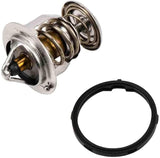 ACDelco 131-160 187° Thermostat
$45.36ACDelco 187° thermostat. Confirm fitment by VIN before ordering.
ACDelco 131-160 187° Thermostat
$45.36ACDelco 187° thermostat. Confirm fitment by VIN before ordering.
 ACDelco Water Pump 12710208
$385.99ACDelco water pump. Confirm fitment by VIN before ordering.
ACDelco Water Pump 12710208
$385.99ACDelco water pump. Confirm fitment by VIN before ordering.
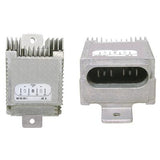 ACDelco Cooling Fan Module 19530917
$230.99ACDelco cooling fan module. Confirm fitment by VIN before ordering.
ACDelco Cooling Fan Module 19530917
$230.99ACDelco cooling fan module. Confirm fitment by VIN before ordering.
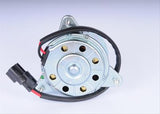 ACDelco Cooling Fan Motor 89019144
$174.99ACDelco cooling fan motor. Confirm fitment by VIN before ordering.
ACDelco Cooling Fan Motor 89019144
$174.99ACDelco cooling fan motor. Confirm fitment by VIN before ordering.

How Is P1258 Diagnosed?
- Stop driving. This step comes before all the others.
- Let the engine cool completely before anyone opens anything.
- Record all codes and freeze frame data before clearing — what the engine was doing when protection engaged is genuinely useful.
- Check coolant level at the surge tank when cold.
- Inspect the radiator and condenser face for external blockage. Free, and frequently the answer.
- Look for leaks — residue, staining, drips, and a coolant smell.
- Pressure test the cooling system and the cap.
- Verify fan operation as temperature rises, including the fan clutch where fitted.
- Check thermostat operation by comparing hose temperatures through warm-up.
- Test for combustion gases in the coolant if there is any suspicion of head gasket damage.
- Verify the coolant temperature sensor against an actual measurement.
- After repair, bleed the system properly and confirm normal operating temperature across a full drive cycle — including idling in traffic, which is where cooling systems are worked hardest.
Parts and Cost
| Repair | What it involves | Cost picture |
|---|---|---|
| Clearing a blocked radiator face | Removing debris from the radiator and condenser | Effectively free. Check before anything |
| Coolant top-up and proper bleed | Where level or trapped air is the issue — and find the cause | Minimal, but the leak still needs finding |
| Pressure cap | Where the cap tests bad | Minimal |
| Hose | Where a leak is found | Modest |
| Thermostat | A common cause and a common repair | Modest — access varies by engine |
| Fan clutch or electric fan repair | Where fans are not doing their job | Moderate |
| Water pump | Where leaking or not circulating | Moderate to significant depending on access |
| Radiator | Where leaking or internally blocked | Significant |
| Head gasket | What overheating causes if it continues | Major. And it is why stopping promptly matters |
| Cylinder head or engine | What severe or repeated overheating causes | The reason this page says stop driving |
Confirm parts against your VIN, and use the correct coolant specification for your vehicle — GM's coolant requirements are specific and mixing types causes its own problems.
Coolant and hoses
 ACDelco 10-101 DEX-COOL Coolant, 1 Gal
$31.95ACDelco DEX-COOL extended life coolant.
ACDelco 10-101 DEX-COOL Coolant, 1 Gal
$31.95ACDelco DEX-COOL extended life coolant.
 ACDelco RC85 15 PSI Radiator Cap
$17.99ACDelco 15 PSI radiator cap. Confirm fitment by VIN before ordering.
ACDelco RC85 15 PSI Radiator Cap
$17.99ACDelco 15 PSI radiator cap. Confirm fitment by VIN before ordering.


What Other P1258 Pages Get Wrong
- Treating it as a sensor code. P1258 records that the module engaged protection mode because the engine was too hot. It is the alarm, not the fault, and the diagnosis is a cooling system investigation rather than a circuit test.
- Describing the reduced power as a symptom to fix. The rough running and lost power are the protection strategy working — cylinders cut, engine speed capped. That is the module doing its job.
- Not saying clearly enough to stop driving. Overheating damage accumulates by the minute. This is not a code to finish the trip on.
- Omitting the safety warning. Opening a hot cooling system causes serious scalding injuries. Any page discussing this code should say so before it discusses anything else.
- Suggesting the code can be cleared. Clearing it removes the light and nothing else. The cause is still there and will act again.
- Skipping the free checks. Coolant level, a debris-blocked radiator face and fan operation cost nothing to inspect and account for a large share of cases.
- Not mentioning that limp mode is for getting off the road. It exists so you can reach safety, not so you can keep driving.
Frequently Asked Questions
Can I keep driving with P1258?
No. Stop as soon as it is safe to do so. This code means the engine got hot enough for the computer to intervene, and overheating damage accumulates with every minute at temperature. The reduced power you are feeling is a limp-home provision designed to get you off the road, not to let you continue the journey.
Why is my engine running so badly?
Because the module is deliberately cutting fuel to some cylinders. Those cylinders stop combusting and pump air through the engine instead, carrying heat out. Combined with a reduced engine speed limit, that is why the vehicle feels rough and gutless. It is the protection strategy working correctly.
Can I just top up the coolant and carry on?
Check the level, certainly — but only once the engine is completely cold, and never by opening a hot system. More importantly, if the coolant was low, find out where it went. Topping up without finding the leak means being in the same position shortly, with more accumulated heat damage.
It cooled down and drives fine now. Is it fixed?
No. It means the temperature came down, which tells you nothing about whether damage occurred while it was hot or whether the cause is still present. After an overheat it is reasonable to have the cooling system pressure tested and the engine checked for signs of head gasket damage, even if it seems fine.
What are the cheapest things to check?
Coolant level at the surge tank when cold, the radiator and condenser face for leaves and debris blocking airflow, and whether the cooling fans actually engage as the engine warms. All three are free, and between them they explain a great many overheats.
It overheats in traffic but is fine on the highway. What does that suggest?
That points toward airflow rather than coolant flow. At speed, air is being forced through the radiator regardless; in traffic, the fans have to do that work. A fan clutch that no longer engages or an electric fan circuit fault fits that pattern well, as does a debris-blocked radiator face.
Could it be a faulty temperature sensor rather than real overheating?
It is possible, and worth verifying by comparing the sensor's reading against an actual measured temperature. But treat real overheating as the assumption until it is disproven — the cost of being wrong in that direction is an engine.
Is it safe to open the radiator cap to look?
Not on a hot engine, and this matters more than anything else on this page. The system is pressurised and the coolant is above its atmospheric boiling point, so releasing the cap lets it flash to steam and eject. That causes severe burns. Wait until it is completely cold, and check the surge tank rather than opening the system where you can.
Shop Related Parts & Tools
Stop driving first, let it cool completely, then work the free checks — level, radiator face, fan operation — before ordering anything. Match coolant and parts to your VIN.
-
 MOTOPOWER MP69033 OBD2 Scanner — captures the freeze frame before the code is cleared, which records whether protection engaged while idling in traffic or under sustained load. That distinction points at airflow versus coolant flow.
-
 95-Piece Mechanics Tool Set (Metric & SAE) — for thermostat housing, hose clamp and cooling component access once the engine is completely cold.
-
 3-In-1 Cordless Impact Wrench & Screwdriver Kit — speeds up fan shroud and water pump fastener work where access is awkward.
Related Guides
- P0128 Code: Coolant Thermostat Below Regulating Temperature — the opposite problem, and the same component
- P0300 Code: Random/Multiple Cylinder Misfire Detected — what a head gasket failure often looks like afterwards
- P0521 Code: Engine Oil Pressure Sensor/Switch — the other warning worth stopping for
- GM Check Engine Light Codes: Most Common & What They Mean