
P1336 is Crankshaft Position System Variation Not Learned, and P1346 carries the same definition on many GM applications. Here is what makes these unusual: they are not reporting a broken part. They are reporting that a required setup procedure has not been performed. The fix is frequently a relearn done with a scan tool and no parts at all — and until it is done, your vehicle's misfire detection cannot be trusted.
Jump to a section: What these codes mean · Why the module has to learn the wheel · When the relearn is required · What the procedure involves · Doing it safely · Why your misfire codes may be false · P1346 and its second definition · When the relearn will not complete · A note on sourcing · Symptoms · Causes and how to confirm each · How they're diagnosed · Parts and cost · What other pages get wrong · FAQ
What Do P1336 and P1346 Mean?
These codes report that the crankshaft position system variation learn procedure has not been completed. The module needs a piece of calibration data about your specific engine, and it does not have it.
That framing matters, because it changes what you should expect. This is not a component failure code. It is closer to a configuration message — the equivalent of software telling you setup was never finished.
The most common way to arrive here is straightforward: someone did work that required the relearn, and the relearn was not performed afterwards. The repair itself may have been done perfectly. The final step was skipped.
Why the Module Has to Learn the Wheel
This is the part worth understanding, because everything else follows from it.
Misfire detection works by measuring crankshaft speed very precisely. When a cylinder fails to fire, the crankshaft momentarily decelerates — a tiny hesitation that the module can detect by watching the reluctor wheel teeth pass the crankshaft position sensor.
Here is the complication. That reluctor wheel is a manufactured part, and the tooth spacing is not perfectly uniform. Machining tolerances leave microscopic variations — one gap fractionally wider, another fractionally narrower.
To the sensor, those spacing variations look exactly like speed variations. The module cannot distinguish "the crankshaft slowed slightly" from "that tooth was slightly further apart" — not without knowing what the wheel's own irregularities are.
So GM has the module learn them. The variation learn procedure measures the wheel's individual signature and stores it. Once learned, the module subtracts that known pattern from what it sees, and whatever is left over is real crankshaft speed variation — which is to say, a real misfire.
Two things follow, and they are the practical heart of this page:
- The learned data is specific to your engine's reluctor wheel. Change the wheel, the crankshaft, or the module holding the data, and it no longer applies.
- Without it, misfire detection is unreliable. The module cannot separate wheel geometry from genuine misfires.
Tools for checking the CKP signal
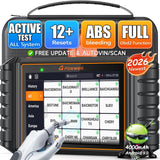 FOXWELL NT726 Bidirectional Scanner
$368.99Bidirectional scanner that shows crank sensor RPM signal and all-module codes during a no-start.
FOXWELL NT726 Bidirectional Scanner
$368.99Bidirectional scanner that shows crank sensor RPM signal and all-module codes during a no-start.
 FOXWELL NT301 Code Reader
$68.82Budget code reader with live data for confirming an engine speed signal while cranking.
FOXWELL NT301 Code Reader
$68.82Budget code reader with live data for confirming an engine speed signal while cranking.
 TOPDON BT200 Battery Tester
$103.99Low battery voltage while cranking can corrupt the CKP signal — test the battery first.
TOPDON BT200 Battery Tester
$103.99Low battery voltage while cranking can corrupt the CKP signal — test the battery first.

When the Relearn Is Required
If one of these applies to your vehicle recently, you have almost certainly found your answer.
| Work performed | Why it invalidates the learned data |
|---|---|
| ECM or PCM replacement | The stored variation data lived in the old module. The new one has never seen your engine |
| ECM reprogramming | Reflashing can clear the stored values |
| Crankshaft position sensor replacement | The sensor's position relative to the wheel changes slightly, which changes the signature |
| Crankshaft or reluctor wheel replacement | A different wheel has entirely different variations |
| Harmonic balancer replacement | Where the reluctor is part of or referenced to it |
| Engine replacement or rebuild | New engine, new wheel, new signature |
| Timing component work on some applications | Where the relationship between components is disturbed |
The single most useful diagnostic question here is "what was done to this vehicle recently?" If the answer includes anything in that table, the relearn is the first thing to attempt — before any component is suspected, let alone replaced.
This is a recurring theme across GM codes. Our P0506 and P0507 guide covers the idle relearn that gets skipped after throttle body cleaning, and our P0717 guide covers a transmission code that follows a valve body fitted without verification. When a code arrives shortly after work, the work is the first suspect.
What the Procedure Involves
Knowing roughly what is required helps you understand why this is not a driveway job for most people.
The procedure needs a capable scan tool. A basic code reader cannot initiate it — this requires a bidirectional tool able to command the learn function. That is the main practical barrier for a home mechanic.
And it requires a specific driving event. The general shape, which varies by application, is:
- Bring the engine to full operating temperature.
- Initiate the learn function with the scan tool.
- Accelerate to a specified engine speed under the conditions the procedure calls for.
- Release the throttle completely and allow the engine to decelerate through a specified range without touching the pedal.
- Repeat as required until the tool reports the learn complete.
Why the deceleration matters is genuinely interesting. During a closed-throttle decel, the module cuts fuel entirely — no combustion is happening. With no firing events disturbing crankshaft speed, the only variation left to measure is the mechanical signature of the wheel itself. That is precisely the measurement the procedure needs, and it is why the specific decel event cannot be skipped or approximated.
Follow the procedure for your specific vehicle rather than a generic description, including this one. The engine speeds, gear selection and repetition requirements vary by application, and the tool will guide a technician through the correct sequence.
Doing It Safely
Worth stating plainly, because the procedure involves driving at speed while operating equipment.
The relearn requires accelerating to a specified engine speed and then decelerating through a range, which means it happens with the vehicle in motion under conditions you do not fully control.
- Do not attempt it in traffic. The procedure demands specific speeds and a clean, uninterrupted deceleration — neither of which you can guarantee around other vehicles.
- Do not operate a scan tool while driving. If the procedure needs monitoring, a second person handles the tool, or it is done on a dynamometer.
- Choose a safe, legal location where the required speeds can be reached without risk.
- Many shops do this on a lift or dyno for exactly these reasons, which is a good argument for having it done professionally.
Between the tool requirement and the driving requirement, this is a procedure most owners are better off paying for — and it is usually inexpensive relative to any part.
Why Your Misfire Codes May Be False
An important consequence that gets missed, and it can save an unnecessary repair.
Until the variation learn is complete, the module cannot reliably distinguish wheel geometry from genuine misfires. That means misfire codes stored alongside P1336 are not trustworthy evidence.
So if you have P1336 together with P0300 or cylinder-specific misfire codes, the correct order is:
- Perform the variation relearn first.
- Clear all codes.
- Drive the vehicle properly and see what returns.
Quite often the misfire codes do not come back, because they were an artefact of the module measuring an unknown wheel rather than a real combustion problem.
Chasing those misfires first — plugs, coils, injectors, compression testing — is work done on unreliable evidence. Our P0300 guide covers genuine misfire diagnosis, but the relearn comes first when P1336 is present.
If the misfires do return after a successful relearn, they are real — and now you can diagnose them properly, on data the module can actually trust.
P1346 and Its Second Definition
This needs flagging honestly, because P1346 is not always the same code as P1336.
GM code references give P1346 two definitions:
- Crankshaft sensor system variation not learned — the same fault as P1336, and everything on this page applies.
- Intake camshaft position out of range — an entirely different matter, concerning camshaft timing rather than crankshaft measurement.
Which one applies depends on your specific vehicle and model year. This is the code-reuse problem that runs through GM's whole P1xxx range, and published GM code lists carry an explicit caution about it.
How to tell which you are dealing with:
- Trust your scan tool's description over any general list.
- Look at the context. If the code followed ECM replacement or crankshaft work, the variation reading fits. If it arrived alongside variable valve timing codes, oil pressure concerns, or a timing rattle, the camshaft reading fits.
- Check for companion codes. P1336 alongside supports the variation reading; VVT codes support the camshaft reading.
If yours is the camshaft reading, our P0014 guide and P0016 guide cover camshaft timing faults, where oil condition and timing chain wear are the dominant causes rather than a missing relearn.
When the Relearn Will Not Complete
If the procedure has been attempted properly and will not finish, the picture changes — and now a component genuinely may be involved.
Things that prevent a successful learn:
- A damaged reluctor wheel. Chipped, cracked or damaged teeth produce a signature the module cannot make sense of. GM has a related code specifically covering reluctor wheel performance, which is worth knowing exists.
- A failing crankshaft position sensor, or a wiring and connector fault in its circuit.
- Conditions not met — engine not at full operating temperature, or the required speeds and decel not achieved cleanly.
- Other codes present that inhibit the procedure from running.
- A genuine mechanical problem producing real crankshaft speed variation that swamps the measurement.
The diagnostic value of a failed relearn is high. If the procedure has been carried out correctly and still will not complete, you have learned something real: the module is seeing something it cannot reconcile, and inspecting the reluctor wheel and the crankshaft sensor circuit is now warranted.
Our P0340 and P0341 guide covers reluctor wheel and position sensor faults on the camshaft side, and much of the same reasoning applies here.
A Note on Sourcing for These Codes
We cite documents we have read and label the rest.
We could not verify a GM service bulletin naming P1336 or P1346 on a specific GM platform. The definitions are consistent across GM code references, and the description of the variation learn — its purpose, when it is required and what it involves — reflects standard practice rather than a GM document we opened and read.
The exact procedure varies by application, including engine speeds, gear selection and repetitions. Follow your vehicle's service information, not a general description.
These are also older GM codes from the manufacturer-specific set. And given P1346's dual definition, confirming what your scan tool actually reports matters more here than on most codes. Ask a dealer to check your VIN — it is free.
Symptoms of P1336 and P1346
- Check engine light on
- Frequently no driveability symptoms at all — the engine may run perfectly
- Misfire codes stored alongside, which may not be genuine
- The light appearing shortly after engine, sensor or module work
- Failed emissions testing, since misfire monitoring is compromised
- Rough running in cases where a genuine underlying fault exists
On urgency: low to moderate, and unusual in why. The vehicle is generally fine to drive, and often nothing feels wrong. What is compromised is the module's ability to detect misfires accurately — so a real misfire developing might be reported unreliably, and the vehicle will not pass an emissions test with monitoring in this state. Get the relearn done rather than living with it, but this is not an emergency.
Causes and How to Confirm Each
| Cause | How to confirm it | Notes |
|---|---|---|
| Relearn never performed after work | Ask what was done recently — module, crank sensor, crankshaft, balancer or engine work | By far the most common. The fix is a procedure, not a part |
| Relearn attempted but not completed | Confirm the tool reported it as complete, not merely started | Conditions must be met exactly for it to finish |
| Conditions not met during the attempt | Engine at full operating temperature; correct speeds; clean closed-throttle decel | An interrupted decel will not produce a valid measurement |
| Damaged reluctor wheel | Suspect where a correctly performed relearn will not complete. Inspect for damaged teeth | GM has a related code for reluctor wheel performance |
| Crankshaft position sensor or circuit fault | Inspect the connector and wiring; test the circuit | A poor signal cannot produce a valid learn |
| Other codes inhibiting the procedure | Read all codes; resolve those that block the learn | The tool will usually say why it refused |
| Genuine mechanical fault | Where real speed variation swamps the measurement | Rare, but a failed relearn is meaningful evidence |
| Camshaft timing fault (if P1346 carries the second definition) | Check what your scan tool actually reports; look for VVT codes and oil condition | Entirely different diagnosis — see our P0014 and P0016 guides |
Crankshaft position sensors
 ACDelco Crankshaft Position Sensor 213-4761
$103.99ACDelco crankshaft position sensor for many Chevy and GMC engines. Confirm fitment by VIN before ordering.
ACDelco Crankshaft Position Sensor 213-4761
$103.99ACDelco crankshaft position sensor for many Chevy and GMC engines. Confirm fitment by VIN before ordering.
 ACDelco Gold 213-4761 Crankshaft Sensor
$57.70ACDelco Gold version of the 213-4761 sensor. Confirm fitment by VIN before ordering.
ACDelco Gold 213-4761 Crankshaft Sensor
$57.70ACDelco Gold version of the 213-4761 sensor. Confirm fitment by VIN before ordering.
 12636947 Crankshaft Position Sensor
$15.78Budget 12636947 crank sensor listed for Buick and Chevrolet applications. Confirm fitment by VIN before ordering.
12636947 Crankshaft Position Sensor
$15.78Budget 12636947 crank sensor listed for Buick and Chevrolet applications. Confirm fitment by VIN before ordering.


How Are P1336 and P1346 Diagnosed?
- Confirm what your scan tool reports, particularly for P1346, given its dual definition.
- Ask what work was done recently. Module replacement or reprogramming, crank sensor, crankshaft, balancer, or engine work all require the relearn.
- Record all codes. Misfire codes alongside are suspect until the relearn is done; VVT codes alongside point at the camshaft reading of P1346.
- Inspect the crankshaft position sensor connector and wiring before attempting the procedure — a poor signal will not produce a valid learn.
- Perform the variation learn with a capable scan tool, following your vehicle's procedure, safely and not in traffic.
- Confirm the tool reports the learn complete, not merely attempted.
- Clear all codes and drive the vehicle properly.
- See what returns. Misfire codes that do not come back were artefacts; ones that do are real and can now be diagnosed on trustworthy data.
- If the relearn will not complete, inspect the reluctor wheel and crankshaft sensor circuit — that failure is meaningful evidence.
Parts and Cost
| Repair | What it involves | Cost picture |
|---|---|---|
| Crankshaft variation relearn | Scan tool procedure plus a specific drive event | No parts. Usually a modest labour charge, and frequently the whole answer |
| Connector or wiring repair | Where the crankshaft sensor circuit is at fault | Modest |
| Crankshaft position sensor | Where the sensor is confirmed faulty | Moderate. Note it requires a relearn afterwards |
| Resolving codes that inhibit the procedure | Varies with what those codes are | Varies |
| Reluctor wheel or crankshaft | Where damaged teeth prevent a valid learn | Major. Confirm thoroughly before going here |
| Misfire repairs done before the relearn | Plugs, coils and testing chased on unreliable data | Money spent on evidence the module could not vouch for |
The notable feature of this table is how much of it is empty. On most vehicles setting these codes, nothing needs to be bought at all.
For the replacement job
 50-Piece 1/4 in. Drive Socket Set
$54.99Quarter-inch drive sockets for tight sensor bolts.
50-Piece 1/4 in. Drive Socket Set
$54.99Quarter-inch drive sockets for tight sensor bolts.
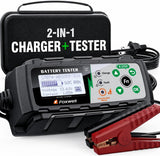 FOXWELL BC521 Battery Charger & Tester
$162.35Charger and tester for battery health.
FOXWELL BC521 Battery Charger & Tester
$162.35Charger and tester for battery health.
 ACDelco Digital Torque Wrench, 1/2 in. (14.8–147.5 ft-lb)
$162.99Half-inch digital torque wrench.
ACDelco Digital Torque Wrench, 1/2 in. (14.8–147.5 ft-lb)
$162.99Half-inch digital torque wrench.


What Other P1336 / P1346 Pages Get Wrong
- Treating it as a failed component. These codes report that a setup procedure has not been completed. The usual fix is a relearn with a scan tool and no parts whatsoever.
- Never asking what was done recently. Module replacement or reprogramming, crank sensor, crankshaft, balancer or engine work all require the relearn. That question resolves most cases immediately.
- Not warning that misfire codes may be false. Until the learn is complete, the module cannot separate reluctor wheel geometry from real misfires. Chasing plugs and coils first is work done on untrustworthy evidence.
- Not explaining why the deceleration matters. Fuel is cut during a closed-throttle decel, so no combustion disturbs crankshaft speed and the only variation left is the wheel's own signature. That is why the specific event cannot be approximated.
- Omitting the safety point. The procedure involves accelerating and decelerating at specified speeds. It should not be attempted in traffic, and nobody should be operating a scan tool while driving.
- Presenting one definition for P1346. GM references give it two — variation not learned, and intake camshaft position out of range. Those are completely different diagnoses.
- Missing what a failed relearn tells you. If a correctly performed procedure will not complete, that is real evidence pointing at the reluctor wheel or the sensor circuit.
Frequently Asked Questions
Do I need to replace anything?
Usually not. These codes report that the crankshaft variation learn procedure has not been performed, and the fix is normally to perform it — a scan tool procedure with no parts involved. Components only come into question if a correctly performed relearn will not complete.
Why does the module need to learn anything?
Because misfire detection works by measuring tiny variations in crankshaft speed, and the reluctor wheel's own tooth spacing is not perfectly uniform. Those manufacturing variations look identical to real speed changes. Learning the wheel's individual signature lets the module subtract it, so what remains is a genuine misfire.
The code appeared right after I had work done. Is that related?
Almost certainly. ECM replacement or reprogramming, crankshaft position sensor replacement, crankshaft or reluctor wheel work, harmonic balancer replacement and engine replacement all require the relearn afterwards. The repair may have been done perfectly — the final step was skipped.
Can I do the relearn myself?
It requires a bidirectional scan tool capable of commanding the procedure, which a basic code reader cannot do. It also requires accelerating and decelerating at specified speeds, which should not be attempted in traffic and should not involve operating a tool while driving. Most owners are better off having it done — it is inexpensive relative to any part.
I have misfire codes too. Should I fix those first?
No — do the relearn first. Until it is complete, the module cannot reliably tell reluctor wheel geometry from genuine misfires, so those codes are not trustworthy evidence. Perform the relearn, clear everything, drive it, and see what returns. Quite often the misfires do not.
Can I keep driving?
Generally yes, and the vehicle often runs perfectly. What is compromised is accurate misfire detection, which means a genuine misfire may be reported unreliably and the vehicle will not pass an emissions test with monitoring in this state. Get the relearn done, but it is not an emergency.
What if the relearn will not complete?
That is useful information rather than a dead end. Confirm the conditions were right — full operating temperature, correct speeds, a clean closed-throttle deceleration. If the procedure was performed correctly and still will not finish, inspect the reluctor wheel for damaged teeth and check the crankshaft position sensor and its circuit.
My scan tool says P1346 means something about the camshaft.
Then trust your tool. GM references give P1346 two definitions — crankshaft variation not learned, and intake camshaft position out of range — and which applies depends on your vehicle and model year. If yours is the camshaft reading, that is a timing diagnosis rather than a relearn, and oil condition and timing chain wear become the things to investigate.
Shop Related Parts & Tools
On these codes the answer is usually a procedure rather than a purchase. Establish what work was done recently before anything is ordered.
-
 MOTOPOWER MP69033 OBD2 Scanner — confirms exactly what your vehicle reports for P1346, which matters here because that code carries two different definitions, and shows which misfire codes return after the relearn. Note that commanding the relearn itself needs a bidirectional tool.
-
 95-Piece Mechanics Tool Set (Metric & SAE) — for crankshaft position sensor and connector access, which is what you inspect if a correctly performed relearn will not complete.
-
 ACDelco dexos1 Gen 3 Full Synthetic 5W-30 (1 qt) — relevant only if your P1346 turns out to carry the camshaft position definition, since variable valve timing runs on oil pressure and oil condition drives those faults.
Related Guides
- P0300 Code: Random/Multiple Cylinder Misfire Detected — the detection this relearn makes reliable
- P0340 & P0341 Codes: Camshaft Position Sensor Circuit — reluctor wheels and position sensors on the camshaft side
- P0016 Chevy Equinox: Meaning, Causes & Fix — if your P1346 is the camshaft definition
- P0014 Code: "B" Camshaft Timing Over-Advanced, Bank 1