
P1345 is a GM-specific code: "Crankshaft Position – Camshaft Position Correlation." It belongs to an older generation of Chevrolet engines — the Vortec 4.3L V6, 5.0L and 5.7L V8 and 7.4L with a distributor, found in 1996-and-later C/K pickups, Tahoe, Suburban, S-10, Blazer, Astro and Express vans. The single most important fact about it is one most pages get backwards: on these engines, turning the distributor does not change ignition timing. It changes rotor phasing and a scan-tool value called Cam Retard Offset. That is what P1345 is really measuring, and it is why the code so often appears right after an engine or distributor has been worked on.
Jump to a section: What P1345 means · Which Chevrolets set it · The distributor doesn't set timing · Cam Retard Offset explained · Symptoms · Causes and how to confirm each · How it's diagnosed · Parts and cost · Sources · What other pages get wrong · FAQ
What Does P1345 Mean?
The engine computer (PCM, or VCM on many 1996–2002 trucks) reads two position signals. The crankshaft position sensor sits behind the harmonic balancer and is the master reference — the computer fires the plugs from it. The camshaft position sensor on these engines is inside the distributor, and the computer uses it to know which cylinder is on its compression stroke for fuel injection sequencing.
Because the distributor is gear-driven from the camshaft, its sensor signal should arrive at a fixed point relative to the crank signal. P1345 sets when the two signals do not line up within the allowed range — or when the cam signal is erratic enough that the computer cannot correlate it.
Being a manufacturer-specific code, P1345 may not show up on a very basic code reader, or may show as "manufacturer code" with no description. A scanner with GM-enhanced data reads it properly and, more importantly, shows the Cam Retard Offset value you need to fix it.
Which Chevrolets Set P1345
P1345 is associated with the 1996-and-later Vortec distributor engines:
- 4.3L V6 — S-10, Blazer, Astro, C/K pickups, Express
- 5.0L and 5.7L V8 — C/K 1500/2500 pickups, Tahoe, Suburban, Express
- 7.4L V8 — heavier C/K and Suburban applications
That application list comes from several consistent technical sources rather than a GM bulletin; we did not find a GM service bulletin on NHTSA's archive that names P1345. Two things we could not confirm, so we will not claim them: exactly which model year was the last to use P1345, and whether the late-production 4.3L in Express and Savana vans reported it under the same code.
Modern GM engines with variable valve timing report cam-to-crank correlation differently, through P0016 to P0019. If you see "P1345" attributed to a 2010s Cobalt or a modern VVT engine, treat that information with suspicion.
Tools for checking cam/crank correlation
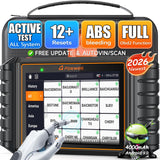 FOXWELL NT726 Bidirectional Scanner
$368.99Bidirectional scan tool that displays cam retard offset on Vortec engines.
 FOXWELL NT604 ABS/SRS/Transmission Scanner
$209.09Engine, transmission, ABS and SRS scanner with live data.
 FOXWELL BT705 Battery & Alternator Tester
$159.89Battery and charging-system tester — rule out low voltage before chasing sensors.


The Distributor Doesn't Set Timing
On a pre-1996 carbureted or TBI small block, you loosened the distributor hold-down and turned the housing to set base timing with a light. Generations of mechanics learned that habit, and it is wrong on a Vortec.
On 1996-up Vortec engines, spark timing comes from the crankshaft sensor. The distributor still sends spark to the right cylinder through the cap and rotor, and it still carries the cam sensor, but rotating it does not advance or retard the spark.
What rotating it does change:
- Rotor phasing — where the rotor tip sits relative to the cap terminal when a spark fires. Far enough out, spark can jump to the wrong terminal, causing crossfire and misfires.
- Cam Retard Offset — the scan-tool reading of how far the cam sensor signal is from where the computer expects it.
So if someone "set the timing" by turning the distributor on one of these trucks, they probably caused the P1345 rather than fixed anything.
Cam Retard Offset Explained
Cam Retard Offset is the number that tells you whether the distributor is indexed correctly. The procedure circulated from the GM service manual is:
- Bring the engine to full operating temperature.
- Hold engine speed at at least 1,000 rpm.
- Read Cam Retard Offset on a GM-capable scan tool. The target is 0°, plus or minus 2°.
- If it reads negative, rotate the distributor counterclockwise; if positive, clockwise. Make small moves.
- Tighten the hold-down and recheck.
We are passing this on secondhand: it is quoted from the factory manual by technicians, but we could not open the GM document itself. The torque figure that circulates with it is internally inconsistent in the sources we found, so use the specification in your service manual for the hold-down bolt.
A reading that will not settle — jumping several degrees with the engine steady — is a different problem from a reading that is steady but off. Steady and off means indexing. Jumping means wear, a loose rotor, or a sensor or wiring fault.
Symptoms of P1345
- Check engine light on
- Misfires, rough running or a stumble under load if rotor phasing is far enough out for crossfire
- Hard starting
- Code appearing right after an engine swap, intake gasket job or distributor replacement
- Often no noticeable symptom at all if the offset is only slightly out of range
- P0340 or P0335 stored alongside when a sensor or its wiring is failing
Causes and How to Confirm Each
| Cause | How to confirm it | Notes |
|---|---|---|
| Distributor installed or indexed incorrectly | Steady Cam Retard Offset outside 0° ±2° at operating temperature | The most common cause, especially after recent work or a loose hold-down |
| Worn distributor drive gear or bushings, loose rotor | Offset reading that wanders; physical play in the shaft; inspect the gear | A worn distributor cannot hold a stable reading |
| Aftermarket distributor installed a tooth or 180° out | Check offset immediately after installation | Reported repeatedly by owners on replacement units |
| Failing cam or crank sensor, or wiring | Erratic rpm on the scan tool, scope the signals; often P0340 or P0335 alongside | Inspect the harness at the distributor and behind the balancer |
| Timing chain slack or a jumped tooth | Mechanical check of chain deflection and timing marks | Less common; consider on high-mileage engines |
On 1998-and-later VCM trucks, a crankshaft position variation relearn may also be needed after crank sensor or crankshaft work. That is a separate code (P1336) — see our P1336 and P1346 guide.
Sensors and timing parts
 ACDelco Crankshaft Position Sensor 213-4761
$103.99ACDelco crankshaft position sensor. Confirm fitment by VIN before ordering.
 12703627 Crankshaft Position Sensor
$38.79Crankshaft position sensor 12703627. Confirm fitment by VIN before ordering.
 ACDelco Timing Chain Kit 12700436
$450.99ACDelco timing chain kit for a stretched chain that shifts cam/crank correlation. Confirm fitment by VIN before ordering.


How Is P1345 Diagnosed?
- Read the code with a GM-capable tool so you can see Cam Retard Offset.
- Ask what work has been done. Distributor, intake, engine swap — any of them points straight at indexing.
- Warm the engine fully and hold 1,000 rpm or more.
- Read Cam Retard Offset. Steady and outside 0° ±2° means re-index the distributor.
- If the value wanders, inspect the distributor for shaft play, gear wear and a loose rotor before adjusting anything.
- Check for P0340 or P0335 and test the sensors and wiring if they are present.
- Adjust the distributor in small steps, tighten the hold-down to specification, and recheck.
- Clear the code and road test under load.
Parts and Cost
| Repair | What it involves | Cost picture |
|---|---|---|
| Distributor indexing | Warm engine, scan tool, small rotations, tighten | Often the whole fix and nearly free — if you have a tool that shows the offset |
| Distributor replacement | Where the gear, bushings or internal cam sensor have failed. Index it correctly on installation | Moderate |
| Cam or crank sensor | Where testing points to the sensor | Modest part; the crank sensor sits behind the balancer |
| Wiring repair | Chafed or corroded sensor wiring | Depends on location |
| Timing chain set | Only with confirmed slack or a jumped tooth | The larger repair |
For the repair
 ACDelco Digital Torque Wrench, 1/2 in. (14.8–147.5 ft-lb)
$162.99Half-inch digital torque wrench for distributor hold-down and timing cover bolts.
 ACDelco 10-2010 RTV Engine Sealant
$22.35GM RTV engine sealant for timing-cover reassembly.
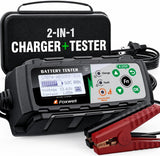 FOXWELL BC521 Battery Charger & Tester
$162.35Charger and tester for battery health.


Sources for P1345
| Source | What it supports | Status |
|---|---|---|
| Technical references (troublecodes.net, Underhood Service case study, GM truck owner forums) | GM definition "Crankshaft Position – Camshaft Position Correlation"; 1996-up Vortec distributor engines; Cam Retard Offset procedure | Corroborated — consistent across multiple sources |
| GM factory service manual Cam Retard Offset procedure | 0° ±2° at operating temperature, 1,000 rpm or more; rotation direction | Corroborated — quoted secondhand; GM document not opened |
| NHTSA GM bulletin archive | Searched for a GM bulletin naming P1345 | None found |
This guide is built on corroborated technical sources rather than a GM bulletin we could read in full. The service manual for your truck is the authority.
What Other P1345 Pages Get Wrong
- "Adjust the distributor to set ignition timing." On 1996-up Vortec engines the crank sensor sets timing. Turning the distributor changes only rotor phasing and the offset.
- Recommending a cam phaser. Some code databases suggest replacing a "cam phaser actuator sprocket" for P1345. A Vortec pushrod distributor engine has no phaser.
- Borrowing advice from other brands. P1345 means something different on Volkswagen, Toyota and Mazda vehicles. GM advice for those codes does not transfer, and the reverse is true too.
- Replacing the distributor without indexing it. A new distributor dropped in a tooth off sets the same code.
- Saying it appears on modern VVT engines. Modern GM engines use P0016–P0019 for cam/crank correlation.
Frequently Asked Questions
Is P1345 serious?
Usually not dangerous. A slightly out-of-range offset may cause no symptom at all. But if rotor phasing is far enough out to cause crossfire, you can get misfires that damage the catalytic converter over time, so fix it rather than ignoring it.
Can I fix P1345 myself?
Often, yes — if you have a scan tool that reads Cam Retard Offset. The fix is frequently just re-indexing the distributor with the engine warm. Without that reading you are guessing.
Why did P1345 show up after I replaced my distributor?
Because the new distributor was not indexed to 0° ±2° Cam Retard Offset, or it went in a tooth off. Recheck the offset and adjust. Owners also report aftermarket units with the gear installed in the wrong position.
Does turning the distributor change timing on a Vortec?
No. Timing comes from the crankshaft position sensor on 1996-up Vortec engines. Turning the distributor changes rotor phasing and the cam signal relationship only.
My basic code reader doesn't show P1345. Why?
P1345 is a GM manufacturer-specific code. Some basic readers do not display it or show no description. A tool with GM-enhanced data reads it and shows Cam Retard Offset.
Can a bad crankshaft sensor cause P1345?
Yes, a failing crank or cam sensor can disturb the correlation. When that is the cause, P0335 or P0340 often sets as well, and the scan-tool readings tend to be erratic rather than steadily out of range.
Shop Related Parts & Tools
The fix is often just indexing the distributor — but you need a scan tool that shows Cam Retard Offset to do it right.
-
 Launch CRE 2.0 GM All-System Scanner — a GM-specific all-system scanner. You need GM-enhanced data to see Cam Retard Offset; confirm the tool lists that parameter for your truck's year before relying on it.
-
 FOXWELL NT301 OBD2 Scanner — reads and clears P1345 and shows live rpm for spotting an erratic crank or cam signal. A generic reader may not show the offset.
-
 95-Piece Mechanics Tool Set (Metric & SAE) — for the distributor hold-down and sensor access.