
P1380 is Misfire Detected — Rough Road Data Not Available, and P1381 is its companion: Misfire Detected — No Communication with Brake Control Module. Both describe the same underlying situation, and it is an unusual one. Your engine's misfire detection needs information from your brakes. When that information stops arriving, the module cannot trust what it is measuring — and it says so. The fix is frequently not in the engine at all.
Jump to a section: What these codes mean · Why misfire detection needs the ABS · P1380 vs P1381 · Look at the ABS, not the engine · Is there a real misfire or not? · The communication side · A warning about this code online · A note on sourcing · Symptoms · Causes and how to confirm each · How they're diagnosed · Parts and cost · What other pages get wrong · FAQ
What Do P1380 and P1381 Mean?
These codes are often described in GM references as "ABS rough road / misfire diagnosis prevented" — and that wording is clearer than the official one.
Nothing has necessarily failed in your engine. What has happened is that the misfire diagnostic could not run properly, because a piece of information it depends on did not arrive.
That information comes from your brake control module — the ABS module — and it concerns road surface roughness.
Which raises the obvious question, and it is the most interesting thing about these codes.
Why Misfire Detection Needs the ABS
The connection seems bizarre until you understand how misfire detection actually works.
Misfires are detected by measuring crankshaft speed. When a cylinder fails to fire, the crankshaft momentarily decelerates. The module watches for that tiny hesitation.
Here is the problem. Driving over a pothole, a washboard surface, a railway crossing or broken pavement also causes momentary crankshaft speed variation. The wheels are being jolted, the driveline is loaded and unloaded, and that reaches the crankshaft as exactly the kind of brief deceleration a misfire produces.
The module cannot tell the difference from the crankshaft alone. A pothole and a dead cylinder look the same to it.
So GM gave it a second source of information. The ABS module already measures each wheel's speed with great precision — that is its entire job. When a wheel drops into a pothole and is momentarily jolted, the ABS sees it. That data, sometimes supported by a dedicated rough road sensor, gets shared with the engine module.
Armed with it, the module can say: "that speed variation happened while the wheels were being jolted, so I will disregard it." Rough road data is what stops your vehicle reporting false misfires every time you drive down a bad road.
P1380 sets when that data is unavailable. The module has detected something that looks like a misfire, and it has no way to check whether the road caused it.
This is the same family of reasoning as our P1336 guide, where the module needs to learn the reluctor wheel's own irregularities before it can trust crankshaft measurements. Accurate misfire detection depends on the module knowing what to subtract.
Tools for checking rough road data
 FOXWELL NT604 ABS/SRS/Transmission Scanner
$209.09ABS scanner — reads the wheel speed data the ECM uses for rough road detection.
FOXWELL NT604 ABS/SRS/Transmission Scanner
$209.09ABS scanner — reads the wheel speed data the ECM uses for rough road detection.
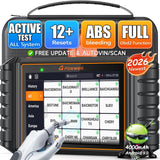 FOXWELL NT726 Bidirectional Scanner
$368.99Bidirectional scanner with engine and ABS data.
FOXWELL NT726 Bidirectional Scanner
$368.99Bidirectional scanner with engine and ABS data.
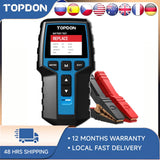 TOPDON BT200 Battery Tester
$103.99Low voltage causes network and module dropouts.
TOPDON BT200 Battery Tester
$103.99Low voltage causes network and module dropouts.

P1380 vs P1381 — the Distinction
| Code | What it says | Where it points |
|---|---|---|
| P1380 | Rough road data not available | The data itself is missing or invalid — a wheel speed sensor, a rough road sensor, or a fault inside the ABS module |
| P1381 | No communication with the brake control module | The message is not getting through — the network between modules, or the ABS module being offline entirely |
The practical difference: P1380 suggests the brake module is talking but cannot supply usable rough road information. P1381 suggests it is not talking at all.
P1381 in particular puts you in network territory, and our U0100 guide covers that reasoning in depth — including GM's documented ground faults and named connectors, and the principle that a communication code is often about a shared power or ground problem rather than a failed module.
Look at the ABS, Not the Engine
This is the practical heart of it, and it is where most diagnostic time gets wasted.
The engine module is the one reporting the code, but the fault is usually upstream of it. So the first question is not "what is wrong with my engine" — it is "what is going on with the ABS system?"
Start by reading codes from the brake control module, not just the engine module. A basic code reader that only talks to the engine will show you P1380 and nothing else, while the actual fault sits in a module it cannot see. That is a genuinely common way for this diagnosis to stall.
What to look for:
- ABS codes stored — wheel speed sensor faults, module faults, or communication codes. These are your answer far more often than anything in the engine.
- An ABS warning light on the dash. If the ABS light and the check engine light are both on, that is not a coincidence. It is the same fault reported from two directions.
- Wheel speed sensor wiring, which lives in one of the harshest environments on the vehicle — road spray, salt, stones and constant suspension movement. Chafing and corrosion are common.
- Damaged tone rings at the wheels, which produce erratic wheel speed data.
The useful shortcut: if your ABS light is on, fix that first and see whether P1380 clears with it. Very often it does, because it was never an engine fault to begin with.
Is There a Real Misfire or Not?
An important question that these codes leave genuinely open, and you should hold both possibilities.
Possibility one: there is no misfire. Rough road jolts produced crankshaft speed variations, the module had no rough road data to filter them out, and it flagged the situation. The engine is fine.
Possibility two: there is a real misfire, and it happens to have been detected during a period when rough road data was unavailable. The engine genuinely needs attention.
How to tell them apart:
- How does it drive? A real misfire on a smooth road usually produces a felt roughness, a stumble or a vibration. If it drives perfectly smoothly, that leans toward possibility one.
- What else is stored? Cylinder-specific misfire codes are much stronger evidence of a real problem than P1380 alone.
- Fix the rough road data problem first, clear the codes, and drive it. That is the decisive test. If misfire codes return with the data source working, they are real and can now be diagnosed properly.
That order matters, because chasing plugs, coils and injectors while the module cannot filter road noise means working on evidence you cannot trust. Our P0300 guide covers genuine misfire diagnosis for once you have a trustworthy signal.
The Communication Side
Because P1381 specifically concerns modules talking to each other, a few principles carry over from network diagnosis generally.
- Check the battery and charging system first. It is free, and marginal voltage produces communication faults across a vehicle without anything being broken.
- Grounds matter enormously. A high-resistance ground scatters codes across unrelated modules. Voltage drop testing under load finds what a static resistance check passes.
- Inspect connectors properly. A backed-out terminal looks perfectly seated from outside — finding it needs a pin drag test rather than a look.
- A module that is offline is not necessarily a failed module. Lost power, lost ground, or a broken network wire all produce the same silence.
If several modules are reporting communication problems rather than just this one, stop looking at individual modules and look at what they share.
A Warning About This Code Online
Worth flagging, because this specific code attracts a well-circulated error.
You will find pages describing P1380 as a variable cam timing fault, discussing camshaft actuators and solenoids, and referencing European vehicles. That is not GM's definition.
GM code references consistently give P1380 as misfire detection with rough road data unavailable, and place it directly alongside P1381 and a run of wheel speed and rough road sensor codes. That surrounding family is strong corroboration — the code sits exactly where the rough road reading says it should.
P1xxx codes are manufacturer-specific, so different makes use the same numbers for entirely unrelated faults. A page describing camshaft timing under this number is describing another manufacturer's vehicle, not yours.
And GM reused P1xxx numbers internally too, across model years and platforms. Published GM code lists carry an explicit caution about it. If your scan tool shows something different, trust the tool and your service information over any article.
A Note on Sourcing for These Codes
We cite documents we have read and label the rest.
We could not verify a GM service bulletin naming P1380 or P1381 on a specific GM platform. The definitions are consistent across multiple independent GM code references, and the surrounding code family — wheel speed sensor and rough road sensor codes — corroborates the reading strongly.
The explanation of why rough road data is used to qualify misfire detection reflects well-established diagnostic principle rather than a GM document we opened.
Implementation varies. Some GM applications use a dedicated rough road sensor; others derive the information from ABS wheel speed data. Which yours uses affects what there is to inspect, so confirm against your vehicle's service information.
Symptoms of P1380 and P1381
- Check engine light on
- ABS warning light on as well, in many cases — a strong clue
- Traction control or stability control light, or those systems disabled
- Frequently no engine driveability symptoms at all
- Misfire codes stored alongside, which may or may not be genuine
- Rough running only if a real misfire also exists
- Failed emissions testing, since misfire monitoring is compromised
On urgency: moderate, and the reason is the brakes rather than the engine. The engine side is not an emergency — compromised misfire monitoring will not strand you. But if the underlying fault has disabled ABS, traction control or stability control, you have lost driver assistance systems that matter in an emergency stop or on a slippery surface. Your base brakes still work, but the assistance behind them may not. That is worth attending to promptly, particularly in poor weather.
Causes and How to Confirm Each
| Cause | How to confirm it | Notes |
|---|---|---|
| Wheel speed sensor fault | Read codes from the ABS module, not just the engine module | Start here. Harsh environment, common failure |
| Wheel speed sensor wiring damage | Inspect at the wheels for chafing, corrosion and road damage | Constant suspension movement, salt and stones |
| Damaged tone ring | Inspect for damaged or missing teeth and for debris | Produces erratic wheel speed data |
| Rough road sensor fault (where fitted) | Check the sensor and its circuit; GM has dedicated codes for it | Not all applications have one |
| Network communication fault | P1381 points here. Check network wiring and connectors | See our U0100 guide for the full approach |
| Poor ground or weak battery | Voltage drop testing under load; test the battery and charging system | Free to check, and a common cause of communication faults |
| Corroded or backed-out connector terminal | Pin drag test rather than visual inspection | A backed-out terminal looks perfectly seated |
| Brake control module fault | After wiring, grounds and supply are proven | Less likely than the circuit feeding it |
| A genuine misfire | Fix the data problem first, then clear codes and see what returns | Both are possible. Do not assume either way |
| Engine module fault | Last, after everything upstream is excluded | Rare |
Wheel speed sensor parts
 ACDelco Front ABS Wheel Speed Sensor 22873507
$123.99ACDelco front ABS wheel speed sensor. Confirm fitment by VIN before ordering.
ACDelco Front ABS Wheel Speed Sensor 22873507
$123.99ACDelco front ABS wheel speed sensor. Confirm fitment by VIN before ordering.
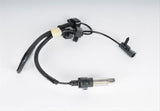 ACDelco ABS Wheel Speed Sensor 22827364
$93.99ACDelco ABS wheel speed sensor 22827364. Confirm fitment by VIN before ordering.
ACDelco ABS Wheel Speed Sensor 22827364
$93.99ACDelco ABS wheel speed sensor 22827364. Confirm fitment by VIN before ordering.
 ACDelco ABS Reluctor Ring 12479286
$94.99ACDelco ABS reluctor ring. Confirm fitment by VIN before ordering.
ACDelco ABS Reluctor Ring 12479286
$94.99ACDelco ABS reluctor ring. Confirm fitment by VIN before ordering.


How Are P1380 and P1381 Diagnosed?
- Read codes from every module, especially the brake control module. A reader that only talks to the engine will miss the actual fault entirely.
- Note which warning lights are on. An ABS light alongside the check engine light is a strong pointer.
- Note whether it is P1380 or P1381. Data unavailable versus module not communicating are different searches.
- Test the battery and charging system. Free, and marginal voltage causes communication faults directly.
- Check grounds with voltage drop testing under load, not a static reading.
- Inspect the wheel speed sensors and their wiring at each wheel, along with the tone rings.
- Inspect network wiring and connectors where P1381 is present, using a pin drag test on terminals.
- Repair the ABS or communication fault first.
- Clear all codes and drive the vehicle properly, including on smooth roads.
- See what returns. Misfire codes that come back with rough road data working are real — and now diagnosable on trustworthy evidence.
Parts and Cost
| Repair | What it involves | Cost picture |
|---|---|---|
| Ground repair | Where voltage drop testing finds a poor ground | Among the cheapest outcomes |
| Battery or charging repair | Where marginal voltage is destabilising communication | Moderate — and far cheaper than a module |
| Connector or terminal repair | Where corrosion or a backed-out terminal is found | Modest |
| Wheel speed sensor | Where the ABS module identifies which one | Moderate. Access varies by wheel and vehicle |
| Wheel speed sensor wiring repair | Where chafing or corrosion is found at the wheel | Modest — and reroute it clear of the damage |
| Tone ring | Where teeth are damaged | Varies; sometimes integral to a hub assembly |
| Rough road sensor | Where fitted and confirmed faulty | Moderate |
| Brake control module | After the circuit feeding it is proven | Significant; may require programming |
| Misfire repairs done first | Plugs, coils and testing chased before the data source is fixed | Money spent on evidence the module could not qualify |
Confirm parts against your VIN. Wheel speed sensors and hub assemblies differ by position and by whether the vehicle has ABS and stability control.
Wiring and ignition parts
 ACDelco 2-Pin Replacement Connector PT3739
$90.99Two-pin replacement connector. Confirm fitment by VIN before ordering.
ACDelco 2-Pin Replacement Connector PT3739
$90.99Two-pin replacement connector. Confirm fitment by VIN before ordering.
 Nomex Split Loom, 1 in. x 10 ft
$105.66Split loom to protect a repaired harness.
Nomex Split Loom, 1 in. x 10 ft
$105.66Split loom to protect a repaired harness.
 ACDelco Ignition Coil D515C
$105.99ACDelco ignition coil — for the misfire itself. Confirm fitment by VIN before ordering.
ACDelco Ignition Coil D515C
$105.99ACDelco ignition coil — for the misfire itself. Confirm fitment by VIN before ordering.


What Other P1380 / P1381 Pages Get Wrong
- Publishing the wrong definition entirely. Pages describing P1380 as a variable cam timing fault are describing another manufacturer's code. GM's definition concerns misfire detection and rough road data, and the surrounding code family confirms it.
- Treating it as an engine fault. The engine module reports it, but the missing information comes from the brake control module. The diagnosis usually starts at the ABS system.
- Not saying to scan the other modules. A reader that only talks to the engine shows P1380 and nothing else, while the real fault sits where it cannot see. This is a common way for the diagnosis to stall.
- Never explaining why the ABS is involved. Rough road jolts produce crankshaft speed variations that look exactly like misfires. Wheel speed data is what lets the module discount them. Without that, the whole code makes no sense to a reader.
- Assuming the misfire is real — or assuming it is not. Both are possible. Fix the data problem, clear the codes, drive it, and let the vehicle tell you.
- Ignoring the ABS light. If it is on alongside the check engine light, that is the same fault reported twice, not two problems.
- Missing the safety angle. The engine side is not urgent, but losing ABS, traction or stability control is worth attending to — especially in poor weather.
Frequently Asked Questions
What does my ABS have to do with a misfire code?
More than you would expect. Misfires are detected by measuring tiny crankshaft speed variations — but driving over potholes and rough surfaces produces those same variations. The ABS module already measures wheel speed precisely, so that data is shared with the engine module, which uses it to discount speed variations caused by the road. Without it, the module cannot tell a pothole from a dead cylinder.
Do I actually have a misfire?
These codes leave that genuinely open, and you should hold both possibilities. If the vehicle drives smoothly and no cylinder-specific misfire codes are stored, there may be no misfire at all. The decisive test is to fix the rough road data problem, clear everything, and drive it — misfire codes that return with the data source working are real.
Where should I start looking?
At the brake control module, not the engine. Read codes from every module rather than just the engine, and check whether the ABS warning light is on. If it is, fix that fault first — very often P1380 clears with it, because it was never an engine problem.
My code reader only shows P1380 and nothing else.
That is expected with a basic reader, and it is a common reason this diagnosis stalls. Many readers only communicate with the engine module, so a wheel speed sensor fault sitting in the ABS module is invisible to them. You need a tool that can read the brake control module, or a shop that can.
What's the difference between P1380 and P1381?
P1380 means the rough road data is not available — the brake module may be talking, but it cannot supply usable information. P1381 means the engine module is not communicating with the brake module at all, which puts you into network diagnosis: wiring, connectors, grounds and supply.
Can I keep driving?
The engine side is not an emergency. The consideration is the brakes: if the underlying fault has disabled ABS, traction control or stability control, you have lost systems that matter in an emergency stop or on a slippery surface. Your base brakes still work, but get it attended to promptly, particularly in poor weather.
I found a page saying this is a camshaft timing code.
That page is describing another manufacturer's vehicle. P1xxx codes are manufacturer-specific, and different makes use the same numbers for unrelated faults. GM's definition concerns misfire detection and rough road data, and the codes immediately around it are wheel speed and rough road sensor codes — which corroborates it strongly.
Could it just be a bad ground?
Very possibly, particularly with P1381. Communication faults are frequently power and ground problems rather than failed modules, and a high-resistance ground scatters codes across systems that seem unrelated. Voltage drop testing under load is how you find one — a static resistance check will pass it.
Shop Related Parts & Tools
Read the brake control module before doing anything in the engine bay — on these codes that is where the fault usually is.
-
 MOTOPOWER MP69033 OBD2 Scanner — shows which misfire codes are stored alongside, which is what tells you whether the misfire is likely real. Note that reading the brake control module needs a tool with ABS module access.
-
 VDIAGTOOL BT500 Battery Tester — genuinely first in line on P1381, since marginal voltage causes module communication faults directly and this rules it out for nothing.
-
 95-Piece Mechanics Tool Set (Metric & SAE) — for wheel speed sensor access and inspecting the sensor wiring where it runs down to each wheel.
Related Guides
- P1336 & P1346 Codes: Crankshaft Position System Variation Not Learned — the other code about making misfire detection trustworthy
- P0300 Code: Random/Multiple Cylinder Misfire Detected — for once the data source is working
- U0100 Code: Lost Communication With ECM/PCM — module communication faults and where they actually live
- GM Check Engine Light Codes: Most Common & What They Mean