
If your GM truck already has the factory integrated trailer brake controller, keep it. It is proportional, it is tied into the truck's own brake and stability systems, its settings live on the dash display, and nothing aftermarket integrates that cleanly. Buy an aftermarket controller when your truck was not built with one — which is common on base and mid-trim Silverados and Sierras — or when the factory unit has failed and you want a cheaper path back to working trailer brakes.
That decision takes about two minutes once you know whether your truck has the option. Check the dash for a trailer brake gain display and a manual apply lever or slider near the shifter, then confirm against your RPO label. If you are shopping either way, start from towing and hauling accessories for your Silverado or Sierra.
Parts and tools you'll need
- Brake controllers, wiring adapters, hitches and trailer wiring
- GM electrical and wiring components — connectors, fuses, circuit protection
- A test light or multimeter, and a plug-in trailer tester if you tow often
- A vehicle-specific brake controller wiring adapter, not a generic pigtail
Factory trailer brake controllers
 ACDelco Trailer Brake Controller
$83.99GM factory-style trailer brake controllers. Confirm fitment by VIN before ordering.
ACDelco Trailer Brake Controller
$83.99GM factory-style trailer brake controllers. Confirm fitment by VIN before ordering.
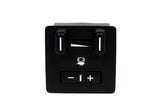 ACDelco Trailer Brake Controller
$86.99GM factory-style trailer brake controllers. Confirm fitment by VIN before ordering.
ACDelco Trailer Brake Controller
$86.99GM factory-style trailer brake controllers. Confirm fitment by VIN before ordering.
 ACDelco Trailer Brake Controllers, ACDelco GM Genuine Parts
$147.99GM factory-style trailer brake controllers. Confirm fitment by VIN before ordering.
ACDelco Trailer Brake Controllers, ACDelco GM Genuine Parts
$147.99GM factory-style trailer brake controllers. Confirm fitment by VIN before ordering.
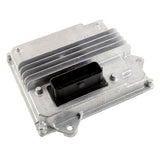 ACDelco Trailer Brake Controllers, ACDelco GM Genuine Parts
$212.99GM factory-style trailer brake controllers. Confirm fitment by VIN before ordering.
ACDelco Trailer Brake Controllers, ACDelco GM Genuine Parts
$212.99GM factory-style trailer brake controllers. Confirm fitment by VIN before ordering.


How do you tell if your truck already has one?
Look for a gain adjustment on the dash. On GM trucks equipped with the integrated controller, trailer brake gain is set through the driver information center or the infotainment screen depending on model year, and there is a manual apply control within reach of the driver. If both exist, you have it.
If the dash shows nothing about trailer braking, check the RPO label — usually in the glove box or on the driver's door area, depending on model. The integrated controller commonly comes bundled with a trailering package rather than as a standalone option; on many Silverado 1500s it arrives with the Max Trailering Package (RPO NHT). Package contents and codes vary by year and model, so read your own label rather than a forum's summary.
One more check: plug in a trailer with electric brakes and see whether the truck displays a trailer connected message and a gain value. A truck without the controller will show trailer lighting status but nothing about braking.
Do you even need a brake controller?
Only if the trailer has electric or electric-over-hydraulic brakes. A small utility trailer with no brakes at all, or a trailer with surge (hydraulic) brakes that actuate mechanically at the coupler, needs no controller in the truck. A controller does nothing for either one.
The threshold at which a trailer is legally required to have its own brakes is set by state law and varies, and it is usually expressed as a gross trailer weight. Look up the requirement for your state and for any state you tow through rather than assuming a national number. Separately, your truck's own towing documentation specifies the trailer weight above which GM requires trailer brakes — that figure is in your owner's manual and trailering guide, and it can be lower than what the law allows.
The practical answer for most Silverado and Sierra owners: if the trailer has brake magnets and a 7-way plug, you need a controller. If it has a surge coupler and a 4-flat plug, you do not. If you are unsure which connector you are looking at, our guide to 4-pin, 7-pin and GM's auxiliary connectors sorts that out — and explains why no adapter can give a 4-pin trailer brakes.
One thing a controller does not do is compensate for a badly loaded trailer. Tongue weight, load distribution and tire pressure matter more to how a rig stops than any gain setting. Get those right first — our guide to weight distribution and tongue weight covers the loading side.
Factory integrated vs aftermarket: what actually differs?
Both do the same fundamental job — send a variable voltage to the trailer's electric brake magnets in proportion to how hard the truck is stopping. The differences are in how they sense braking, how they behave in an emergency stop, and how much of the truck's interior they occupy.
| Factory integrated (ITBC) | Aftermarket proportional | Aftermarket time-delayed | |
|---|---|---|---|
| How it senses braking | Reads the truck's own brake system data | Internal accelerometer senses deceleration | Timer ramps output after brake pedal input |
| Mounting | Built into the dash; nothing added | Bracket under dash; must be within reach | Bracket under dash, often smaller |
| Mounting angle sensitivity | None | Older units need leveling; most modern ones self-level | None |
| Settings location | Dash display / infotainment | On the controller body | On the controller body |
| Manual apply | Factory lever or slider | Lever or slider on the unit | Lever or slider on the unit |
| Smoothness in normal stops | Best | Very good | Noticeably less smooth |
| Behavior in a hard stop | Ramps with actual braking effort | Ramps with actual deceleration | Same ramp regardless of severity |
| Installation | Already done | Plug-in adapter on most 2014+ GM trucks | Plug-in adapter on most 2014+ GM trucks |
| Resale and interior appearance | Clean, no visible add-on | Visible box under the dash | Visible box under the dash |
The row that matters most is behavior in a hard stop. A time-delayed controller applies the same ramp whether you are slowing for a light or standing on the pedal, which means either weak trailer braking in an emergency or grabby trailer brakes in normal driving. A proportional unit — factory or aftermarket — matches trailer braking to what the truck is actually doing.
Is a time-delayed controller ever the right choice?
Rarely, and only in narrow cases. They are cheaper, physically smaller, and unaffected by mounting angle, which makes them tolerable for a light utility trailer that gets towed a few times a year on flat roads at low speed. For anything heavy, anything in hills, or anything you tow regularly, the price difference does not justify the compromise.
The reason people still buy them is mounting flexibility — a time-delayed unit can be tucked almost anywhere. If that is your only constraint, look at modern proportional units first, because most of the current generation self-level and no longer require the precise mounting angle that gave older proportional controllers their reputation.
How hard is an aftermarket install on a modern GM truck?
Easier than most people expect. GM has provided a dedicated brake controller connector under the driver's side dash on Silverado and Sierra models for years — 2014 and newer trucks generally have it — which means a vehicle-specific adapter harness plugs in on both ends and you never cut a wire.
The realistic sequence:
- Confirm your truck has the factory under-dash brake controller connector and buy the adapter harness listed for your exact year and model.
- Choose a mounting location where you can reach the manual apply lever without leaning, and where your knee will not hit the unit.
- Disconnect the battery negative terminal before working under the dash.
- Locate the factory connector, plug the adapter into it, and route the harness to your chosen mounting point.
- Mount the controller bracket, then connect the adapter to the controller.
- Reconnect the battery, verify the controller powers up, then plug in a trailer and confirm it recognizes the connection.
- Set the gain and test with the manual apply lever in a safe empty area before towing on public roads.
If your truck predates the factory connector, or if the connector is missing on your build, the install becomes a four-wire hardwire job: power, ground, a brake switch input and the output to the trailer brakes. Do not assume wire colors from a generic diagram — confirm the color code in the instructions supplied with your specific controller and against the wiring diagram for your truck. Verify the brake switch wire with a test light rather than guessing.
Whichever route you take, use a properly rated fused power feed. The output circuit to trailer brakes carries real current, and the fuse is what stands between a chafed wire and a fire. Source the connectors and circuit protection from GM electrical and ignition parts rather than a bag of generic crimp terminals.
What if the factory controller stops working?
Diagnose before you replace. A dead trailer brake display or a "service trailer brake system" message is more often a connector or circuit problem than a failed module. Work in this order:
- Inspect the 7-way connector at the truck for corrosion, bent pins or road salt buildup — this is the single most common cause.
- Check the trailer's own wiring and brake magnets; a shorted magnet can take the truck's output circuit offline.
- Check the relevant fuses in the underhood and interior fuse blocks per your owner's manual.
- Test the 7-way with a plug-in tester to confirm whether the truck is producing a brake output at all.
- Scan for chassis and body codes with a tool that reads more than powertrain data.
- Only then consider the module itself.
If the factory module is genuinely dead, an aftermarket controller is a legitimate repair path and usually the cheaper one. It will not restore the dash display, and you will have a box under the dash, but the trailer will stop properly. The reverse — adding a factory-style integrated controller to a truck that never had one — generally involves module, harness and programming work that costs more than a good aftermarket unit.
Trailer brake control modules
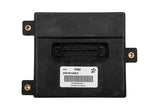 ACDelco Trailer Brake Control Module
$173.99GM trailer brake control modules. Confirm fitment by VIN before ordering.
ACDelco Trailer Brake Control Module
$173.99GM trailer brake control modules. Confirm fitment by VIN before ordering.
 ACDelco Trailer Brake Control Module
$155.99GM trailer brake control modules. Confirm fitment by VIN before ordering.
ACDelco Trailer Brake Control Module
$155.99GM trailer brake control modules. Confirm fitment by VIN before ordering.
 ACDelco Trailer Brake Control
$84.99GM trailer brake control modules. Confirm fitment by VIN before ordering.
ACDelco Trailer Brake Control
$84.99GM trailer brake control modules. Confirm fitment by VIN before ordering.


Can you run both a factory and an aftermarket controller?
No. Two controllers feeding the same output circuit fight each other and produce unpredictable trailer braking. If the truck has a working integrated controller, use it. If you install an aftermarket unit because the factory one failed, follow the controller and adapter instructions for isolating the factory circuit — do not simply parallel the two.
What about setting gain?
Gain is the maximum output the controller sends to the trailer brakes, and it has to be set for the actual load, not once and forgotten. A trailer that is empty one weekend and loaded the next needs different gain. Set it every time the load changes meaningfully.
The method is the same on factory and aftermarket units: in a safe, empty, level area at low speed, use the manual apply lever alone and increase gain until the trailer brakes just short of locking up, then back off slightly. Do it again when the trailer weight changes. Our step-by-step walkthrough on dialing in the trailer brake gain on a Silverado 1500 covers the menu paths by model year and gives starting points by trailer weight.
Safety note: trailer brakes are not optional equipment on a heavy trailer. Check your state's requirements for when electric brakes and a breakaway system are legally required, verify the breakaway battery holds a charge before every trip, and never test gain settings on a public road with traffic behind you. Note that the breakaway battery charges off the 12-volt auxiliary pin in the 7-way — if that circuit is dead, the battery quietly goes flat and the breakaway system will not work when it is needed.
Which should you buy?
| Your situation | Recommendation |
|---|---|
| Truck has a working factory integrated controller | Use it. Buy a 7-way tester and spare fuses instead. |
| Truck has no controller; you tow regularly or tow heavy | Aftermarket proportional with a vehicle-specific adapter |
| Truck has no controller; light utility trailer, a few trips a year | Proportional still preferred; time-delayed acceptable if space is tight |
| Factory controller failed out of warranty | Diagnose first; aftermarket proportional as the repair path |
| You switch between very different trailers | Any unit with easy, frequent gain adjustment and boost settings |
| Truck predates the factory under-dash connector | Aftermarket, budget time for a hardwire install |
What to check before you order
- Whether you already have one. Check the dash and the RPO label before spending anything.
- Adapter harness fitment. Vehicle-specific, by exact year and model — not a universal pigtail.
- Mounting clearance. Sit in the driver's seat and confirm the unit clears your knee and the steering column.
- Number of trailer brake axles supported. Controllers are rated by how many axles they can drive.
- Proportional versus time-delayed. Assume proportional unless you have a specific reason not to.
- Your 7-way connector condition. A corroded connector will make any controller look broken.
Towing tools and sensors
 FOXWELL NT726 Bidirectional OBD2 Scanner
$368.99Scan and electrical tools for towing systems.
FOXWELL NT726 Bidirectional OBD2 Scanner
$368.99Scan and electrical tools for towing systems.
 GM GENUINE PARTS 13545366 Trailer Tire Pressure Indicator
$39.99Scan and electrical tools for towing systems. Confirm fitment by VIN before ordering.
GM GENUINE PARTS 13545366 Trailer Tire Pressure Indicator
$39.99Scan and electrical tools for towing systems. Confirm fitment by VIN before ordering.
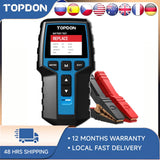 TOPDON BT200 12V Car Battery Tester Digital Automotive
$103.99Scan and electrical tools for towing systems.
TOPDON BT200 12V Car Battery Tester Digital Automotive
$103.99Scan and electrical tools for towing systems.
 For Chevrolet Silverado 1500 2007-2024 Compatible Chevrolet
$33.90Scan and electrical tools for towing systems. Confirm fitment by VIN before ordering.
For Chevrolet Silverado 1500 2007-2024 Compatible Chevrolet
$33.90Scan and electrical tools for towing systems. Confirm fitment by VIN before ordering.


Frequently Asked Questions
How do I know if my truck has a factory trailer brake controller?
Look for a trailer brake gain display in the driver information centre or infotainment screen, plus a manual apply lever or slider within the driver's reach. If both exist, you have it. Confirm against the RPO label — on many Silverado 1500s it arrives with the Max Trailering Package, RPO NHT.
Do I need a brake controller at all?
Only if the trailer has electric or electric-over-hydraulic brakes. A trailer with surge brakes actuating at the coupler, or no brakes, needs nothing in the truck. The practical test: brake magnets and a 7-way plug means yes; a surge coupler and a 4-flat plug means no.
What is the difference between proportional and time-delayed controllers?
A proportional unit matches trailer braking to how hard the truck is actually stopping — the factory unit reads the truck's brake data, an aftermarket one uses an accelerometer. A time-delayed unit applies the same ramp regardless of severity, which means either weak braking in an emergency or grabby brakes in normal driving.
Is a time-delayed controller ever acceptable?
Only for a light trailer towed a few times a year on flat roads, where mounting space is the binding constraint. Most current proportional units self-level and no longer need the precise mounting angle that gave older ones their reputation, so the usual reason for choosing time-delayed has largely gone away.
How hard is it to install an aftermarket brake controller?
On 2014-and-newer Silverado and Sierra trucks, straightforward — GM provides a dedicated connector under the driver's side dash, so a vehicle-specific adapter plugs in at both ends with no wire cutting. Older trucks need a four-wire hardwire: power, ground, brake switch input and output to the trailer.
My factory controller stopped working. Do I need a new module?
Probably not. A dead display or a service trailer brake message is more often a connector or circuit fault. Check the 7-way for corrosion first, then the trailer's own wiring and magnets, then fuses, then test the 7-way for a brake output. Consider the module last.
Can I run a factory and an aftermarket controller together?
No. Two controllers feeding the same output circuit fight each other and produce unpredictable trailer braking. If you fit an aftermarket unit because the factory one failed, follow the instructions for isolating the factory circuit rather than paralleling the two.
How do I set the gain?
In a safe, empty, level area at low speed, use the manual apply lever alone and increase gain until the trailer brakes just short of locking, then back off slightly. Reset it whenever the load changes meaningfully — an empty trailer and a loaded one need different gain.
Will a brake controller fix a trailer that sways?
No. Sway is a loading problem — tongue weight, load distribution and tire pressure matter far more to how a rig behaves than any gain setting. Fix the loading first; the controller only decides how hard the trailer's own brakes apply.
Why does my breakaway battery keep going flat?
Usually a dead 12-volt auxiliary circuit in the 7-way, which is what charges it. That matters more than it sounds: the breakaway system applies the trailer brakes if the trailer separates from the truck, and a flat battery means it will not work. Check that pin is live.
A Note on Sourcing
Whether your truck has the integrated controller depends on trailering package rather than model, and package contents and RPO codes vary by year. The label on your own vehicle is authoritative — this page names RPO NHT as a common bundling on Silverado 1500s, not as a universal rule.
Trailer brake and breakaway requirements are set by state law and vary, and GM's own trailer weight threshold for requiring trailer brakes is in your owner's manual and trailering guide. It can be lower than what the law allows, which is why this page tells you to check both rather than publishing a single figure.
The under-dash brake controller connector is present on most 2014-and-newer Silverado and Sierra trucks, but builds vary. Confirm yours before buying an adapter harness rather than a hardwire kit.
The recommendations, the diagnostic order and the assessment of time-delayed controllers are our own judgement, based on how these units behave in service. We sell brake controllers, and the position stated here is that if your truck already has a working factory unit, the right purchase is a 7-way tester and some spare fuses.
Still deciding?
The short version: factory integrated is better when you have it, and a proportional aftermarket unit is the right answer when you do not. Time-delayed controllers only make sense for very light, very occasional towing where mounting space is the limiting factor.
Compare controllers, adapter harnesses and trailer wiring in towing and hauling accessories, and confirm the harness is listed for your exact year and model before you order. Once you are set up, tow/haul mode covers what the truck does on the road, and there are more GM owner guides for the rest of the setup.