
A 4-pin flat carries four things: ground, running lights, left turn/brake and right turn/brake. A 7-way blade adds electric trailer brakes, switched 12-volt power and a reverse circuit. If your trailer has electric brakes, you need the 7-way — there is no adapter that invents the brake signal. And the "GM 12-pin" people ask about is not a lighting connector at all.
That last point catches a lot of people. Search results for 12-pin trailer connectors return military HMMWV plugs, European ISO connectors and Ram camera ports, none of which are on your Silverado. What GM actually puts on late-model HD trucks is a separate auxiliary camera port that sits below the 7-way and has nothing to do with lights or brakes. Before you order anything, confirm which connector is physically on your bumper, then match it in towing and hauling wiring for your GM truck or SUV.
Parts and tools you'll need
- Trailer connectors, adapters and towing wiring
- GM electrical parts for pigtails, terminals and fuses
- A test light or a multimeter. A circuit tester makes this job twenty minutes instead of a weekend.
- Dielectric grease, and a wire brush small enough to clean connector pins
Trailer brake control
 ACDelco Trailer Brake Controller
$83.99Trailer brake controllers and modules. Confirm fitment by VIN before ordering.
ACDelco Trailer Brake Controller
$83.99Trailer brake controllers and modules. Confirm fitment by VIN before ordering.
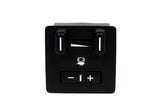 ACDelco Trailer Brake Controller
$86.99Trailer brake controllers and modules. Confirm fitment by VIN before ordering.
ACDelco Trailer Brake Controller
$86.99Trailer brake controllers and modules. Confirm fitment by VIN before ordering.
 ACDelco Trailer Brake Controllers, ACDelco GM Genuine Parts
$147.99Trailer brake controllers and modules. Confirm fitment by VIN before ordering.
ACDelco Trailer Brake Controllers, ACDelco GM Genuine Parts
$147.99Trailer brake controllers and modules. Confirm fitment by VIN before ordering.
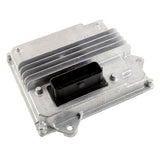 ACDelco Trailer Brake Controllers, ACDelco GM Genuine Parts
$212.99Trailer brake controllers and modules. Confirm fitment by VIN before ordering.
ACDelco Trailer Brake Controllers, ACDelco GM Genuine Parts
$212.99Trailer brake controllers and modules. Confirm fitment by VIN before ordering.


What is the difference between a 4-pin and a 7-pin trailer connector?
Pin count equals function count. A 4-pin flat handles ground, running lights and the two turn/brake circuits — enough for a small utility trailer with no brakes. A 7-way blade adds three circuits: electric brake output, a 12-volt auxiliary feed, and reverse. Those three are what a travel trailer, a boat trailer with surge or electric brakes, and any trailer with an onboard battery need.
There are intermediate connectors too. A 5-way flat is a 4-way with a reverse or surge-brake lockout circuit added. A 6-way round is common on older equipment trailers and horse trailers and carries brakes plus 12-volt but not reverse. You will encounter both, mostly on used trailers.
| Connector | Circuits | Electric brakes? | 12V aux? | Reverse? | Typical use |
|---|---|---|---|---|---|
| 4-way flat | Ground, tail, left turn/brake, right turn/brake | No | No | No | Small utility trailers, single-axle open trailers, light boat trailers |
| 5-way flat | 4-way plus one extra circuit | No | No | Yes (or surge lockout) | Boat trailers with surge brakes that need a reverse lockout |
| 6-way round | Ground, tail, both turn circuits, brakes, 12V | Yes | Yes | No | Older horse and equipment trailers |
| 7-way RV blade | All of the above plus reverse | Yes | Yes | Yes | Travel trailers, fifth wheels, goosenecks, any braked trailer |
The practical rule: if the trailer has brakes or a battery, you need a 7-way. If it is a landscape trailer with two lights and a license plate lamp, a 4-way is all it will ever use, and installing a 7-way just gives you four unused pins to corrode.
Is there a GM 12-pin trailer connector?
Not for lights and brakes. Twelve-pin trailer connectors exist, but they belong to military vehicles and to some European trailer standards, and other truck manufacturers have used multi-pin connectors for trailer camera systems. On a GM truck, the extra connector you may find near the hitch is an auxiliary accessory port, not a trailer wiring connector.
On 2020 and newer Silverado HD and Sierra HD trucks, there is a sealed accessory connector located beneath the 7-way receptacle. It carries the signal for GM's accessory trailer camera system so the camera image can reach the infotainment screen. It does not carry brake output, running lights or turn signals, and no lighting adapter plugs into it.
This matters because people find that port, search for a 12-pin adapter, and end up buying something for a different brand of truck entirely. If you are wiring lights or brakes on a GM, your connector is the 7-way blade or the 4-way flat. Nothing else on the vehicle does that job.
If you do want the trailer camera capability, that is an accessory system with its own harness, not something you adapt from a trailer plug. Confirm your truck has the camera provisions before ordering, because trucks built without them need more than a plug.
Which connector does your GM truck come with from the factory?
It depends on the trailering package, not the model. Most GM full-size trucks and SUVs equipped with a factory trailering package have both a 7-way blade and a 4-way flat at the rear bumper. Vehicles without the package may have a 4-way only, a capped connector behind the bumper, or nothing at all.
Do not assume from the badge. A Silverado 1500 with the Max Trailering package and a Silverado 1500 work truck without trailering provisions are wired very differently behind the bumper. Same with Tahoe, Suburban, Yukon and Traverse — trim and package drive it.
Look for the RPO codes on the sticker in your glovebox. Trailering-related codes tell you what the truck actually left the factory with, which is more reliable than what a previous owner told you. If there is a factory brake controller in the dash, the 7-way is almost certainly live.
The other giveaway is the fuse box. Trucks pre-wired for trailering usually have labeled trailer fuse positions, and often a labeled but empty position for the trailer brake circuit. An empty labeled slot means the wiring exists and the fuse was never installed.
What does each pin on a 7-way do?
Seven circuits: ground, tail/running lights, left turn and stop, right turn and stop, electric brake output, 12-volt auxiliary, and reverse. Pin positions are standardized. Wire colors are not fully standardized, and that is the source of most miswired trailers.
There are two color conventions in common use. Both agree that white is ground and blue is the electric brake circuit. They disagree about the rest. One convention uses green for tail lights, red for left turn and brown for right turn. The other uses brown for tail lights, yellow for left turn and green for right turn. Same pin positions, swapped colors.
| Function | Color, RV convention | Color, SAE convention | Agreed across both? |
|---|---|---|---|
| Ground | White | White | Yes |
| Electric brakes | Blue | Blue | Yes |
| Tail / running lights | Green | Brown | No |
| Left turn and stop | Red | Yellow | No |
| Right turn and stop | Brown | Green | No |
| 12-volt auxiliary | Black | Black | Yes |
| Reverse | Yellow | Varies | No |
Read that table as a warning rather than a wiring diagram. Brown means tail lights on one trailer and right turn on another. Yellow means left turn on one and reverse on another. If you wire by color alone across a truck and trailer built to different conventions, you will get brake lights when you signal and running lights when you back up.
The fix is a test light and five minutes. Probe each pin at the truck with the ignition on and have someone operate the turn signals, brake pedal, headlights and reverse gear one at a time. Write down what each pin does on your truck. Then do the same at the trailer. Match function to function, not color to color.
Why doesn't a 4-pin work with a brake controller?
Because the brake output has nowhere to go. A brake controller produces a variable-voltage output that feeds the trailer's electromagnets, and that signal travels on a dedicated pin that a 4-way flat does not have. No adapter can create a circuit that the connector does not physically carry.
This is the single most common misunderstanding in trailer wiring, and it costs people money. A 7-way-to-4-way adapter is a legitimate product — it lets a 4-way trailer plug into a 7-way truck. GM catalogs one for recent Silverado 1500 trucks, listed as part 19366958 in dealer parts data; confirm the current number for your model year before ordering. What that adapter does is pass through the four lighting circuits. It does not give a 4-pin trailer brakes.
Going the other direction is worse. A 4-way-to-7-way adapter lets a 7-way trailer physically connect to a 4-way truck, and the lights will work. The brakes will not, because the truck has no brake output. Towing a braked trailer with the brakes disconnected is a serious problem, not an inconvenience.
If your truck has a 4-way only and you need to tow a braked trailer, the correct path is installing the 7-way circuit properly: a 7-way receptacle, the brake and 12-volt circuits run to it, appropriate fusing, and a brake controller. Our comparison of factory versus aftermarket brake controllers covers which route suits which truck, and the Silverado brake controller setup guide covers the gain adjustment once it is in.
Safety note: most states require working brakes on trailers above a specified weight, and require a breakaway system on trailers with electric brakes. The breakaway battery charges off the 12-volt auxiliary pin. If that pin is dead, the breakaway battery slowly goes flat and the safety system it exists for will not work when you need it.
How do you diagnose a dead trailer circuit?
- Start at the truck, not the trailer. Probe each pin of the 7-way with a test light, grounding to the connector's ground pin.
- Have a helper cycle running lights, left signal, right signal, brake pedal and reverse while you watch each pin.
- Confirm the 12-volt auxiliary pin is hot. On many GM trucks this circuit is fused separately and the fuse is a frequent failure.
- Check the trailer brake output pin with the controller manually applied. It should read a variable voltage that rises as you slide the manual lever.
- If a circuit is dead at the truck, check the trailer fuses in the underhood fuse block before you chase wiring.
- If everything is live at the truck, move to the trailer connector and repeat the same probe test.
- Inspect and clean both connector faces. Corroded pins are the number one cause of intermittent trailer lights.
- Verify the trailer's ground. A bad trailer ground makes lights dim, cross-feed and behave randomly — turn signals that flash the brake lights are almost always a ground fault.
- Check the trailer's frame ground bolt. Paint under a ring terminal is not a ground connection.
- Apply dielectric grease to both connector faces once everything works, and keep the cap closed.
Cross-feeding deserves its own note because it looks like a wiring error and almost never is. When the trailer ground is poor, current returns through whatever path it can find, which is usually another lamp filament. The symptom is dramatic and the cause is one loose bolt.
Diagnostics
 FOXWELL NT726 Bidirectional OBD2 Scanner
$368.99Scanners and testers for a dead trailer connector.
FOXWELL NT726 Bidirectional OBD2 Scanner
$368.99Scanners and testers for a dead trailer connector.
 FOXWELL NT624 Elite OBD2 Scanner, All-System Scan Tool
$332.09Scanners and testers for a dead trailer connector.
FOXWELL NT624 Elite OBD2 Scanner, All-System Scan Tool
$332.09Scanners and testers for a dead trailer connector.
 TOPDON BT200 12V Car Battery Tester Digital Automotive
$103.99Scanners and testers for a dead trailer connector.
TOPDON BT200 12V Car Battery Tester Digital Automotive
$103.99Scanners and testers for a dead trailer connector.
 ACDelco Wire Connectors, Replacement, 2 Pins
$90.99Scanners and testers for a dead trailer connector.
ACDelco Wire Connectors, Replacement, 2 Pins
$90.99Scanners and testers for a dead trailer connector.


What does not work
- No adapter adds an electric brake circuit to a 4-way flat. The pin does not exist.
- A 4-way-to-7-way adapter on a truck without brake wiring gives you lights and no brakes.
- The auxiliary camera port on late-model GM HD trucks is not a trailer lighting connector and takes no lighting adapter.
- Wire colors do not reliably match between truck and trailer. Match by tested function.
- A converter box designed for a vehicle with separate turn and brake lamps behaves differently than one for combined lamps. Match the converter to the vehicle, not the trailer.
- A 6-way round is not a 7-way with a pin missing. Different housing, different pin layout.
What to check before you order
- What is physically on your bumper right now: 4-way, 7-way, both, or a capped connector.
- What is on the trailer, including whether it has been changed by a previous owner.
- Whether the trailer has electric brakes, surge brakes, or no brakes.
- Whether the trailer has an onboard battery that needs the 12-volt circuit.
- Whether your truck has a factory brake controller or needs an aftermarket one.
- Your trailering RPO codes from the glovebox sticker.
- Whether the trailer fuse positions in your truck's fuse block are populated.
- Whether you need an adapter or an actual wiring harness. They are not the same purchase.
Towing parts
 GM GENUINE PARTS 13545366 Trailer Tire Pressure Indicator
$39.99Trailer sensors and wiring protection. Confirm fitment by VIN before ordering.
GM GENUINE PARTS 13545366 Trailer Tire Pressure Indicator
$39.99Trailer sensors and wiring protection. Confirm fitment by VIN before ordering.
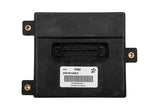 ACDelco Trailer Brake Control Module
$173.99Trailer sensors and wiring protection. Confirm fitment by VIN before ordering.
ACDelco Trailer Brake Control Module
$173.99Trailer sensors and wiring protection. Confirm fitment by VIN before ordering.
 ACDelco Trailer Brake Control Module
$155.99Trailer sensors and wiring protection. Confirm fitment by VIN before ordering.
ACDelco Trailer Brake Control Module
$155.99Trailer sensors and wiring protection. Confirm fitment by VIN before ordering.
 For Chevrolet Silverado 1500 2007-2024 Compatible Chevrolet
$33.90Trailer sensors and wiring protection. Confirm fitment by VIN before ordering.
For Chevrolet Silverado 1500 2007-2024 Compatible Chevrolet
$33.90Trailer sensors and wiring protection. Confirm fitment by VIN before ordering.


Frequently Asked Questions
What is the difference between a 4-pin and 7-pin trailer connector?
Pin count equals function count. A 4-pin flat carries ground, running lights and the two turn/brake circuits. A 7-way blade adds three more: electric brake output, 12-volt auxiliary and reverse. If the trailer has brakes or an onboard battery, you need the 7-way.
Can I use an adapter to get trailer brakes from a 4-pin?
No. A brake controller sends a variable-voltage signal down a dedicated pin that a 4-way flat does not physically have, and no adapter can create a circuit that does not exist. The correct fix is installing a 7-way receptacle with the brake and 12-volt circuits, proper fusing and a controller.
Does GM use a 12-pin trailer connector?
Not for lights or brakes. On 2020-and-newer Silverado HD and Sierra HD trucks there is a sealed accessory port beneath the 7-way that carries GM's accessory trailer camera signal to the infotainment screen. It has no brake, turn or running light circuits, and no lighting adapter plugs into it.
Why don't the wire colours match between my truck and trailer?
Because two colour conventions are in common use and they disagree. Both agree white is ground and blue is electric brakes. After that, brown means tail lights on one and right turn on the other; yellow means left turn on one and reverse on the other. Match by tested function, never by colour.
How do I test which pin does what?
Use a test light grounded to the connector's ground pin, with a helper cycling running lights, left signal, right signal, brake pedal and reverse one at a time. Write down what each pin does on the truck, then repeat at the trailer, and match function to function.
My trailer signals flash the brake lights. What causes that?
Almost always a bad trailer ground. When the ground path is poor, current returns through whatever it can find — usually another lamp filament — which produces dramatic cross-feeding symptoms. Check the frame ground bolt; paint under a ring terminal is not a ground connection.
What does the 12-volt auxiliary pin actually do?
It powers trailer accessories and charges the breakaway battery. That matters more than most people realise: if the pin is dead, the breakaway battery slowly goes flat, and the safety system that applies the trailer brakes if it separates will not work when needed.
Which connector did my truck come with from the factory?
It follows the trailering package rather than the model. Trucks and SUVs with a factory trailering package usually have both a 7-way and a 4-way at the rear bumper; those without may have a 4-way only, a capped connector, or nothing. Check the RPO codes on the glovebox sticker.
My trailer lights work intermittently. Where do I start?
Corroded connector pins are the most common cause. Clean both faces, check the trailer fuses in the underhood block, verify the trailer ground bolt, then probe pin by pin at the truck before chasing wiring on the trailer. Finish with dielectric grease and keep the cap closed.
Is a 6-way round just a 7-way missing a pin?
No — different housing and different pin layout. A 6-way round carries ground, tail, both turn circuits, brakes and 12-volt, but no reverse. It turns up mostly on older horse and equipment trailers.
A Note on Sourcing
Pin functions and connector types are industry standards. The two wire colour conventions are both in active use, which is exactly why this page presents them as a warning rather than a wiring diagram — there is no single correct colour map, and matching by colour across a truck and trailer built to different conventions is how trailers get miswired.
The GM adapter part number 19366958 comes from dealer parts data and is included as a starting point. Part numbers supersede, so confirm the current one for your model year before ordering.
What is on your bumper is determined by trailering package rather than model, which is why this page repeatedly says to look rather than to assume. The RPO sticker in your glovebox is authoritative for what the truck left the factory with.
Trailer brake and breakaway requirements are set by state law and vary, so the note about them is deliberately general. Check your own state's threshold.
The diagnostic sequence is our own, based on service practice — in particular the order of starting at the truck rather than the trailer, which saves most of the time on an intermittent fault.
Will this connector fit your truck?
Check your year, model and trailering package before you order. GM trucks and SUVs left the factory with several different rear wiring configurations, and the connector on your bumper is the only thing that settles it. Look, then order from trailer connectors, adapters and towing wiring. Terminals, pigtails and fuses are in GM electrical and ignition parts.
For the rest of the towing setup: hitch ball and shank sizing, whether you need weight distribution, and more GM owner guides.