
P00B7 is Engine Coolant Flow Low / Performance — and the first thing worth knowing is that nothing on your engine measures coolant flow. There is no flow meter. The module compares two temperature sensors and infers that coolant must not be moving properly between them. That inference is usually right, but it has an important consequence: either sensor being wrong produces this code with a perfectly healthy cooling system. And because this is an overheating code, the order you check things in matters more than usual.
Jump to a section: Read this first · What P00B7 means · The two-sensor comparison · Why a sensor can cause it · The electrically heated thermostat · Why your fans run flat out · Clear the code after the repair · Do not replace the thermostat on suspicion · Coolant level, air and leaks · A note on sourcing · Symptoms · Causes and how to confirm each · How it's diagnosed · Parts and cost · What other pages get wrong · FAQ
Read This First
If your temperature gauge is high, a message tells you the engine is overheating, or you can smell coolant — stop driving and let the engine cool. Overheating damage is expensive and can be permanent, and small engines of the type that commonly set this code have very little tolerance for it.
Do not open the cooling system while it is hot. A pressurised system releases scalding coolant and steam the moment the cap is loosened, and it causes serious burns every year. Wait until it is cold.
Our P1258 guide covers what happens when GM's overtemperature protection actually engages.
If the engine is running at normal temperature and the gauge is steady, you have time to diagnose this properly. Most of what follows assumes that.
What Does P00B7 Mean?
Coolant has to circulate. The water pump pushes it through the engine, where it absorbs heat, then out to the radiator, where it gives that heat up. P00B7 means the module has concluded that circulation is not happening properly.
But it has not measured that. It has worked it out from two temperature readings — which is the key to the whole diagnosis.
Tools for checking coolant flow
 FOXWELL NT726 Bidirectional Scanner
$368.99Commands the auxiliary coolant pump and shows both temperature sensors.
FOXWELL NT726 Bidirectional Scanner
$368.99Commands the auxiliary coolant pump and shows both temperature sensors.
 FOXWELL NT614 Elite Scanner
$233.69Engine live data including coolant temperatures.
FOXWELL NT614 Elite Scanner
$233.69Engine live data including coolant temperatures.
 TOPDON BT200 Battery Tester
$103.99Battery tester — handy before any cooling-system repair.
TOPDON BT200 Battery Tester
$103.99Battery tester — handy before any cooling-system repair.

The Two-Sensor Comparison
Your engine has two coolant temperature sensors, not one:
- The engine coolant temperature sensor (ECT), on the engine
- The radiator coolant temperature sensor (RCT), at the radiator
If coolant is circulating properly, those two readings track each other reasonably closely. The same fluid is moving between both points, so it cannot be very hot at one and very cold at the other.
P00B7 sets when the difference between them exceeds roughly 68°F. The module's reasoning is straightforward: a gap that large means the coolant at the engine is not reaching the radiator, so flow must be restricted.
Sound logic — and entirely dependent on both sensors being honest.
This puts P00B7 in a family of codes we cover elsewhere. Our P1514 guide covers a plausibility check between airflow and throttle position; our P1380 guide covers misfire detection depending on data from another module. In every case, the module is inferring rather than observing — and the inference is only as good as its inputs.
Why a Sensor Can Cause It
The practical consequence, and the thing that saves people from replacing water pumps unnecessarily.
A large temperature discrepancy can mean coolant is not flowing. It can also mean one sensor is lying. The module cannot tell those apart.
So before any cooling system component is condemned:
- Look at both sensor readings live on a scan tool. Which one is implausible?
- Check them cold. On a vehicle that has sat overnight, both sensors should read close to ambient temperature and close to each other. If they disagree substantially when cold, one of them is wrong — coolant flow cannot explain a discrepancy in a stone-cold engine.
- Verify against reality with an infrared thermometer. Point it at the engine and at the radiator and compare with what the sensors report.
That cold check is the single most valuable free test on this page. It separates a sensor problem from a flow problem in about a minute, and it needs no tools at all beyond a scan tool that shows live data.
Also check the wiring and connectors at both sensors, and consider the shared circuits behind them — our P0641 and P0651 guide covers how one fault can corrupt several sensor readings at once.
A caution worth stating: replacing both sensors on spec is a common response and frequently does not fix it. Establish which reading is wrong, or whether either is, before buying anything.
The Electrically Heated Thermostat
Many GM engines that set this code use a thermostat the module can actively control, and understanding it explains a great deal.
A conventional thermostat is purely mechanical — a wax pellet expands as coolant heats it, opening the valve. GM's map-controlled thermostat adds an electric heating element, letting the module heat the pellet deliberately and open the thermostat earlier than coolant temperature alone would.
The reported operating figures give a sense of the range:
| Condition | Behaviour |
|---|---|
| No current applied | Begins to open at approximately 217°F |
| 12V applied to the heater | Begins to open at approximately 176°F |
| Fully open | Approximately 243°F |
The module decides which mode to use based on load. Running hotter improves efficiency at light load; opening early protects the engine under heavy load.
Why this matters for P00B7: the thermostat is not a passive part here — it is something the module commands. So the fault can be the thermostat itself stuck open or closed, or the circuit that heats it, or the module's control of that circuit. Inspect the thermostat's electrical connector and wiring, not just the thermostat.
Our P0128 guide covers the related complaint of an engine not reaching operating temperature.
Why Your Fans Run Flat Out
A distinctive symptom, and knowing the reason is genuinely reassuring.
When P00B7 sets, the cooling fans commonly run at high speed continuously whenever the engine is running.
That is deliberate. The module has concluded coolant flow is insufficient, so it does the one thing it still can to remove heat: it runs the fans hard. The fans are not broken and they are not the problem — they are the module's response to the problem.
Two useful implications. Loud fans immediately after a check engine light, with the engine otherwise behaving, fits this code well. And if the fans are running flat out and the engine still gets hot, that is a genuine escalation — the protective measure is not keeping up, and you should stop.
Clear the Code After the Repair
An easily missed step that produces a confusing outcome, reported by owners who have been through it.
While P00B7 is set, the module may hold the thermostat open regardless of temperature — a protective default, since it believes flow is compromised.
The consequence: after you fix the actual fault, the engine may still fail to reach normal operating temperature. It sits well below where it should, the heater underperforms, and it looks as though the repair did not work or the new thermostat is faulty.
It is neither. The code needs clearing. Until it is, the module stays in its protective state.
So the sequence matters: repair the fault, refill and bleed the system properly, clear the code, then drive and see whether it returns. Judging the repair without clearing first will mislead you.
Do Not Replace the Thermostat on Suspicion
Worth stating plainly, because the thermostat is the default assumption on any coolant code.
GM's guidance is reported to be that the engine coolant thermostat should not be replaced unless a thermostat-related trouble code is found. The module monitors thermostat behaviour at every start, comparing the two sensor readings to confirm it is operating within design parameters.
And a related point that saves needless work: smaller engines can take longer to reach normal operating temperature than people expect. Slow warm-up on its own is not a reason to replace a thermostat in the absence of a thermostat code.
We should be honest about this one: that guidance is reported by a reputable third party rather than being a GM bulletin we opened and read. We include it because it is specific, checkable, and points away from an unnecessary purchase. Have a dealer confirm against your VIN.
Coolant Level, Air and Leaks
The cheapest causes, and they belong at the front of the queue.
Low coolant is a leading cause, and it is free to check on a cold engine. But treat a low level as a symptom rather than the fault — coolant does not simply disappear. Find where it went:
- Visible leaks at hoses, the radiator, the water pump or the surge tank
- A leaking surge tank cap, which loses pressure and lowers the boiling point
- Internal leaks, which produce no puddle at all
Air in the system deserves particular attention, especially after any cooling system work. An air pocket sitting against a temperature sensor makes it read wrongly, and an airlock genuinely does block circulation. Both mechanisms produce this code, and both are fixed by bleeding the system properly to the correct procedure.
Then the flow path itself:
- Restricted or collapsed hoses, which can collapse under suction while looking fine at rest
- A blocked radiator or heater core, from sediment or degraded coolant
- The water pump — a failed impeller circulates nothing while the pump looks intact from outside. A leak from the weep hole is a classic sign
- Weak or contaminated coolant, or the wrong specification
One thing worth asking about: some GM engines carried extended water pump coverage beyond the standard warranty. If a water pump is diagnosed, ask a dealer whether any extended coverage applies to your VIN before paying — that question is free and occasionally worth a great deal.
A Note on Sourcing for This Code
We cite documents we have read and label the rest.
We could not verify a GM service bulletin naming P00B7 on a specific GM platform. Unlike several codes on this site, we have no GM document to quote here, and we would rather say so than imply otherwise.
The set condition is corroborated across independent sources: a temperature difference exceeding approximately 68°F between the radiator coolant temperature sensor and the engine coolant temperature sensor.
The thermostat operating temperatures and GM's reported guidance not to replace the thermostat without a thermostat code are corroborated but not verified by us — reported by a reputable source rather than read from a GM bulletin. Treat the figures as indicative and confirm against your service information.
The behaviour of the module holding the thermostat open until the code is cleared is owner-reported, from someone who worked through it on a GM truck. We include it because it explains a genuinely confusing post-repair symptom, but it is field experience rather than documentation.
Have a dealer check your VIN against current bulletins, and ask about extended coverage if a water pump is diagnosed. Both are free.
Symptoms of P00B7
- Check engine light on
- Cooling fans running at high speed constantly — a strong pointer to this code
- Overheating, or a temperature gauge reading higher than normal
- Temperature gauge fluctuating oddly
- Heater blowing cold or lukewarm, since the heater core needs flow too
- An "A/C off due to high engine temperature" message
- Engine failing to reach operating temperature, particularly after a repair with the code still set
- Low coolant level, or visible leaks
On urgency: high if the engine is actually running hot, moderate otherwise. Overheating causes real and expensive damage — warped heads, failed gaskets — and the small engines that commonly set this code tolerate it poorly. If the gauge is high or you have an overheating message, stop. If temperature is normal and the only symptoms are the light and loud fans, you have time to diagnose it properly — but do not leave it, because the underlying cause tends to progress.
Causes and How to Confirm Each
| Cause | How to confirm it | Notes |
|---|---|---|
| Low coolant level | Check on a cold engine. Then find where it went | Free, and a leading cause. Topping up is not a repair |
| Air in the system | Bleed to the correct procedure, especially after recent work | Causes both false readings and genuine blockage |
| A temperature sensor reading wrongly | Compare both sensors on a cold engine. They should agree | The best free test. Flow cannot explain a cold-engine gap |
| Sensor wiring or connector fault | Inspect both; pin drag test the terminals | Also consider shared reference circuits |
| Thermostat stuck | Compare warm-up behaviour against expected; check for thermostat codes | Reported GM guidance: do not replace without a thermostat code |
| Thermostat heater circuit fault | Inspect the thermostat's electrical connector and wiring | The module actively controls these thermostats |
| Failed water pump | Check circulation; inspect the weep hole for leakage | Ask a dealer about extended coverage before paying |
| Restricted or collapsed hose | Inspect; hoses can collapse under suction while looking fine | Inexpensive to rule out |
| Blocked radiator or heater core | Inspect for sediment; compare inlet and outlet temperatures | An infrared thermometer makes this quick |
| Leaking surge tank cap | Pressure test the system | Cheap part, real consequences |
| Wrong or degraded coolant | Establish what is in it and when it was last changed | Degraded coolant deposits and corrodes |
| Head gasket or internal leak | After external causes are excluded | Serious. Combustion gas testing confirms |
Pump, thermostat and sensor parts
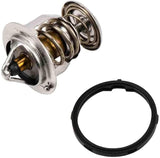 ACDelco 131-160 187° Thermostat
$45.36ACDelco 187° thermostat. Confirm fitment by VIN before ordering.
ACDelco 131-160 187° Thermostat
$45.36ACDelco 187° thermostat. Confirm fitment by VIN before ordering.
 ACDelco Water Pump 12710208
$385.99ACDelco water pump. Confirm fitment by VIN before ordering.
ACDelco Water Pump 12710208
$385.99ACDelco water pump. Confirm fitment by VIN before ordering.
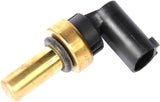 GM Genuine 55591401 Coolant Temp Sensor
$19.22GM Genuine coolant temperature sensor. Confirm fitment by VIN before ordering.
GM Genuine 55591401 Coolant Temp Sensor
$19.22GM Genuine coolant temperature sensor. Confirm fitment by VIN before ordering.

How Is P00B7 Diagnosed?
- Establish whether the engine is actually overheating. If it is, stop and let it cool before anything else.
- Record all codes and freeze frame data before clearing anything.
- Check the coolant level on a cold engine, and look for leaks. Free.
- Compare both temperature sensors on a cold engine. They should read close to ambient and close to each other. A gap here means a sensor, not flow.
- Verify with an infrared thermometer against what the sensors report.
- Inspect sensor wiring and connectors, using a pin drag test on terminals.
- Bleed the system properly if there has been recent cooling system work.
- Watch warm-up behaviour and check whether the fans run high constantly.
- Check circulation and inspect the water pump, hoses, radiator and cap.
- Pressure test the system for leaks.
- Repair the fault, refill and bleed, then clear the code — the module may hold the thermostat open until you do.
- Drive and verify that the engine reaches and holds normal operating temperature.
Parts and Cost
| Repair | What it involves | Cost picture |
|---|---|---|
| Coolant top-up and leak repair | Find the source rather than just refilling | Varies with the leak, but checking is free |
| Bleeding the system | Removing trapped air to the correct procedure | Time only — and a real fix after cooling work |
| Clearing the code after repair | The step that stops the engine sitting cold afterwards | Free, and easy to overlook |
| Surge tank cap | Where a pressure test finds it leaking | Minimal |
| Coolant temperature sensor | Only once you know which one is wrong | Modest. Replacing both on spec often fixes nothing |
| Hose replacement | Collapsed or restricted hoses | Modest |
| Thermostat | Reported GM guidance: not without a thermostat code | Moderate. These are controlled units, not simple mechanical parts |
| Water pump | Where circulation is confirmed absent | Significant — ask about extended coverage first |
| Radiator | Where blockage is confirmed | Significant |
| Head gasket or overheating damage | What happens when an overheating engine keeps being driven | By far the largest bill. This is what stopping prevents |
Confirm parts against your VIN, and use the coolant specification your vehicle calls for — mixing types causes its own problems.
Coolant and hoses
 ACDelco 10-101 DEX-COOL Coolant, 1 Gal
$31.95ACDelco DEX-COOL extended life coolant.
ACDelco 10-101 DEX-COOL Coolant, 1 Gal
$31.95ACDelco DEX-COOL extended life coolant.
 ACDelco RC85 15 PSI Radiator Cap
$17.99ACDelco 15 PSI radiator cap. Confirm fitment by VIN before ordering.
ACDelco RC85 15 PSI Radiator Cap
$17.99ACDelco 15 PSI radiator cap. Confirm fitment by VIN before ordering.
 ACDelco Gold Upper Radiator Hose 22827731
$146.99ACDelco Gold upper radiator hose. Confirm fitment by VIN before ordering.
ACDelco Gold Upper Radiator Hose 22827731
$146.99ACDelco Gold upper radiator hose. Confirm fitment by VIN before ordering.


What Other P00B7 Pages Get Wrong
- Treating it as a confirmed flow problem. Nothing measures flow. The module compares two temperature sensors and infers it — so either sensor being wrong produces this code with a healthy cooling system.
- Not giving the cold-engine test. Both sensors should read close to ambient and close to each other on a car that has sat overnight. A gap then cannot be explained by flow, and it identifies a sensor fault in about a minute.
- Recommending a thermostat by reflex. Reported GM guidance is not to replace it without a thermostat-related code — and on these engines it is an electrically controlled unit, so the heater circuit and its wiring matter too.
- Never mentioning that the code must be cleared. The module may hold the thermostat open while P00B7 is set, so a correctly repaired engine can still fail to warm up. That gets misread as a failed repair.
- Not explaining the fans. Running flat out is the module's deliberate response to what it believes is low flow, not a separate fault.
- Treating low coolant as the answer. It is a symptom. Coolant does not disappear on its own, and topping up without finding the leak just delays the next occurrence.
- Understating the overheating risk. This is not a code to drive on while a gauge climbs. The engines that commonly set it have very little tolerance for overheating.
Frequently Asked Questions
How does my car know coolant flow is low?
It does not measure it. Your engine has two coolant temperature sensors — one at the engine and one at the radiator — and the module compares them. If coolant is circulating, both should be reading similar temperatures. When the difference exceeds roughly 68°F, the module concludes the coolant at the engine is not reaching the radiator and sets P00B7.
Could it just be a bad sensor?
Yes, and it is worth ruling out before anything else. Since the code comes from comparing two readings, one sensor reading wrongly produces it with a perfectly healthy cooling system. The test is free: on a cold engine that has sat overnight, both sensors should read close to ambient temperature and close to each other. If they disagree substantially when cold, coolant flow cannot be the explanation.
Why are my cooling fans running constantly at full speed?
Because the module put them there deliberately. Having concluded that coolant flow is insufficient, it runs the fans hard to remove as much heat as it can. The fans are working correctly — they are the response, not the problem. But if they are running flat out and the engine still gets hot, stop driving.
I fixed the problem but the engine won't warm up now.
Clear the code. While P00B7 is set, the module may hold the thermostat open regardless of temperature as a protective measure, so the engine runs cooler than it should and the heater underperforms. That persists until the code is cleared, and it is commonly mistaken for a failed repair or a faulty new thermostat.
Should I just replace the thermostat?
Not on suspicion. GM's guidance is reported to be that the thermostat should not be replaced unless a thermostat-related code is found — the module checks its behaviour at every start. And on these engines it is an electrically heated unit the module actively controls, so the heater circuit and wiring are worth inspecting rather than assuming the thermostat itself has failed.
Can I keep driving?
Only if the engine is running at normal temperature. If the gauge is high, you have an overheating message, or you can smell coolant, stop and let it cool — overheating damage is expensive and often permanent, and these engines tolerate it badly. If temperature is normal and you just have the light and loud fans, you have time to diagnose it, but do not leave it indefinitely.
I just had cooling system work done and now I have this code.
Suspect trapped air first. An air pocket sitting against a temperature sensor makes it read wrongly, and an airlock genuinely restricts circulation — so it produces this code by two separate routes. Bleed the system properly to the correct procedure for your vehicle before looking at parts.
The shop says water pump and thermostat. Is that reasonable?
It can be, but ask what was tested. Specifically: were both temperature sensors compared on a cold engine, was circulation actually verified, and was a thermostat-related code present. Also ask a dealer whether any extended water pump coverage applies to your VIN — some GM engines carried coverage beyond the standard warranty, and asking costs nothing.
Shop Related Parts & Tools
Check coolant level and compare both sensors on a cold engine before ordering anything — those two free steps resolve a meaningful share of these. Confirm parts against your VIN.
-
 MOTOPOWER MP69033 OBD2 Scanner — central to this code twice over: reading both coolant temperature sensors live on a cold engine is the test that separates a sensor fault from a flow fault, and clearing the code afterwards is what stops the engine sitting cold once you have fixed it.
-
 95-Piece Mechanics Tool Set (Metric & SAE) — for hose clamps, sensor access and thermostat housing work. Only on a cold engine, for the reasons at the top of this page.
-
 VDIAGTOOL BT500 Battery Tester — relevant because these thermostats are electrically heated and module-controlled, and marginal supply produces odd sensor and control behaviour across the vehicle.
Related Guides
- P1258 Code: Engine Coolant Overtemperature — Protection Mode Active — what happens when it goes further
- P0128 Code: Coolant Thermostat Below Regulating Temperature — the engine that will not warm up
- P0641 & P0651 Codes: 5-Volt Sensor Reference Circuit — when several sensors read wrongly at once
- P1514 Code: Airflow to TP Sensor Correlation High — another inferred rather than measured fault