
P0722 is Output Speed Sensor Circuit No Signal. The transmission module expects a signal telling it how fast the output shaft is turning, and it is getting nothing at all. We found three GM bulletins touching this code, and between them they give you something most pages on it cannot: a specific build date that determines which parts you need, a documented cause where the fix is re-centering a module rather than replacing anything, and a physical check that takes minutes.
Jump to a section: What P0722 means · Input speed vs output speed · The build date that changes the parts list · When the fix is re-centering, not replacing · The reluctor wheel that slips · Wiring, and the generator chafe · What the module does without the signal · A note on sourcing · Symptoms · Causes and how to confirm each · How it's diagnosed · Parts and cost · What other pages get wrong · FAQ
What Does P0722 Mean?
The transmission control module needs to know how fast the output shaft is turning. That figure tells it road speed, and it is one half of the calculation the module uses to verify which gear the transmission is actually in.
P0722 means the module is receiving no signal at all — not an implausible one, not an erratic one. Nothing.
That distinction is useful. "No signal" points harder at an open circuit, a disconnected sensor or a missing reluctor than at a sensor that is merely inaccurate. Its siblings cover the other failure modes:
- P0721 — output speed sensor circuit range/performance: a signal arrives, but it is wrong
- P0723 — output speed sensor circuit intermittent: the signal comes and goes
All three commonly appear in the same GM bulletins, because the underlying hardware and wiring are shared.
Input Speed vs Output Speed
Worth being clear about, since the two sensors are easy to conflate and this site covers both.
| Input / turbine speed | Output speed | |
|---|---|---|
| Measures | Speed going into the transmission from the torque converter | Speed coming out toward the driveshaft |
| No-signal code | P0717 | P0722 |
| Losing it affects | Gear ratio calculation, converter clutch control | Gear ratio calculation, road speed, shift scheduling |
The module compares the two to work out the gear ratio — input speed divided by output speed. That is how it confirms the transmission is actually in the gear it commanded.
Which explains something you will probably see: lose the output speed signal and the ratio calculation breaks, so gear ratio codes appear alongside. Those are usually consequences rather than separate faults, and the GM bulletin below demonstrates that vividly.
Our P0717 guide covers the input side, including a documented case where alternator noise produced a speed sensor fault with a healthy sensor.
Tools for checking speed sensor data
 FOXWELL NT604 ABS/SRS/Transmission Scanner
$209.09Shows input and output shaft speed in live data.
FOXWELL NT604 ABS/SRS/Transmission Scanner
$209.09Shows input and output shaft speed in live data.
 Launch CRE 2.0 GM All-System Scanner
$159.00GM all-system scanner with transmission data.
Launch CRE 2.0 GM All-System Scanner
$159.00GM all-system scanner with transmission data.
 TOPDON BT200 Battery Tester
$103.99Weak charging voltage can corrupt speed sensor signals.
TOPDON BT200 Battery Tester
$103.99Weak charging voltage can corrupt speed sensor signals.


The Build Date That Changes the Parts List
The most immediately practical finding on this page, and it comes from a document we read.
GM bulletin 17-NA-147 (April 2018) covers DTCs P0716, P0717, P0721, P0722, P0723, P176B, P176C and P176D on:
- Buick Enclave 2018 (M3W), LaCrosse (M3G)
- Chevrolet Cruze Gen II VIN B 2017–2018 (M3D), Equinox 2018 (M3D, M3H, M3U), Malibu 2017–2018 (M3E), Traverse 2018 (M3V)
- GMC Terrain 2018 (M3D, M3H, M3U)
GM's correction begins with a condition that matters: perform the diagnostic procedure for the codes set. Only if diagnostics find no conditions that set the codes do you proceed to the repairs below. This is not a parts-first bulletin.
And then the split:
| Which code | Vehicle build date | What GM specifies | Part number |
|---|---|---|---|
| Input speed codes | — | Replace the input speed sensor | 24279771 |
| Output speed codes | Built after 02MAR2017 | Replace the output speed sensor | 24289782 |
| Output speed codes | Built on or prior to 02MAR2017 | Install the internal transmission wiring harness and output speed sensor | Harness kit 24292335 |
Read that bottom row carefully, because it is the whole point. On vehicles built on or before 2 March 2017, GM does not consider the sensor alone sufficient — the internal transmission wiring harness goes in with it.
The practical consequences are significant. An internal harness means the transmission has to be opened, so this is a substantially bigger job than swapping an external sensor. If your vehicle falls on the earlier side of that date and someone quotes you a sensor alone, the code may well return — and you will have paid for the access twice.
Check your build date. It is on the door jamb label, and on this code it is worth knowing before any parts are ordered.
Scope, honestly: this bulletin covers the models and years listed above. We are not claiming it applies to your vehicle — but the pattern it reveals, that an internal harness can be the real fault behind a speed sensor code, is worth carrying regardless.
When the Fix Is Re-Centering, Not Replacing
A second GM bulletin we read, and a striking one.
GM bulletin 18-NA-083 (May 2019) covers 2017 Buick LaCrosse and 2017–2019 Cadillac XT5 with the automatic transmission (MRC), for a Service Transmission message on the driver information centre and the MIL illuminated.
Look at the list of codes GM associates with it:
P0722 (output speed sensor circuit no signal), P0729 (6th gear ratio incorrect), P0730 (gear ratio incorrect), P0731, P0732, P0733, P0734, P0735 (1st through 5th gear ratio incorrect), P073D (unable to engage neutral), P073E (unable to engage reverse), P07A2 (transmission clutch 1 performance), P07E4 (unable to engage park), P07E5 (unable to engage drive), and P1769 (transmission range sensor TRCM correlation).
Fourteen codes. And GM's stated cause is a single thing: misalignment of the coupler between the Transmission Range Control Module (TRCM) and the transmission.
GM's correction is not a part. Where those codes are set in history or current, the TRCM needs to be re-centred by following GM's service procedure — which begins by inspecting the transmission fluid level.
Two lessons, both broadly useful.
First, this is the clearest "one fault, many codes" case in our library. The same principle appears in our P0641 and P0651 guide, where a shared reference rail does it, and in our P0401 guide, where GM documents a shorted EGR valve opening a shared fuse and setting nine. A wall of transmission codes is not fourteen problems.
Second, it belongs to the family of codes where the answer is a procedure rather than a purchase — like our P1336 guide and P160C guide. If your vehicle matches and someone has quoted a transmission, that is worth raising.
The Reluctor Wheel That Slips
A third GM bulletin, and a physical check worth knowing about.
GM bulletin 20-NA-153 (August 2020) covers 2016–2019 Cadillac ATS and 2020 Chevrolet Camaro with the 6-speed manual (M13). It names DTC P17A2 (Transmission Clutch Slip Detected), not P0722 — we are citing it for the mechanism, not as coverage of this code.
GM's stated cause: the output speed sensor reluctor wheel slipping on the shaft, due to low output shaft nut torque.
The check GM specifies is refreshingly direct. Remove the output vehicle speed sensor and, using a small tool, lightly pry on the reluctor wheel.
- If it moves — that is the fault, and GM's procedure follows: a new thrust washer and a new output shaft flange nut, tightened to 145 N·m (107 lb ft), using the J-45012 holding fixture.
- If it does not move — GM directs you back to normal diagnostics.
Why this matters beyond that specific application: a speed sensor reads a toothed wheel. If the wheel is not turning with the shaft, the sensor has nothing to report — and the sensor itself is perfectly good. That is a mechanical cause behind an apparently electrical code, and it is not one most people think to check.
Wiring, and the Generator Chafe
Before any sensor is condemned, the ordinary electrical work applies — and one GM instruction is worth quoting.
P0722 appears in GM bulletin PI0339 among a long list of transmission DTCs, in a document whose diagnostic steps include checking for poor terminal contact or tension, and which carries this instruction:
If the wiring harness was contacting the generator, the wiring harness MUST be rerouted.
That is worth reading twice. A harness rubbing on the alternator is both a source of chafe damage and a source of electrical noise — and GM's insistence on rerouting rather than merely repairing is the point. Repair the wire without moving it and you have scheduled the same failure again.
Our P0717 guide covers the alternator-noise relationship on the input speed side, and the same reasoning applies here.
So, before parts:
- Test the battery and charging system under load, including ripple. Free.
- Check grounds with voltage drop under load, not static resistance.
- Inspect the harness for chafe points, particularly anywhere it can contact the generator or a sharp edge.
- Pin drag test the connector terminals rather than judging by appearance.
What the Module Does Without the Signal
Understanding the response explains the symptoms.
Without a road speed reference the module cannot schedule shifts properly or verify gear ratios, so it takes the safe option: a default or limp strategy, commonly holding a single gear.
That produces:
- Harsh, delayed or absent shifting
- Stuck in one gear, which feels alarming but is protective
- Speedometer inoperative or erratic on vehicles that take road speed from this sensor
- Torque converter clutch not engaging, which raises engine speed on the highway and hurts economy
- Cruise control disabled, and sometimes ABS or stability control affected
On safety: a transmission stuck in a low gear limits your speed, and one stuck in a high gear makes pulling away difficult. Neither is a reason to panic, but both are reasons not to take the vehicle onto a highway until it is sorted. Our P0700 guide covers how transmission faults get reported to the engine module.
A Note on Sourcing for This Code
We cite documents we have read and label the rest.
Bulletin 17-NA-147 is verified. April 2018, covering the Buick, Chevrolet and GMC models listed above for P0716, P0717, P0721, P0722, P0723, P176B, P176C and P176D. It instructs technicians to perform SI diagnostics first, and only where those find no conditions to proceed with the build-date-dependent repairs and part numbers quoted.
Bulletin 18-NA-083 is verified. May 2019, covering 2017 Buick LaCrosse and 2017–2019 Cadillac XT5 (MRC), naming P0722 among fourteen DTCs, with TRCM coupler misalignment as the cause and re-centring as the correction.
Bulletin 20-NA-153 is verified. August 2020, covering 2016–2019 Cadillac ATS and 2020 Chevrolet Camaro (M13). It names P17A2, not P0722, and we cite it for the slipping reluctor wheel mechanism and the pry check rather than as coverage of this code.
PI0339 lists P0722 among many transmission DTCs and carries the harness rerouting instruction quoted above.
All of these cover specific models and model years. P0722 appears across a very wide range of GM vehicles, so have a dealer check your VIN against current bulletins — free, and on this code potentially the whole answer.
Symptoms of P0722
- Check engine light on, and often a Service Transmission message
- Harsh, delayed or absent shifting
- Stuck in a single gear (limp mode)
- Speedometer inoperative or erratic
- Torque converter clutch not engaging; higher engine speed on the highway
- Cruise control inoperative
- Gear ratio codes stored alongside — usually consequences, not separate faults
- Reduced fuel economy
On urgency: moderate to high, mostly for driveability rather than damage. A transmission in limp mode will get you home but should not be taken onto a highway. And because gear ratio codes accompany this so often, there is a real risk of a transmission being condemned when the actual fault is a sensor, a harness, or a module that needs re-centring.
Causes and How to Confirm Each
| Cause | How to confirm it | Notes |
|---|---|---|
| Internal transmission wiring harness | Check the build date. GM 17-NA-147 specifies harness plus sensor on listed models built on or prior to 02MAR2017 | A sensor alone may not fix it. Harness kit 24292335 |
| Output speed sensor | On listed models built after 02MAR2017, per the same bulletin | Part 24289782 |
| TRCM coupler misalignment | Many transmission codes at once on 2017 LaCrosse / 2017–19 XT5 (MRC) | GM 18-NA-083: re-centre the TRCM. Not a part |
| Reluctor wheel slipping on the shaft | Remove the sensor and lightly pry the wheel. If it moves, that is it | GM 20-NA-153 documents this (naming P17A2). Low shaft nut torque |
| Chafed harness contacting the generator | Inspect for contact points and damage | GM: if it was contacting the generator, it MUST be rerouted |
| Connector or terminal fault | Pin drag test rather than visual inspection | A backed-out terminal looks perfectly seated |
| Poor ground or marginal voltage | Voltage drop under load; test battery and charging with ripple | Free to check, and it mimics sensor failure |
| Low or degraded transmission fluid | Check level and condition to the correct procedure | GM's own procedure starts here |
| Damage from recent work | Ask what was done near the transmission or harness | A code following work usually relates to it |
| Transmission control module fault | Last, after wiring, sensor, reluctor and grounds | May require programming |
| Internal transmission failure | Do not assume this from gear ratio codes alone | Those are commonly consequences of the lost signal |
Output speed sensor parts
 ACDelco Transmission Control Module 24276411
$254.99ACDelco transmission control module — 6L80/8L90 speed sensors are built into the TEHCM. Confirm fitment by VIN before ordering.
ACDelco Transmission Control Module 24276411
$254.99ACDelco transmission control module — 6L80/8L90 speed sensors are built into the TEHCM. Confirm fitment by VIN before ordering.
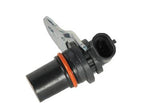 ACDelco Vehicle Speed Sensor 213344
$85.99ACDelco 2-wire vehicle speed sensor. Confirm fitment by VIN before ordering.
ACDelco Vehicle Speed Sensor 213344
$85.99ACDelco 2-wire vehicle speed sensor. Confirm fitment by VIN before ordering.
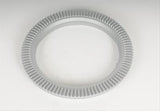 ACDelco Speed Sensor Reluctor 88936164
$139.99ACDelco speed sensor reluctor — a damaged reluctor gives no signal. Confirm fitment by VIN before ordering.
ACDelco Speed Sensor Reluctor 88936164
$139.99ACDelco speed sensor reluctor — a damaged reluctor gives no signal. Confirm fitment by VIN before ordering.
 ACDelco 2-Pin Replacement Connector PT3739
$90.99Two-pin replacement connector for a damaged sensor connector. Confirm fitment by VIN before ordering.
ACDelco 2-Pin Replacement Connector PT3739
$90.99Two-pin replacement connector for a damaged sensor connector. Confirm fitment by VIN before ordering.


How Is P0722 Diagnosed?
- Record every stored code before clearing anything. A large cluster of transmission codes points at one shared cause.
- Check your build date on the door jamb label. On the models GM lists, 02MAR2017 decides whether an internal harness is part of the repair.
- Have a dealer check your VIN against current bulletins. Free, and there are at least three relevant documents.
- Check transmission fluid level and condition using the correct procedure — GM's own service procedure begins here.
- Test the battery and charging system under load, including ripple.
- Check grounds with voltage drop under load.
- Inspect the harness for chafe points, especially any contact with the generator. Reroute if found.
- Pin drag test the connector terminals.
- Remove the sensor and check the reluctor wheel — lightly pry it. If it moves on the shaft, that is your fault.
- Test the sensor circuit for continuity and resistance against specification.
- Only then replace parts, matched to your build date, and re-check for bulletin coverage before assuming an internal transmission problem.
Parts and Cost
| Repair | What it involves | Cost picture |
|---|---|---|
| Ground or connector repair | Where voltage drop or a pin drag test finds it | Among the cheapest outcomes. Check first |
| Harness repair and reroute | Where chafing, especially generator contact, is found | Modest. Rerouting is what stops it recurring |
| TRCM re-centring | Where GM 18-NA-083 applies | A procedure, not a part |
| Output shaft nut and thrust washer | Where the reluctor wheel is found to slip | Modest parts, meaningful labour. Torque to 145 N·m (107 lb ft) |
| Output speed sensor | Built after 02MAR2017 on listed models. Part 24289782 | Moderate |
| Internal transmission harness + sensor | Built on or prior to 02MAR2017 on listed models. Kit 24292335 | Significantly more — the transmission must be opened |
| Transmission control module | After everything upstream; may need programming | Significant |
| Transmission rebuild or replacement | What gets quoted when gear ratio codes are read as internal failure | The outcome this page exists to prevent |
The gap between the last two rows is the point. Confirm parts against your VIN and your build date.
Fluid and wiring parts
 ACDelco Dexron VI Full Synthetic ATF, 1 Gal
$49.99Dexron VI full synthetic ATF, 1 gallon.
ACDelco Dexron VI Full Synthetic ATF, 1 Gal
$49.99Dexron VI full synthetic ATF, 1 gallon.
 ACDelco Transmission Filter TF937
$89.99ACDelco automatic transmission filter. Confirm fitment by VIN before ordering.
ACDelco Transmission Filter TF937
$89.99ACDelco automatic transmission filter. Confirm fitment by VIN before ordering.


What Other P0722 Pages Get Wrong
- Never mentioning the build date. GM specifies an internal transmission harness alongside the sensor on listed models built on or prior to 2 March 2017. Fit the sensor alone on one of those and the code can return — after you have paid for the access.
- Reading gear ratio codes as internal transmission failure. Output speed is half the ratio calculation, so losing it makes ratio codes appear automatically. GM documented fourteen codes from one misaligned coupler.
- Not knowing the fix can be re-centring. On the LaCrosse and XT5 applications GM names, the correction is re-centring the TRCM — no part at all.
- Ignoring the reluctor wheel. A speed sensor reads a toothed wheel; if that wheel slips on the shaft, the sensor has nothing to report and is perfectly good. GM documents a pry check that takes minutes.
- Repairing a chafed harness without rerouting it. GM is explicit: if it was contacting the generator, it must be rerouted. Otherwise you have scheduled the same failure again.
- Skipping the free electrical checks. Battery, charging with ripple, and grounds by voltage drop under load all mimic sensor failure and cost nothing to eliminate.
- Not distinguishing P0722 from P0721 and P0723. No signal, wrong signal, and intermittent signal point in different directions.
Frequently Asked Questions
Do I just need an output speed sensor?
Possibly — but check your build date first. GM bulletin 17-NA-147 covers several 2017–2018 Buick, Chevrolet and GMC models, and specifies that on vehicles built after 2 March 2017 you replace the output speed sensor, while on vehicles built on or prior to that date you install the internal transmission wiring harness together with the sensor. That is a much bigger job, and fitting the sensor alone may not resolve it.
I have a screen full of gear ratio codes. Is my transmission finished?
Do not assume that. The module calculates gear ratio from input speed divided by output speed, so losing the output signal makes ratio codes appear automatically. GM bulletin 18-NA-083 documents fourteen codes — including P0722 and gear ratio codes for first through sixth — all caused by a misaligned coupler between the transmission range control module and the transmission.
What was the fix in that case?
Re-centring the module, not replacing anything. GM's correction where those codes are set is to re-centre the TRCM following their service procedure, which begins with checking the transmission fluid level. If your vehicle is a 2017 LaCrosse or a 2017–2019 XT5 with the MRC transmission and you have been quoted a transmission, that bulletin is worth raising.
What is a reluctor wheel and why does it matter?
It is the toothed wheel the speed sensor reads. If it slips on the shaft rather than turning with it, the sensor has nothing to detect even though it is perfectly good. GM bulletin 20-NA-153 documents exactly that on the 2016–2019 ATS and 2020 Camaro with the 6-speed manual, caused by low output shaft nut torque — and the check is simply to remove the sensor and lightly pry the wheel to see if it moves.
Can I keep driving?
Short distances, carefully. Without a road speed reference the module falls back to a default strategy and often holds one gear, which is protective rather than damaging. But a transmission stuck in a low gear limits your speed and one stuck high makes pulling away difficult, so keep it off highways until it is repaired.
Why is my speedometer dead?
Because on many vehicles road speed comes from this same sensor. A dead or erratic speedometer alongside P0722 is consistent with the signal being genuinely absent rather than merely inaccurate, and it may also disable cruise control and affect other systems that rely on vehicle speed.
What's the difference between P0722, P0721 and P0723?
What the module is seeing. P0722 is no signal at all, which points at an open circuit, a disconnected sensor or a reluctor problem. P0721 is a signal that arrives but is implausible. P0723 is a signal that comes and goes. They share hardware and often appear in the same bulletins, but they point in slightly different directions.
What should I check before buying anything?
The free things, in order: your build date on the door jamb label, transmission fluid level and condition, battery and charging under load including ripple, grounds by voltage drop, the harness for chafe points — particularly against the generator — and the connector terminals with a pin drag test. Then have a dealer check your VIN against current bulletins.
Shop Related Parts & Tools
Check your build date before ordering — on the models GM lists, 2 March 2017 decides whether a sensor alone is the right part. Confirm against your VIN.
-
 MOTOPOWER MP69033 OBD2 Scanner — recording the full code list matters here more than usual, because a large cluster of transmission codes is the signature of one shared cause rather than a failing gearbox.
-
 VDIAGTOOL BT500 Battery Tester — charging system noise is a documented cause of speed sensor faults on GM transmissions, and ripple analysis catches an alternator that passes a plain voltage check.
-
 95-Piece Mechanics Tool Set (Metric & SAE) — for removing the speed sensor to check whether the reluctor wheel moves on the shaft, which is a few minutes' work and rules a real cause in or out.
Related Guides
- P0717 Code: Input/Turbine Speed Sensor A Circuit No Signal — the other half of the ratio calculation
- P0700 Code: Transmission Control System — how transmission faults reach the engine module
- P1868 Code: Transmission Fluid Life — the fluid check GM's procedure starts with
- P0641 & P0651 Codes: 5-Volt Sensor Reference Circuit — one fault, many codes