
P160C is Engine Calibration Information Not Programmed — GPCM. Like a small number of codes on this site, it does not report a failed part. It reports that a programming step was never completed — specifically, that injector flow rate data has not been written into the glow plug control module. The usual fix involves no parts at all. And there is a persistent misconception worth clearing up straight away: this code should not, on its own, cause a no-start.
Jump to a section: What P160C means · Why injector flow rate data exists · When it gets set · It should not cause a no-start · What the fix actually involves · Why the glow plug module holds this · If injectors were replaced · A note on sourcing · Symptoms · Causes and how to confirm each · How it's diagnosed · Parts and cost · What other pages get wrong · FAQ
What Does P160C Mean?
On a GM diesel, certain calibration data has to be stored in the control modules for the fuel system to work as designed. P160C sets when the engine calibration information — specifically injector flow rate data — is not correctly programmed in the glow plug control module.
That is a configuration message rather than a fault report. Nothing is broken. A module is missing information it was supposed to be given.
And the way it usually happens is straightforward: a module was replaced, and the data was not transferred into the new one. The replacement may have been perfectly correct; the final programming step was skipped.
This puts P160C in the same small family as our P1336 guide — codes where the answer is a procedure, not a purchase.
Why Injector Flow Rate Data Exists
This is worth understanding, because it explains why the data matters and why it cannot simply be left blank.
Diesel injectors are not identical to one another. They are manufactured to extremely tight tolerances, but "extremely tight" is not "perfect" — and at the pressures a modern common rail system runs, tiny differences in flow rate produce real differences in how much fuel each cylinder receives.
So each injector's actual flow rate is measured during manufacture and recorded. That measurement is often referred to as injection quantity adjustment data, and on many injectors it appears as a code printed or etched on the injector body itself.
The module uses those numbers to compensate. Knowing that one injector flows slightly more than another, it trims the commanded quantity for each cylinder individually so that every cylinder actually receives what it should.
Two consequences follow:
- Without the data, the module cannot compensate. It has to work on generic assumptions rather than what your specific injectors actually do.
- The data is specific to your engine's injectors. It is not a generic calibration that any module arrives with — it has to be entered for your vehicle.
That is why replacing a module without transferring the data produces this code. The new module genuinely does not know your injectors.
Tools for programming and checks
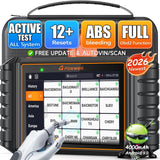 FOXWELL NT726 Bidirectional Scanner
$368.99Bidirectional scanner with injector coding on supported vehicles.
FOXWELL NT726 Bidirectional Scanner
$368.99Bidirectional scanner with injector coding on supported vehicles.
 Launch CRE 2.0 GM All-System Scanner
$159.00GM all-system scanner with programming functions.
Launch CRE 2.0 GM All-System Scanner
$159.00GM all-system scanner with programming functions.
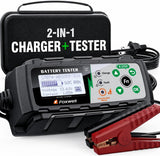 FOXWELL BC521 Battery Charger & Tester
$162.35Charger and tester — holds voltage steady during module programming.
FOXWELL BC521 Battery Charger & Tester
$162.35Charger and tester — holds voltage steady during module programming.

When It Gets Set
Ask this question first, because it resolves most cases immediately.
| What happened | Why it produces this code |
|---|---|
| PCM or ECM replacement | The calibration data lived in the old module. The new one has never had it |
| Glow plug control module replacement | Same problem, in the module the code names |
| Module reprogramming or reflashing | Can clear stored values that then need re-entering |
| Injector replacement | New injectors have their own flow rate codes, which must be programmed in |
If any of those happened recently, you have almost certainly found your answer — and the vehicle does not need diagnosis so much as it needs the programming finished.
This is the same pattern that runs through several codes on this site. Our P0506 and P0507 guide covers the idle relearn skipped after throttle cleaning; our P1514 guide covers the same relearn from the airflow side. When a code appears shortly after work, the work is the first suspect — and a missed final step is a very common form of that.
It Should Not Cause a No-Start
Worth stating clearly, because this is where people waste the most time.
P160C is frequently encountered on vehicles that will not start, which naturally leads owners to assume the code is the cause. A master diesel technician who checked GM's service information on this specific point reported finding nothing indicating that P160C would prevent the engine from starting.
So if you have a no-start and P160C, treat them as two separate things until proven otherwise. The code may well be genuine and worth resolving, but it is very likely not why the engine will not run.
Diagnose the no-start on its own merits — the ordinary questions apply:
- Battery and charging system, which on a diesel matters more than on most vehicles given the cranking demands
- Fuel supply and rail pressure
- Crankshaft and camshaft position signals — our P0340 and P0341 guide covers how losing those can disable fuel injection entirely
- Module power and grounds, and whether the modules are communicating — see our U0100 guide
- Glow plug operation itself, particularly in cold conditions
The trap is spending a day trying to program a module to fix a starting problem that has an entirely different cause.
What the Fix Actually Involves
Setting expectations properly, because this is not a driveway job.
Clearing P160C means programming the injector flow rate data into the module, and that requires a capable scan tool. Reported requirements are a GM MDI or a comparable aftermarket tool with the relevant special functions — professional-grade equipment rather than a code reader.
Some well-equipped independent shops can do it. A dealer certainly can. A basic OBD-II reader cannot.
Two practical points:
- Clearing the code without programming the data achieves nothing. The light may go out briefly, but the module still does not have the information, and the code returns.
- If a shop replaced a module and left this code set, it is reasonable to ask them to complete the programming. Transferring calibration data is part of the job, not an optional extra — and asking is a fair question rather than a confrontational one.
The cost is labour and tooling access, not parts. That is unusual and it is good news, provided nobody sells you hardware you do not need.
Why the Glow Plug Module Holds This
A reasonable question, since glow plugs and injector calibration sound unrelated.
The glow plug control module does more than switch glow plugs on. On GM diesels it is a networked control module that participates in cold-start management and reports back to the engine control module, and it holds configuration data relevant to that role.
The practical point for you is simpler than the architecture: the code names the GPCM, so that is the module the data needs to be in. If a shop is investigating, that is where to look — and if the GPCM itself was replaced, that is very likely the whole explanation.
It also means the glow plug system generally is worth a thought if you have hard cold starting alongside this code, since that is the module's primary job. Hard starting when cold and P160C together is worth mentioning specifically.
If Injectors Were Replaced
A specific scenario worth its own note, because it is easy to get half-right.
New injectors come with their own flow rate codes, and those codes must be programmed into the module against the correct cylinder. Fitting the injectors is only part of the job.
What can go wrong:
- The codes were never entered — which produces exactly this fault
- The codes were entered against the wrong cylinders, so the module compensates in the wrong direction on every one of them
- The old codes were left in place, so the module is compensating for injectors that are no longer fitted
The middle one is worth watching for, because it can produce running complaints that seem to have nothing to do with a programming error. If injectors were replaced and the engine has not run right since, ask whether the flow rate codes were entered and whether cylinder assignment was verified.
Our Duramax injector output circuit guide covers the injector circuit side, including GM's instruction not to replace injectors for those codes.
A Note on Sourcing for This Code
We cite documents we have read and label the rest.
We could not verify a GM service bulletin naming P160C on a specific GM platform. The definition — engine calibration information not programmed in the glow plug control module — is consistent across independent code references.
The point about no-starts is corroborated but not verified by us: a master diesel technician reported checking GM service information on exactly this question and finding nothing indicating P160C would prevent starting. We include it because it is specific, it is checkable, and it addresses the most common misconception about this code — but treat it as strong field reporting rather than a document we opened.
The tooling requirement and the description of injector flow rate data likewise reflect well-established practice on GM diesels rather than a GM document we read.
Have a dealer check your VIN against current bulletins, and ask specifically whether the calibration programming is outstanding on your vehicle.
Symptoms of P160C
- Check engine light on
- Frequently no driveability symptoms at all
- Rough running or uneven idle in some cases, where the module cannot compensate correctly
- Reduced fuel economy
- Hard starting in cold conditions, where the glow plug system is also involved
- The code appearing shortly after module or injector work
- Not, on its own, a no-start
On urgency: low to moderate. The vehicle is generally drivable and often nothing feels wrong. What is compromised is the module's ability to trim each injector accurately, which over time affects economy and smoothness rather than causing damage. Get the programming completed, but this is not an emergency — and if you also have a no-start, that is a separate problem needing separate attention.
Causes and How to Confirm Each
| Cause | How to confirm it | Notes |
|---|---|---|
| Module replaced without programming | Ask what work was done recently — PCM, ECM or GPCM | By far the most common. The fix is programming, not parts |
| Injectors replaced without entering flow rate codes | Ask whether the codes were programmed and cylinder assignment verified | Codes entered against wrong cylinders cause their own problems |
| Reprogramming cleared stored values | Ask whether a reflash preceded the code | Data may simply need re-entering |
| Corrupted or incomplete calibration data | Requires a capable scan tool to read and rewrite | Reprogram rather than replace |
| Wiring or connector fault at the module | Inspect connectors; check terminal grip rather than appearance | Inexpensive to rule out |
| Poor power or ground to the module | Voltage drop testing under load | Free to check, and worth doing on any diesel electrical complaint |
| Weak battery or charging fault | Test battery and charging system | Diesels are demanding; marginal voltage causes odd behaviour |
| Failed glow plug control module | After programming has been attempted properly | Less likely than missing data |
| An unrelated no-start cause | Diagnose separately — fuel, cranking, position signals, communication | This code should not prevent starting |
Control module parts
 ACDelco Remanufactured ECM
$301.99ACDelco remanufactured engine control module. Confirm fitment by VIN before ordering.
ACDelco Remanufactured ECM
$301.99ACDelco remanufactured engine control module. Confirm fitment by VIN before ordering.
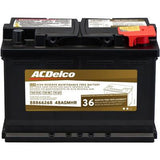 ACDelco Gold AGM Battery, Group 48
$300.99ACDelco Gold AGM battery — low voltage interrupts programming. Confirm fitment by VIN before ordering.
ACDelco Gold AGM Battery, Group 48
$300.99ACDelco Gold AGM battery — low voltage interrupts programming. Confirm fitment by VIN before ordering.
 TOPDON BT200 Battery Tester
$103.99Battery tester — confirm voltage before programming.
TOPDON BT200 Battery Tester
$103.99Battery tester — confirm voltage before programming.

How Is P160C Diagnosed?
- Ask what work was done recently. Module replacement, reprogramming or injector replacement all explain this code directly.
- Record all codes. What else is stored tells you whether other systems are involved.
- If the vehicle will not start, diagnose that separately. Do not assume this code is the cause.
- Test the battery and charging system. Free, and diesels are unforgiving of marginal voltage.
- Inspect the module connectors for corrosion and terminal problems.
- Establish whether the calibration data is present using a capable scan tool.
- Program the injector flow rate data with a GM MDI or comparable tool, verifying cylinder assignment.
- Clear codes and verify across several drive cycles including cold starts.
- Only consider the module itself if programming has been properly attempted and will not take.
Parts and Cost
| Repair | What it involves | Cost picture |
|---|---|---|
| Programming the calibration data | Scan tool procedure entering injector flow rate data | No parts. Labour and tooling access only — usually the whole answer |
| Completing work a shop left unfinished | Where a module was replaced without the data transferred | Reasonable to ask them to finish it |
| Connector or wiring repair | Where corrosion or damage is found | Modest |
| Battery or charging repair | Where testing shows it is marginal | Moderate — and worth doing on a diesel regardless |
| Glow plug control module | Only after programming has genuinely been attempted | Significant, and it needs programming too |
| Chasing a no-start through this code | Time spent on the wrong problem | The most likely waste. Diagnose the no-start separately |
Confirm any part against your VIN. And note the shape of this table — on most vehicles setting this code, nothing needs to be purchased at all.
Related parts
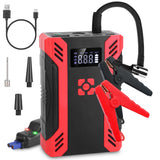 Jump Starter with Air Compressor
$177.99Jump starter with built-in air compressor.
Jump Starter with Air Compressor
$177.99Jump starter with built-in air compressor.
 ACDelco 2-Pin Replacement Connector PT3739
$90.99Two-pin replacement connector. Confirm fitment by VIN before ordering.
ACDelco 2-Pin Replacement Connector PT3739
$90.99Two-pin replacement connector. Confirm fitment by VIN before ordering.
 Nomex Split Loom, 1 in. x 10 ft
$105.66Split loom to protect a repaired harness.
Nomex Split Loom, 1 in. x 10 ft
$105.66Split loom to protect a repaired harness.


What Other P160C Pages Get Wrong
- Treating it as a failed component. This code reports that programming was not completed. The usual fix involves no parts — just the calibration data being written into the module.
- Blaming it for no-starts. It is frequently found on vehicles that will not start, but service information reportedly does not support it causing that. Diagnose the no-start separately or you will spend a day on the wrong problem.
- Never asking what work was done recently. Module replacement, reflashing and injector replacement all produce this directly, and that question resolves most cases immediately.
- Not explaining what injector flow rate data is. Diesel injectors vary slightly, their actual flow is measured at manufacture, and the module uses those numbers to trim each cylinder. Without that, the whole code is meaningless to a reader.
- Suggesting the code can simply be cleared. Clearing without programming the data leaves the module still missing the information, and the code returns.
- Not mentioning the tooling requirement. This needs a GM MDI or comparable professional tool. A basic reader cannot do it, and knowing that up front saves wasted effort.
- Ignoring cylinder assignment on injector jobs. Flow rate codes entered against the wrong cylinders make the module compensate backwards on every one.
Frequently Asked Questions
Do I need to replace anything?
Usually not. P160C reports that injector flow rate calibration data has not been programmed into the glow plug control module — most often because a module was replaced and the data was not transferred. The fix is to program it, which requires a capable scan tool but no parts.
Is P160C why my truck won't start?
Almost certainly not. This code is frequently found on no-start vehicles, which makes it look like the culprit, but a master diesel technician who checked GM's service information on this exact point reported finding nothing indicating it would prevent starting. Diagnose the no-start separately — fuel supply, cranking, position signals, module power and communication.
What is injector flow rate data?
Diesel injectors are not perfectly identical, so each one's actual flow rate is measured during manufacture and recorded — often as a code on the injector body. The module uses those numbers to trim each cylinder individually, so that every cylinder receives what it should despite the small differences. Without the data, it cannot compensate.
Can I clear the code myself?
Clearing it will not help, because the module still will not have the data and the code returns. Programming it in requires a GM MDI or a comparable aftermarket tool with the relevant special functions, which is professional-grade equipment rather than a code reader. A dealer or a well-equipped independent shop can do it.
A shop replaced my module and now I have this code.
Then the programming was very likely not completed. Transferring the calibration data is part of replacing the module rather than an optional extra, so it is entirely reasonable to go back and ask them to finish it. That is a fair question, not a confrontational one.
I just had injectors replaced.
New injectors carry their own flow rate codes, and those must be programmed into the module against the correct cylinder. Ask whether the codes were entered and whether cylinder assignment was verified — entering them against the wrong cylinders makes the module compensate backwards, which produces running complaints that look unrelated to a programming error.
Can I keep driving?
Generally yes, and often nothing feels wrong. What is compromised is the module's ability to trim each injector accurately, which affects smoothness and economy rather than causing damage. Get the programming completed, but it is not an emergency.
Why does the glow plug module hold engine calibration data?
Because on GM diesels it is a networked control module doing more than switching glow plugs — it participates in cold-start management and holds configuration relevant to that role. The practical point is simply that the code names the GPCM, so that is the module the data needs to be in.
Shop Related Parts & Tools
This code is usually resolved by programming rather than parts. Establish what work was done recently before anything is ordered.
-
 MOTOPOWER MP69033 OBD2 Scanner — useful for seeing what else is stored, which matters here because a no-start alongside this code is a separate problem. Note that programming the calibration data itself needs a GM MDI or comparable professional tool.
-
 VDIAGTOOL BT500 Battery Tester — genuinely relevant on a diesel, where cranking demands are high and marginal voltage produces odd module behaviour. Free to eliminate, and the first thing to check on any no-start.
-
 95-Piece Mechanics Tool Set (Metric & SAE) — for module connector access and the wiring inspections worth doing before anything is condemned.
Related Guides
- P1336 & P1346 Codes: Crankshaft Position System Variation Not Learned — the other code where the fix is a procedure, not a part
- P1223 & Related: Duramax Injector Output Circuits — the injector circuit side
- P0612 Code: Fuel Injector Control Module Relay Control
- GMC Code P0191: Fuel Rail Pressure Sensor Performance — the Duramax fuel system