
P1719 on a Chevrolet is ABS Base Brake Closed Solenoid Circuit Open — a fault in the anti-lock brake system. That matters more than usual, because almost everything you will find searching this code describes a transmission problem. On a Honda it is a clutch pressure switch; on a Subaru a lock-up solenoid; on a Dodge a skip shift solenoid. Those pages are about other manufacturers' vehicles, and following them means investigating a gearbox while the fault sits in your brakes.
Jump to a section: The transmission trap · What the code actually means · Your brakes still work — and what you have lost · "Circuit open" points at wiring · It can produce an engine code too · Why this confusion happens · A note on sourcing · Symptoms · Causes and how to confirm each · How it's diagnosed · Parts and cost · What other pages get wrong · FAQ
The Transmission Trap
Worth dealing with first, because it is the reason this page exists.
| Make | What P1719 means there |
|---|---|
| Chevrolet | ABS base brake closed solenoid circuit open — a brake system fault |
| Honda / Acura | 4th clutch transmission fluid pressure switch circuit |
| Subaru | Abnormal current for lock-up duty solenoid |
| Hyundai | Lost communication with ECM |
| Dodge | Skip shift solenoid circuit |
| Volkswagen / Audi | Functionality limited due to engine control module |
Six manufacturers, six unrelated faults, one number. And the transmission readings dominate search results simply because more of those vehicles are out there generating more pages.
The consequence is worse here than on most mixed-up codes. On a code like P1403 the confusion costs you time. On this one it can send you to a transmission shop while the actual fault is in the system that helps you stop — and unlike a gearbox complaint, a brake system fault will not announce itself until the moment you need it.
The check that settles it costs nothing: look at your dash. If your ABS warning light is on, you have the brake reading. A transmission pressure switch does not illuminate an ABS lamp.
What the Code Actually Means
Unpacking the name, because each part carries information.
"Base brake" refers to ordinary braking — what happens when you press the pedal and ABS is not intervening. Your ABS unit sits in the hydraulic path all the time; most of that time it simply lets pressure through to the wheels unmodified.
The solenoid valves inside the ABS modulator are what allow it to intervene. During an ABS event the module rapidly opens and closes them to hold, release and reapply pressure at individual wheels — faster than any driver could pump a pedal. Some of those valves are held closed during normal braking and only open when ABS acts.
"Circuit open" is the specific complaint. The module energises solenoids through control circuits and monitors those circuits continuously. An open circuit means the electrical path is broken — the module commands the valve and gets no current flow, so it knows it cannot rely on that valve working.
Put together: the module has found a break in the control circuit for one of the valves it needs during an ABS stop, and has reported that it cannot guarantee the system will function.
Notice what it is not saying. It is not reporting a hydraulic problem, a fluid leak, or worn pads. It is reporting an electrical fault in the system's control circuitry — which is why the diagnosis starts with wiring rather than brake parts.
Tools for reading ABS codes
 FOXWELL NT604 ABS/SRS/Transmission Scanner
$209.09ABS, SRS and transmission scanner — reads the EBCM.
FOXWELL NT604 ABS/SRS/Transmission Scanner
$209.09ABS, SRS and transmission scanner — reads the EBCM.
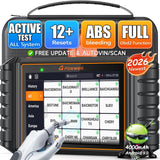 FOXWELL NT726 Bidirectional Scanner
$368.99Bidirectional scanner that runs ABS function tests.
FOXWELL NT726 Bidirectional Scanner
$368.99Bidirectional scanner that runs ABS function tests.
 TOPDON BT200 Battery Tester
$103.99Low voltage sets EBCM circuit codes — test the battery first.
TOPDON BT200 Battery Tester
$103.99Low voltage sets EBCM circuit codes — test the battery first.

Your Brakes Still Work — and What You Have Lost
Being precise here matters, in both directions.
The reassurance: ABS systems are designed so that a failure defaults to normal braking. The hydraulic path from your pedal to the wheels remains intact. You have not lost the ability to stop the vehicle, and your brakes should feel and behave normally in ordinary driving.
The warning: what you have very likely lost is ABS itself — and usually traction control and stability control along with it, since those systems depend on the same hydraulic unit.
That difference only shows up when it matters:
- In a hard emergency stop, the wheels can lock. A locked wheel stops steering — you slide in whatever direction you were already going, and cannot steer around anything.
- On wet, icy or loose surfaces, where wheels lock at much lower pedal pressures than you would expect.
- Under acceleration or cornering, if traction and stability control have gone with it.
So: safe to drive to a shop, not safe to leave for months — and treat winter, rain and heavy traffic as reasons to prioritise it. Increase your following distances and brake earlier and more gently until it is repaired.
If you have not driven a vehicle without ABS, be aware that threshold braking is a genuinely different skill. Stamping on the pedal in an emergency is exactly the wrong input when ABS is not there to manage it.
"Circuit Open" Points at Wiring
The phrasing is a real diagnostic clue, and it points away from the expensive part.
An open circuit means a break in the electrical path. That break can be in the solenoid coil itself, but far more often it is somewhere in the wiring between the module and the valve, or in a connection.
Where to look, roughly in order:
- Connectors at the ABS modulator. The unit lives in a punishing environment — heat, vibration, road spray and salt — and its connectors take the brunt. Check terminal grip with a pin drag test rather than judging by appearance; a backed-out terminal looks perfectly seated.
- Corrosion inside connectors, particularly on vehicles that see salted roads.
- Chafed or damaged harness, especially where it passes near moving suspension components or sharp edges.
- Damage from previous work. A harness disturbed during unrelated repairs is a very common source of open circuits.
- Rodent damage, which is more common than people expect and produces textbook open circuits.
Then power and grounds. The ABS module needs clean supply and clean grounds like any other module, and marginal voltage produces faults that look like component failures. Voltage drop testing under load finds high-resistance grounds that a static resistance check passes — our P1630 guide covers a GM-documented case where a loose ground bolt was the entire fault behind a no-start.
The ABS modulator assembly comes last, once circuits, connectors and supply are proven — because it is the expensive conclusion and the code does not directly implicate it.
It Can Produce an Engine Code Too
A connection worth knowing, because it explains an otherwise baffling pairing.
On GM vehicles the brake control module shares data with the engine module — including wheel speed information used to qualify misfire detection. Our P1380 and P1381 guide covers that in full: driving over rough surfaces produces crankshaft speed variations indistinguishable from misfires, and wheel speed data is what lets the engine module discount them.
So a fault in the ABS system can set an engine code. If you have P1719 alongside P1380, or alongside misfire codes, you may be looking at one fault reported by two modules rather than two separate problems.
The practical guidance: fix the brake system fault first, then clear everything and see what returns. Chasing plugs and coils while the module cannot filter road noise means working on evidence you cannot trust.
And more generally — scan every module, not just the engine. A reader that only talks to the engine module will show you an engine code while the brake fault that caused it stays invisible.
Why This Confusion Happens
The P0xxx range is standardised across all manufacturers. P0301 means cylinder 1 misfire on any vehicle sold.
The P1xxx range is not. It was deliberately left for each manufacturer to assign as it saw fit — so Chevrolet's P1719 and Honda's P1719 are not variants of one meaning. They are separate assignments that happen to share a number.
Search engines do not distinguish. A well-written page about a Honda ranks perfectly for a code number a Chevrolet owner typed, and nothing warns you.
And GM reused numbers internally too, across model years and platforms, with published GM code lists carrying an explicit caution about it.
Our P1400 guide covers the same trap with Ford's DPFE sensor, and our P1247 guide covers a case where two definitions exist inside GM's own range. The habit worth building: on any P1xxx code, confirm the definition against your make before acting on anything you read.
A Note on Sourcing for This Code
We cite documents we have read and label the rest.
We could not verify a GM service bulletin naming P1719 on a specific GM platform. The Chevrolet definition — ABS base brake closed solenoid circuit open — comes from a code reference that also documents the competing definitions on other makes, which is why we can lay out the cross-manufacturer picture with reasonable confidence.
The diagnostic material — that an open circuit points at wiring and connectors before the modulator, and that ABS failures default to base braking — reflects standard practice rather than a GM document we opened.
Brake system work is one area where professional diagnosis is genuinely worth it. Reading ABS module codes requires a tool that can talk to that module, and the consequences of getting it wrong are not the same as on a driveability fault. Have a dealer check your VIN against current bulletins — free, and it may save the whole diagnosis.
Symptoms of P1719
- ABS warning light on — the clearest indicator, and what distinguishes this from the transmission readings
- Traction control or stability control light on, or those systems disabled
- Normal brake pedal feel and normal stopping in ordinary driving
- No ABS activity in a hard stop — no pedal pulsing, no rapid clicking from the modulator
- Wheels locking under hard braking, especially in the wet
- Possible engine codes such as P1380 alongside
- No transmission symptoms, which is itself informative
On urgency: moderate to high, and specifically because of what it costs you in an emergency. The vehicle stops normally day to day, so there is no daily reminder that anything is wrong. But the systems that keep the wheels from locking and the vehicle from spinning are the ones that matter precisely when you have no time to think. Get it repaired promptly, and be more conservative with following distances and speed in poor conditions until you have.
Causes and How to Confirm Each
| Cause | How to confirm it | Notes |
|---|---|---|
| Connector fault at the ABS modulator | Pin drag test on terminals; inspect for corrosion | Start here. Harsh environment; a backed-out terminal looks seated |
| Chafed or broken harness wiring | Trace the harness; flex it while inspecting | Suspension movement, sharp edges, road debris |
| Corrosion in the circuit | Inspect connectors, particularly on salted-road vehicles | A classic open-circuit cause |
| Damage from previous work | Ask what was done recently near the modulator or harness | Very common and easily overlooked |
| Rodent damage | Inspect for chewed insulation and nesting material | Produces textbook open circuits |
| Poor ground or marginal voltage | Voltage drop testing under load; test battery and charging | Free to check, and it mimics component failure |
| Open solenoid coil | After wiring and connectors are excluded | Usually means the modulator assembly |
| ABS module fault | Last, after circuits and supply are proven | The expensive conclusion; may require programming |
| A transmission fault | Not indicated by this code on a Chevrolet | Do not start here because search results said so |
ABS sensors and wiring
 ACDelco Front ABS Wheel Speed Sensor 22873507
$123.99ACDelco front ABS wheel speed sensor for Chevy and GMC trucks. Confirm fitment by VIN before ordering.
ACDelco Front ABS Wheel Speed Sensor 22873507
$123.99ACDelco front ABS wheel speed sensor for Chevy and GMC trucks. Confirm fitment by VIN before ordering.
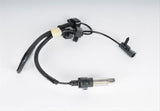 ACDelco ABS Wheel Speed Sensor 22827364
$93.99ACDelco ABS wheel speed sensor 22827364. Confirm fitment by VIN before ordering.
ACDelco ABS Wheel Speed Sensor 22827364
$93.99ACDelco ABS wheel speed sensor 22827364. Confirm fitment by VIN before ordering.
 ACDelco 2-Pin Replacement Connector PT3739
$90.99Two-pin replacement connector. Confirm fitment by VIN before ordering.
ACDelco 2-Pin Replacement Connector PT3739
$90.99Two-pin replacement connector. Confirm fitment by VIN before ordering.


How Is P1719 Diagnosed?
- Confirm the ABS light is on. That settles the brake reading versus the transmission definitions immediately.
- Read codes from every module, especially the brake control module. A basic reader that only talks to the engine cannot see the fault.
- Record all codes before clearing anything. Engine codes alongside may be the same fault reported twice.
- Test the battery and charging system. Free, and marginal voltage produces circuit faults.
- Check grounds with voltage drop testing under load, not a static resistance check.
- Inspect the ABS modulator connectors using a pin drag test on the terminals.
- Inspect the harness for chafing, corrosion, rodent damage and damage from previous work.
- Test the solenoid circuit for continuity and resistance against specification.
- Repair the open circuit and reroute the harness clear of whatever caused the damage.
- Only consider the modulator or module once circuits, connectors and supply are proven.
- Clear codes and verify the ABS light stays off across several drive cycles.
Parts and Cost
| Repair | What it involves | Cost picture |
|---|---|---|
| Ground repair | Where voltage drop testing finds a poor ground | Among the cheapest outcomes. Check first |
| Connector or terminal repair | Where corrosion or a backed-out terminal is found | Modest — and a very common answer |
| Harness repair and reroute | Where chafing or a break is found | Modest. Reroute clear of the cause |
| Battery or charging repair | Where testing shows it is marginal | Moderate |
| Diagnostic time | Reading ABS module codes needs a capable tool | Worth paying for on a brake system |
| ABS modulator assembly | Where the solenoid coil itself is open | Significant. Ask what circuit testing was done first |
| ABS module | After everything upstream is excluded | Significant; may require programming |
| Transmission diagnosis | What happens if you follow the wrong definition | The waste this page exists to prevent |
Confirm parts against your VIN. ABS components vary by vehicle and by which systems are fitted.
Related parts and tools
 Nomex Split Loom, 1 in. x 10 ft
$105.66Split loom to protect a repaired ABS harness.
Nomex Split Loom, 1 in. x 10 ft
$105.66Split loom to protect a repaired ABS harness.
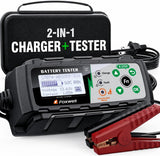 FOXWELL BC521 Battery Charger & Tester
$162.35Charger and tester for battery health.
FOXWELL BC521 Battery Charger & Tester
$162.35Charger and tester for battery health.
 FOXWELL NT301 Code Reader
$68.82Budget code reader with live data.
FOXWELL NT301 Code Reader
$68.82Budget code reader with live data.


What Other P1719 Pages Get Wrong
- Presenting it as a transmission code. That is Honda, Subaru and Dodge territory. On a Chevrolet it is an ABS fault, and following the transmission definition means investigating a gearbox while a brake system fault goes unaddressed.
- Not offering the free check. If your ABS light is on, you have the brake reading. A transmission pressure switch does not illuminate an ABS lamp.
- Not saying to scan the brake module. A basic reader talking only to the engine cannot see the fault at all.
- Going straight to the ABS modulator. "Circuit open" describes a broken electrical path, most often in connectors or harness rather than the assembly. The expensive part is the last conclusion, not the first.
- Getting the safety framing wrong in either direction. Some pages imply the brakes have failed; others treat it as harmless. Base braking works normally — but ABS, traction and stability control likely do not, and that shows up exactly when you need it.
- Missing the engine code connection. GM brake modules share wheel speed data with the engine module, so an ABS fault can set a misfire-related code. Two codes may be one fault.
- Recommending static ground checks. High-resistance grounds pass with no current flowing. Voltage drop under load is what exposes them.
Frequently Asked Questions
Everything online says this is a transmission code.
Those pages are about other manufacturers. On Honda and Acura P1719 is a clutch pressure switch, on Subaru a lock-up solenoid, on Dodge a skip shift solenoid — but on a Chevrolet it is an ABS base brake solenoid circuit fault. P1xxx codes are manufacturer-specific, so the same number is assigned independently by each make, and search engines do not flag the difference.
How do I know which one applies to me?
Look at your dash. If the ABS warning light is on, you have the brake reading — a transmission pressure switch does not illuminate an ABS lamp. Reading codes from the brake control module confirms it, and your scan tool's own description of the code on your vehicle outranks any general list.
Are my brakes safe?
Your normal braking is intact — ABS systems are designed so a failure defaults to base braking, and the hydraulic path from pedal to wheels is unaffected. What you have likely lost is ABS itself, and usually traction and stability control with it. That only matters in a hard stop or on a slippery surface, but those are exactly the moments it matters most.
Can I keep driving?
It is safe to drive to a shop. Do not leave it for months. Until it is repaired, increase your following distances, brake earlier and more gently, and be especially careful in rain, ice and heavy traffic. If you are not used to driving without ABS, remember that stamping on the pedal in an emergency is the wrong input when there is nothing managing wheel lock.
Does this mean I need a new ABS unit?
Not necessarily, and it should not be the first assumption. "Circuit open" describes a break in the electrical path, which is most often a connector problem or damaged harness rather than the assembly itself. Connectors at the modulator take heat, vibration, road spray and salt, and a backed-out terminal looks perfectly seated — it takes a pin drag test to find.
I also have engine codes. Are they related?
Quite possibly. GM brake control modules share wheel speed data with the engine module, which uses it to tell genuine misfires from crankshaft variations caused by rough roads. So an ABS fault can set an engine code such as P1380. Fix the brake fault first, then clear everything and see what returns.
My code reader only shows this and nothing useful.
Many basic readers only communicate with the engine module, so a fault living in the brake control module is invisible to them. You need a tool with ABS module access, or a shop that has one. On a brake system fault, that diagnostic time is worth paying for.
What should be checked first?
Connectors at the ABS modulator, the harness, and the grounds and supply — all before anything is replaced. Test grounds with voltage drop under load rather than a static resistance check, since a high-resistance ground passes with no current flowing and produces faults that mimic a failed component.
Shop Related Parts & Tools
This is a brake system fault, so the diagnosis belongs with someone who can read the ABS module. Circuits and connectors come well before the modulator.
-
 MOTOPOWER MP69033 OBD2 Scanner — shows the engine-side codes that may be the same ABS fault reported twice. Reading the brake control module itself needs a tool with ABS access, which is worth arranging on a code like this.
-
 VDIAGTOOL BT500 Battery Tester — rules out marginal voltage, which produces circuit faults that look convincingly like failed components. Free to eliminate before anything is condemned.
-
 95-Piece Mechanics Tool Set (Metric & SAE) — for access to the modulator connectors and the harness runs where open circuits usually turn out to be.
Related Guides
- P1380 & P1381 Codes: Misfire Detected — Rough Road Data Not Available — how a brake fault sets an engine code
- P1400 Code on a GM: What It Probably Doesn't Mean — the same cross-manufacturer trap
- P1630 Code: System Voltage or Theft Deterrent Learn Mode — GM-documented ground faults
- U0100 Code: Lost Communication With ECM/PCM — module circuits and how to test them properly